
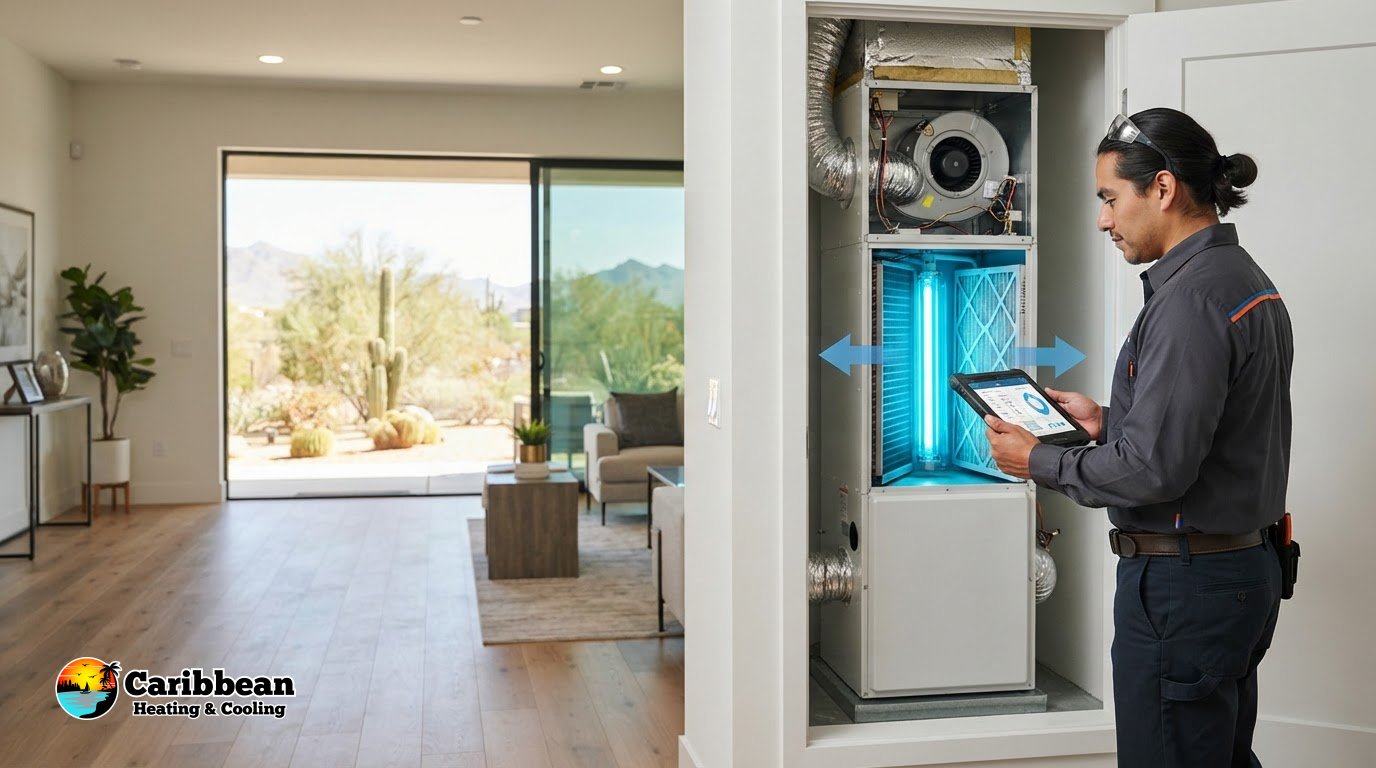
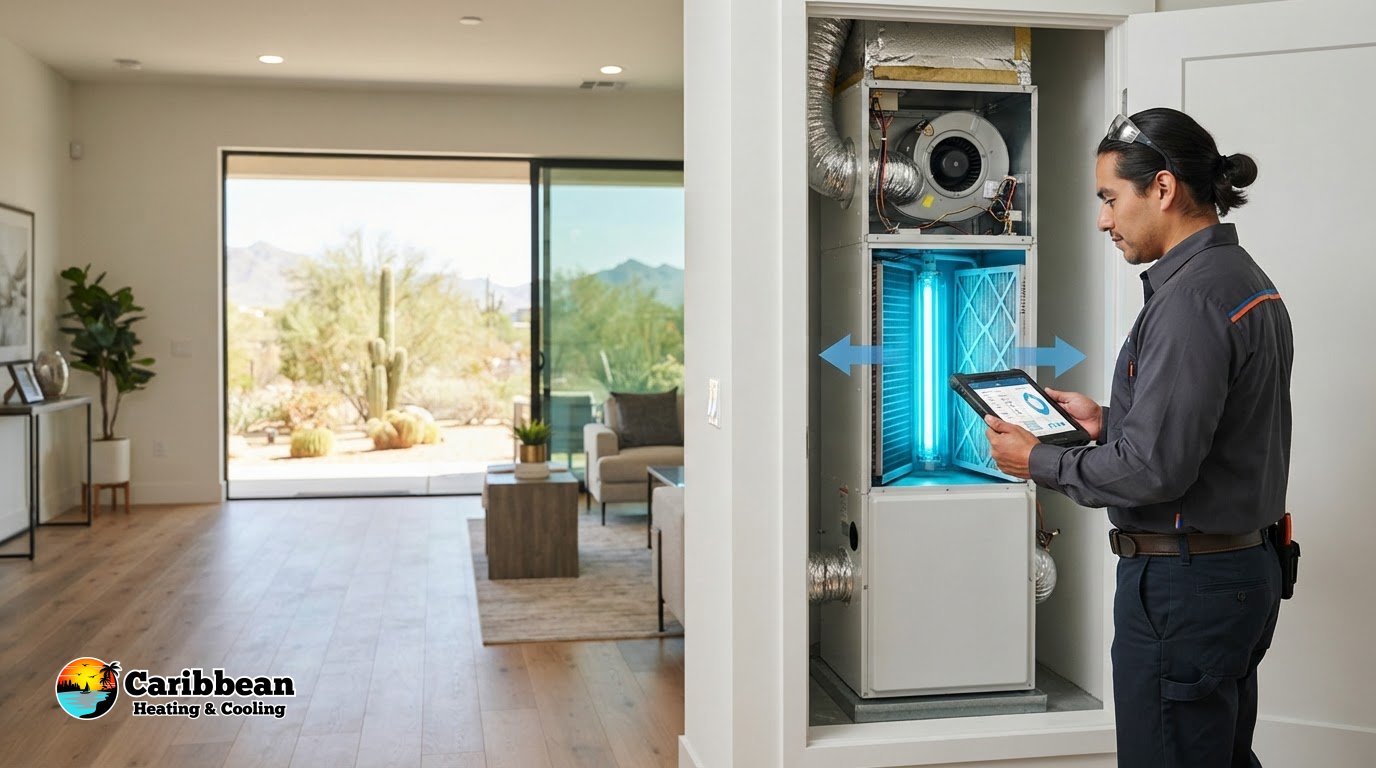
Al comparar los costos y beneficios del purificador de aire con luz UV para HVAC, la primera pregunta es en qué parte del sistema debe actuar. Una...
Landlord HVAC Responsibilities in Nevada: A 2026 Guide to NRS 118A
When the outdoor temperature climbs past 110°F, a broken air conditioner isn’t just an inconvenience; it’s a critical safety hazard. You already know that managing a rental property in this climate is a high-stakes job, and the pressure only intensifies when a cooling system fails during a heatwave. Staying compliant with landlord hvac responsibilities Nevada is vital to protecting your investment and your tenants’ well-being in these demanding conditions.
It’s natural to feel concerned about the legal definitions of habitability and the potential for health risks when equipment breaks down. This guide provides the clarity you need regarding NRS 118A and the specific requirements for 2026. You’ll learn exactly how the 48-hour repair window for essential services works and how recent legislation like AB 121 impacts your daily operations. We’ll also explore the practical steps for maintaining heating and cooling systems so you can resolve issues quickly and keep your property running safely.
Key Takeaways
- Learn why functioning HVAC is a legal pillar of habitability under NRS 118A.290, ensuring your property remains compliant from day one of the lease.
- Understand your landlord hvac responsibilities Nevada regarding the strict 48-hour repair window for essential services like heating and air conditioning.
- Discover why the “legal clock” for emergency repairs only begins once you receive formal written notice from your tenant.
- Identify how proactive AC maintenance and heating maintenance can prevent costly legal disputes and equipment failures during extreme weather.
- See why professional documentation from a licensed contractor is your best defense against potential claims of negligence or habitability violations.
Understanding Nevada Law: NRS 118A and HVAC Habitability
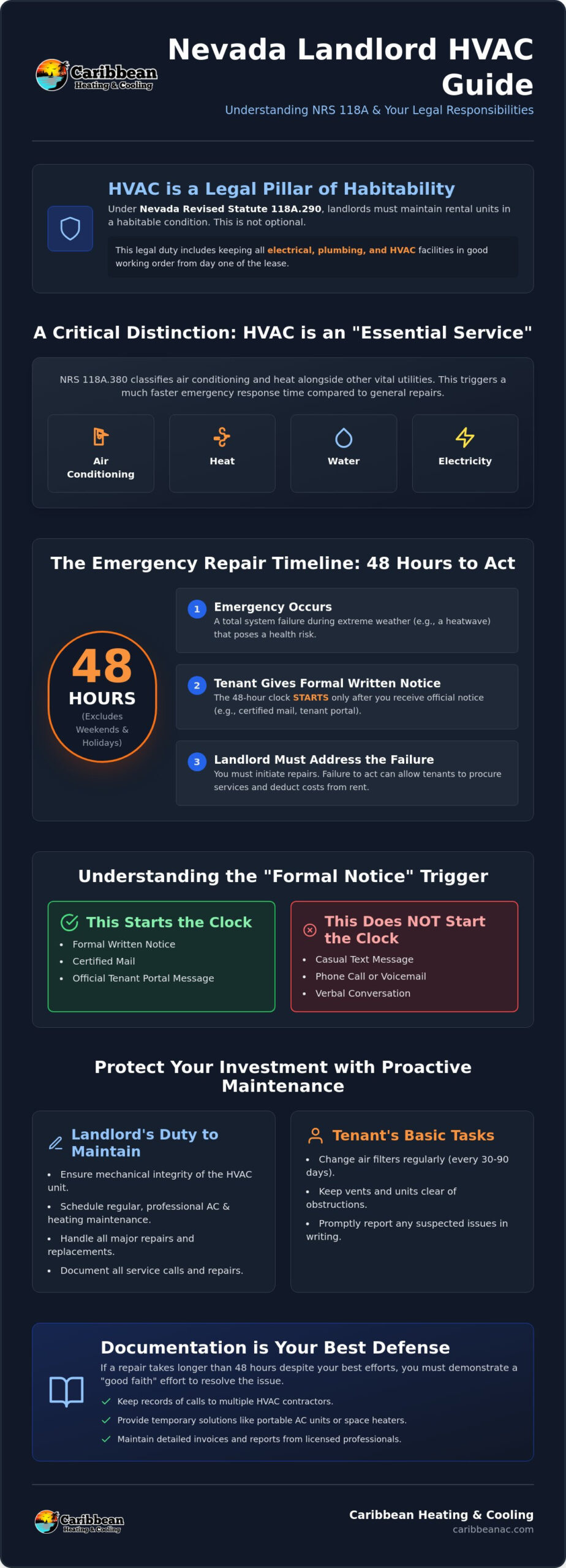
Nevada Revised Statute 118A.290 serves as the legal foundation for rental standards across the Silver State. It establishes that every landlord must maintain a dwelling unit in a habitable condition. This responsibility includes keeping all electrical, plumbing, and HVAC facilities in good working order. Under the broader implied warranty of habitability, a property isn’t just a roof and four walls; it must be a safe, functional environment for the tenant.
To better understand how these laws protect both parties, watch this helpful video:
If an air conditioning unit or heating system was provided when the tenant moved in, you’re legally bound to keep it running. You cannot include clauses in a lease that bypass these basic requirements. Even if a tenant signs a contract saying they’ll handle all repairs, Nevada law typically views these waivers as unenforceable regarding core habitability. Understanding your landlord hvac responsibilities Nevada means recognizing that climate control is a legal requirement, not a courtesy.
Is Air Conditioning an Essential Service?
Under NRS 118A.380, Nevada law classifies air conditioning as an “essential service” alongside heat, water, and electricity. This is a critical distinction. While general habitability issues might allow for a 14-day resolution period, essential service failures trigger a much tighter response window. In the harsh Nevada climate, a non-functional AC isn’t just a standard maintenance ticket; it’s a legal emergency that requires immediate professional attention to ensure the safety of the occupants.
The Landlord’s Duty to Maintain
Your obligations extend beyond reacting to a total system failure. You must ensure the equipment remains in good repair throughout the entire tenancy. While tenants are often responsible for basic tasks like changing filters every 30 to 90 days, the landlord is responsible for the mechanical integrity of the unit. Scheduling regular AC maintenance or heating maintenance helps you document your compliance and prevents sudden, expensive breakdowns that could lead to legal disputes or health risks.
Emergency Repair Timelines: The 48-Hour Rule in Nevada
Once a tenant identifies a failure in an essential service, the legal clock begins to tick. Under Nevada Revised Statute 118A, landlords have exactly 48 hours to address the failure of essential services like heating and air conditioning. This window excludes weekends and holidays, but it requires a swift response to stay compliant with landlord hvac responsibilities Nevada. If you fail to act within this timeframe, tenants may have the legal right to procure the service themselves and deduct the cost from their rent, or even withhold rent under specific conditions.
What Qualifies as an HVAC Emergency?
Not every maintenance request is an emergency. A true crisis involves a total system failure during extreme heat warnings in Las Vegas or a loss of heat in Henderson during the winter. When outdoor temperatures pose a genuine health risk, the law prioritizes these repairs. If your tenant’s unit is sweltering or freezing, you need a professional partner for AC repair to mitigate legal exposure and ensure resident safety.
The Formal Notice Process
The 48-hour countdown doesn’t start with a casual text or a phone call. It begins when the tenant provides formal written notice of the issue. This is usually delivered via certified mail or through an official tenant portal. Landlords must respond promptly to these notices to avoid claims of “retaliatory eviction” if a dispute arises later. Documentation is your best friend. Keep detailed records of when you received the notice and exactly when your technician arrived on-site.
Managing landlord hvac responsibilities Nevada effectively requires a fast response even when parts are backordered or contractors are booked. If you can’t complete the repair in 48 hours despite your best efforts, you must demonstrate “good faith.” This means showing you’ve contacted multiple professionals and are doing everything possible to restore service. Providing portable cooling units or space heaters can often satisfy the immediate need for habitability while you wait for a permanent mechanical fix.
Best Practices for Landlords: Protecting Your HVAC Investment
Proactive management is the most effective way to fulfill landlord hvac responsibilities Nevada while protecting your bottom line. Instead of waiting for a system to fail during a record breaking heatwave, smart property owners invest in preventative care. This approach doesn’t just extend the life of your equipment; it provides a paper trail that proves you’ve met your legal obligation to maintain a habitable dwelling.
Detailed records from a licensed contractor are your strongest defense in any legal dispute. If a tenant claims negligence, having dated receipts for inspections and repairs shows you’ve acted in good faith. We recommend keeping a dedicated digital folder for each property that includes every service invoice and maintenance report. This documentation is essential if you ever need to justify repair timelines or equipment replacement costs in court.
Annual Maintenance Checklists
The transition between seasons is the perfect time to schedule professional oversight. A pre summer tune up ensures the condenser can handle the desert heat, while a pre winter furnace inspection identifies potential safety issues like cracked heat exchangers. Following a consistent ac maintenance schedule prevents the 48-hour scramble and keeps your tenants comfortable year round.
Choosing a Licensed Residential Expert
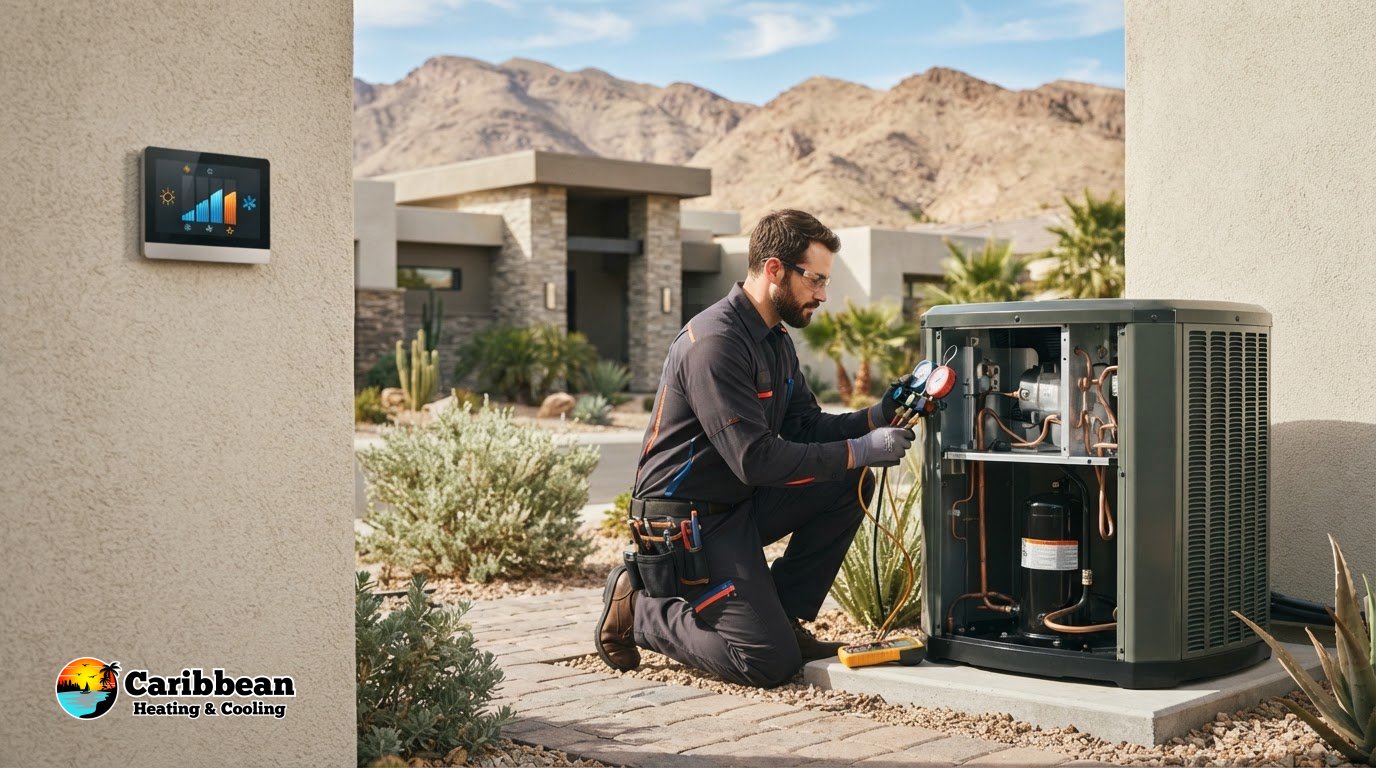
Choosing the right technician is critical. It’s tempting to hire a general handyman for minor fixes, but this often leads to recurring failures and higher long term costs. Complex HVAC systems require specialized knowledge to diagnose correctly. When an emergency strikes at 2 AM, you need a partner that offers 24/7 support to meet strict NRS 118A deadlines. Having a reliable partner like Caribbean Heating & Cooling is a landlord’s best defense against the stress of sudden equipment failure. For professional AC Repair Las Vegas, always choose a licensed expert who understands local residential requirements.
Improving the living experience also pays dividends in tenant retention. Consider upgrading to smart thermostats or installing indoor air quality solutions. These features not only make the property more attractive to high quality renters but also allow the HVAC system to operate more efficiently. When the equipment doesn’t have to work as hard, you’ll see fewer breakdowns and a much better return on your investment.
Secure Your Property and Tenant Safety
Mastering landlord hvac responsibilities Nevada is about more than just legal compliance; it’s about maintaining a safe and reliable home for your residents. By acting within the 48-hour window for essential service repairs and keeping detailed maintenance logs, you significantly reduce your liability and protect your mechanical assets. A proactive approach prevents the “emergency scramble” that often leads to costly repairs and strained tenant relationships.
When technical failures occur, having a dependable expert on call is your strongest asset. Our team has been family-owned and licensed in Nevada since 2018, providing the local expertise needed to handle the unique demands of our desert climate. We focus exclusively on residential systems, offering the 24/7 emergency support required to meet NRS 118A deadlines day or night.
Need urgent AC repair for your rental? Contact Caribbean Heating & Cooling for 24/7 service.
Protecting your investment is easier when you have a professional partner dedicated to your property’s performance. Reach out today to ensure your heating and cooling systems remain in peak condition throughout the year.
While you focus on protecting your real estate assets through proper maintenance, if your business interests also include logistics or fleet operations, securing commercial trucking insurance Houston is another essential step in a comprehensive risk management strategy.
Frequently Asked Questions
How long does a landlord have to fix AC in Las Vegas?
A landlord has exactly 48 hours to address a failed air conditioning system once they receive written notice from the tenant. This timeline applies because AC is classified as an “essential service” under Nevada law, especially during periods of extreme heat. While weekends and holidays aren’t included in the 48-hour count, you must act quickly to restore service. Failure to do so can lead to legal penalties or the tenant taking independent action.
Can a Nevada tenant withhold rent if the AC is broken?
Yes, a tenant can withhold rent or use the “repair and deduct” method, but they must follow strict legal procedures first. The tenant has to provide formal written notice and wait the required 48-hour period for essential services. If the landlord fails to act, the tenant can pay for the repair themselves and subtract that amount from the rent. However, tenants should use caution and consult legal advice to avoid the risk of eviction.
Is a landlord required to provide AC in Nevada?
Nevada law doesn’t strictly require every rental unit to have air conditioning, but if a unit was provided at the start of the lease, the landlord must keep it in good repair. This is a core part of landlord hvac responsibilities Nevada under habitability standards. Once the equipment is included in the rental agreement, it’s considered an essential facility that must remain functional for the duration of the tenancy to ensure the home remains livable.
What happens if a landlord ignores an emergency HVAC repair request?
If a landlord ignores an emergency repair request, they face significant legal liability and potential lawsuits for damages. Tenants may choose to terminate the rental agreement without penalty or seek a court order to force the repairs. Additionally, ignoring landlord hvac responsibilities Nevada can result in being responsible for the tenant’s temporary housing costs if the unit becomes uninhabitable. It’s always best to partner with a licensed contractor to resolve these issues immediately and document your response.

Related Posts
Comments (0)