
Son las 2:00 a. m. en Anthem y, aunque las estrellas del desierto son hermosas, el aire a 38 grados Fahrenheit (3 °C) que se cuela por sus ventanas...
AC Unit Leaking Water Outside Summerlin: Normal or Emergency? (2026)
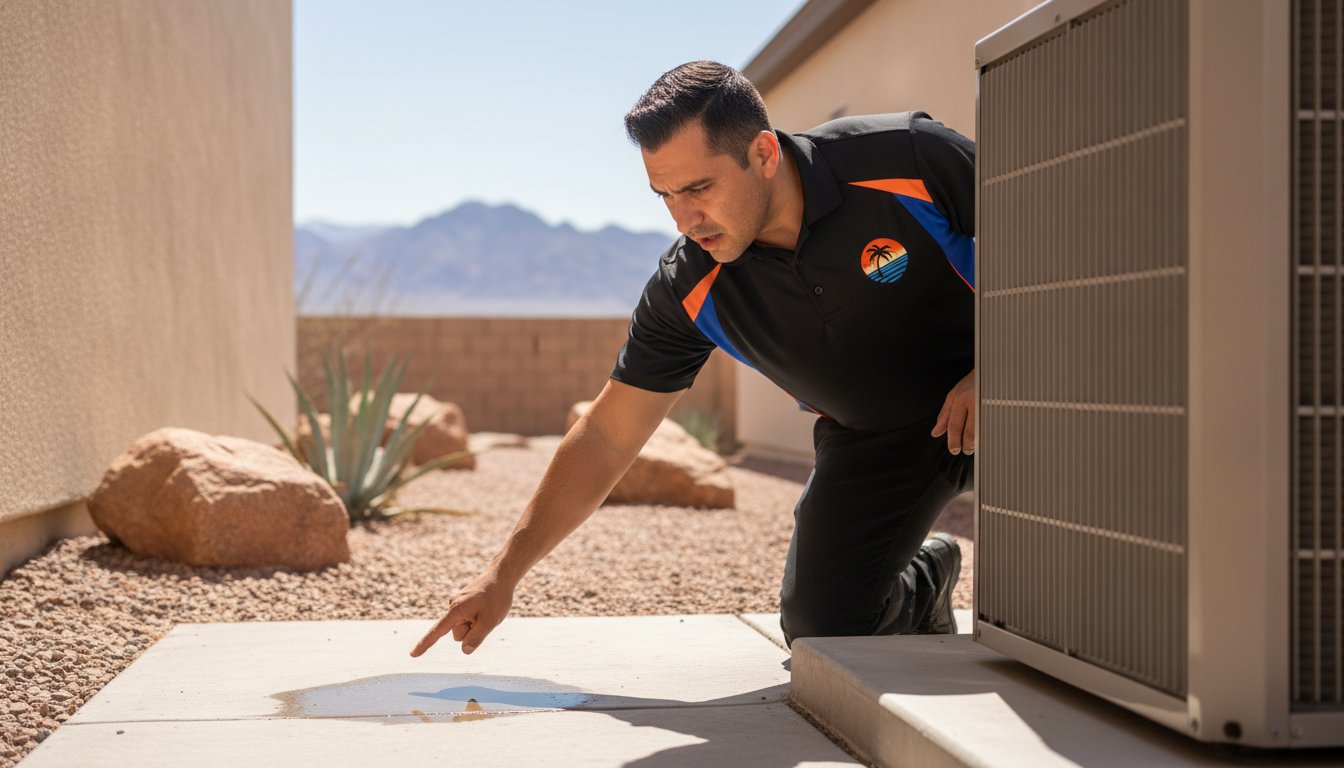
You step outside to check the mail and notice a growing pool of water beneath your condenser. In the triple-digit heat of a Nevada July, seeing your ac unit leaking water outside Summerlin can trigger immediate panic. It’s completely natural to feel anxious when you see moisture where it doesn’t belong. You’re likely wondering if your system is simply “sweating” in the humidity or if a mechanical failure is about to leave your family stranded in the desert heat. With the 2026 transition to new A2L refrigerants and stricter energy codes, understanding your system’s behavior is more important than ever for your peace of mind.
We promise to help you distinguish between harmless desert condensation and a high-priority emergency that threatens your home’s foundation. This guide provides clear criteria to identify a real leak and outlines the immediate steps you should take to prevent expensive water damage. You’ll learn how to spot a clogged condensate line, when to shut your system down, and how to ensure your Summerlin home remains a cool sanctuary throughout the harshest months of the year. We’ve simplified the technical details so you can act decisively and keep your property safe.
Key Takeaways
- Identify the difference between normal desert condensation and a mechanical failure by observing the flow rate and location of the water.
- Learn how Summerlin’s unique wind and dust conditions can clog your condensate lines and lead to an ac unit leaking water outside Summerlin.
- Understand the specific risks of ignoring a leak, such as foundation damage or potential electrical shorts in your HVAC system.
- Follow a safe homeowner checklist to inspect your unit without needing to climb onto a roof or enter a cramped attic.
- Discover why the 2026 shift to A2L refrigerants makes professional leak detection more critical for maintaining system efficiency and safety.
Distinguishing Normal Condensation from Abnormal AC Leaks in Summerlin
Identifying an ac unit leaking water outside Summerlin starts with understanding the basic physics of cooling. Your evaporator coil acts like a magnet for moisture. As warm air passes over the cold coils, water vapor transforms into liquid droplets. This process is fundamental to how air conditioning works, as removing humidity is just as vital as lowering the temperature for your indoor comfort.
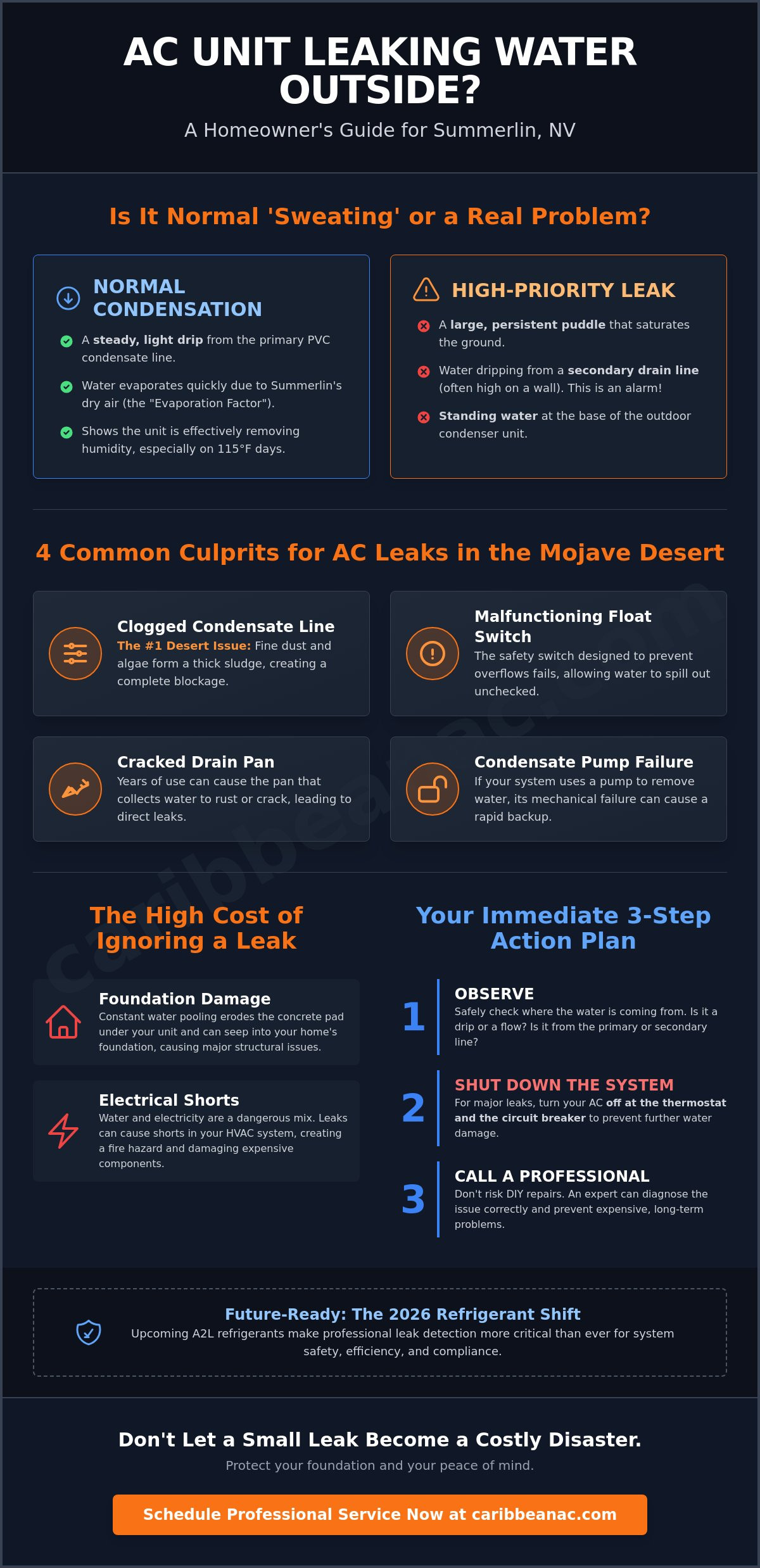
In a healthy system, this moisture collects in a drain pan and exits through a primary condensate line. You should expect to see a steady, light drip from this pipe during the hottest part of the afternoon. However, the “Summerlin Evaporation Factor” is a unique local challenge. Our exceptionally dry air often causes small amounts of water to evaporate before they even hit the ground. If you notice a large, persistent puddle or water saturating your desert landscaping, your system is likely experiencing a drainage failure rather than standard operation.
To better understand this concept, watch this helpful video:
The Desert Heat Factor: Why Your AC “Sweats”
The record-breaking temperatures predicted for the 2026 summer season put immense pressure on residential condensers. When it’s 115 degrees outside and you’re requesting 72 degrees indoors, the temperature differential is extreme. This high workload forces the system to pull massive amounts of moisture from the air to maintain your set point. A high-efficiency system in Clark County might produce several gallons of water a day during peak usage. While this “sweating” shows the unit is working, the water must stay contained within the designated drainage path.
When to Worry: Signs of an Active Drainage Problem
You need to act quickly if you see water dripping from a secondary drain line. These are typically located high on an exterior wall or above a window. This pipe only carries water when the primary line is completely blocked; it’s a visual alarm designed to grab your attention. Standing water at the base of your outdoor unit is another red flag. This pooling can erode the concrete pad or seep into your home’s foundation. Dealing with an ac unit leaking water outside Summerlin immediately prevents these structural issues from becoming permanent, expensive headaches.
4 Common Culprits for Exterior Water Leaks in Las Vegas Homes
Your HVAC system relies on a precise network of components to manage the gallons of water it removes from the air daily. The primary players include the drain pan, which collects the moisture, and the condensate line, the 3/4-inch PVC pipe that carries it safely away. In some installations, a condensate pump helps move this water against gravity. When any of these parts fail, you’ll likely find your ac unit leaking water outside Summerlin. While manufacturers like Carrier outline many common causes of an AC unit leaking water, the unique environmental conditions of the Mojave Desert create specific mechanical stressors that aren’t found in more humid climates.
Summerlin’s frequent high winds and fine desert silt play a significant role in these failures. Dust infiltrates your system and settles in the damp areas, leading to mechanical obstructions. Additionally, modern systems feature a safety float switch designed to shut the unit down if water backs up. If this switch malfunctions or is improperly installed, water will overflow the pan and spill onto your property or into your home’s structure. If you notice persistent puddling, it’s a clear signal to schedule professional ac maintenance to clear out these desert-specific contaminants.
Clogged Condensate Drain Lines (The #1 Desert Issue)
Desert dust is exceptionally fine and abrasive. When it enters your indoor unit and meets the moisture on the coils, it forms a “thick sludge” that settles in the drain line. Over time, algae can also grow in this damp environment, creating a complete blockage that gravity alone cannot clear. Professional technicians often use a specialized pressure-flush method to clear these stubborn obstructions without damaging the PVC. Keeping these lines clear is essential for preventing the secondary drain line from becoming an active, dripping nuisance.
Frozen Evaporator Coils and Clogged Filters
Airflow is the lifeblood of your cooling system. A dirty air filter restricts this flow, causing the temperature of the evaporator coil to drop below freezing. Ice begins to form on the coils, eventually encasing them in a block of frost. When the system finally cycles off, all that ice melts rapidly. This creates a massive water dump that often overwhelms the drain pan capacity. If your filters are clean but you still see ice, you may be dealing with a refrigerant leak. Given the 2026 regulations regarding new A2L refrigerants, these leaks require expert ac repair las vegas to ensure your system is handled safely and remains compliant with updated environmental standards.
Troubleshooting and Professional Solutions for Summerlin Homeowners
Seeing your ac unit leaking water outside Summerlin requires a calm but decisive response. While some moisture is expected in our climate, excessive pooling leads to serious risks that go beyond a simple repair. Ignoring a persistent leak can cause mold growth within your walls or even trigger electrical shorts that damage expensive control boards. Understanding how central air conditioners circulate cool air and manage moisture is the first step toward protecting your property from these preventable failures.
Immediate Steps: The 3-Point Home Inspection
You don’t need to climb onto a scorching roof or enter a 130-degree attic to perform a basic assessment. Attempting to troubleshoot in those dangerous conditions during a Las Vegas afternoon is unnecessary. Instead, use this safe, ground-level checklist to gather information:
- Step 1: Check the air filter. Pull your filter and inspect it for visible dirt or restriction. A clogged filter is the primary cause of frozen coils and subsequent water dumps.
- Step 2: Inspect the thermostat. Look for “frozen” indicators or humidity readings that seem unusually high. This suggests the system is struggling to dehumidify your home.
- Step 3: Locate the exit point. Determine if the water is exiting the primary drain line near the foundation or the secondary line above a window. Water from the secondary line is a major warning signal that your main drain is fully obstructed.
Why Professional Maintenance Prevents Water Damage
Preventative care is the most effective way to avoid the stress of an emergency puddle. A professional tune-up includes clearing the entire length of your condensate line and testing the safety float switches that prevent overflows. Caribbean Heating & Cooling brings deep local expertise to every service call, specifically managing the desert-specific stressors that affect Summerlin homes. We ensure your system is prepared for the 2026 heatwaves and compliant with the latest efficiency standards. Don’t let a minor drip turn into a major restoration project. Contact Caribbean Heating & Cooling for 24/7 AC repair in Summerlin to restore your comfort and protect your home today.
Secure Your Comfort and Protect Your Summerlin Property
You now have the knowledge to distinguish between harmless desert condensation and a mechanical failure that threatens your home’s foundation. While a light afternoon drip is a sign of a hard-working system, persistent puddling or water exiting a secondary drain line demands a quick response. Addressing these warning signs early prevents the mold growth and electrical issues that often follow a neglected leak. Staying proactive is especially important as we navigate the 2026 transition to new refrigerant standards and higher efficiency requirements.
If you’re worried about your ac unit leaking water outside Summerlin, our team is ready to help. Caribbean Heating & Cooling has been family-owned and licensed since 2018, offering specialized expertise in high-heat desert HVAC systems. We provide 24/7 emergency residential support to keep your family safe and cool, regardless of the temperature outside. Schedule Your Summerlin AC Diagnostic Now to ensure your system is operating at peak performance. We’re proud to be your local partner in maintaining a dependable, worry-free home environment.
Frequently Asked Questions
Is it normal for my AC to drip water outside in the Summerlin heat?
It is perfectly normal to see a light, steady drip from your primary condensate line during the peak of a Summerlin afternoon. This moisture is the result of your system’s evaporator coil pulling humidity from the indoor air to lower the temperature. Because our desert air is exceptionally dry, you might not see much water during the morning, but a small puddle near the drain pipe by late afternoon is typical for a healthy unit.
Where is the AC condensate drain line located on most Las Vegas homes?
Most residential properties in the Las Vegas valley feature two distinct drain locations. The primary drain line is typically a 3/4-inch PVC pipe that exits the home near the outdoor condenser unit or foundation. The secondary drain line, which serves as an emergency overflow, is often positioned high on an exterior wall, frequently above a bathroom window or a patio door, to ensure you notice any unusual dripping immediately.
Why is water dripping from the pipe above my window?
Water dripping from the pipe above your window is a clear warning that your primary condensate line is completely blocked. This secondary line only carries water when the main drain pan is overflowing. If you see an ac unit leaking water outside Summerlin from this high-visibility location, it’s a priority situation that requires professional attention to prevent water from backing up into your ceiling or walls.
Can a dirty air filter cause my AC unit to leak water outside?
A clogged air filter is a leading cause of exterior water leaks. When airflow is restricted, the evaporator coil can drop below freezing, causing a layer of ice to build up on the system. Once the unit cycles off or the ice becomes too heavy, it thaws rapidly and produces a volume of water that overwhelms the drain pan. Replacing your filters every 30 to 90 days is the easiest way to prevent this cycle.
What should I do if I see a large puddle around my outdoor AC unit?
You should immediately turn off your cooling system at the thermostat to prevent further water production. Check your air filter for clogs and look for signs of ice on the copper refrigerant lines. If the puddle is persistent or accompanied by unusual noises, contact a licensed technician to inspect the drain pan and condensate pump for mechanical failures before the moisture damages your home’s foundation or concrete pad.
How much water should an AC unit drain per day in the desert?
While Summerlin is known for its arid climate, a high-efficiency air conditioner can still produce between 5 and 20 gallons of water per day during the hottest summer months. The exact amount depends on the indoor humidity levels and how long your system runs. If your unit seems to be producing significantly more water than usual without a change in weather, it may indicate a drainage obstruction or a refrigerant issue.

Related Posts
Comments (0)