
Al comparar los costos y beneficios del purificador de aire con luz UV para HVAC, la primera pregunta es en qué parte del sistema debe actuar. Una...
HVAC Las Vegas: The Ultimate Homeowner’s FAQ for Desert Comfort (2026)
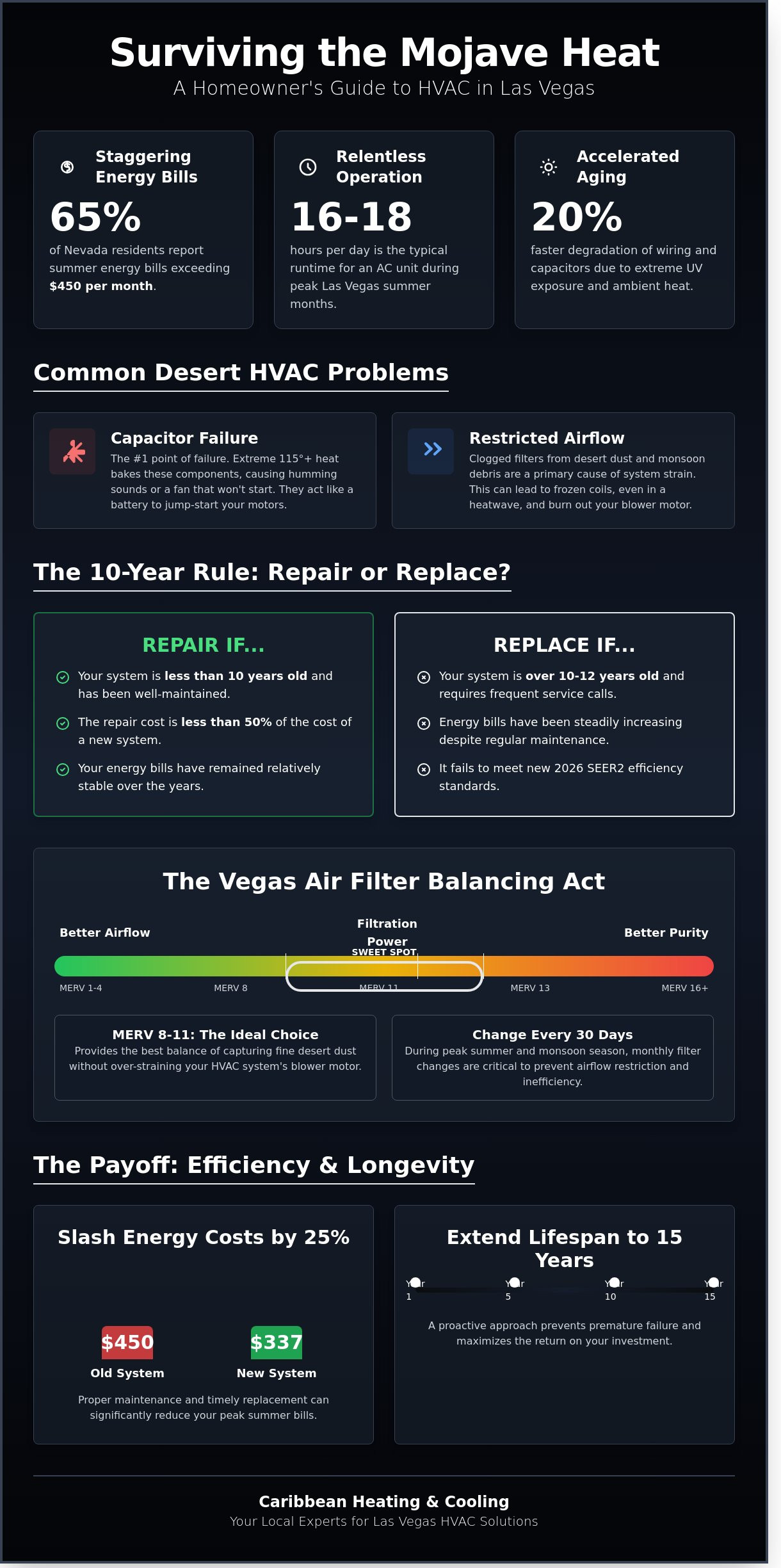
In 2025, nearly 65% of Nevada residents reported that their monthly energy bills exceeded $450 during the peak summer months. This staggering figure highlights the reality of maintaining a functional hvac las vegas system in the unforgiving Mojave Desert. You already know that living in the valley means your air conditioner isn’t a luxury; it’s a critical lifeline that fights against 110 degree heat and relentless dust every single day. It’s stressful to worry about a sudden breakdown when the mercury rises, but you don’t have to face the heat alone.
We’ve compiled expert answers to help you slash those monthly costs by up to 25%, extend your system’s lifespan to a full 15 years, and keep your indoor air free from the fine desert particulates that trigger seasonal allergies. Our team understands the unique environmental pressures of our local climate and the importance of reliable performance. This guide breaks down the latest 2026 SEER2 standards, NV Energy rebates, and the preventative maintenance schedules you need to stay cool and comfortable all year long.
Key Takeaways
- Understand why extreme Mojave heat causes specific electrical failures and how to protect your outdoor unit from seasonal monsoon debris.
- Master the “10-Year Rule” to determine if repairing or replacing your hvac las vegas system is the most cost-effective path to long-term reliability.
- Discover the reality of indoor humidity in the desert and how to implement smart climate controls for a healthier, more comfortable home environment.
- Learn how to properly vet local contractors and identify the red flags that signal a “fly-by-night” operation during peak summer demand.
The Essentials of HVAC in Las Vegas: Why the Desert Changes Everything
Most homeowners think of HVAC (Heating, Ventilation, and Air Conditioning) as a luxury. In the Mojave Desert, it’s a critical safety utility. When temperatures hit 115 degrees in July, your system isn’t just blowing cold air. It’s performing a complex mechanical process known as heat extraction. This involves moving thermal energy from inside your living room to the outdoors, a task that becomes significantly harder as the mercury rises. While a standard unit in the Midwest might run for 8 hours a day, a system providing hvac las vegas services often works for 16 to 18 hours during peak summer months.
Local geography dictates how hard your equipment must work. If you live in the Summerlin foothills at an elevation of 3,500 feet, your unit faces higher UV exposure that degrades capacitors and wiring 20% faster than homes on the valley floor. Conversely, homes in the North Las Vegas basin deal with higher concentrations of dust and trapped heat. These environmental factors mean your system requires a specific calibration that standard national manuals don’t cover. We focus on these local variables to ensure your equipment survives the 50 degree temperature swings common in our desert environment.
The Role of Your AC in the Nevada Climate
Your air conditioner relies on the evaporation of refrigerant to absorb heat. In our typical 15% humidity, this process is incredibly efficient, but it places a heavy burden on the compressor. Many residents make the mistake of installing oversized units, thinking more power equals more cooling. An oversized system will short cycle, meaning it turns on and off too frequently. This prevents the system from reaching its optimal operating pressure and increases your energy bills by up to 25% while shortening the equipment’s lifespan by five years.
Residential vs. Commercial HVAC: Why Specialization Matters
Residential systems in Henderson and Summerlin are typically split systems, meaning they have an indoor coil and an outdoor condenser. This is fundamentally different from the massive package units found on commercial buildings on the Strip. Residential technicians understand the nuances of home ductwork and indoor air quality that commercial “jack of all trades” contractors often overlook. We prioritize residential hvac las vegas expertise because your home requires a personal touch. Specialized care ensures your family stays comfortable without the industrial overhead or generalized solutions that don’t fit a standard three bedroom floor plan.
Common HVAC Problems in the Nevada Desert: A Homeowner’s FAQ
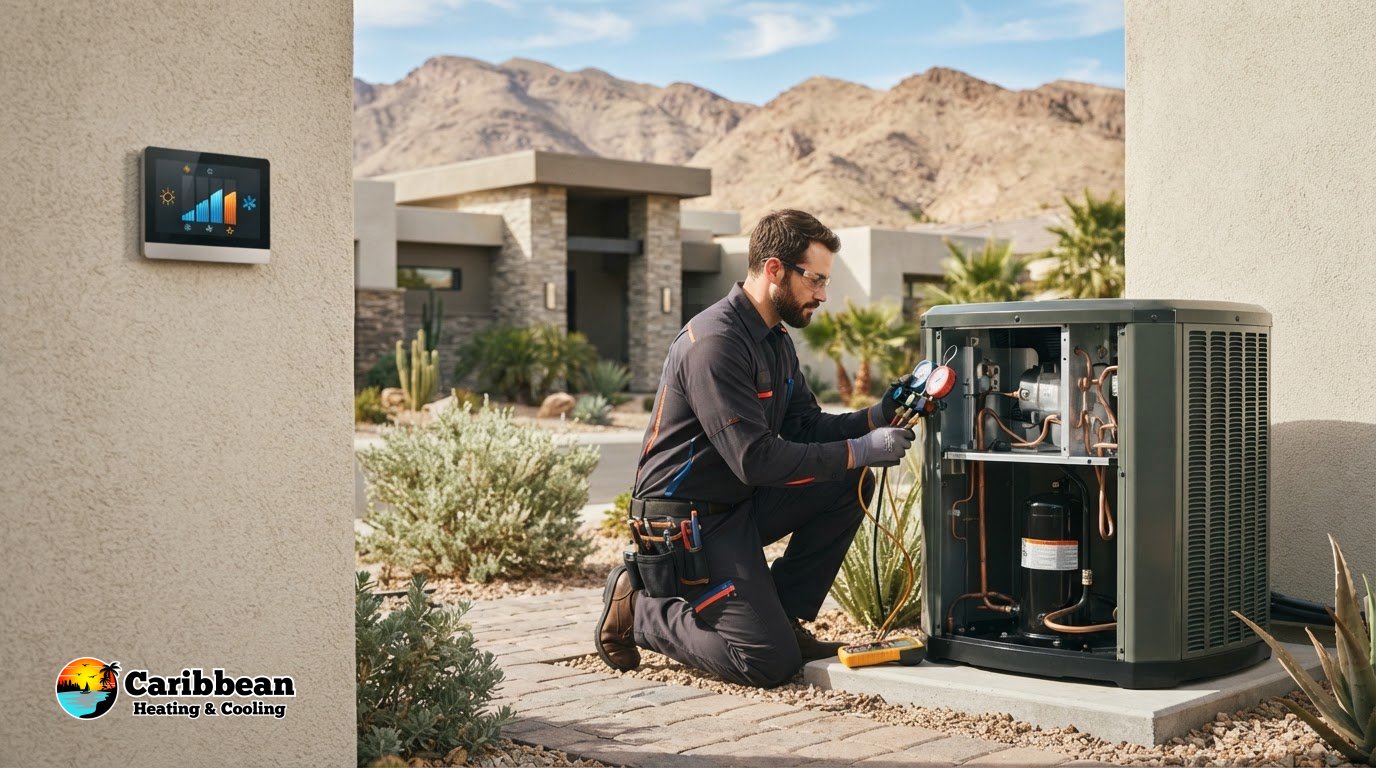
Living in the Mojave Desert means your air conditioning system works harder than almost anywhere else in the country. The intense heat is the primary cause of system breakdowns, often leading to electrical component failure. When outdoor temperatures hit 110 degrees, internal cabinet components can reach 145 degrees, causing wiring to become brittle and connections to loosen. If you hear a persistent clicking or buzzing, it’s usually a sign of a failing contactor or a motor struggling to start. Another common paradox is finding ice on your unit during a heatwave. Frozen coils typically result from restricted airflow or low refrigerant levels, forcing the system to work until it literally chokes on its own cold air. This creates a cycle where the unit runs constantly but fails to lower the indoor temperature.
Dust, Wind, and Air Filtration
The “Vegas Dust” factor is a constant battle for your hvac las vegas system. During the July and August monsoon season, wind-blown silt and debris coat your outdoor condenser coils, which can reduce heat transfer efficiency by as much as 20 percent. You should change your indoor filters every 30 days during peak summer months to prevent debris buildup. For most homes in the valley, a MERV 8 to MERV 11 filter provides the ideal balance between air purity and system longevity. Filters with MERV ratings above 13 can actually strain your blower motor by restricting airflow too much in older systems. Following basic homeowner maintenance tips ensures your motor doesn’t burn out prematurely under the desert sun.
Extreme Heat and Capacitor Failures
Capacitors act like short-term batteries that give your motor the “push” it needs to start. They’re the most frequent point of failure in Southern Nevada because they’re extremely sensitive to the 115-degree ambient temperatures that bake the electrical cabinet. A failing capacitor often presents as a faint humming sound or a fan that spins slowly. If you notice your vents blowing warm air or the outdoor unit failing to kick on, it’s likely a capacitor or contactor issue. Because these failures often happen during record-breaking heatwaves, having access to reliable emergency repair services is essential for your family’s safety. Our team prioritizes these urgent calls to restore your peace of mind before your home’s internal temperature becomes dangerous.
- Clicking noises: Often indicates a failing relay or electrical contactor.
- Buzzing sounds: Usually points to a failing fan motor or capacitor.
- Frozen coils: Often caused by a dirty filter or a leak in the refrigerant line.
- Frequent cycling: Can be a sign of an oversized unit or a malfunctioning thermostat.
Maintenance vs. Replacement: Making the Right Call for Your Vegas Home
In the Mojave Desert, your air conditioner works harder in three months than systems in other states do all year. While the national average lifespan for a unit is 15 years, the reality for hvac las vegas systems is often closer to 10. This “10-Year Rule” reflects the extreme thermal stress of 115-degree summers that degrades capacitors, fan motors, and compressor coils at an accelerated rate. If your unit is approaching its tenth birthday, the cost of inefficiency often outweighs the cost of a monthly payment on a new system.
By 2026, energy efficiency is no longer just a preference; it is a mandate. New SEER2 regulations have raised the floor for performance, and we strictly adhere to ASHRAE standards to ensure every installation meets these rigorous environmental benchmarks. You’ll know your unit is a “money pit” if you experience these three warning signs: recurring refrigerant leaks, a 20% spike in utility bills compared to the previous year, or any repair estimate exceeding $1,200 on an out-of-warranty system.
Evaluating the ROI of a New AC Installation
Upgrading from an older SEER 14 unit to a modern SEER 18+ system can slash your monthly cooling costs by 25% to 35%. In the Las Vegas Valley, homeowners can often leverage utility rebates from NV Energy to offset initial costs by several hundred dollars. A new ac installation also provides a 10-year manufacturer warranty. This protection is vital in Henderson’s high-heat environment, where a single failed compressor can cost $2,500 or more out of pocket.
The Importance of Regular Tune-Ups
Preventing a “July Breakdown” starts with a professional rejuvenation in the spring. This process includes chemically cleaning the condenser coils, tightening all electrical connections, and verifying the exact refrigerant charge. A system that is just 10% low on Freon can see a 20% drop in efficiency. Learn more about our comprehensive AC maintenance plans to ensure your hvac las vegas equipment remains a reliable asset rather than a liability. Regular service is the only way to catch small capacitor issues before they turn into total system failures during a record-breaking heatwave. For homeowners with heat pump systems, understanding the difference between heat pump service maintenance and repair approaches is crucial for maximizing efficiency and preventing costly breakdowns in the extreme desert climate.
The principle of expert calibration to handle extreme heat applies to more than just home systems. Many residents find their vehicles also require specialized performance tuning to cope with the demanding desert climate. For those interested in enhancing their vehicle’s efficiency and power, you can click here to explore remote tuning options.
Optimizing Indoor Comfort: Air Quality and Smart Climate Control
Living in the Mojave Desert means your hvac las vegas system does more than just cool the air. It acts as your home’s primary defense against fine particulate matter. Dust levels in the Las Vegas valley often exceed 50 micrograms per cubic meter during seasonal wind events. This debris settles in your ducts and lungs if your filtration isn’t up to the task. Reliable comfort requires a multi-layered approach to filtration and humidity management to ensure your home remains a sanctuary.
Many homeowners believe desert air is always too dry, but indoor humidity should ideally stay between 30% and 50%. If levels drop below 20%, you’ll deal with dry skin and respiratory irritation. Conversely, poorly ventilated bathrooms in airtight Summerlin homes can trap moisture, which leads to localized mold issues. Balancing these levels ensures your system doesn’t have to work overtime to compensate for poor air density.
Indoor Air Quality Solutions for Desert Living
UV lights kill 99% of biological contaminants that thrive on dark cooling coils. High-efficiency air purifiers capture pollen from local Mulberry and Olive trees, which peak in March and April. Maintaining clean air isn’t just about breathing; it’s about protection. A system clogged with desert silt works 15% harder, leading to premature motor failure. Investing in advanced indoor air quality services keeps your family healthy and your equipment running for its full 15-year lifespan.
To complement your HVAC’s air filtration, consider the impact of dust and allergens that settle deep within carpets and rugs. While based in another desert climate, the methods used by specialists like Arabian Carpet Cleaning serve as a good example of how to thoroughly remove embedded particulates for a healthier home.
Smart Thermostats for Summerlin and Henderson Homes
The “Vegas Swing” can see temperatures drop from 112°F at 4 PM to 78°F by 4 AM. Smart thermostats automate these adjustments with precision. Programming your system to pre-cool before NV Energy peak rates hit at 1 PM saves significant money on monthly utilities. For the 20% of residents who travel or maintain second homes in Henderson, remote monitoring provides essential peace of mind while you’re away.
Professional configuration ensures your hvac las vegas setup doesn’t “short cycle.” This saves roughly $215 annually in energy costs compared to manual settings. While DIY kits are popular, a professional install guarantees the wiring is handled correctly to avoid power failures during a July heatwave. Expert calibration matches your thermostat to the specific tonnage of your unit for maximum efficiency.
You can help your system deliver better results with these simple steps:
- Change MERV 11 filters every 60 days to prevent airflow restriction.
- Clear 2 feet of space around your outdoor condenser to ensure proper heat rejection.
- Keep blinds closed on south-facing windows to reduce the cooling load by 10%.
- Ensure your windows are properly sealed and insulated, as this is one of the biggest sources of heat gain. If you’re considering an upgrade, you can find out more about energy-efficient options.
Ready to breathe easier and lower your monthly bills? Schedule an indoor air quality assessment with our expert team today.
Choosing the Right HVAC Contractor in Las Vegas & Henderson
Selecting a contractor in the Mojave Desert is a decision that impacts your home’s safety and your monthly utility bills. Nevada law requires specific HVAC licensing for any project exceeding $1,000, and for good reason. Technicians with Nevada-specific experience understand how 115 degree summer peaks affect system head pressure and refrigerant cycles. A contractor from a milder climate might not realize that a system running 20 hours a day requires different lubrication and cooling parameters than one in the Midwest.
During a July heatwave, “fly-by-night” operators often flood the local market. These unlicensed individuals frequently lack a permanent physical address in the valley and often demand cash payments upfront. This is a major red flag. If a component fails under their “warranty” two weeks later, these operators are usually impossible to find. Always verify a contractor’s license through the Nevada State Contractors Board website before they touch your equipment. Reliable hvac las vegas professionals provide written estimates and carry full liability insurance to protect your property.
Choosing a company with a residential-only focus provides a distinct advantage for homeowners. Technicians at these firms don’t spend their mornings on massive industrial chillers at a casino only to rush to your home in the afternoon. They specialize in the specific ductwork configurations and split systems found in local neighborhoods like Summerlin and Green Valley. This specialization leads to more accurate diagnostics and faster repair times. To better understand the full scope of services that qualified HVAC contractors in Las Vegas provide, from diagnostics and refrigerant management to system installations and emergency response, reviewing a detailed breakdown of their roles can help you ask the right questions. Henderson homeowners can benefit from reviewing a dedicated HVAC Henderson NV contractor checklist to ensure they’re asking the right questions before hiring any technician.
For homeowners seeking this level of dedicated service, a reputable contractor like Crome Mechanical can provide the specialized expertise needed for residential systems.
What to Look for in a 24/7 Emergency Service
When your AC fails at 2:00 AM in the middle of August, every minute counts. Evaluate a company based on these three criteria:
- Response Time: Look for providers that offer a 90 minute or less arrival window for emergencies.
- Stocked Vehicles: A “warehouse on wheels” should carry 95% of common failure parts, including capacitors, contactors, and universal fan motors, to ensure a one-visit repair.
- Upfront Pricing: Ethical companies disclose their diagnostic fees immediately. Avoid any contractor who won’t quote a flat rate for the service call before arriving at your door.
The Caribbean Difference: Your Residential HVAC Experts
Since 2018, Caribbean Heating & Cooling has operated as a family-owned business dedicated to the Las Vegas community. We made a strategic choice to avoid commercial contracts and duct cleaning services. This allows our team to focus 100% of our training and resources on residential core comfort. We believe your home deserves a specialist, not a generalist. Our technicians maintain a 4.8-star service standard by treating every call with the urgency a desert summer demands. If your system is blowing warm air or making unusual noises, contact us for 24/7 residential AC repair in Las Vegas to restore your peace of mind.
Secure Your Desert Comfort for 2026 and Beyond
Living in the Mojave means your AC isn’t just a luxury; it’s a lifeline. We’ve explored how scheduling bi-annual inspections can prevent 80% of mechanical failures during 115-degree heat waves. You’ve also learned that modern smart thermostats and SEER2-rated systems often reduce monthly cooling costs by 25% or more. Choosing the right partner for hvac las vegas ensures these technical benefits translate into daily reliability for your family.
Since 2018, our family-owned and operated team has served the valley with professional integrity. We’re fully licensed and insured, providing 24/7 emergency residential support so you’re never left stranded in the heat. Schedule Your Residential HVAC Service with Caribbean Heating & Cooling Today to protect your home’s most vital system. You can breathe easy knowing your indoor air quality and comfort are in expert hands. We look forward to keeping your Las Vegas home cool and comfortable for years to come.
Frequently Asked Questions
How much does a new HVAC system cost in Las Vegas in 2026?
A new HVAC system in Las Vegas typically costs between $8,500 and $17,500 including professional installation in 2026. This price range reflects the 4.5% annual increase in equipment costs and the shift toward high-efficiency SEER2 compliant units. Your total investment depends on your home’s square footage and whether you choose a standard single-stage unit or a premium variable-speed system designed for extreme desert heat. Homeowners who want to make the most informed decision possible should review a comprehensive ac installation guide for Las Vegas homeowners that covers SEER2 standards, NV Energy rebates, and how to choose the right system size for your home.
Is it worth repairing a 12-year-old AC unit in Nevada?
Repairing a 12-year-old AC unit is rarely cost-effective because most systems in the Mojave Desert reach the end of their functional life by year 14. If a repair quote exceeds $1,200 or 50% of the unit’s remaining value, replacement is the smarter financial move. Modern units installed today are 30% more efficient than those manufactured in 2014, which helps offset the cost through lower monthly utility bills.
Why is my AC running constantly but the house isn’t getting cold?
Your AC is likely running constantly due to a restricted air filter or a refrigerant leak that has reduced cooling capacity by 20% or more. In the dusty hvac las vegas environment, dirt buildup on the evaporator coils prevents the system from absorbing heat effectively. You should check your filter immediately. If the problem persists, a technician needs to inspect the compressor and ductwork for leaks or mechanical failure.
How often should I service my HVAC system in the Las Vegas desert?
You should schedule professional maintenance twice a year, specifically in March before the summer surge and in October before the winter chill. Desert homes accumulate 25% more dust than average, which can lead to premature motor failure if not cleaned regularly. These bi-annual tune-ups prevent 85% of emergency breakdowns during July heatwaves when outdoor temperatures frequently exceed 110 degrees Fahrenheit. Following a structured ac maintenance checklist designed for Las Vegas homeowners ensures you cover every critical inspection point before the summer heat arrives.
What is the best SEER rating for a home in Henderson or Summerlin?
The best SEER2 rating for homes in Henderson or Summerlin is 18 or higher to maximize energy savings and indoor comfort. While the current federal minimum is 14.3 SEER2, upgrading to an 18 SEER2 model can reduce your cooling costs by approximately 28% each year. These high-efficiency systems are specifically engineered to handle the intense 45-degree temperature swings common in the higher elevations of the Vegas valley.
Does Caribbean Heating & Cooling offer 24/7 emergency repairs for residents?
Yes, Caribbean Heating & Cooling provides 24/7 emergency repair services to ensure no resident is left without cooling during a dangerous heatwave. Our technicians typically arrive within 90 minutes of your call to diagnose and resolve critical system failures. We prioritize emergency calls because we know that a broken air conditioner in the desert is a serious safety concern for families and seniors.
Can a smart thermostat really lower my Las Vegas power bill?
A smart thermostat can lower your hvac las vegas power bill by 10% to 15% by automatically adjusting temperatures when you aren’t home. These devices use geofencing technology to shift your cooling setpoint by 7 degrees while you’re at work, preventing unnecessary energy consumption. Most Henderson and Summerlin residents see a full return on their investment within the first 12 months of use through reduced NV Energy charges.
What are the signs that my furnace needs repair before the Vegas winter?
You should watch for a yellow pilot light or unusual scraping sounds which indicate your furnace needs professional attention before the January freeze. A healthy burner flame should always be blue. If your heating bill has increased by more than 20% compared to last year, your system is likely struggling with a cracked heat exchanger or a failing blower motor that requires immediate repair to ensure safety. Homeowners who want to stay ahead of cold-weather failures can benefit from reviewing a comprehensive guide to heater repair in Las Vegas that covers desert-specific furnace diagnostics and carbon monoxide safety.

Related Posts
[…] If you’re curious about how these ratings specifically apply to our local climate, see our HVAC Las Vegas FAQ. Investing in efficiency now protects your wallet against rising energy rates in the future. Before […]
[…] because we live here too. If you have more questions about your system’s operation, visit our HVAC Las Vegas FAQ for detailed […]
[…] real-time grid conditions. This level of technical sophistication is a vital component of reliable HVAC Las Vegas solutions, ensuring your home remains a sanctuary without wasting […]
[…] before a total failure occurs. For more detailed answers on maintaining desert comfort, explore our HVAC Las Vegas: The Ultimate Homeowner’s FAQ. Professional diagnostics ensure you only spend what’s necessary to keep your home […]
[…] Homeowners in our community often find that the initial average cost of heat pump installation Summerlin providers quote is significantly reduced by strategic incentives. NV Energy’s PowerShift program currently offers rebates between $510 and $3,400 for qualifying high-efficiency systems. While you can claim up to $2,000 back through the federal Energy Efficient Home Improvement Credit, you should also monitor the upcoming HEAR program. Although it hasn’t launched in Nevada as of early 2026, it is expected to provide up to $8,000 for income-eligible households. By combining these rebates with flexible financing, your monthly energy savings can effectively offset the cost of a loan. You can explore more about system performance in our HVAC Las Vegas FAQ. […]
[…] find more details on managing these unique environmental demands in our comprehensive resource on HVAC Las Vegas comfort […]
[…] hvac las vegas professionals provide the technical documentation Henderson realtors require to close deals […]
[…] To understand how localized units integrate with broader home comfort systems, explore our full hvac las vegas […]
[…] Ask which systems are compatible with your home’s equipment and what the proposed installation includes. Clarify how the system operates, how to handle filter replacement, and what routine upkeep to expect. For broader context on residential HVAC considerations in the area, read the Las Vegas HVAC homeowner FAQ. […]
[…] For helpful background on home heating and other equipment, visit the Las Vegas HVAC homeowner FAQ. […]