
Al comparar los costos y beneficios del purificador de aire con luz UV para HVAC, la primera pregunta es en qué parte del sistema debe actuar. Una...
AC Not Blowing Cold Air in Las Vegas? 5 Common Causes and Fixes
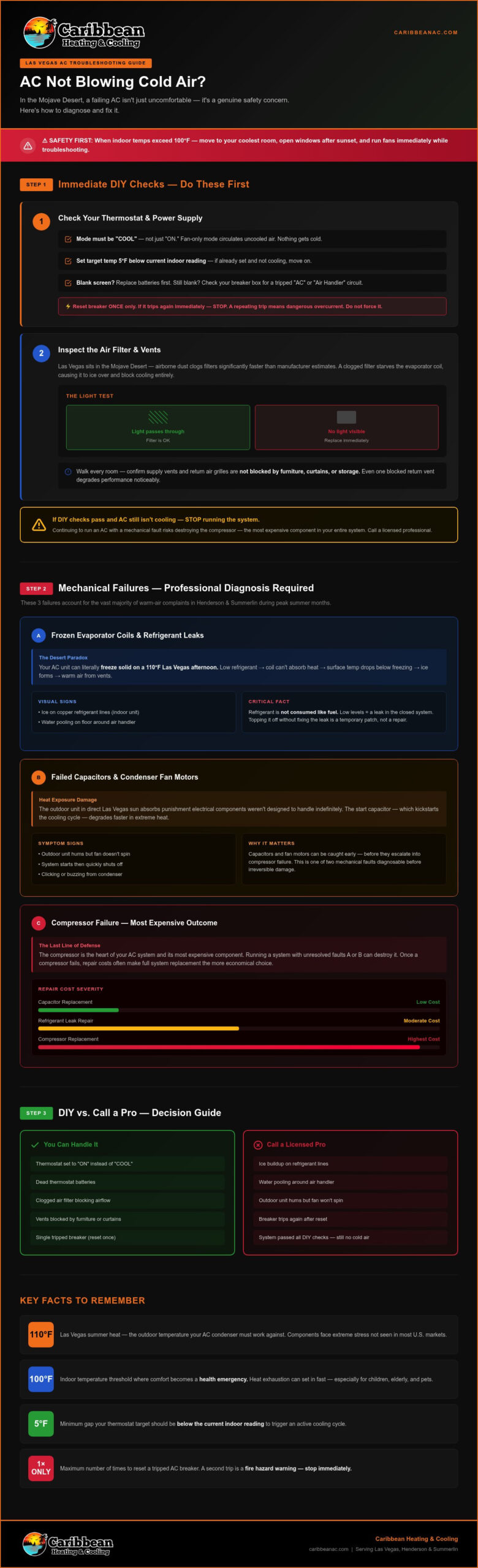
Step outside in Las Vegas during summer and the heat hits you like a wall. Now imagine walking back inside and feeling almost the same thing. If your AC not blowing cold air in Las Vegas is your reality right now, you already know this isn’t a minor inconvenience. In the Mojave Desert, a failing air conditioner isn’t just uncomfortable; it’s a genuine safety concern.
You’re probably wondering the same thing most homeowners ask first: why is the unit running at all if the air coming through the vents isn’t cold? It’s a fair question, and the answer is almost never “your system is completely broken.” More often, something specific and identifiable has pushed your AC past its operating threshold, and some of those causes are ones you can check yourself right now.
This article walks you through the five most common reasons your AC is running without cooling your home, which quick checks you can do before calling anyone, and how to know when it’s time to bring in a licensed professional. Let’s get your home cool again.
Key Takeaways
- If your AC not blowing cold air in Las Vegas is your current reality, there are several quick DIY checks you can run right now before spending a dollar on repairs.
- In Nevada’s extreme heat, a struggling AC isn’t just an inconvenience — indoor temperatures can become dangerous fast, and knowing when to act is critical.
- The most common mechanical failures behind warm air from a running system are specific and diagnosable, and two of the three can be caught early before they escalate into compressor damage.
- Continuing to run a failing AC past a certain point can destroy the most expensive component in your system — this article tells you exactly when to shut it down and call for help.
- Not all AC problems require emergency service, but some absolutely do — you’ll know which category yours falls into by the time you finish reading.
Immediate DIY Steps When Your AC Stops Cooling
Let’s be direct: when indoor temperatures climb past 100°F in Las Vegas, this stops being a comfort issue and becomes a health risk. Heat exhaustion can set in faster than most people expect, especially for children, elderly residents, and pets. Before you do anything else, move to the coolest room in the house, open windows after sunset if outdoor temps allow, and run any fans you have. Then work through the checks below in order.
Check Your Thermostat and Power Supply
Start here. It sounds basic, but the thermostat is responsible for more service calls than most homeowners realize. Confirm three things immediately:
- Mode setting: The thermostat must be set to “Cool,” not just “On.” When the fan is set to “On” without a cooling mode active, it circulates uncooled air through your vents. The system runs, air moves, but nothing gets cold.
- Temperature setting: Set the target temperature at least 5 degrees below the current indoor reading. If it’s already there and the system still isn’t cooling, move on.
- Blank or unresponsive screen: This usually means dead batteries or a tripped breaker, not a failed system. Replace the batteries first. If the screen stays blank, check your electrical panel.
Inspect the Air Filter and Vents
Desert dust is relentless here. Las Vegas sits in the Mojave, and airborne particulate levels mean your filter clogs significantly faster than the national average suggests on the packaging. A severely clogged filter doesn’t just reduce airflow; it starves the evaporator coil of warm air, which can cause it to ice over and block cooling entirely.
Pull your filter out and hold it up to a light source. If you can’t see light through it, replace it now. While you’re at it, walk through every room and confirm that supply vents and return air grilles aren’t blocked by furniture, curtains, or storage boxes. Even one blocked return vent can create enough pressure imbalance to degrade system performance noticeably. For a complete prevention plan, the AC maintenance guide for Las Vegas homeowners covers seasonal filter schedules and vent checks in detail.
If you’ve completed both checks and your AC not blowing cold air in Las Vegas is still the situation, the problem is mechanical. That’s when DIY stops and professional diagnosis begins. Running a system with an underlying mechanical fault risks damaging the compressor, which is the most expensive component in the entire unit. Shut it down and call for help.
Mechanical Reasons Your AC Is Blowing Warm Air
You’ve checked the thermostat, replaced the filter, and confirmed your breakers are holding. Your AC not blowing cold air in Las Vegas still hasn’t resolved itself. At this point, the problem lives inside the mechanical system, and that’s where DIY ends and professional diagnosis begins. Continuing to run the unit without understanding what’s wrong risks destroying the compressor, which is the single most expensive component in your entire system.
In Henderson and Summerlin, three mechanical failures account for the vast majority of warm-air complaints during peak summer months. Here’s what each one looks like and why it happens.
Frozen Evaporator Coils and Refrigerant Leaks
There’s a real irony in this one: your AC unit can literally freeze over on a 110°F Las Vegas afternoon. When refrigerant levels drop too low, the evaporator coil can’t absorb heat properly. Its surface temperature falls below freezing, moisture in the air crystallizes on the coil, and the whole thing ices over. The result is warm air from your vents because the coil is now insulated by ice instead of doing its job.
Check the copper refrigerant lines running into your indoor unit. Ice buildup on those lines, or water pooling on the floor around the air handler, are both visual signs that this is your problem. One thing worth understanding: refrigerant isn’t consumed like fuel. It doesn’t get “used up” over time. If your levels are low, it means there’s a leak somewhere in the closed system. Topping it off without finding and sealing that leak is a temporary fix, not a repair.
Failed Capacitors and Condenser Fan Motors
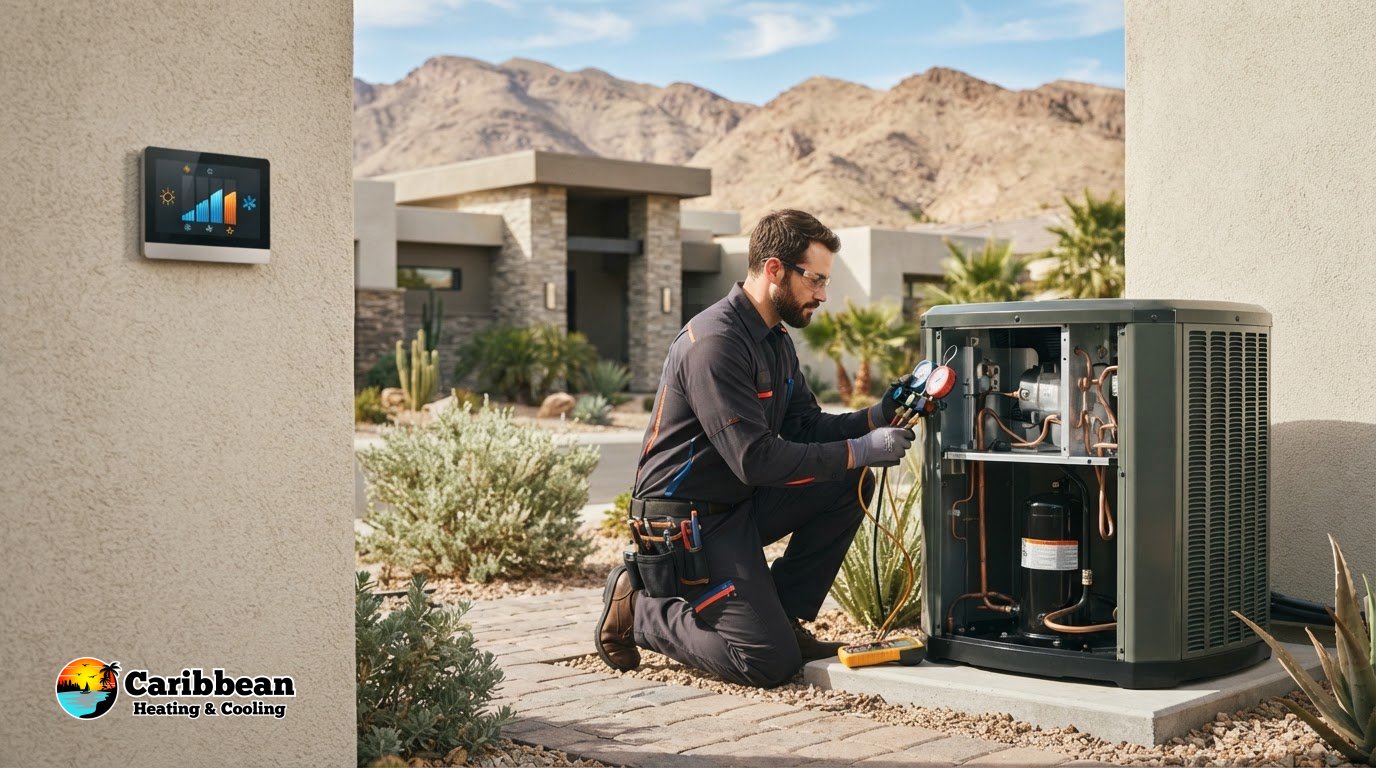
The outdoor unit sitting in direct Las Vegas sun routinely absorbs punishment that electrical components simply weren’t designed to handle indefinitely. While regular maintenance is key, structural improvements like those seen at acadianapatios.com can also help provide much-needed shade for your home’s exterior systems. The start capacitor, which is the component that kickstarts the cooling cycle each time your system calls for cool air, degrades faster in extreme heat. When it fails, the compressor or fan motor can’t start properly.
Pay attention to the fan on top of your outdoor condenser unit. If it’s not spinning when the system is running, heat from the refrigerant has nowhere to go. Your home can’t cool down because the outdoor unit isn’t releasing the heat it’s supposed to remove. This is a hard stop: shut the system off immediately to protect the compressor.
A failed capacitor or condenser fan motor is a repair that requires a licensed technician and the right replacement parts. If you’re seeing these symptoms, ac repair in Las Vegas from a qualified professional is the right next step before the damage compounds further.
Knowing which failure you’re dealing with matters because the fix, the urgency, and the cost are completely different for each one. An AC not blowing cold air in Las Vegas due to a failed capacitor is a faster, less expensive repair than a refrigerant leak that’s gone undetected long enough to stress the compressor. The sooner a technician can diagnose it, the better your outcome.
When to Call for Professional AC Repair in Las Vegas
You’ve reached the point where DIY checks have run out of answers. The thermostat is fine, the filter is clean, and the breaker is holding. Your AC not blowing cold air in Las Vegas is a mechanical problem, and the most important decision you’ll make right now is whether to keep running the system while you wait for help. In most cases, the right answer is to shut it off.
The Risks of Running a Malfunctioning AC
A struggling AC doesn’t fail all at once. It degrades. When a system runs with low refrigerant, a failing capacitor, or a seized fan motor, the compressor compensates by working harder than it was designed to. This creates a pattern called short-cycling, where the unit kicks on and off rapidly rather than completing full cooling cycles. Short-cycling is one of the clearest warning signs that your system is under serious mechanical stress.
Here’s why that matters financially: the compressor is the heart of your system, and it’s also the most expensive single component to replace. What starts as a relatively contained repair can compound quickly if the unit keeps running in a compromised state. Shutting the system down and waiting for a technician is the most protective thing you can do for your equipment and your budget.
Fast, Local Support for Your Home
Caribbean Heating & Cooling is a family-owned, licensed business serving Henderson, Summerlin, and the broader Las Vegas valley, and they offer 24/7 emergency residential support because desert heat doesn’t keep business hours. That local grounding matters more than it might seem. A technician who works exclusively in Nevada understands the specific strain that sustained extreme heat puts on outdoor condenser units, the accelerated wear rates on electrical components, and the parts inventory needed to fix it fast.
While you wait for your technician to arrive, take these steps:
- Turn the system off at the thermostat to stop compressor strain.
- Move to your coolest interior room and close blinds on sun-facing windows to slow heat gain.
- Run ceiling or portable fans to improve air circulation and make the space more tolerable.
- Keep hydrated and check on elderly family members or pets, who are more vulnerable to rapid heat buildup.
If your AC not blowing cold air in Las Vegas has left your home climbing toward dangerous indoor temperatures, don’t wait. Schedule your emergency AC repair with Caribbean Heating & Cooling and get a licensed local technician working on your system today.
Get Your Home Cool Again — Here’s What to Do Next
A running AC that isn’t cooling your home is a solvable problem, but the window to solve it cheaply narrows the longer the system runs under stress. The checks in this article give you a clear starting point: thermostat settings, filter condition, and breaker status are all things you can verify in minutes. When those come back clean, you’re dealing with a mechanical issue, and that’s when shutting the system down protects your compressor from compounding damage.
If AC not blowing cold air Las Vegas is still your situation after working through these steps, don’t wait it out. Caribbean Heating and Cooling is a family-owned, licensed business that has been serving Las Vegas, Henderson, and Summerlin since 2018, with 24/7 emergency residential support for exactly this kind of situation.
Your home should be a refuge from the desert heat, not another version of it. Contact Caribbean Heating and Cooling now to schedule emergency AC repair and get a local technician working on your system today.
Frequently Asked Questions About AC Not Blowing Cold Air in Las Vegas
Why is my AC running but not cooling the house?
The most common culprits are a clogged air filter restricting airflow, low refrigerant from a leak, a failed capacitor preventing the compressor from starting properly, or a thermostat set to “On” instead of “Cool.” Each of these allows the system to run while producing little to no cooling. The unit sounds normal, air moves through the vents, but the temperature in your home doesn’t drop.
The tricky part is that these causes look identical from inside the house. A technician can diagnose the actual source quickly with the right tools, which is why guessing and letting the system keep running isn’t a great strategy in Las Vegas heat.
How long can an AC unit last in the Las Vegas heat?
Most residential AC units are rated for 15 to 20 years under average conditions, but Las Vegas is not average. Sustained summer temperatures above 110°F, combined with dust and low humidity, accelerate wear on electrical components, capacitors, and condenser coils significantly. Many local homeowners find their systems need major repairs or full replacement closer to the 10 to 12 year mark, particularly if annual maintenance has been inconsistent.
The units that reach the upper end of their lifespan in this climate are almost always the ones receiving regular professional maintenance, not just reactive repairs when something breaks.
Is it safe to run my AC if it’s blowing warm air?
In most cases, no. If your AC not blowing cold air in Las Vegas is a mechanical issue, continuing to run the system forces the compressor to work under stress it wasn’t designed to handle. This can turn a manageable repair into a full compressor replacement, which is the most expensive outcome possible. Short-cycling, which is when the unit kicks on and off rapidly, is a clear signal to shut the system down immediately.
The safer move is to turn the system off at the thermostat, use fans to manage the heat, and call for professional diagnosis. Running a compromised system to stay slightly cooler while waiting for a technician often creates a much larger repair bill.
How much does a typical AC repair cost in Las Vegas?
Repair costs vary widely depending on what’s failed, and quoting a specific number here wouldn’t be accurate or fair to you as a homeowner. A capacitor replacement is a fundamentally different job than a refrigerant leak repair or a condenser fan motor swap, and each carries its own parts and labor costs. Getting a diagnosis from a licensed local technician is the only reliable way to understand what you’re actually dealing with and what it will cost to fix it.
What’s consistent across repairs is this: the sooner a problem is caught, the less it tends to cost. Components that fail quietly and go undetected long enough to stress the compressor almost always result in higher repair bills than the original issue would have required.

Related Posts
Comments (0)