
Al comparar los costos y beneficios del purificador de aire con luz UV para HVAC, la primera pregunta es en qué parte del sistema debe actuar. Una...

Air Source Heat Pump vs. Central AC: Which is Best for Las Vegas Homes in 2026?
Most homeowners think a traditional air conditioner is the only way to survive a 110-degree July, but the most efficient solution for your home might actually be a system designed for both heating and cooling. When weighing the benefits of an air source heat pump vs central ac Las Vegas residents often find that the right choice depends on balancing extreme heat with rising costs. You’ve likely felt the sting of a $400 electric bill or noticed that one bedroom stays stubbornly warm during a heatwave.
This guide settles the debate by comparing long-term performance and reliability in our unique desert environment. We’ll break down the $250 to $550 NV Energy PowerShift rebates available in 2026 and explain the impact of expired federal tax credits. You’ll discover which system offers the best path to lower utility bills and consistent home comfort.
Key Takeaways
- Learn how a dual-purpose heat pump moves thermal energy to provide both heating and cooling, unlike a traditional central AC that requires a separate furnace for winter.
- Compare the operational costs of an air source heat pump vs central ac Las Vegas to determine which system offers the best protection against rising energy rates.
- Discover how to qualify for 2026 NV Energy PowerShift rebates of up to $550 to lower your upfront installation costs.
- Assess the maintenance needs and expected lifespan of each system to ensure reliable performance during extreme 110-degree summer heatwaves.
Comparing the Mechanics: How Heat Pumps and Central AC Differ in the Desert
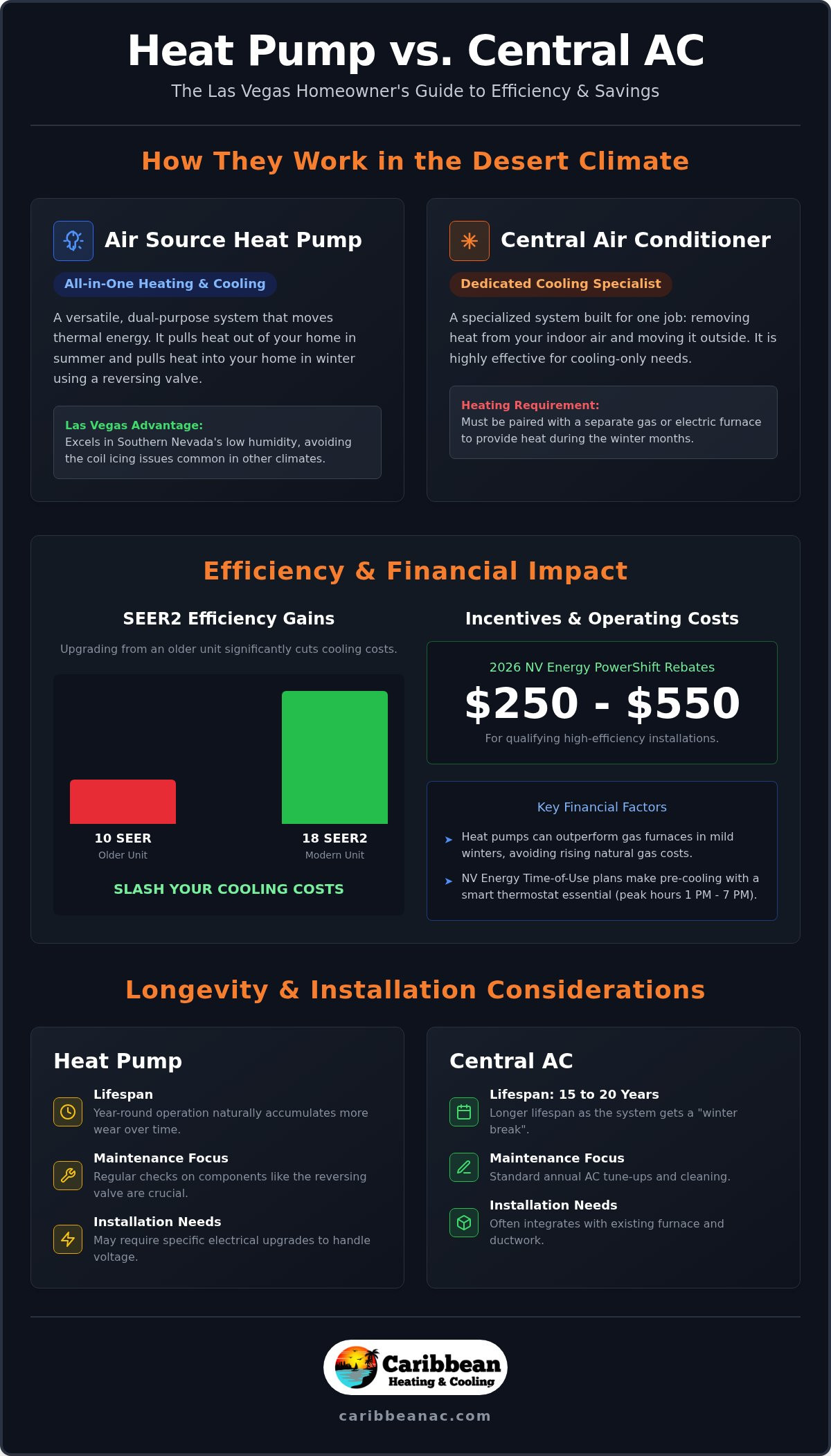
A central air conditioner is essentially a specialist. It’s built for one job: removing heat from your indoor air and moving it outside. To keep your home comfortable in the winter, this system must be paired with a separate gas or electric furnace. In contrast, an air source heat pump is a versatile, dual-purpose tool. It uses a reversing valve to change the direction of refrigerant flow, meaning it can pull heat out of your home in July and pull heat into your home in January.
This mechanical flexibility is a major factor when comparing an air source heat pump vs central ac Las Vegas homes require. Because Southern Nevada has such low humidity, we don’t deal with the coil icing issues that plague heat pumps in the humid South. This makes the technology even more dependable for our local climate. Learning How Air Source Heat Pumps Work reveals why they are becoming a preferred choice for year-round thermal management in our region.
Can a Heat Pump Truly Handle a 115°F Las Vegas Summer?
Older heat pumps sometimes struggled in extreme heat, but modern units use advanced inverter technology. This allows the system to modulate its output, running at lower speeds to maintain a steady temperature rather than constantly blasting on and off. A high-efficiency heat pump delivers the same cooling capacity as a standard central AC unit even when the thermometer hits 115°F in the middle of the afternoon.
Precision is key during the installation process. If a system is oversized for your square footage, it will short-cycle, which leads to “hot spots” and increased wear on the compressor. This often results in more frequent ac repair las vegas calls during peak summer months. A professional load calculation ensures your system stays reliable for the long haul.
Efficiency and Operational Costs: The Financial Impact on Your NV Energy Bill
Managing the financial side of an air source heat pump vs central ac Las Vegas installation requires looking closely at your monthly utility statement. NV Energy currently sets standard residential rates at $0.11622 per kWh, but summer bills can still skyrocket three to five times higher than winter costs. While a central AC typically relies on a gas furnace for heat, a heat pump uses electricity year-round. In our mild desert winters, the high efficiency of a heat pump often outperforms traditional gas furnaces, helping you avoid the rising costs of natural gas.
Peak demand pricing is another critical factor for Nevada residents. NV Energy offers Time-of-Use plans where electricity costs more between 1 PM and 7 PM during the summer. Using a smart thermostat with either system allows you to pre-cool your home before these expensive windows hit. Even though federal tax credits expired at the end of 2025, you can still secure local ROI through NV Energy PowerShift rebates. These offer between $250 and $550 for qualifying high-efficiency installations in 2026.
SEER2 Ratings and Energy Savings in Southern Nevada
SEER2 is the updated efficiency standard that accounts for the higher static pressure found in modern home ductwork. For 2026, the Southwest region has strict minimum requirements to ensure systems handle the heat without wasting power. Upgrading from an old 10 SEER unit to a modern 18 SEER2 system can slash your cooling costs by a significant margin. To keep these efficiency gains from slipping over time, following a consistent ac maintenance schedule is vital. If you’re ready to lower your monthly overhead, our team can help you select a unit that maximizes these local incentives.
Installation and Longevity: Choosing the Right System for Your Long-Term Comfort
Deciding between an air source heat pump vs central ac Las Vegas homeowners often focus on immediate cooling power. However, longevity in the Nevada sun is just as vital. A traditional central AC system usually enjoys a winter break, which can extend its lifespan to 15 or 20 years. Because a heat pump works throughout every season, it naturally accumulates more wear. This year-round operation means you might schedule ac repair las vegas more frequently to keep components like the reversing valve in top shape.
Your home’s existing infrastructure also plays a role. High-efficiency heat pumps often require specific electrical upgrades to handle the voltage. Beyond the breaker panel, your ductwork must be sized correctly to manage the specific airflow requirements of these units. A professional ac installation includes a Manual J load calculation. This ensures the system isn’t straining against restrictive vents, which is a common cause of premature failure in desert homes.
The Hybrid Approach: Is Dual Fuel the Ultimate Vegas Solution?
A hybrid system combines an electric heat pump with a natural gas furnace backup. The heat pump handles the cooling in the summer and the mild heating during our crisp fall and spring nights. When a rare desert freeze hits, the gas furnace takes over to provide high-intensity warmth without taxing the electric compressor. It’s a robust solution for those who want maximum reliability.
When evaluating an air source heat pump vs central ac Las Vegas families should consider if a hybrid setup fits their existing gas lines. If your home is already piped for gas, this dual-fuel configuration offers the best of both worlds. It allows you to switch between fuel sources based on seasonal efficiency. For homes without gas lines, a pure electric heat pump remains the most streamlined path to reliable comfort.
Securing Your Home’s Future Comfort
Choosing between an air source heat pump vs central ac Las Vegas residents often find that the best answer depends on their specific home layout and long-term energy goals. While traditional central AC systems remain powerful cooling specialists, modern heat pumps provide a versatile, all-in-one solution that excels in our low-humidity environment. Both options can significantly lower your monthly bills when paired with 2026 NV Energy rebates and a high SEER2 rating.
Since 2018, Caribbean Heating & Cooling has provided licensed, bonded, and insured service across the valley. Our expert technicians specialize in high-efficiency desert HVAC solutions and offer 24/7 emergency residential support to keep your family safe. Schedule a Free In-Home Estimate for Your New System with Caribbean Heating & Cooling to ensure your next upgrade is sized perfectly for your home. We’re here to help you stay cool and comfortable all year long.
Frequently Asked Questions
Is a heat pump more expensive to install than central AC in Las Vegas?
Installing a heat pump is often comparable to or even more affordable than a full central AC and furnace replacement. Because a heat pump handles both heating and cooling, you only purchase one primary unit instead of two separate systems. This streamlined approach can reduce initial equipment costs while providing superior year-round efficiency for your home.
Do heat pumps lose efficiency when the temperature drops below freezing in Henderson?
Modern heat pumps maintain excellent efficiency even during the occasional cold snaps we see in Henderson and Summerlin. While older models struggled below freezing, today’s inverter-driven technology allows these systems to extract heat from outside air even when it’s 30 degrees. Since Southern Nevada rarely experiences prolonged deep freezes, a heat pump remains a highly reliable choice for our local winters.
How long does a typical heat pump last in the Nevada desert climate?
A well-maintained heat pump typically lasts between 10 and 15 years in the harsh Las Vegas environment. Because these systems operate during both the summer and winter months, they accumulate more runtime than a cooling-only unit. Regular professional maintenance is essential to protect the compressor and reversing valve from the extreme temperature swings and dust common in our region.
Can I use my existing ductwork if I switch from central AC to a heat pump?
Most homeowners can utilize their existing ductwork when choosing an air source heat pump vs central ac Las Vegas upgrade. However, our technicians must perform a professional load calculation to ensure your ducts can handle the specific airflow and static pressure requirements of high-efficiency SEER2 systems. If your current vents are undersized, minor modifications may be needed to prevent system strain.
Are there specific rebates for Las Vegas homeowners who install a heat pump in 2026?
Yes, NV Energy offers PowerShift rebates ranging from $250 to $550 for qualifying high-efficiency heat pump installations in 2026. While federal tax credits for these systems expired at the end of 2025, these local utility incentives provide a great way to offset your initial investment. We recommend checking the latest PowerShift requirements before starting your project to maximize your total savings.

Related Posts
Comments (0)