
Al comparar los costos y beneficios del purificador de aire con luz UV para HVAC, la primera pregunta es en qué parte del sistema debe actuar. Una...
How Long Do HVAC Systems Last in Nevada? A 2026 Desert Homeowner’s Guide
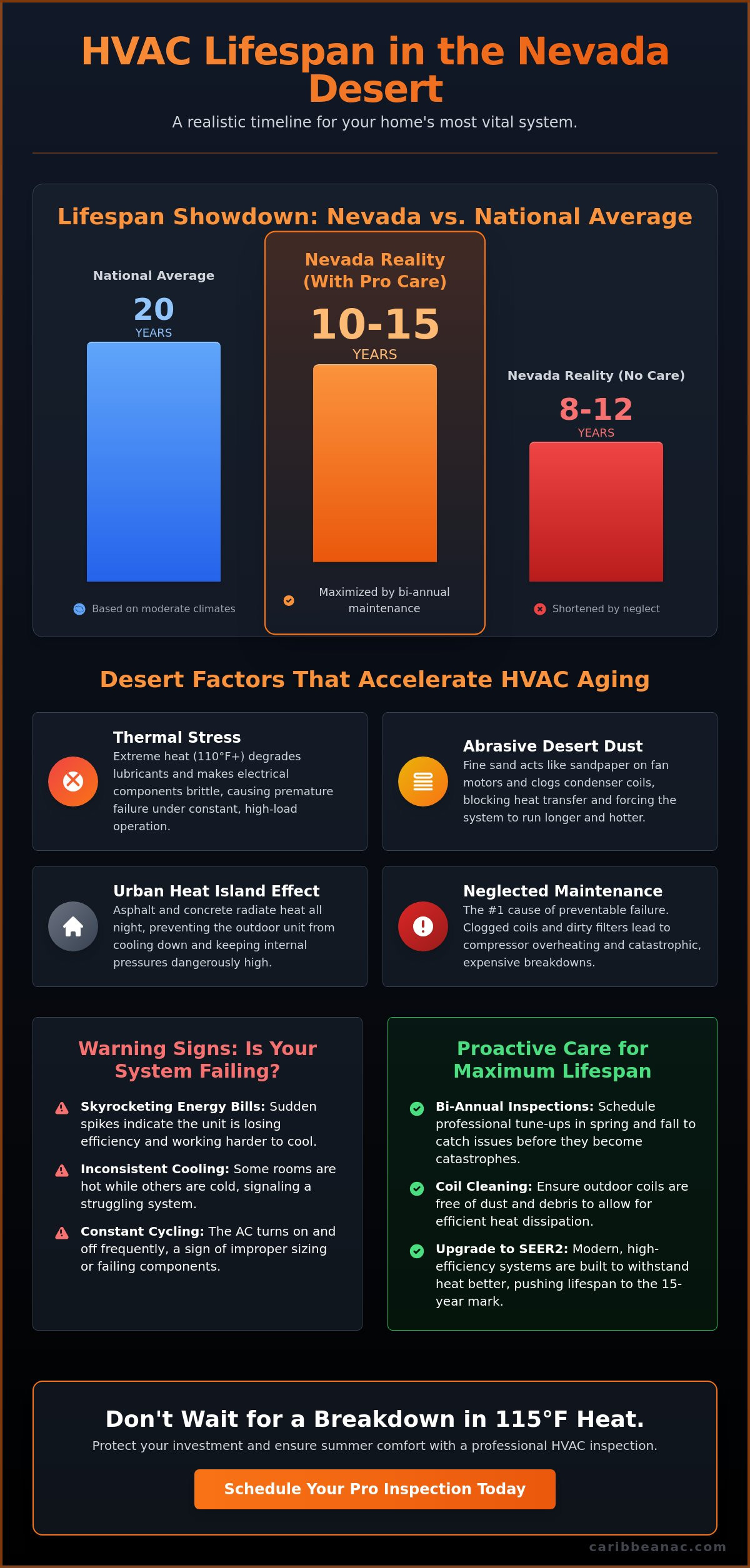
Did you know that a central air conditioner in the Silver State effectively ages much faster than one in a cooler climate? While national averages suggest your unit might reach its twentieth birthday, the reality of the desert is far more demanding. Understanding exactly how long do hvac systems last in Nevada is the first step toward avoiding a catastrophic failure when temperatures spike above 110°F. In our unique environment, most systems reach their limit between 10 and 15 years. Without professional care, that window can shrink even further to just 8 to 12 years because of the relentless thermal stress.
We understand the stress that comes with an aging unit and rising energy bills. It’s frustrating to follow standard advice that doesn’t account for our extreme heat and fine desert dust. This guide provides a realistic timeline for your equipment and actionable steps to protect your investment. You’ll discover how to delay a new installation and gain peace of mind during the peak of summer. We will explore the latest 2026 efficiency standards and local maintenance strategies that keep your home safe and comfortable.
Key Takeaways
- Learn why the local climate creates a significant lifespan penalty and discover exactly how long do hvac systems last in Nevada compared to the national average.
- Understand the impact of “thermal stress” and how extreme summer temperatures degrade sensitive electrical components and lubricants inside your outdoor unit.
- Identify how abrasive desert dust and high winds impact fan motors and condenser coils, leading to premature wear and tear without proper care.
- Discover the specific signs of a failing system, from inconsistent cooling to skyrocketing energy bills, and learn when it is more cost-effective to replace than repair.
- Master the preventive care strategies, including bi-annual professional inspections, that can add years of dependable service to your HVAC investment.
The Reality of HVAC Lifespan in the Nevada Desert
If you’re researching the durability of your home comfort equipment, you’ve likely seen manufacturers promise twenty years of service. However, those estimates rarely account for the Mojave Desert. In our region, the standard for how long do hvac systems last in Nevada typically ranges from 10 to 15 years for central air conditioners and heat pumps. While a furnace might survive for two decades because it only runs a few months a year, the cooling side of your Heating, ventilation, and air conditioning (HVAC) system faces a much harsher reality.
The primary culprit is “thermal stress.” Unlike standard wear and tear, which occurs through normal mechanical friction, thermal stress is the physical degradation caused by extreme temperature fluctuations and prolonged high-heat operation. In cities like Las Vegas, Henderson, and Summerlin, your outdoor condenser doesn’t just run; it fights. Electrical components become brittle and lubricants break down faster when exposed to triple-digit heat for eighteen hours a day. This creates a “thermal penalty” that effectively shortens the mechanical life of your unit compared to a home in a more moderate climate.
Why the ‘National Average’ Doesn’t Apply in Las Vegas
National averages are built on moderate climates where 90°F is considered a “heatwave.” In Southern Nevada, 115°F ambient temperatures are a seasonal norm. These conditions force your compressor to work at maximum capacity for months without relief. Additionally, the “Heat Island Effect” in urban Las Vegas means asphalt and concrete radiate heat long after the sun goes down. This prevents your unit from cooling off overnight, keeping internal pressures high. For a deeper look at managing these local challenges, see our guide on HVAC Las Vegas and desert-specific maintenance.
The 2026 Outlook: Modern Systems vs. Older Models
Technology has advanced significantly to meet these environmental demands. Modern units are designed with more resilient materials and advanced sensors to mitigate heat damage. SEER2 is the current efficiency standard for Nevada HVAC installations, ensuring that new systems provide better cooling output with lower energy consumption than models from 2010. While an older unit might struggle to maintain 75°F during a July afternoon, a correctly sized SEER2 system handles the load with far less internal strain. This efficiency helps push the equipment’s lifespan toward the higher end of the 15-year local average.
Factors That Accelerate HVAC Aging in Southern Nevada
The Mojave Desert presents a unique set of challenges that directly impact how long do hvac systems last in Nevada. While a typical HVAC system lifespan might reach 20 years in more temperate states, our environmental stressors accelerate mechanical aging. High ambient temperatures degrade the lubricants in your compressor and cause electrical capacitors to fail under the constant load. When these small components fail, they often take the more expensive parts with them.
Dust and wind also play a critical role. Fine desert sand is highly abrasive. It acts like sandpaper on fan motors and clogs condenser coils. When coils are caked in dust, the system cannot shed heat efficiently, forcing it to run longer and hotter than designed. During the late summer monsoon season, sudden humidity spikes add another layer of stress. Your system must work overtime to dehumidify the air, a process that consumes more energy and puts additional strain on the blower motor. In areas like Summerlin, we often see units “burn out” prematurely because they were improperly sized for the home’s heat gain, forcing them to cycle constantly without relief.
To further mitigate this heat gain, many homeowners invest in better attic protection. For example, Ray Brown Air and Heat provides blown-in insulation services that help maintain a stable indoor temperature, effectively reducing the frequency of cooling cycles.
The Silent Killer: Neglected Maintenance
Missing just one season of professional care can have a compounding effect on your equipment. Following a comprehensive AC maintenance plan is essential for survival in this climate. Clogged coils are a leading cause of compressor failure. When air can’t flow, the compressor overheats and eventually seizes. This usually results in a total system replacement that could have been avoided with a simple cleaning. Consistent care ensures you aren’t wondering how long do hvac systems last in Nevada when your unit fails in July.
Usage Patterns in North Las Vegas and Henderson
How you interact with your thermostat matters. Homeowners in North Las Vegas and Henderson often debate whether to “set it and forget it” or adjust the temperature throughout the day. Constant, drastic adjustments can overwork the system during the hottest hours. Smart thermostats help by managing the cooling load gradually, preventing the “thermal shock” of a unit trying to drop the temperature ten degrees in the middle of a 112°F afternoon. If you suspect your unit is struggling to keep up with these demands, scheduling a professional AC repair can prevent minor wear from becoming a major failure.
How to Maximize Your System’s Life and When to Replace
Protecting your home from the Mojave heat requires a proactive survival strategy. While the environmental factors are harsh, the actual answer to how long do hvac systems last in Nevada often depends on your commitment to bi-annual professional inspections. In 2026, preventive care is no longer just a recommendation; it’s a necessary step to ensure your system doesn’t fail during a record-breaking heatwave. Catching a weak capacitor or a slow refrigerant leak in April can prevent a total system seizure in July.
Watch for the warning signs that your equipment is nearing the end of its functional life. Inconsistent temperatures between rooms and grinding or squealing noises are clear indicators of mechanical fatigue. Most importantly, pay attention to your NV Energy bills. If your monthly costs are skyrocketing despite normal usage, your system is likely losing efficiency and working overtime to compensate for failing components. When these symptoms appear, you’re faced with the choice between ongoing AC repair in Las Vegas or a fresh start.
Professional Maintenance: The Caribbean Heating & Cooling Difference
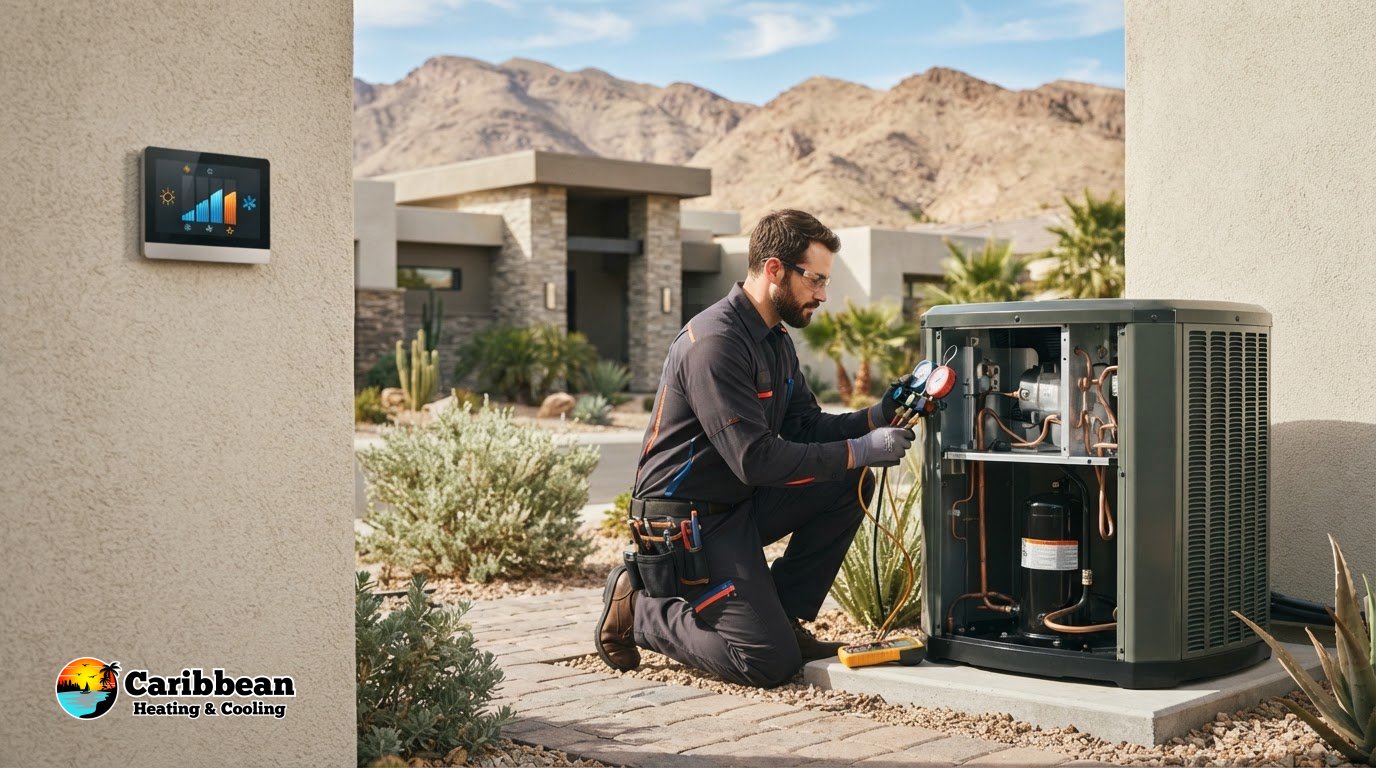
A standard tune-up isn’t enough for our specific climate. Our desert-ready service includes deep coil cleaning to remove abrasive caliche dust, precise refrigerant level verification, and rigorous capacitor testing. We understand that even the best-maintained units can face issues, which is why we provide 24/7 emergency support. This round-the-clock availability offers a critical fallback for local families, ensuring you’re never left without cooling during the dangerous summer peaks.
Knowing When to Say Goodbye to Your Old Unit
Deciding when to replace your system involves more than just looking at the calendar. While the “Age x Repair Cost” rule is a helpful baseline, 2026 inflation and rising energy rates have changed the math. If your unit is over 12 years old and requires a major component like a compressor or a condenser coil, a new AC installation is often the more financially sound decision. Modern high-efficiency systems drastically reduce monthly overhead, providing a level of dependability that an aging, patched-together unit simply cannot match.
Secure Your Home’s Comfort for the Seasons Ahead
Navigating the desert climate requires a shift in expectations for your home’s mechanical systems. While national averages are often optimistic, the reality of how long do hvac systems last in Nevada is defined by the relentless heat and abrasive dust of the Mojave. By understanding the 10 to 15-year local lifespan and identifying the signs of mechanical fatigue early, you can avoid the stress of a sudden mid-summer failure. Consistent, professional care is the only proven method to protect your investment and keep your monthly energy bills manageable.
Don’t wait for your system to struggle during a 115°F afternoon. Since 2018, our family-owned team has specialized in high-heat desert HVAC solutions designed for our unique environment. We provide the peace of mind that comes with expert maintenance and 24/7 emergency residential support. Schedule your desert-ready HVAC maintenance with Caribbean Heating & Cooling today to ensure your home remains a reliable sanctuary all year long. We are here to help you stay cool, comfortable, and confident in your home’s performance.
Frequently Asked Questions
Is 15 years too old for an AC unit in Las Vegas?
Fifteen years is considered the upper limit for an air conditioner in our demanding climate. While some units reach this milestone, most systems in Southern Nevada begin to show significant mechanical decline between 10 and 12 years. If your unit is 15 years old, it likely uses outdated refrigerant and operates at a much lower efficiency than modern SEER2 standards. Planning for a replacement now prevents a stressful emergency during a summer heatwave.
How often should I service my HVAC system in Nevada?
You should schedule professional maintenance twice a year to ensure your system survives the desert extremes. A spring visit prepares the cooling components for the 110°F summer peak, while a fall inspection ensures the heating side is safe for the winter. This bi-annual schedule is the most effective way to extend how long do hvac systems last in Nevada. Regular cleanings prevent abrasive dust from destroying sensitive fan motors and electrical connections.
Does the Nevada heat affect heat pumps differently than central AC?
Heat pumps face unique pressure because they provide both heating and cooling, meaning they run almost year-round without the off-season a furnace might enjoy. In the summer, they handle the same intense thermal stress as a central air conditioner. Because they work harder across all four seasons, heat pumps require rigorous maintenance to reach the typical 10 to 15-year local lifespan. Their reversing valves and electronic expansion valves are particularly sensitive to the intense heat.
What are the first signs that my HVAC system is failing in the desert?
The earliest indicators are often subtle, such as a slight increase in your monthly energy bill or the system cycling more frequently than usual. You might notice inconsistent temperatures between rooms or warm air blowing from the vents during the hottest part of the day. If you hear metallic banging or high-pitched squealing, these are urgent signs of mechanical failure. Addressing these issues immediately can help you maximize how long do hvac systems last in Nevada before a total breakdown occurs.

Related Posts
Comments (0)