
La marca con la calificación más alta no siempre es, de forma automática, la mejor opción para su hogar en Las Vegas. Las calificaciones pueden...

Why Your Upstairs Is Hotter Than Downstairs in Summerlin
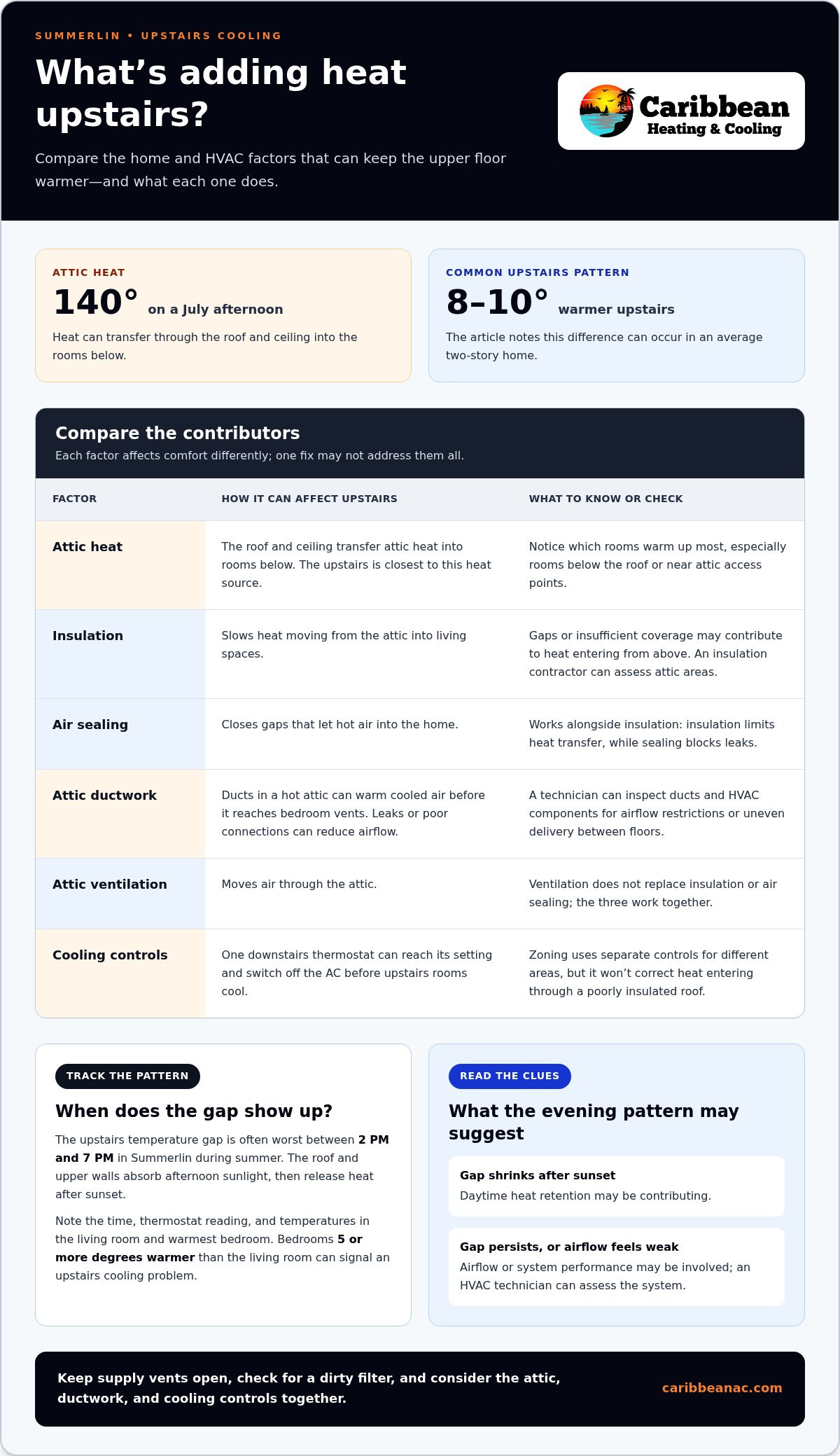
Your AC can be running, yet the upstairs can still hold onto the day’s heat. Warm air rises, the roof and sun-exposed upper walls add heat, and a downstairs thermostat may switch the system off once the lower floor reaches its setting. In an average two-story home, the upstairs can be 8 to 10 degrees warmer, which helps explain why your upstairs is so much hotter than downstairs in Summerlin.
If you notice the difference most in the afternoon or evening, you’re not imagining it. Heat can build upstairs during the day and linger after sunset, even while the AC is running.
Here’s how airflow, attic heat, and heat retention can create a temperature gap, why closing downstairs vents may not solve it, and which signs suggest an HVAC issue needs attention.
Key Takeaways
- A single downstairs thermostat can stop cooling before upstairs rooms feel comfortable; understand how the system’s control point affects both floors.
- Closing downstairs vents isn’t a reliable fix and can restrict airflow. Learn what to consider before adjusting vents or fan settings.
- Attic heat, insulation gaps, and sun exposure can add to the upstairs cooling load; spot the factors that may be contributing in your home.
- Upstairs rooms can hold onto daytime heat into the evening. Notice when the temperature gap persists and when AC maintenance or repair may help address it.
1. Will closing downstairs vents push more cold air upstairs?
Closing every downstairs vent is not a reliable way to cool upstairs. In a typical two-story Summerlin home, one downstairs thermostat controls both floors. Once the first floor reaches the set temperature, the AC may cycle off before the upstairs does. Because warm air rises, the upper floor can stay warmer. That helps explain why your upstairs is so much hotter than downstairs in Summerlin, even while the system is running.
Try a small adjustment rather than shutting vents completely. Slightly closing some downstairs vents may direct more air upstairs, but closing too many can increase duct pressure and restrict airflow. Restricted airflow can worsen cooling problems and may freeze the evaporator coil. Keep supply vents open and check that a dirty filter isn’t reducing airflow throughout the home.
To circulate air between floors in summer, switch the thermostat fan from “auto” to “on.” The blower then runs continuously, mixing the air and reducing temperature layering. This may help, but it won’t provide independent control for each floor. A zoning system uses separate controls for different areas, while a thermostat upgrade may help improve how your system is controlled.
Have an HVAC technician inspect the system if uneven temperatures persist, airflow is weak, or the AC cycles off before upstairs rooms cool. If the pattern suggests heat is entering through the attic or gaps in the insulation, an insulation contractor can assess those areas. Note the temperatures on each floor and when the difference is greatest, such as in the afternoon. These details can help explain why your upstairs stays hotter than downstairs in Summerlin.
2. Attic heat, insulation, and ventilation
Summerlin attic heat can load the upstairs with warmth before the AC has a chance to catch up. Attics can reach 140 degrees on a July afternoon, and heat transfers through the roof and ceiling into rooms below. In two-story homes, the upstairs is closest to that heat source, so its temperature may rise while downstairs stays more comfortable. For homeowners dealing with severe solar heat gain who may also need to address aging roof structures, professionals like United Roofing & More! provide roof replacement and installation services designed to protect the building envelope.
Insulation slows heat moving from the attic into living spaces, while air sealing closes gaps that let hot air in. The U.S. Department of Energy says proper attic insulation and air sealing can improve home comfort and energy efficiency. Notice which rooms get warmest, especially those below the roof or near attic access points. These patterns can help identify where heat may be entering.
Attic heat can also warm the ductwork that supplies upstairs rooms. If ducts pass through a hot attic, cooled air may warm up before it reaches bedroom vents. Leaks or poor connections can further reduce airflow to those rooms. The U.S. Department of Energy explains that duct design and sealing affect comfort and efficiency. A technician can inspect the ductwork and HVAC components for airflow restrictions or uneven delivery between floors.
Ventilation helps move air through the attic, but it doesn’t replace insulation or air sealing. These parts work together: ventilation moves attic air, insulation limits heat transfer, and sealing blocks leaks. A zoning system may help balance cooling across story homes, but it won’t correct heat entering through a poorly insulated roof. If the upstairs remains uncomfortable, AC maintenance can help assess system performance alongside the home’s heat and airflow patterns.
3. Evening heat retention in upstairs rooms
In Summerlin, the upstairs temperature gap is often worst between 2 PM and 7 PM during summer. The roof and upper walls absorb sunlight through the afternoon, then release heat after sunset. In a two-story home, that stored warmth can keep bedrooms uncomfortable even while the AC is running. The thermostat may show the set temperature downstairs, while an upstairs room stays several degrees warmer.
Track the pattern for a few evenings. Note the time, thermostat reading, and temperatures in the living room and warmest bedroom. Bedrooms 5 or more degrees warmer than the living room can signal an upstairs cooling problem. Also note whether the room cools later at night. A temperature gap that shrinks after sunset may point to daytime heat retention; a gap that persists may involve airflow or system performance.
Start with simple airflow checks. Replace a dirty filter, because restricted airflow can affect cooling throughout the home. Keep supply vents open and check for closed dampers that may limit air to an upstairs room. A ceiling fan can circulate air and help people feel cooler, but it won’t lower the room temperature. Turn it off when the room is empty.
If the upstairs stays hot after the evening peak, or the AC runs without balancing temperatures, arrange an HVAC technician’s assessment. They can examine airflow and system operation rather than relying on thermostat readings alone. Get help with a persistent AC cooling problem if warm upstairs rooms remain uncomfortable.
Caribbean Heating & Cooling: AC Repair
Caribbean Heating & Cooling provides AC Repair when an upstairs room stays hot despite open vents, a clean filter, and reasonable thermostat settings. A technician can assess cooling performance and airflow to identify whether a system problem is contributing to uneven temperatures. AC Maintenance can also help keep equipment operating properly through Summerlin’s hot summers.
Watch for changes: if the temperature gap appears suddenly, the AC runs unusually long, or airflow from upstairs registers feels weak, arrange an evaluation. If the system no longer meets your home’s cooling needs, AC Installation may be the appropriate next step. The right service depends on the system’s condition and the source of the problem.
Contact Caribbean Heating & Cooling or visit caribbeanac.com to discuss persistent upstairs cooling issues.
Choose a Clear Next Step for Home Comfort
If you’re still wondering why your upstairs is so much hotter than downstairs in Summerlin, start by noting which rooms are uncomfortable, when the problem occurs, and whether it changes over time. These observations can help clarify the home’s cooling needs and guide a practical conversation about what to address.
Caribbean Heating & Cooling offers AC Repair for system problems, AC Maintenance to support ongoing performance, and AC Installation when a different system is needed. The right option depends on what’s affecting comfort and the condition of your equipment. A focused assessment can help determine the next step.
Contact Caribbean Heating & Cooling to discuss your upstairs comfort concerns and take a confident next step toward a more comfortable home.
Frequently Asked Questions
Why is my upstairs hotter than downstairs even when the AC runs?
Upstairs may gain heat faster than the system can remove it, especially in rooms with sun-facing windows or ceilings beneath a hot attic. Compare room temperatures at the same time of day and note which rooms get direct afternoon sun. If one bedroom stays warmer while nearby rooms feel comfortable, that pattern can help distinguish a room-specific heat load from a whole-system cooling problem.
Will closing downstairs vents push more cold air upstairs?
Closing all downstairs vents can restrict airflow rather than reliably redirect it, so don’t shut them throughout the home. If you make a small adjustment, leave the vents partly open and compare comfort on both floors. Watch for changes in airflow or cooling performance. If upstairs remains uncomfortable, the cause may involve duct delivery or system operation, not just vent position.
Could my ductwork be losing cooling before it ever reaches the second floor?
Yes. According to the U.S. Department of Energy and ENERGY STAR, typical homes lose roughly 20 to 30 percent of the air moving through their ducts because of leaks and poor connections. Duct runs serving upstairs rooms may be affected by gaps or damage, reducing the air delivered to those rooms. A technician can inspect duct design, connections, and condition to identify possible losses.
Does running the HVAC fan all the time help?
Running the fan continuously in summer can mix air between floors and may reduce temperature layering. Set the thermostat fan to “on” instead of “auto” to keep the blower running between cooling cycles. This circulates the air already in the home; it doesn’t increase the AC’s cooling capacity. If airflow remains weak or rooms stay uneven, fan operation alone won’t address the underlying issue.
How do I cool a hot upstairs in a two-story Summerlin home?
Start with simple checks: replace a standard 1-inch filter at least every 90 days, and consider changing it every 30 days with pets, allergies, or heavy system use. Close blinds during peak sunlight on south- and west-facing windows—or consider upgrading to custom insulating shades via axentshutters.com to reduce solar heat gain. Keep vents open, then track which rooms stay warm. If the problem persists, AC Repair or AC Maintenance can address equipment-related causes.

Related Posts

Comments (0)