
Son las 2:00 a. m. en Anthem y, aunque las estrellas del desierto son hermosas, el aire a 38 grados Fahrenheit (3 °C) que se cuela por sus ventanas...
Troubleshooting Furnace Pilot Light Issues: A Homeowner’s Guide
On a cold morning, you wake up to a house that feels more like an icebox than a home, only to find your furnace has gone silent. It’s a frustrating moment that immediately triggers concerns about expensive repair bills or the safety of your gas line. Since most furnaces with standing pilot lights were phased out around 2010, your system is likely over 15 years old and requires specific care. If you are currently troubleshooting furnace pilot light issues, it is often the first step to getting your comfort back on track without unnecessary stress.
We understand that dealing with heating failures is stressful, especially when you aren’t sure if you’re facing a simple fix or a total system replacement. This guide will help you safely identify common problems so you can decide if a quick cleaning will do the trick or if a part has reached its limit. You’ll learn the difference between a dirty thermocouple and a broken valve, giving you the confidence to handle minor issues or know exactly when to call the experts at Caribbean Heating & Cooling for a professional repair.
Key Takeaways
- Identify whether your Las Vegas home uses a traditional standing pilot or a modern electronic ignition system to guide your repair approach.
- Follow a safe, step-by-step process for troubleshooting furnace pilot light issues to rule out simple power or thermostat setting errors.
- Learn to distinguish between a dirty component that needs a quick cleaning and a broken part that requires a professional replacement.
- Understand the high-risk repairs, such as gas valve or heat exchanger issues, that should never be handled without a licensed technician.
- Gain peace of mind by knowing exactly when to prioritize safety and call for professional heating maintenance to protect against carbon monoxide risks.
Identifying Furnace Pilot Light Issues Safely
The pilot light serves as the heart of your heating system’s ignition process. It is a small, continuous flame that stands ready to ignite the main burners whenever your thermostat calls for heat. In many older Las Vegas homes, you will find a “standing pilot” system where the flame stays lit 24/7. However, newer high-efficiency models utilize electronic ignition systems that only spark when needed. Understanding which system you have is the first step in troubleshooting furnace pilot light issues and ensuring your home stays warm during chilly desert nights.
To better understand how these components work together, watch this helpful video:
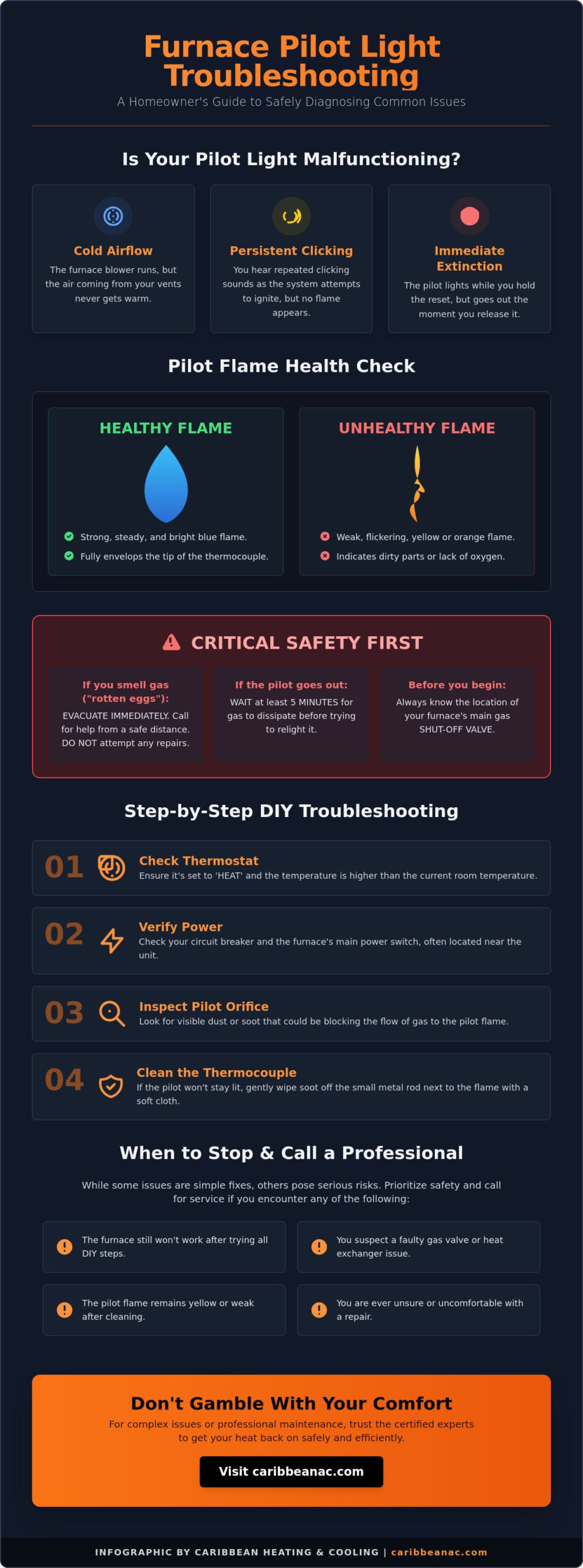
A healthy pilot flame should be steady and bright blue, with enough strength to completely envelop the tip of the thermocouple. If you notice a flickering yellow or orange flame, it’s a clear warning sign. This change in color often indicates a lack of oxygen or a dirty burner assembly. Look for soot buildup around the pilot orifice, as this can obstruct the gas flow and lead to a complete lack of ignition.
Signs Your Pilot Light is Malfunctioning
A failing pilot light often presents specific symptoms that you can identify before opening the furnace cabinet. Common indicators include:
- Cold Airflow: The furnace cycles on and the blower runs, but the air never gets warm.
- Persistent Clicking: You hear the system trying to ignite, but no flame appears.
- Immediate Extinction: The pilot lights briefly while you hold the reset button, but it goes out the moment you release the knob. This often signals a faulty thermocouple that can no longer detect heat safely.
Essential Safety Precautions Before You Begin
Safety is the most important part of troubleshooting furnace pilot light problems. Natural gas is naturally odorless, so manufacturers add mercaptan to give it a distinct “rotten egg” smell. If you smell this, do not attempt any repairs; leave the house and call a professional. Always follow the 5-minute rule: if the pilot goes out, wait at least five minutes for any collected gas to dissipate before trying to relight it. Finally, ensure you know how to operate the gas shut-off valve, which is typically a lever located on the gas pipe leading into the furnace.
Step-by-Step Troubleshooting for Common Pilot Failures
Before assuming a component is broken, start with a logical process of elimination to save time and money. Begin by checking your thermostat. Ensure it’s set to ‘Heat’ and the temperature is at least five degrees above the current room ambient. Next, verify the system has power. It’s common for a circuit breaker to trip or the furnace power switch to be accidentally toggled off during routine storage. These simple checks often resolve issues before they escalate.
In the Nevada desert, fine dust is a primary culprit for ignition failure. Inspect the pilot orifice for any visible debris that might be choking the gas flow. Understanding how a pilot light works helps you see why even a tiny obstruction can prevent the flame from reaching the safety sensor. If the area looks clear, attempt a manual re-light. You’ll typically find specific instructions for your model printed on a sticker on the furnace door.
Cleaning and Inspecting the Thermocouple
The thermocouple is the small copper rod sitting right next to the pilot flame. If it’s covered in soot, it won’t get hot enough to signal the gas valve to stay open. This safety feature prevents gas from leaking into your home when there’s no flame to burn it. Use a soft cloth to remove soot from the rod and restore its ability to detect heat accurately.
Checking the Gas Supply and Air Intake
Ensure the gas valve is in the ‘On’ position and hasn’t been bumped by accident. You should also look for obstructed PVC intake pipes that might be starving the flame of oxygen. If your efforts at troubleshooting furnace pilot light issues don’t restore heat, it’s time to consult the HVAC Las Vegas experts. Professional intervention ensures your heating system remains a dependable partner for your home comfort.
When to Call a Las Vegas Heating Professional
While basic troubleshooting furnace pilot light issues can often resolve minor hiccups, certain repairs are strictly for licensed professionals. Gas valve replacements and heat exchanger inspections involve high-pressure components and critical combustion safety protocols. Attempting to swap a gas valve yourself, as some online forums might suggest, is extremely dangerous and can lead to gas leaks or fire hazards. Our team prioritizes your safety by ensuring every component meets strict operational standards.
A cracked heat exchanger is one of the most serious issues a homeowner can face. This failure allows carbon monoxide to leak into your living space, posing a silent but deadly threat. Following the Consumer Product Safety Commission safety guidelines is essential for protecting your family from these risks. If you suspect a major component failure during a freezing winter night in Summerlin, don’t hesitate to reach out for emergency heating repair to restore your home’s safety and warmth immediately.
Signs of a Faulty Gas Valve or Control Board
Sometimes the pilot light functions perfectly, but the system still fails to produce heat. Watch for these specific red flags:
- Main Burner Failure: The pilot stays lit consistently, but the main burners refuse to ignite when the thermostat calls for heat.
- Rollout Burns: You notice visible scorching or “rollout” burns on the exterior of the burner assembly or furnace cabinet.
- Persistent Odor: The smell of gas remains noticeable even after you’ve turned the pilot assembly to the ‘Off’ position.
The Importance of Annual Heating Maintenance
Professional maintenance is the single most effective way to prevent pilot failure as we move into 2026. In Henderson homes, the high volume of desert dust frequently clogs pilot orifices and coats sensitive electronics. A multi-point safety inspection catches these small issues before they become expensive middle-of-the-night emergencies. Just as our AC maintenance guide explains for summer cooling, consistent year-round care ensures your entire HVAC system remains dependable and efficient regardless of the season.
Secure Your Home Comfort and Safety
Managing your home’s heating system doesn’t have to be a source of stress. By understanding the core components of your furnace, you’ve taken the first step toward a safer, more efficient household. Whether you’ve successfully cleared away desert dust from an orifice or identified a more complex issue with your ignition system, you now have the tools to handle basic troubleshooting furnace pilot light tasks with confidence. Your safety is always the priority. If you encounter persistent gas odors or suspect a cracked heat exchanger, it’s time to step back and let the experts take over.
Caribbean Heating & Cooling has been a trusted, family-owned partner for homeowners since 2018. Our expert technicians serve the entire valley, including Las Vegas, Henderson, and Summerlin. We provide 24/7 emergency residential support to ensure you never have to spend a freezing night without heat. Schedule your professional furnace inspection with Caribbean Heating & Cooling today. You can rest easy knowing your home’s comfort and dependability are in capable hands.
Frequently Asked Questions
Why does my furnace pilot light keep going out after I light it?
The most common reason a pilot light fails to stay lit is a malfunctioning thermocouple that can no longer detect the flame’s heat. When this safety sensor fails, it automatically shuts off the gas supply to prevent a leak. Other culprits include a clogged pilot orifice or a strong draft from a nearby window or air vent that physically blows the flame out. If the flame doesn’t stay lit after a few attempts, it usually indicates a part needs replacement.
Is it dangerous if the furnace pilot light is out?
Modern furnaces are designed with safety sensors that automatically shut off the gas flow when the pilot light goes out, making it generally safe for the homeowner. However, if you smell a distinct “rotten egg” odor, it indicates a gas leak that requires you to exit the home immediately. You should always wait at least five minutes before attempting to relight the system to ensure any residual gas has dissipated from the furnace cabinet.
What color should my furnace pilot light flame be?
A healthy pilot light should always be a steady, bright blue color with a small amount of yellow at the very tip. If the flame appears mostly yellow or orange, it’s a sign of incomplete combustion caused by dirt buildup or a lack of oxygen. This inefficient burn can lead to carbon monoxide issues and suggests that troubleshooting furnace pilot light components or scheduling a professional cleaning is necessary to restore safe operation.
How much does it cost to have a pro fix a furnace pilot light in Las Vegas?
The total cost for a professional repair depends on whether your system requires a simple cleaning or a full component replacement. Most local providers charge a standard diagnostic or service call fee to identify the root cause of the failure. While a basic thermocouple cleaning or replacement is relatively affordable, more complex issues involving the gas valve or electronic control board will require a higher investment in both specialized parts and labor.

Related Posts
Comments (0)