
Son las 2:00 a. m. en Anthem y, aunque las estrellas del desierto son hermosas, el aire a 38 grados Fahrenheit (3 °C) que se cuela por sus ventanas...
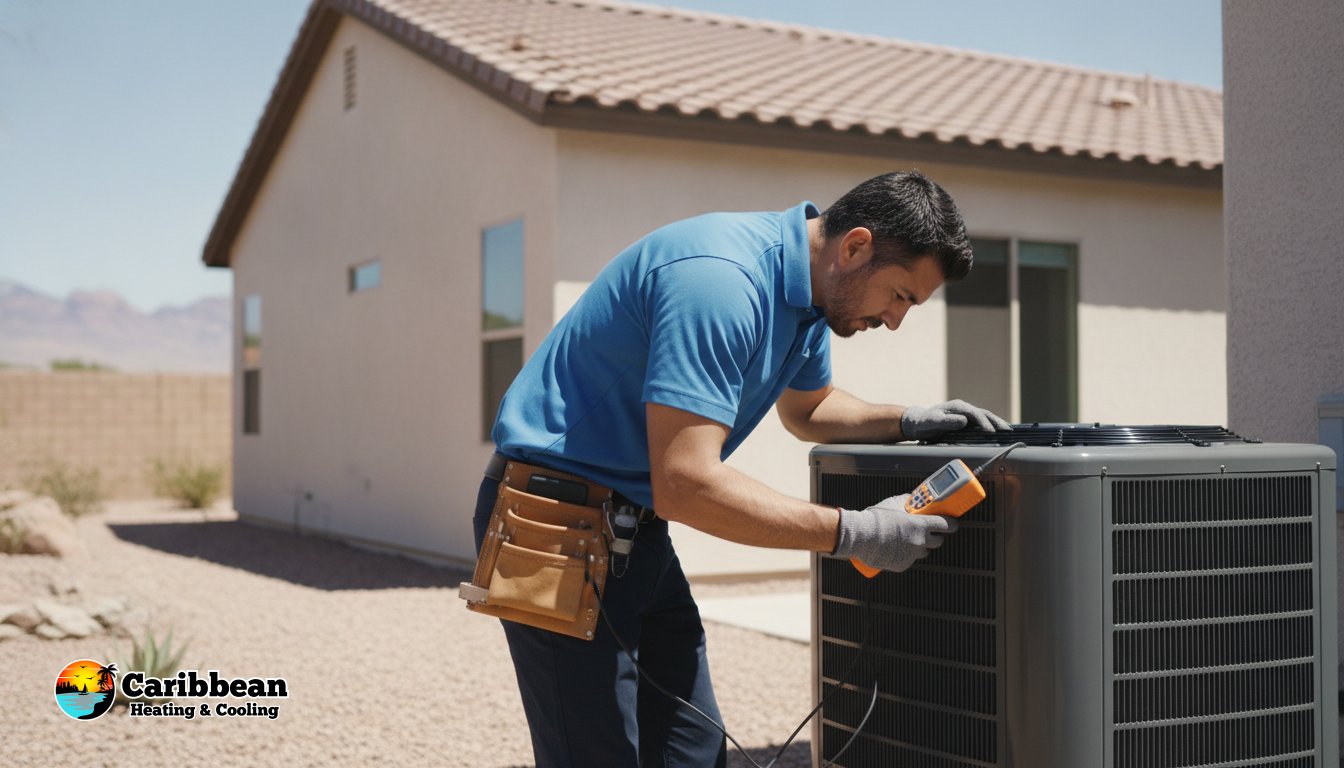
AC Troubleshooting Guide: How to Fix Your Cooling in the Las Vegas Heat
Imagine waking up in the middle of a July night to find your bedroom feels more like a sauna than a sanctuary. In the Las Vegas heat, a sudden cooling failure is more than just a nuisance; it’s a stressful situation that can quickly become a safety concern for your family. We understand that when the thermometer hits triple digits, the last thing you want to deal with is technical jargon or the fear of a massive repair bill. This guide to ac troubleshooting will empower you to identify common issues and determine when a simple DIY fix can save the day.
You’ll learn exactly how to restore your home’s comfort immediately and recognize the critical warning signs that mean it’s time to call in a professional. We’ll cover everything from thermostat glitches to airflow restrictions so you can protect your system and stay cool. By following these steps, you can avoid further damage to your HVAC unit while maintaining a safe environment for your household.
Key Takeaways
- Understand how the extreme Nevada climate and desert dust push your system’s “Delta T” performance to its physical limit.
- Master a simple checklist for ac troubleshooting to resolve power issues and thermostat glitches before scheduling a service visit.
- Identify the “Big Three” mechanical failures, including refrigerant leaks and frozen coils, that require immediate professional intervention.
- Learn to recognize the specific sounds of a failing fan motor or capacitor to prevent permanent damage to your condenser.
Why Air Conditioners Struggle in the Nevada Desert
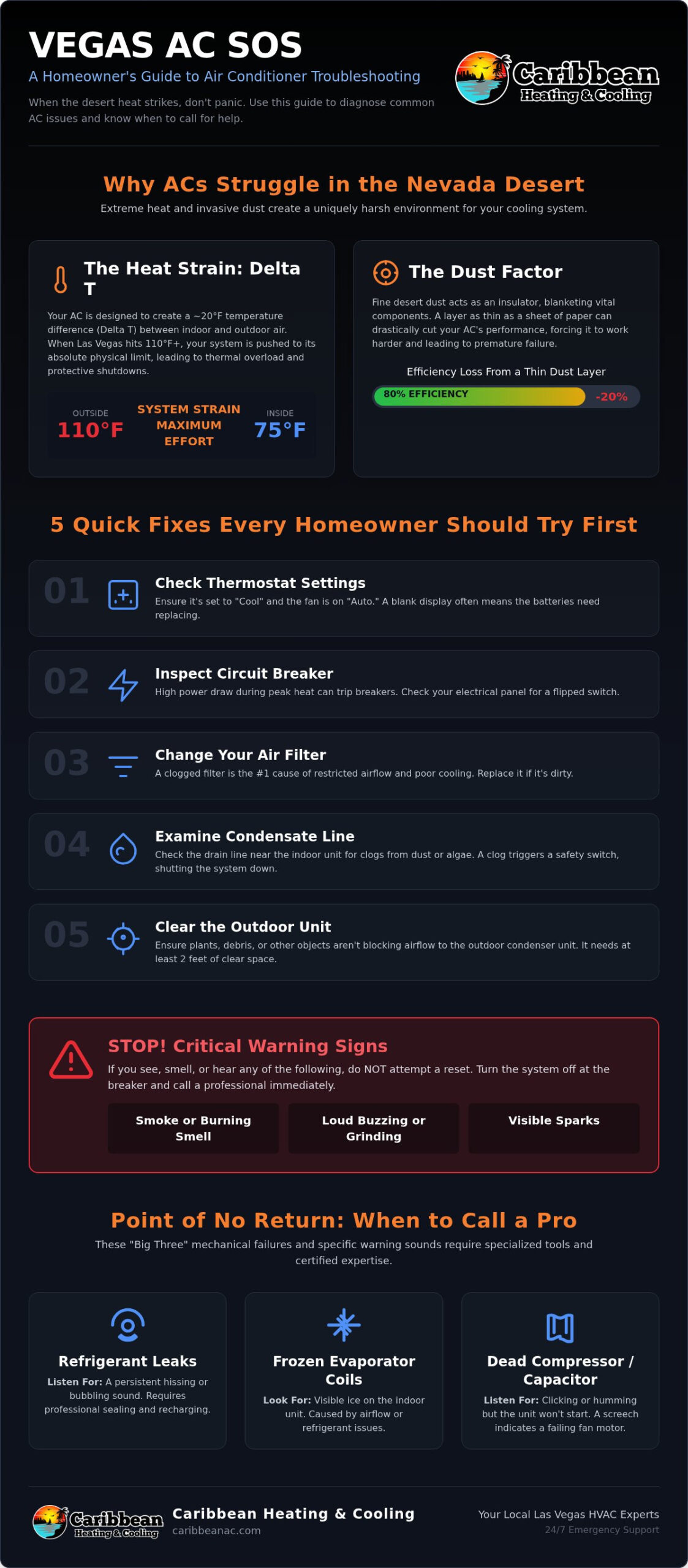
Living in the Mojave Desert presents a unique set of challenges for residential cooling systems. In Las Vegas, we frequently experience temperatures that exceed 110°F, pushing the physical limits of HVAC technology. Most units are designed to maintain a “Delta T,” or temperature difference, of approximately 20 degrees between the indoor and outdoor air. When the exterior heat climbs toward the triple digits, your system must work tirelessly to bridge that massive gap. Understanding How Air Conditioners Work is the first step in effective ac troubleshooting, as it helps you distinguish between a mechanical failure and a system that is simply overwhelmed by the environment.
In communities like Summerlin and Henderson, residential systems are particularly prone to thermal overload. This occurs when the outdoor condenser unit becomes so hot that its internal safety sensors trigger a shutdown to protect the compressor from permanent damage. It’s a protective measure, but it leaves you without cooling during the hottest part of the day. Part of your ac troubleshooting process should involve checking if the unit has simply overheated due to direct sun exposure or excessive workload. Recognizing these early signs of performance degradation can prevent a total collapse of your home’s comfort.
The ‘Desert Dust’ Factor and Your AC System
Our local environment is filled with fine, invasive dust that acts as a powerful insulator. When this grit accumulates on your evaporator coils, it prevents the refrigerant from absorbing heat efficiently. This forces your compressor to work twice as hard to achieve the same cooling effect. In Las Vegas, a layer of dust as thin as a sheet of paper can reduce AC efficiency by up to 20%. This extra strain is a primary cause of premature component failure and high energy bills. To protect your investment, consult the ultimate AC maintenance checklist and keep those coils clear of desert debris.
5 Quick AC Troubleshooting Steps Every Homeowner Should Try
When your home begins to warm up, don’t panic. Perform these essential ac troubleshooting steps to see if a simple fix can restore your cooling. First, verify your thermostat settings. Ensure it’s set to “Cool” and the fan is on “Auto.” If the display is blank or flickering, replace the batteries. Second, inspect your circuit breaker. The extreme desert heat causes units to pull significant power, which often leads to tripped breakers during peak afternoon hours.
Third, check your air filter. A clogged filter is the leading cause of systems not blowing cold air in Las Vegas. Fourth, examine the condensate drain line near your indoor unit. If dust or algae clogs the line, a safety float switch will shut the system down to prevent flooding. Finally, walk outside and ensure no debris or plants are crowding the condenser unit. Clear airflow is vital for heat exchange.
Resetting Your System Safely
You can attempt a “soft reset” by turning the system off at the thermostat for several minutes. If that fails, a “hard reset” involves cycling the breaker. Watch for warning signs during this process. If you smell smoke, hear a loud buzzing, or see sparks, don’t flip the breaker back on. These symptoms often indicate a failing start capacitor or a motor issue caused by local power surges. Never open the condenser cabinet or handle electrical wiring yourself. If these steps don’t solve the problem, it’s best to seek professional AC repair to avoid further damage.
Knowing When to Call for Professional 24/7 AC Repair
While basic ac troubleshooting can resolve minor glitches, some mechanical issues represent a “point of no return” for homeowners. We categorize these as “The Big Three” failures: refrigerant leaks, frozen evaporator coils, and dead compressors. These problems require specialized diagnostic tools and EPA-certified handling that go beyond the scope of DIY maintenance. For example, if you hear a persistent hissing or bubbling sound, you’re likely dealing with a refrigerant leak that needs professional sealing and recharging.
Pay close attention to the sounds your system makes during startup. A high-pitched screeching often indicates a failing condenser fan motor, while a repetitive clicking or humming without the unit actually starting suggests a struggling start capacitor. In the intense 110-degree Las Vegas heat, an AC blowing hot air is more than an inconvenience; it’s a health emergency for seniors, young children, and pets. Seeking a professional diagnosis early can prevent a manageable component repair from escalating into a total system replacement.
The Caribbean Heating & Cooling Emergency Difference
We provide 24/7 emergency residential support across Henderson, Summerlin, and North Las Vegas to ensure you’re never left stranded in the heat. As a family-owned and operated local business, we understand the unique demands our climate places on your equipment. If your initial ac troubleshooting doesn’t restore your comfort, our team is ready to provide a definitive, expert AC repair Las Vegas pillar diagnosis. We’re committed to keeping our community safe and cool with dependable, round-the-clock service.
Secure Your Home’s Comfort Today
Mastering basic ac troubleshooting is a vital skill for every Las Vegas resident. By understanding how desert dust impacts your system and knowing how to check your own air filters and circuit breakers, you can often restore cooling without a service call. However, when you encounter signs of mechanical failure like unusual noises or frozen coils, taking quick action is essential to prevent a complete system breakdown. Protecting your equipment from the extreme Mojave climate ensures your home remains a sanctuary even when temperatures soar.
Don’t suffer in the heat. Schedule your 24/7 emergency AC repair with Caribbean Heating & Cooling now! Our family-owned team brings specialized technical expertise to every Nevada home. We are fully licensed, bonded, and insured to provide the dependable service you need during a heatwave. You deserve a cool, safe indoor environment, and we’re here to help you maintain it all summer long.
Frequently Asked Questions
Why is my AC running but not lowering the temperature?
If your unit is running but the home isn’t cooling, ac troubleshooting usually points to an airflow restriction or a refrigerant issue. In our desert climate, fine dust often cakes on the outdoor condenser or indoor evaporator coils. This blockage prevents effective heat exchange. Utilizing a specialized cleaning and disinfection service like LALA COOL is an excellent way to ensure these components are thoroughly maintained and free of efficiency-robbing blockages. Even a minor refrigerant leak causes performance to drop rapidly during triple-digit Las Vegas afternoons.
Is it safe to leave my AC on if it’s making a loud buzzing noise?
It’s not safe to ignore a loud buzzing noise coming from your unit. This sound often indicates an electrical failure, such as a struggling contactor or a failing start capacitor. Leaving the system on can lead to a total compressor burnout, which is a much more expensive fix. Turn the power off immediately and seek professional assistance to prevent permanent hardware damage. To better understand the costs associated with hiring a professional, you can explore Project-based and hourly electrical contracting fees as a helpful industry guide.
Most common residential repairs, such as replacing a capacitor or a fan motor, typically take between one and three hours to complete. However, the total time depends on part availability and the complexity of the diagnosis. During a heatwave in Summerlin or Henderson, we prioritize efficiency to restore your cooling as quickly as possible while ensuring the repair meets all professional safety standards.
Can I pour bleach down my AC drain line to fix a clog?
We don’t recommend using bleach because it’s corrosive and can damage the plastic piping or the metal drain pan. Instead, use a cup of distilled white vinegar to clear algae and slime. For a stubborn clog, a wet-dry vacuum can often suck the debris out from the exterior exit point. This simple ac troubleshooting step helps maintain proper drainage safely.

Related Posts
Comments (0)