
Son las 2:00 a. m. en Anthem y, aunque las estrellas del desierto son hermosas, el aire a 38 grados Fahrenheit (3 °C) que se cuela por sus ventanas...
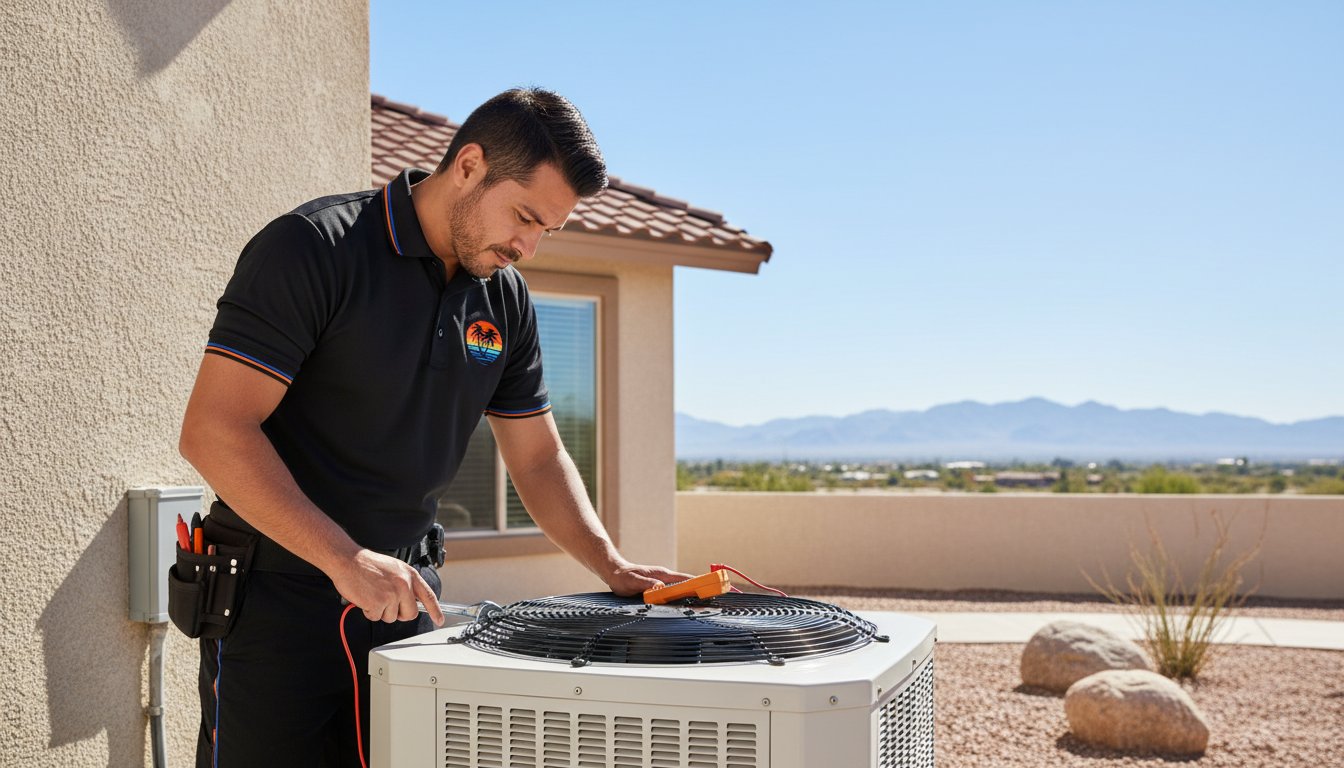
What Do HVAC Contractors in Las Vegas Actually Do? (2026 Guide)
Imagine it is July 15th in Summerlin, and the outside temperature has just spiked to 115 degrees. Your air conditioning unit makes a sudden grinding noise and stops, leaving your family in a house that is heating up by three degrees every hour. You know you need help, but the thought of calling a technician feels like a gamble. It’s completely normal to feel overwhelmed by technical jargon like SEER2 or heat pump configurations while worrying about being overcharged during a peak heatwave.
You deserve a home that remains a sanctuary regardless of the Nevada sun. This guide clarifies the essential roles hvac contractors play in maintaining your desert comfort and protecting your long-term investment. We will show you how to identify a legitimate, licensed expert who prioritizes your safety and energy efficiency over a quick sale. We are going to break down the specific services these professionals provide, explain the latest 2026 industry standards, and provide a clear roadmap for choosing a reliable partner for your home maintenance needs.
Key Takeaways
- Master the essentials of desert climate control and see how professional maintenance protects your home from extreme 115°F heat and high dust levels.
- Recognize when rapid-response emergency support transitions from a luxury to a critical safety necessity for your family’s well-being in the Las Vegas valley.
- Explore how precision system design and modern SEER2 ratings can significantly lower your utility bills while maximizing indoor comfort.
- Secure your home’s future by learning the exact steps to verify hvac contractors through NSCB licensing and NATE technical mastery.
- Identify the specific quality markers that separate dependable local experts from standard service providers in Henderson, Summerlin, and North Las Vegas.
The Vital Role of HVAC Contractors in the Las Vegas Desert Climate
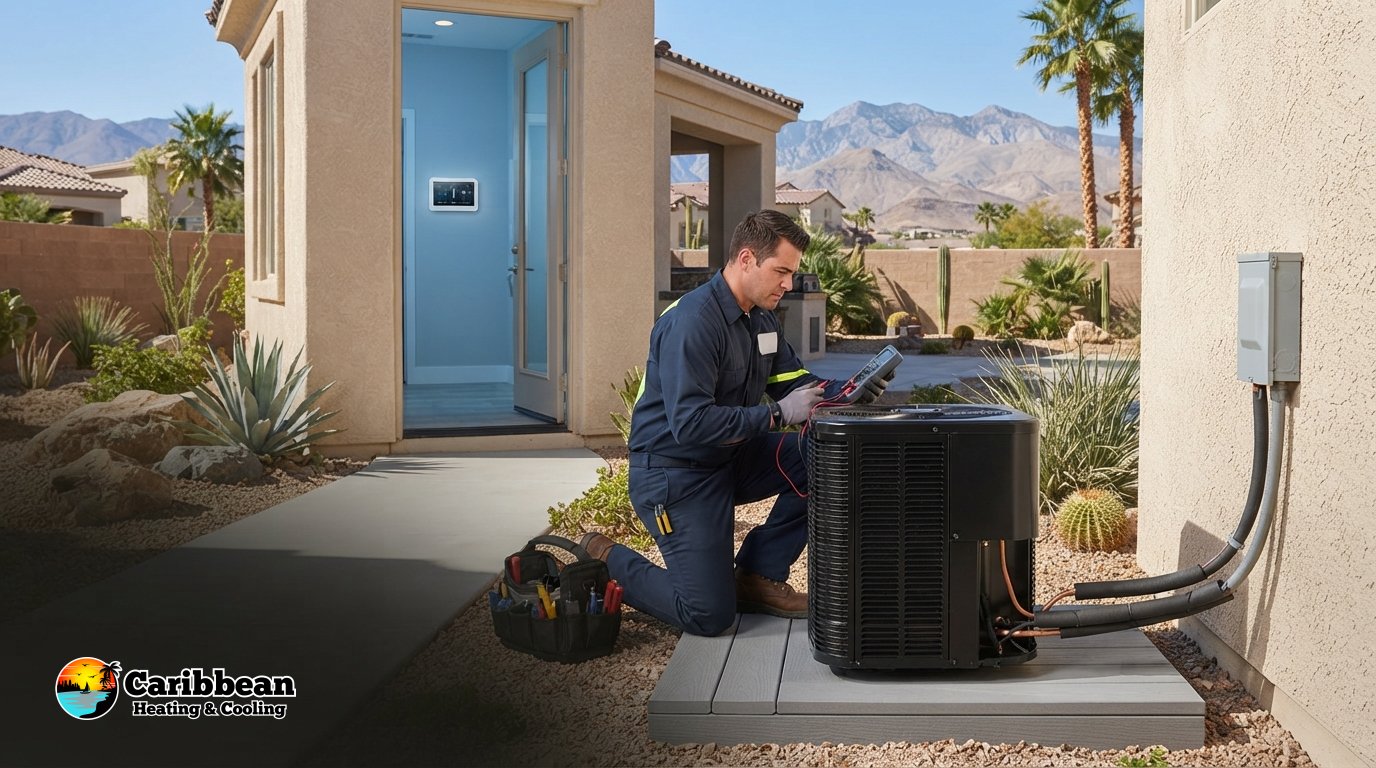
Licensed professionals specializing in Heating, ventilation, and air conditioning (HVAC) systems are the backbone of desert living. These experts design, install, and maintain the complex machinery that keeps your home habitable. In Southern Nevada, hvac contractors must hold a specific C-21 license to handle high-pressure refrigerants and intricate electrical components safely. This certification ensures they meet the rigorous standards set by the state to protect your property and your family’s health.
To better understand what happens during a professional service call, watch this helpful video:
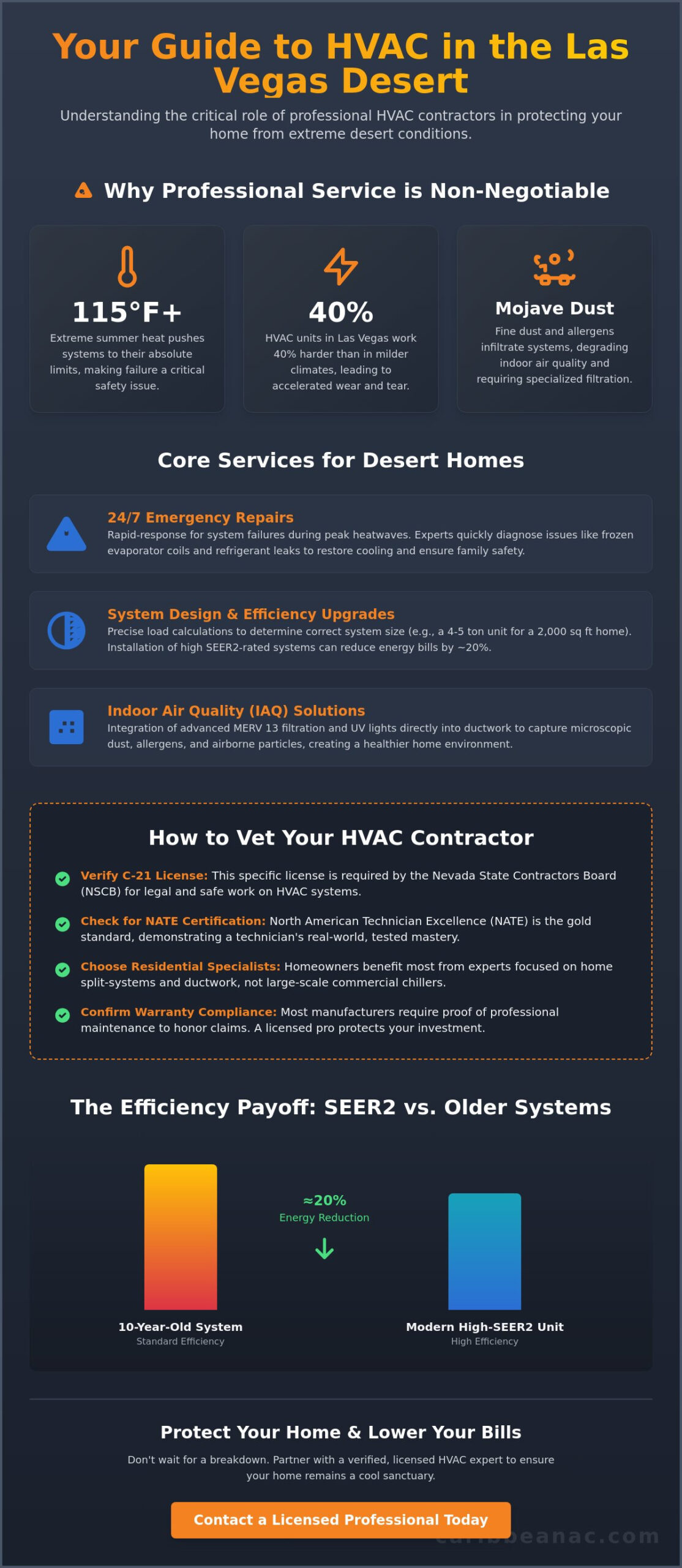
Las Vegas presents environmental challenges that differ from almost anywhere else in the United States. With summer temperatures regularly exceeding 115°F and fine Mojave dust infiltrating every vent, your system works 40% harder than units in milder climates. While a general handyman might fix a leaky faucet, they lack the specialized diagnostic tools like digital manometers and micron gauges required for high-stakes cooling repairs. An HVAC contractor serves as a residential climate guardian for the Mojave region, ensuring your home remains a sanctuary against the brutal 115°F heat.
Residential vs. Commercial HVAC Specialists
Homeowners benefit most from residential-only specialists who focus on the unique ductwork and split systems found in local housing developments. Commercial techs often deal with massive industrial chillers and cooling towers, whereas residential hvac contractors prioritize indoor air quality and energy efficiency for families. For more detailed insights into managing your home air, check out this guide on hvac las vegas to understand local system needs. Choosing a specialist ensures your manufacturer warranty remains valid, as most brands require proof of professional maintenance to honor claims. Relying on a licensed pro provides peace of mind when the mercury rises.
Core Services: From Emergency Repairs to Efficiency Upgrades
In the Mojave Desert, a functioning air conditioner is a safety requirement. When temperatures exceed 115°F, professional hvac contractors provide a critical lifeline through 24/7 emergency support. Rapid response times in neighborhoods like Summerlin and Henderson ensure that vulnerable residents don’t face life-threatening heat exposure during a system failure. These experts diagnose complex mechanical issues quickly, such as the common problem of frozen evaporator coils. Our specialists for ac repair las vegas often find that these ice buildups result from restricted airflow or refrigerant leaks; both require immediate technical intervention to restore cooling.
System design is another cornerstone of professional service. Contractors don’t just swap equipment; they calculate the precise tonnage needed for your specific square footage. A 2,000-square-foot home typically requires a 4-ton or 5-ton unit to maintain comfort during a July heatwave. By installing energy-efficient heating and cooling systems with high SEER2 ratings, homeowners can reduce their monthly energy consumption by approximately 20 percent compared to units manufactured a decade ago. Regular preventative maintenance, including seasonal tune-ups, prevents these high-performance systems from failing when the grid is most stressed.
Indoor Air Quality and Smart Technology
Vegas dust and seasonal allergens can degrade your respiratory health if left unchecked. Professional contractors now integrate MERV 13 filtration and UV lights into existing ductwork to capture microscopic particles. You can explore our indoor air quality services to see how these advanced technologies create a cleaner home environment. Additionally, smart thermostat integration allows you to manage your climate remotely. This ensures you never waste energy on an empty house while still returning to a cool living room.
Heating and Heat Pump Solutions
Many Las Vegas homes are rapidly transitioning to high-efficiency heat pumps. These systems provide both cooling and heating by moving heat rather than generating it, which is ideal for our desert climate. Because these units work year-round, consistent heat pump service is vital to ensure the reversing valve and compressor remain functional through every season change. If you want to maximize your home’s reliability, you can schedule a professional system evaluation to identify potential efficiency gaps.
How to Vet HVAC Contractors in Henderson, Summerlin, and North Las Vegas
Selecting the right hvac contractors in Southern Nevada is a critical decision that impacts your home’s safety and your long-term monthly utility costs. Since the 2024 updates to Nevada building codes, the technical requirements for installations have become more stringent. Your first step is to verify a company’s standing with the Nevada State Contractors Board. This verification confirms the business is legally authorized to operate, carries the necessary bonds, and maintains a clean record of consumer protection. A license isn’t just a formality. It’s your primary defense against fraud.
Technical mastery is equally vital. Look for teams that prioritize NATE (North American Technician Excellence) certification. This industry-standard credential ensures your technician has passed rigorous testing on real-world HVAC systems. In the extreme heat of the Mojave Desert, a minor calibration error can reduce system efficiency by 15% or more. Expert contractors also understand local nuances, such as how Summerlin’s elevation, which can be 10 degrees cooler than the valley floor, affects system sizing and airflow requirements.
Professionalism shows in the paperwork. Demand transparent, written pricing and walk away from high-pressure sales tactics. A dependable expert provides diagnostic data and multiple repair or replacement options rather than forcing an immediate, expensive decision. They act as a partner in your home’s comfort, not just a salesperson.
Local Licensing and Insurance Requirements
Hiring unlicensed labor is a gamble that rarely pays off for Nevada homeowners. Unlicensed work can void your manufacturer’s equipment warranty immediately. This leaves you responsible for the full cost of a compressor or heat exchanger, which can exceed $6,000 in out-of-pocket expenses. Legitimate hvac contractors must carry general liability insurance and workers’ compensation to protect your property from accidental damage or injury claims during a project.
- Verify the NSCB license number on every service vehicle and contract.
- Confirm the company holds at least $1 million in general liability coverage.
- Ask for proof of workers’ compensation to ensure you aren’t liable for on-site accidents.
For a detailed breakdown of what to look for during your search, use this hvac henderson nv checklist to vet your next service provider. Taking these steps ensures your cooling system remains a reliable asset during our intense summer months.
Secure Your Home’s Comfort for the Next Vegas Heatwave
Living in the Mojave Desert means your cooling system isn’t just a luxury; it’s a critical piece of home infrastructure. You now understand that professional hvac contractors do far more than just swap filters. They manage complex thermodynamic balances and provide emergency interventions when summer temperatures frequently exceed 110 degrees. By focusing on specialized residential care in neighborhoods like Henderson and Summerlin, you ensure your system is calibrated for the unique dust and heat profiles of the Las Vegas Valley.
Since 2018, Caribbean Heating & Cooling has served as a family-owned pillar for local homeowners. Our team understands that a broken AC at midnight requires an immediate solution. This is why we provide 24/7 emergency support specifically for extreme desert conditions. You deserve a partner who prioritizes your indoor air quality and system longevity through every season.
Keep your home cool with Caribbean Heating & Cooling’s 24/7 expert services.
Stay comfortable and confident knowing your home is in expert hands.
Frequently Asked Questions
What is the difference between an HVAC contractor and a plumber?
HVAC contractors specialize in the mechanical systems that control air temperature and indoor air quality, whereas plumbers manage the pipes that transport water and gas. In the Las Vegas heat, your HVAC expert maintains the refrigerant cycles and blowers that keep your home at 72 degrees. Plumbers handle the 50-gallon water heaters and drainage systems. Choosing the right specialist ensures your 115-degree summer stays comfortable and your home’s infrastructure remains safe.
Do HVAC contractors in Las Vegas need special licensing?
Every hvac contractors professional in Las Vegas must hold a C-21 license from the Nevada State Contractors Board to perform legal repairs. This certification confirms the technician has completed 4 years of journey-level experience and passed rigorous safety exams. You’ll find that licensed experts must also maintain specific insurance bonds to protect your property. This oversight ensures all installations follow the 2024 safety codes, giving you peace of mind that your system won’t fail during a heatwave.
How often should I hire a contractor for maintenance in the desert?
You should hire a professional for system maintenance 2 times every year to combat the harsh desert environment. Schedule your first visit in March to prepare for 100-degree days and a second in October for the winter transition. Because Las Vegas dust levels often exceed 50 micrograms per cubic meter, your filters and coils need frequent attention. These bi-annual visits prevent the 20% increase in energy consumption that occurs when desert grit clogs your mechanical components.
Can an HVAC contractor help lower my NV Energy bills?
Qualified hvac contractors lower your NV Energy bills by restoring your system to its original factory efficiency levels. A precision tune-up can reduce your monthly energy consumption by 15% by fixing airflow restrictions and calibrating thermostats. Technicians also identify duct leaks that account for 30% of cooling loss in typical Nevada homes. By addressing these technical issues, you’ll see a direct reduction in the kilowatt-hours used during the peak cooling months of July and August.

Related Posts
Comments (0)