
Al comparar los costos y beneficios del purificador de aire con luz UV para HVAC, la primera pregunta es en qué parte del sistema debe actuar. Una...
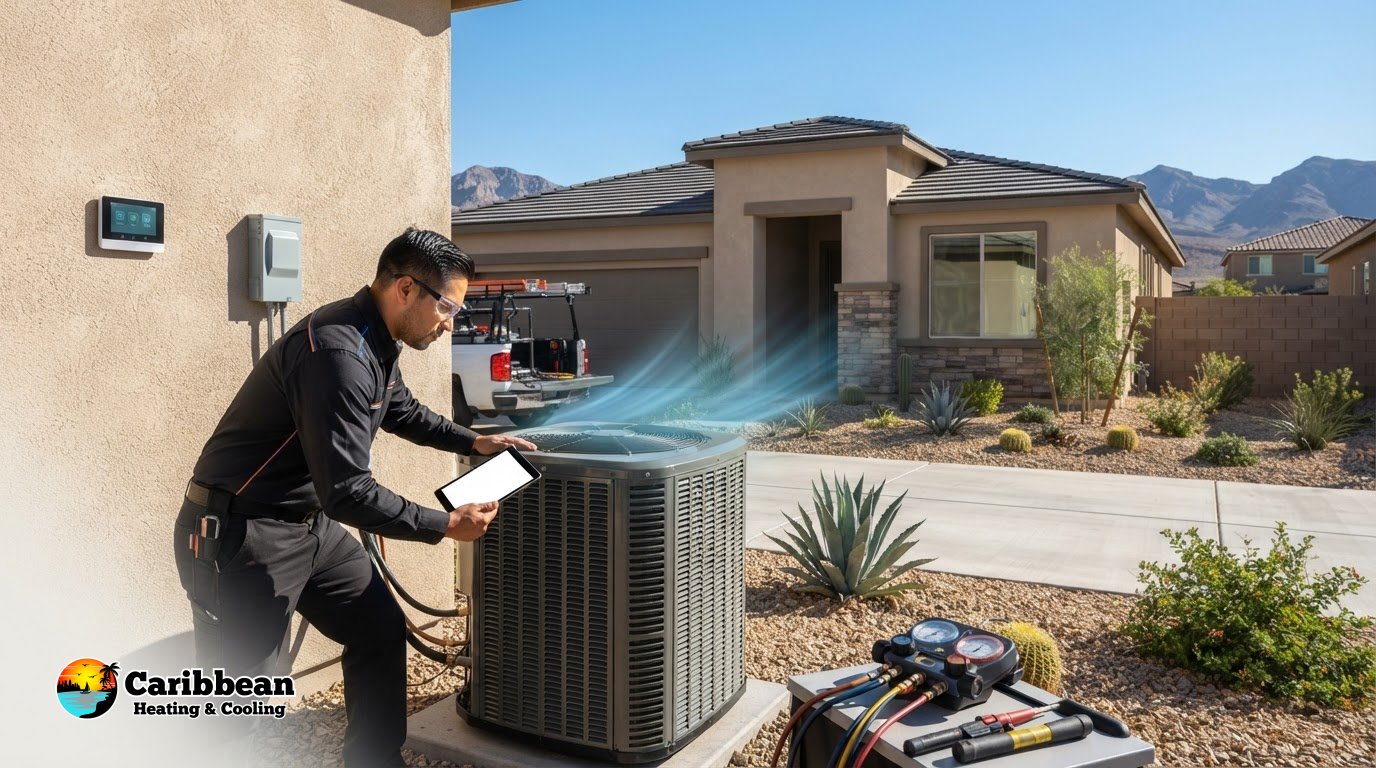
What Size AC Do I Need for a 1,500 Sq Ft House in Nevada?
What if the square-footage rule points you toward the wrong AC? If you’re asking, “what size AC do I need for a 1500 sq ft house in Nevada,” a common starting estimate is 2.5 to 3 tons, or 30,000 to 36,000 BTUs. But that range is only a rough guide, not a sizing recommendation for your home.
Nevada’s intense desert heat can put extra demand on an AC, while insulation, windows, ceiling height, shade, and duct condition all affect how much cooling your house needs. Choose a system that’s too large, and it may cycle on and off too often; choose one that’s too small, and it may struggle to keep up. This article explains what affects your home’s cooling load, why square footage alone isn’t enough, and how a professional Manual J calculation can help you make a confident sizing decision.
Key Takeaways
- For “what size AC do I need for a 1500 sq ft house in Nevada,” use square footage only as a starting point, not a final equipment choice.
- Account for sun exposure, windows, insulation, ceiling height, household occupancy, and duct condition when assessing cooling needs.
- Understand how Nevada’s heat affects demand without assuming every home needs the same AC capacity.
- Review your home and existing system, then use a professional load calculation to guide AC selection and installation.
What Size AC Do You Need for a 1,500 Sq Ft House in Nevada?
There’s no reliable way to choose the right AC capacity from 1,500 square feet alone. A common rule-of-thumb range can offer a preliminary reference, but it can’t account for how quickly your specific home gains heat or how effectively it holds cool air. The practical answer to “what size AC do I need for a 1500 sq ft house in Nevada” is: the capacity determined by your home’s cooling load, not its floor area by itself.
AC capacity is commonly described in tons. Tonnage measures how much heat a system can remove over time; it doesn’t describe the home’s area or how much electricity the equipment will use. One ton represents 12,000 BTUs of cooling capacity per hour. For background on common AC terms and system basics, see Air conditioning.
A square-footage estimate is a starting point, not a final system size; the right capacity depends on a home-specific cooling-load calculation. That distinction matters because an incorrect size can leave rooms uncomfortable and affect how the system operates.
Why a square-footage rule cannot settle AC sizing
Two homes with the same floor area may need different cooling capacities. Insulation affects how much outdoor heat reaches the living space, while window area and orientation influence direct solar gain. High ceilings add air volume, and an open layout distributes cooling differently from a home with many separate rooms. Air leakage can also let cooled air escape and warm air enter.
Nevada’s desert heat raises the stakes, but local weather alone doesn’t determine one universal tonnage. Sun exposure, shade, construction, and the home’s condition all shape its cooling demand. A compact, well-shaded house and a draftier home with broad, sun-facing windows can behave very differently, even at the same size.
How Nevada Climate and Home Details Change the AC Size You Need
Nevada’s hot, dry summers increase the work an air conditioner must do, but they don’t point to one tonnage that suits every house. A home with afternoon sun through large west-facing windows gains heat differently from a shaded home with efficient windows. The right answer to “what size AC do I need for a 1500 sq ft house in Nevada” depends on how the property handles heat, not just the outdoor temperature.
A cooling-load assessment should account for sun exposure, window area and orientation, insulation, ceiling height, occupancy, layout, and duct condition. Each detail can change how much cooling the system must deliver:
- Large or sun-exposed windows can add heat, especially during the afternoon.
- Weak insulation and air leaks allow more outdoor heat into the home.
- High ceilings and open layouts affect the volume and movement of cooled air.
- People and everyday activities add heat indoors.
- Leaky or poorly maintained ducts can reduce how much conditioned air reaches rooms.
What a professional cooling-load calculation evaluates
ACCA Manual J is a recognized method for calculating residential heating and cooling loads. Rather than relying on a square-footage shortcut, the assessment uses measurements and home characteristics to estimate the cooling capacity needed for the property. A residential HVAC professional can evaluate these details and account for local conditions before recommending equipment.
That assessment is one part of choosing a system that fits the home. Caribbean Heating & Cooling’s AC installation buying guide covers other considerations in the broader installation decision. For a home-specific recommendation, residential AC installation can put the load assessment into practice.
Choose and Install the Right AC for Your Nevada Home
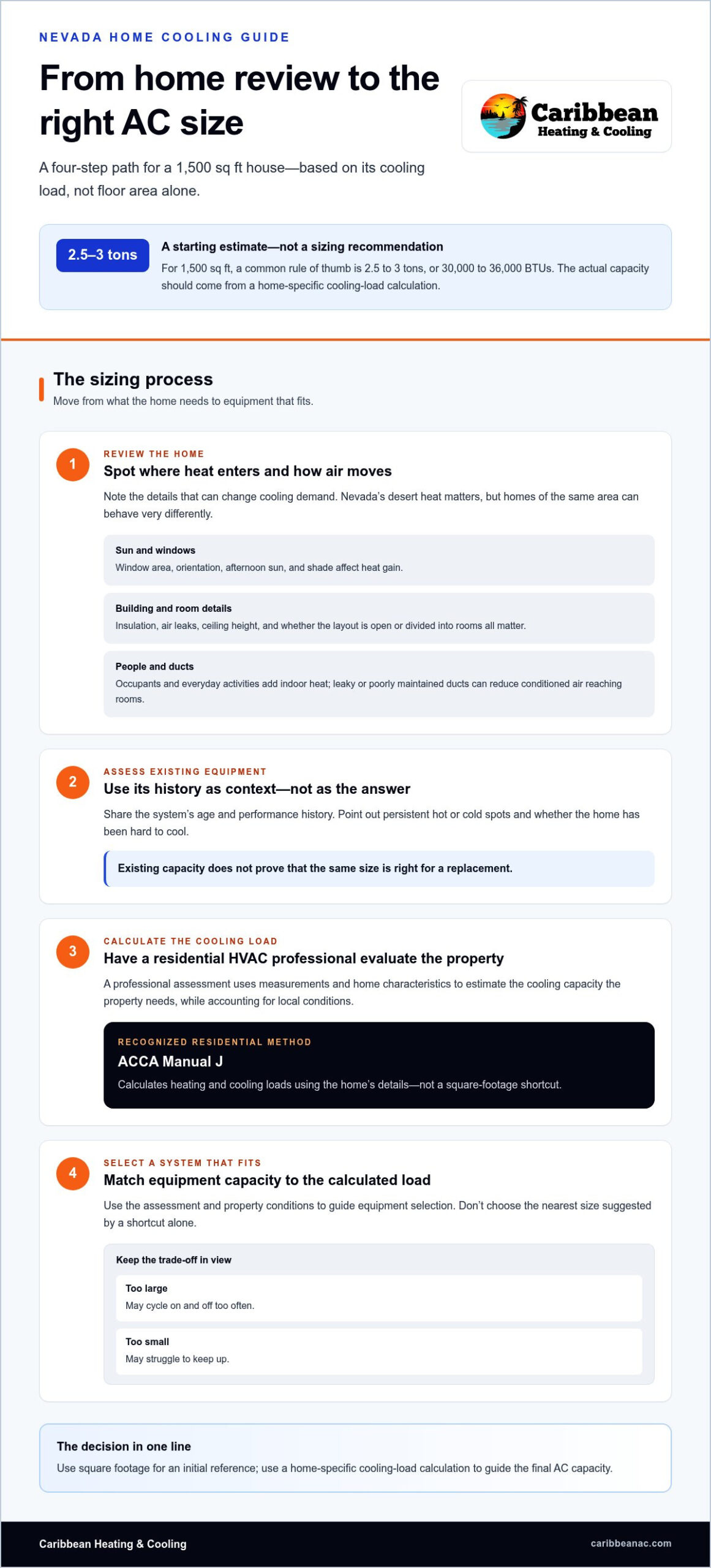
A dependable sizing decision follows a clear sequence, not a guess based on floor area. If you’re still asking “what size AC do I need for a 1500 sq ft house in Nevada,” use these steps to move from a general question to an equipment choice suited to your home:
- Review the home. Note room layout, window exposure, ceiling heights, insulation, and areas that feel warmer or harder to cool.
- Assess existing equipment. Share its age and performance history, and mention persistent hot or cold spots. Existing capacity can provide context, but it doesn’t prove that the same size is right for replacement.
- Calculate the cooling load. A residential HVAC professional can evaluate the home’s characteristics and local conditions to estimate its actual cooling needs.
- Select a system that fits. Match equipment capacity to the calculated load and the property, rather than choosing the nearest size suggested by a shortcut.
A square-footage rule can’t reliably prevent an oversized or undersized system. A mismatch may affect comfort and operation, so a measured assessment provides a stronger foundation for AC installation.
What to expect from an AC sizing and installation assessment
A residential HVAC professional can review the home, discuss your comfort priorities, and consider how the current equipment performs. The goal is to connect the calculated load with suitable equipment and the conditions in the property, not simply replace a label with the same capacity. That gives you a clearer basis for an installation decision.
After installation, regular care helps keep the system operating as intended. Use this Las Vegas AC maintenance checklist to guide ongoing upkeep. When you’re ready to explore a home-specific solution, residential AC installation with Caribbean Heating & Cooling is a practical next step.
Make Your Next AC Decision with Confidence
If you’re still asking “what size AC do I need for a 1500 sq ft house in Nevada,” let a home-specific assessment guide the next conversation about comfort. Consider how you want each room to feel during the hottest part of summer and whether your current system keeps up. Those priorities help connect equipment selection to the way you actually use your home.
Caribbean Heating & Cooling is a family-owned business providing residential AC installation, repair, and maintenance in Las Vegas and nearby communities. When you’re ready to explore your options, explore residential AC installation with Caribbean Heating & Cooling. A thoughtful next step can make choosing a system feel clearer and help you look ahead to greater comfort at home.
Frequently Asked Questions
Is a 2.5-ton AC enough for a 1,500-square-foot house in Nevada?
Not necessarily. For “what size AC do I need for a 1500 sq ft house in Nevada,” 2.5 tons is only a starting point, not a reliable verdict. A shaded, tightly sealed home may behave differently from one with sun-exposed rooms or aging windows. Before choosing equipment, use a home-specific load calculation to determine whether that capacity matches the house’s cooling demand.
Can an AC unit be too large for a 1,500-square-foot home?
Yes. An oversized AC may cool the area near the thermostat quickly, then shut off before the rest of the home reaches a comfortable temperature. You might notice frequent starts and stops or rooms that feel unevenly cooled. These signs can have other causes, too, so a professional assessment can help distinguish a sizing issue from an equipment or control problem.
How is the correct AC size calculated for a Nevada home?
A residential HVAC professional can use ACCA Manual J, a recognized method for estimating a home’s heating and cooling load. Before an assessment, gather available floor plans and note rooms that are difficult to cool or times of day when comfort changes. These details help connect the calculation to how your household uses the home and inform equipment selection.
What happens if my AC is undersized for Nevada’s summer heat?
An undersized system may run for long periods yet still struggle to maintain comfort during high demand. If the indoor temperature keeps rising while the AC is running, note the time of day and which rooms feel warm. Caribbean Heating & Cooling provides residential AC repair in Las Vegas, Henderson, North Las Vegas, and Summerlin, where a professional can assess the system’s performance.

Related Posts
Comments (0)