
Al comparar los costos y beneficios del purificador de aire con luz UV para HVAC, la primera pregunta es en qué parte del sistema debe actuar. Una...

Dry Air in Your Las Vegas House: Causes, Symptoms, and Professional Solutions
Imagine waking up in the middle of the night to the sharp sting of a nosebleed or a throat so parched it hurts to swallow. In Southern Nevada, dealing with dry air in house las vegas environments isn’t just a seasonal nuisance; it’s a daily reality for many homeowners.
You’ve likely noticed the telltale signs of low humidity, from constant static zaps when you touch a doorknob to worrying cracks appearing in your hardwood floors. It’s frustrating to feel like your own home is working against your health and comfort.
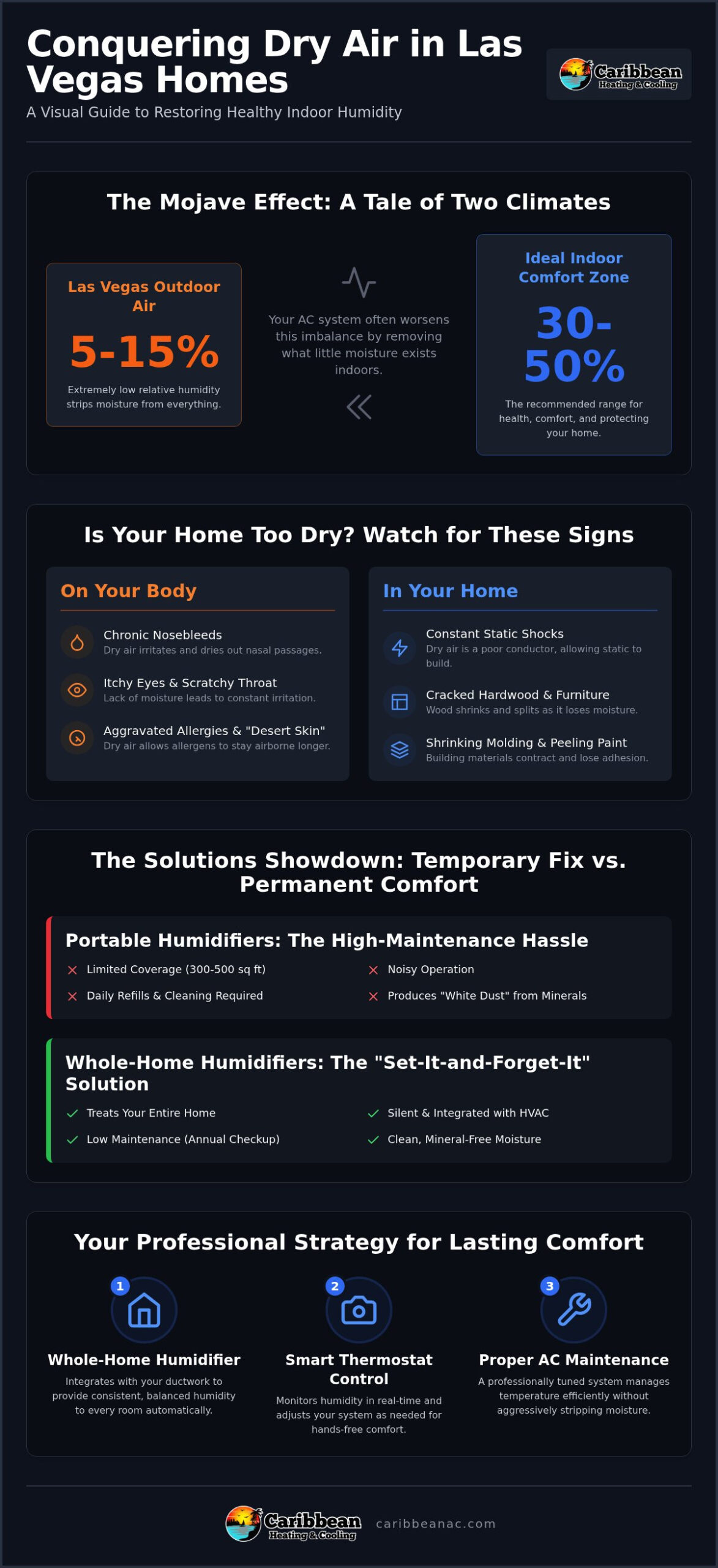
We’ll explore why the Mojave Desert climate, where humidity often drops below 15%, makes indoor air so parched and how you can finally restore a healthy balance. This guide covers the specific symptoms of low humidity, the impact on your property, and how professional HVAC solutions help you wake up feeling refreshed instead of dehydrated.
Key Takeaways
- Understand why the Mojave Desert climate and your home’s cooling system work together to strip essential moisture from your indoor environment.
- Learn to identify and address the root causes of dry air in house las vegas to stop chronic nosebleeds and protect expensive wood features from warping.
- Discover the long-term advantages of whole-home humidity control over the maintenance-heavy limitations and “white dust” issues of portable units.
- Find out how professional HVAC tuning and specialized IAQ solutions provide a permanent fix for better sleep and improved respiratory health.
The Mojave Effect: Why Las Vegas Homes Suffer from Extreme Dry Air
Living in the Mojave Desert means fighting a constant battle against evaporation. While outdoor humidity levels in the valley routinely hover between 5% and 15%, your cooling system can actually make the situation worse. Air conditioners function by pulling heat and moisture out of the air. In a humid climate, this is a benefit; in Nevada, it strips away the tiny bit of moisture you have left. This creates a persistent state of dry air in house las vegas properties that affects everything from your health to your home’s structural integrity.
Understanding the effects of low relative humidity is key to maintaining a healthy indoor environment. Experts generally recommend a “comfort zone” between 30% and 50% for residential spaces. When levels drop below this range, you’ll start to notice hidden costs. Expensive crown molding may begin to shrink, paint can peel prematurely, and hardwood floors often develop unsightly gaps as the wood fibers contract from moisture loss.
Common Symptoms of a Parched Home
If you’re tired of “desert skin” and morning nosebleeds, you aren’t alone. These aren’t just quirks of living in the valley; they’re signs of an imbalanced environment. Low humidity is defined as any level below 30% that triggers respiratory irritation. Look for these common indicators:
- Physical signs: Persistent scratchy throats, dry nasal passages, and itchy eyes.
- Environmental signs: Frequent static shocks when touching door handles and visible cracks in wood furniture.
Why Summerlin and Henderson Feel the Dryness Differently
Local geography plays a massive role in your indoor comfort. Higher elevation areas like Summerlin often face stronger winds that accelerate moisture loss through even the smallest window seals. While modern homes in Henderson are built to be airtight for energy efficiency, this can actually trap “stale” dry air inside. This makes dry air in house las vegas a year-round challenge that requires a professional strategy rather than a temporary fix.
Practical Strategies to Increase Indoor Humidity
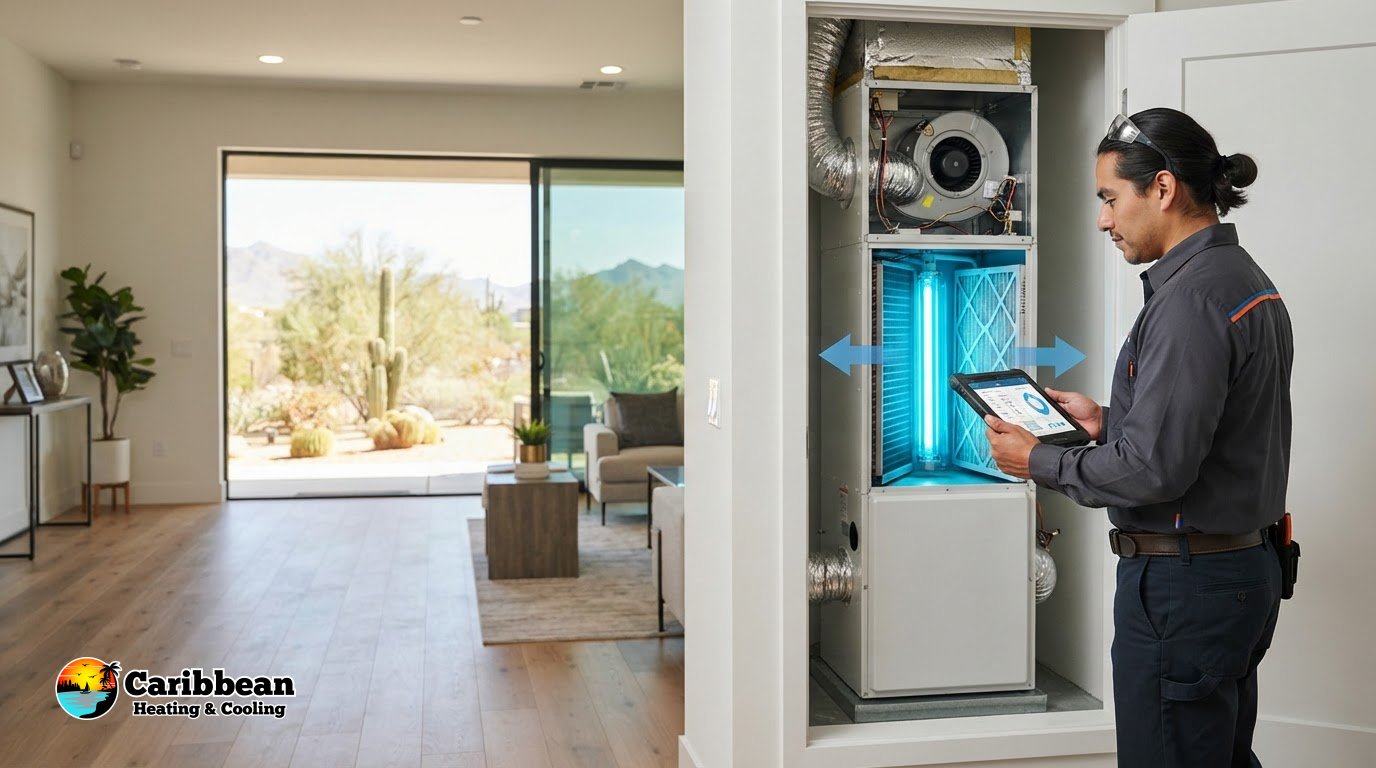
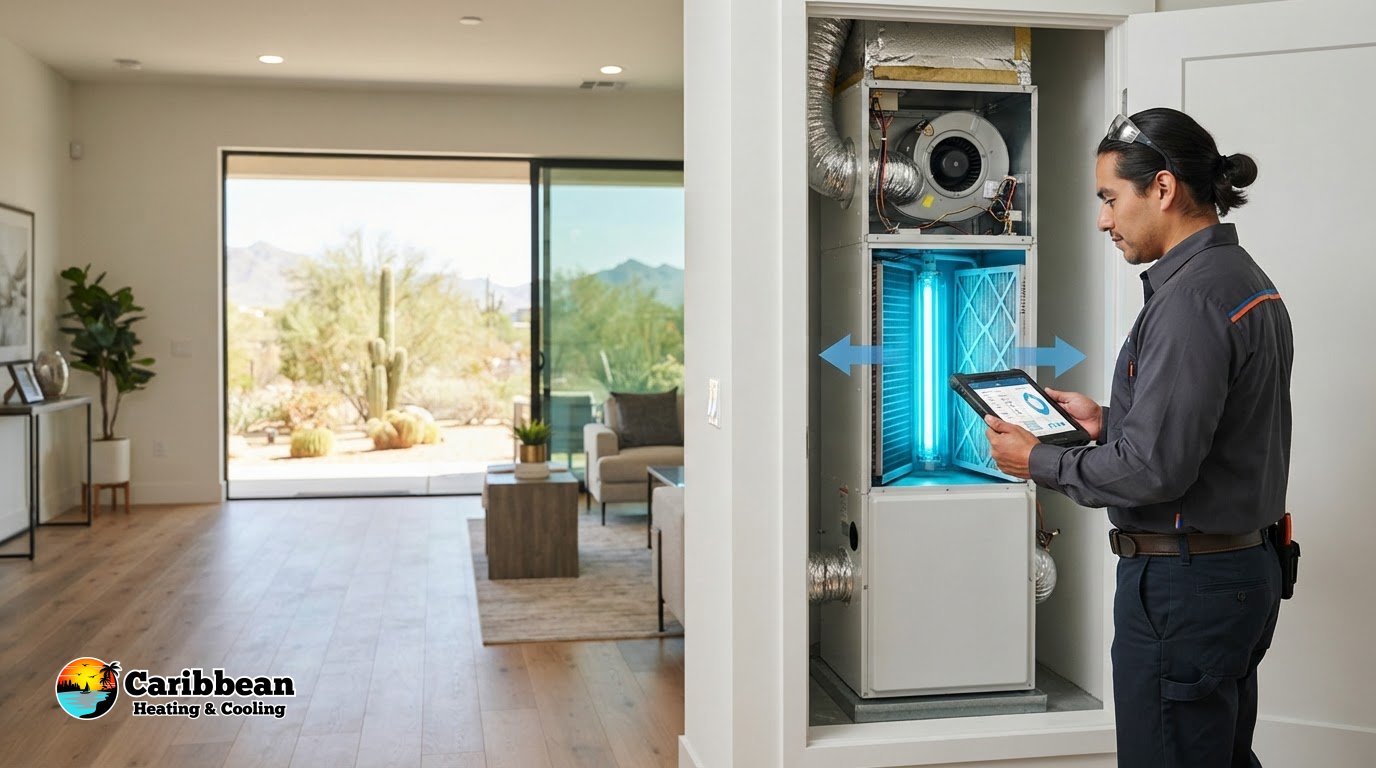
Professional indoor air quality services allow for whole-house humidifiers that work seamlessly with your existing ductwork. This ensures every room stays balanced, mitigating the health effects of dry indoor air such as increased respiratory infections and aggravated allergies. This system-wide approach provides a permanent solution rather than a room-by-room patch.
Whole-Home Humidifier vs. Portable Units
Portable units typically cover only 300 to 500 square feet. A whole-home system treats every inch of your living space simultaneously. Maintenance is also much simpler. Instead of daily scrubbing and refilling, a whole-house unit usually only requires a single annual checkup during your routine HVAC service. It’s a set-it-and-forget-it solution for desert living.
The Role of Thermostats in Humidity Control
Modern smart ac installation packages now frequently include advanced thermostats with built-in hygrometers. These devices monitor relative humidity in real-time and can automatically trigger your HVAC system to add moisture when levels dip. If you’re tired of dry mornings, speaking with a technician can help you automate your home’s comfort.
You can also use natural boosters. Adding leafy houseplants like Boston ferns or spider plants acts as a natural humidifier through transpiration. Keeping bathroom doors open after a shower or using strategic ventilation during rare humid mornings helps hold moisture inside your living areas.
Professional IAQ Solutions: Restoring Desert Comfort
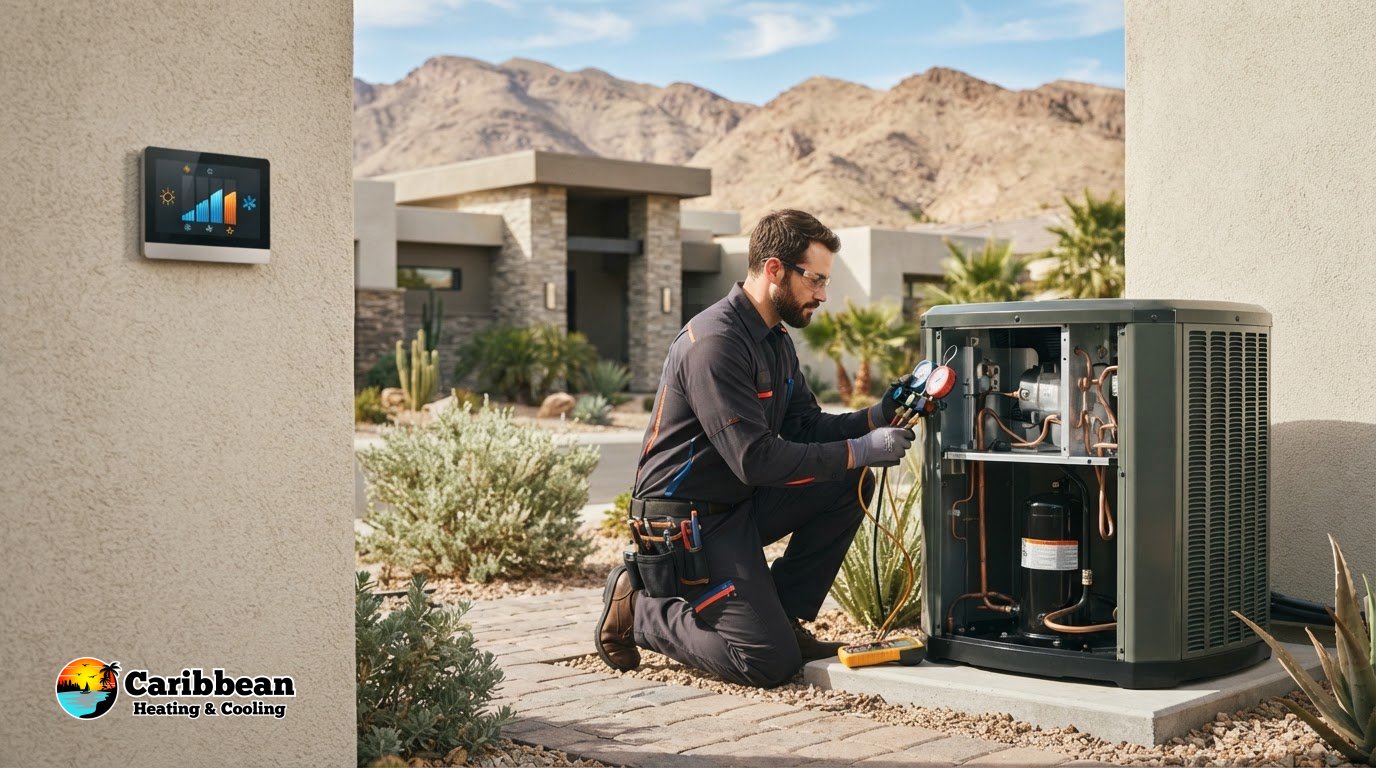
Solving the issue of dry air in house las vegas environments requires a comprehensive strategy that goes beyond simple water injection. A properly tuned air conditioner serves as your home’s first line of defense. When your system is optimized, it manages temperature without aggressively stripping every ounce of moisture from the rooms. Routine ac maintenance is vital here; it prevents “sick building syndrome” by ensuring filters are clean and components are calibrated for the Mojave climate. This transition from simply surviving the heat to thriving in a balanced sanctuary is the hallmark of professional indoor air quality management.
What to Expect During an IAQ Consultation
Our approach starts with data, not guesswork. During a consultation, our experts conduct professional humidity testing and detailed airflow analysis. We evaluate how your specific floor plan in North Las Vegas or Summerlin impacts moisture retention. We then offer tailored recommendations for high-efficiency filtration and moisture injection systems. We follow rigorous guidance on home humidifiers to ensure your new equipment is safe, efficient, and easy to maintain over the long term.
Why Caribbean Heating & Cooling for Las Vegas IAQ?
Choosing a local partner makes a difference when navigating the unique environmental demands of Southern Nevada. We’re a family-owned business deeply rooted in the community since 2018. We provide 24/7 residential support for all hvac las vegas needs, because we know that air quality issues don’t follow a 9-to-5 schedule. Our technicians combine technical proficiency with a friendly, dependable approach designed to build trust. We don’t just fix machines; we restore the daily comfort and safety your family relies on.
Take Control of Your Indoor Environment
Living in the Mojave Desert doesn’t mean you have to accept chronic discomfort. You now understand how the combination of extreme climate and your cooling system creates dry air in house las vegas properties. By moving beyond temporary portable fixes and investing in whole-home humidity control, you protect your health and your home’s structural integrity. Our team at Caribbean Heating & Cooling has served as local, family-owned experts since 2018. We specialize in tailored Indoor Air Quality solutions and provide 24/7 emergency support to keep your family comfortable.
Don’t let parched air disrupt your sleep or damage your furniture any longer. Schedule your Indoor Air Quality consultation with Caribbean Heating & Cooling today! We’re here to help you breathe easier in a home that feels like a true sanctuary. Your comfort is our priority.
Frequently Asked Questions
What is the ideal humidity level for a home in Las Vegas?
The ideal indoor humidity level for a Las Vegas home is between 30% and 50%. While the outdoor Mojave air often drops into the single digits, maintaining this range indoors prevents respiratory irritation and protects expensive wood features. If your home falls below 30%, you’ll likely notice dry skin, scratchy throats, and increased static electricity throughout your living space.
Can dry air make my house feel colder than it actually is?
Yes, dry air makes your home feel colder because it accelerates the evaporation of moisture from your skin. This process strips heat away from your body even if the thermostat is set to a standard temperature. Increasing the humidity allows you to feel warmer at lower temperatures, which can improve your overall energy efficiency during the winter months.
Does my air conditioner make the air drier in the summer?
Your air conditioner definitely makes the air drier during the summer. As the system cools your home, it pulls moisture out of the air to lower the temperature. In a desert climate where humidity is already low, this process often results in excessive dry air in house las vegas properties, leading to morning nosebleeds and static shocks.
Are whole-house humidifiers hard to maintain in the desert?
Whole-house humidifiers are actually very easy to maintain compared to portable units. Instead of daily cleaning and refilling, these systems typically only require a professional inspection once a year. We usually perform this check during your routine HVAC maintenance visit to ensure the water panel is clean and the system is operating at peak efficiency.
Why do I get more static shocks in my house during the winter?
Static shocks increase in the winter because cold air holds significantly less moisture than warm air. When you run your heating system, it further dries out the indoor environment. This lack of moisture prevents static charges from dissipating naturally, causing those annoying zaps whenever you touch a metal doorknob, your pets, or another person in the home.
How can I tell if my indoor air quality is actually poor?
You can identify poor indoor air quality through physical symptoms like chronic dry eyes, frequent headaches, or persistent sinus issues. Environmental signs such as excessive dust buildup, wilting houseplants, or gaps appearing in your wood flooring also indicate a moisture imbalance. A professional IAQ consultation can provide precise digital readings of your home’s humidity and pollutant levels.

Related Posts
Comments (0)