
Son las 2:00 a. m. en Anthem y, aunque las estrellas del desierto son hermosas, el aire a 38 grados Fahrenheit (3 °C) que se cuela por sus ventanas...
Heater Blowing Cold Air in Las Vegas? Troubleshooting & Fixes (2026)
The most common reason for a heater blowing cold air in Las Vegas isn’t a mechanical failure; it’s often a simple thermostat setting you can change in seconds. When those desert temperatures dip into the 30s at night, waking up to a chilly breeze instead of warmth is more than just an inconvenience. It’s stressful. You’re likely worried about the cost of a major repair or the prospect of a freezing house while waiting for a technician. We understand how frustrating it is when your comfort depends on a system that seems to be working against you.
In this guide, we’ll help you regain control of your home’s climate by identifying the root causes of cold air. You’ll discover which simple fixes you can handle yourself right now to restore your heat and learn how to recognize when it’s time to call in a professional for heating repair. From checking your limit switch to understanding how the 2024 IECC efficiency standards impact your equipment, we’ve broken down everything you need to know to stay warm and save money this winter.
Key Takeaways
- Check your thermostat and fan settings first to ensure your system isn’t simply circulating room-temperature air between heating cycles.
- Learn how to troubleshoot a heater blowing cold air in Las Vegas by identifying common issues like clogged air filters and thermostat calibration errors.
- Understand the heat pump defrost cycle, a normal process that can cause temporary cooling while the unit clears ice during cold desert nights.
- Identify the specific warning signs, such as burning smells or disconnected ductwork, that signal a need for professional heating repair.
Quick Checks: Why Your Las Vegas Heater Feels Cold (But Might Not Be Broken)
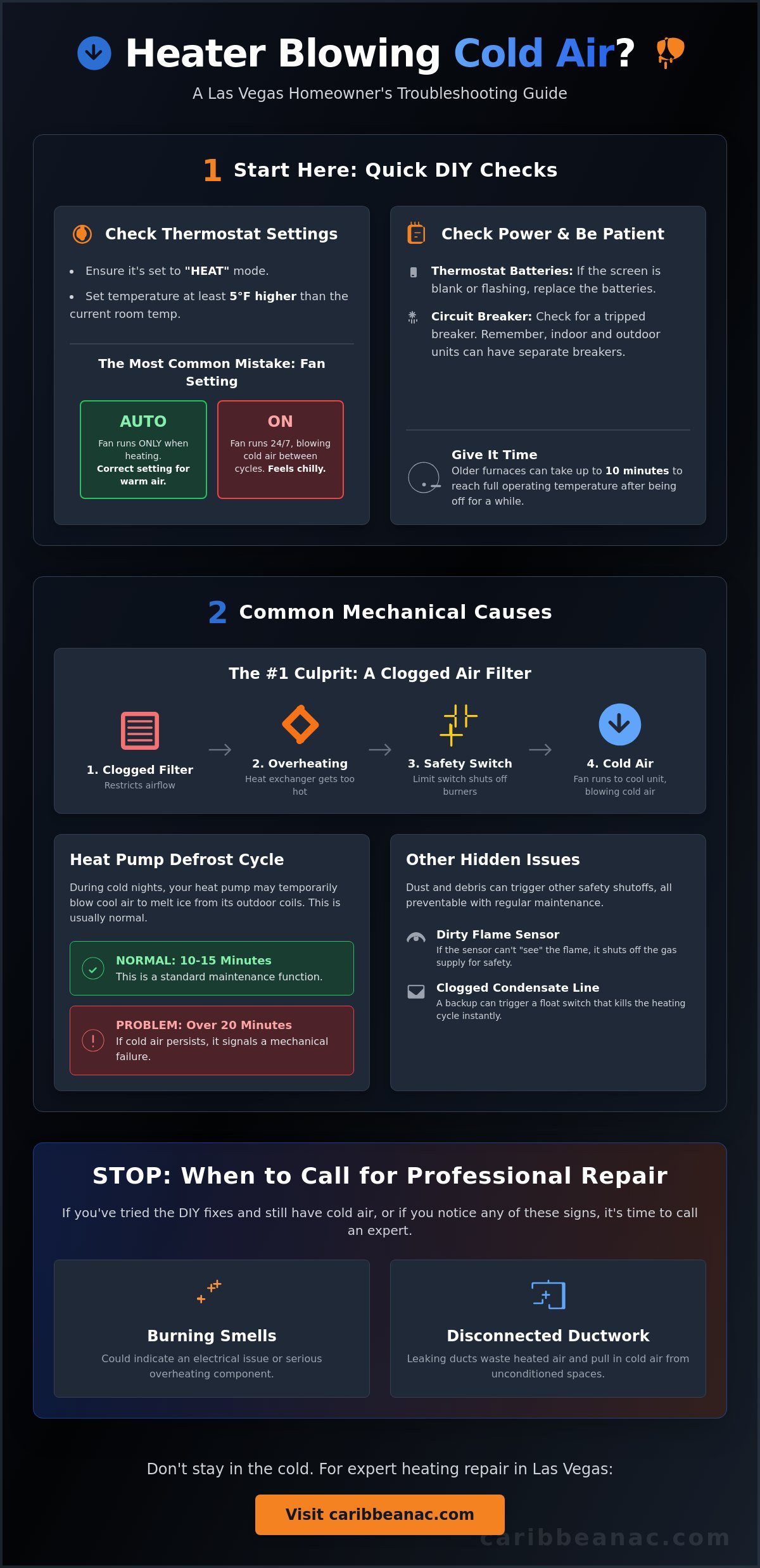
Before you worry about expensive repairs, it’s essential to rule out simple configuration errors. A heater blowing cold air Las Vegas homeowners often experience is frequently the result of a single toggle switch or a lapse in power. First, verify that your thermostat is set to “Heat” and that the target temperature is at least five degrees higher than the current room temperature. If the settings are too close, the system might not trigger the heating sequence correctly, leaving you with a lukewarm breeze.
To help you visualize these common thermostat issues and how they impact your comfort, watch this short walkthrough:
The Thermostat Fan Setting Mistake
This is the most common “false alarm” we see across the Valley. If your thermostat fan is set to “ON” rather than “AUTO,” the blower motor runs 24/7. While this helps with air filtration, it means the vents will blow unheated, room-temperature air once the furnace or heat pump finishes its heating cycle. This air often feels chilly because it’s moving across your skin. To fix this, switch the setting back to “AUTO” so the fan only engages when the heating elements are actually active.
Power and Battery Issues
Digital thermostats rely on steady power to communicate with your HVAC unit. If the screen is blank or flashing, low batteries may be sending weak or “false” signals to the control board, preventing the ignition sequence. Similarly, check your electrical panel for a tripped circuit breaker. In many Las Vegas homes, the air handler and the outdoor unit are on separate breakers. If the indoor unit has power but the outdoor unit doesn’t, you’ll get a cold breeze instead of warmth. This is especially relevant when considering how heat pumps work, as they require both components to function in harmony to extract heat from the outside air. Finally, give your system time. Older furnaces in neighborhoods like Summerlin or North Las Vegas can take up to ten minutes to reach full operating temperature after a long period of inactivity.
Common Mechanical Culprits and the ‘Heat Pump Factor’
While thermostat settings account for many service calls, mechanical issues are the next logical step in troubleshooting a heater blowing cold air Las Vegas residents often face. The most frequent offender is a neglected air filter. When desert dust restricts airflow, the heat exchanger quickly overheats. To protect the system from damage, a safety device called a limit switch shuts down the burners while keeping the blower fan running to cool the unit. This leads to a persistent blast of cold air until the system can safely reset.
Understanding the Heat Pump Defrost Cycle
Many homes in Henderson and Summerlin rely on heat pumps for year-round comfort. As the U.S. Department of Energy explains, these systems must occasionally enter a defrost cycle to melt ice from the outdoor coils during freezing winter nights. During this brief window, the system effectively reverses its operation, which may cause cool air to blow through your vents for 10 to 15 minutes. This is a normal maintenance function, not a breakdown. However, if the air remains cold for over 20 minutes, it’s a sign of a genuine mechanical failure.
Airflow and Ignition Failures
Dust is a constant challenge for local HVAC systems. Fine silt can coat your flame sensor, preventing it from detecting the burner’s ignition. If the sensor can’t “see” the flame, it shuts off the gas supply for safety, leaving the fan to circulate unheated air. Similarly, clogged condensate lines can trigger safety float switches that kill the heating cycle instantly. Most of these issues are entirely preventable. Following a thorough heater maintenance schedule ensures these sensitive components stay clean and functional. If you find your heater blowing cold air in Las Vegas despite these checks, scheduling professional heating maintenance can resolve these hidden bottlenecks before they lead to a total system shutdown.
When to Call for Professional Heater Repair in Las Vegas
If you’ve cycled through the thermostat settings and checked your filters but still have a heater blowing cold air Las Vegas winters can feel much longer. Ignoring persistent issues can lead to total system failure or hazardous conditions in your home. Professional diagnostics become necessary when the problem moves beyond a simple filter change or thermostat adjustment. Our team is ready to step in when your DIY efforts don’t yield the warmth you need.
Safety Red Flags You Can’t Ignore
Certain symptoms require immediate action. If you smell gas, often described as a rotten egg odor, or detect the scent of burning plastic, shut your system off at the breaker immediately. These are not minor glitches. A cracked heat exchanger is particularly dangerous because it can allow carbon monoxide to leak into your living space. Since this gas is odorless and colorless, a malfunctioning heater is a serious health risk. Additionally, if your heater repeatedly trips the circuit breaker, don’t keep flipping it back on. This indicates an electrical fault or a seized motor that requires an expert’s attention.
Ductwork and Mechanical Failures
Sometimes the heater is working, but the warmth never reaches your rooms. Leaky or disconnected ductwork in your attic or crawlspace can pull in freezing outside air, bypassing the heating element entirely. You might also hear loud banging, screeching, or persistent clicking. These sounds often signal a failing blower motor or a cracked component. While regular preventative maintenance can catch these issues early, sudden failures during a cold snap require prompt intervention to prevent further damage.
Expert Residential Support in the Valley
Caribbean Heating & Cooling provides 24/7 emergency support for residents across Las Vegas, Henderson, and Summerlin. We understand that a lack of heat isn’t just uncomfortable; it’s a safety concern for your family. Our team uses advanced diagnostic tools to pinpoint the exact cause of your system’s failure. Choosing professional heater repair ensures your system is safe, efficient, and ready to handle the rest of the winter season.
Schedule your 24/7 emergency heater repair with Caribbean Heating & Cooling today to restore comfort to your home.
Restore Your Home’s Warmth Today
Dealing with a heater blowing cold air Las Vegas homeowners often find that many issues stem from simple thermostat settings or normal heat pump defrost cycles. If you’ve checked your filters and fan settings but the air remains cold, it’s time to prioritize your comfort. Unresolved mechanical issues don’t just cause discomfort; they can lead to higher energy bills and serious safety hazards. You shouldn’t have to guess when it comes to your family’s well-being during a cold desert night.
As a family-owned and operated business since 2018, Caribbean Heating & Cooling specializes in the unique HVAC demands of our local climate. We offer 24/7 emergency residential support to ensure you’re never left without heat. Our technicians bring the technical expertise and dependable service required to diagnose and fix your system correctly the first time. Take the stress out of maintenance by reaching out to a local partner you can trust.
Request 24/7 Emergency Heater Repair in Las Vegas
Our team is ready to provide the professional care needed to keep your home warm and your system running efficiently all winter.
Frequently Asked Questions
Why is my heater blowing cold air but the thermostat is set to heat?
Your system is likely stuck in a safety lockout due to an ignition failure or a tripped limit switch. When the furnace fails to light the burners, the blower fan still runs to clear out unburnt gas or cool the internal components, resulting in cold air through your vents. This often happens if the flame sensor is dirty or the gas supply is interrupted. Check your air filter first, as a clogged filter is a primary cause of these safety shutdowns.
Is it normal for a heat pump to blow cold air sometimes?
Yes, it’s a normal part of the defrost cycle or the transition to auxiliary heat. During freezing desert nights, the outdoor unit may frost over; the system temporarily reverses to melt this ice, which can cause cooler air to blow for about 10 to 15 minutes. Additionally, heat pump air is generally delivered at a lower temperature than a gas furnace. Because it’s closer to your body temperature, it can sometimes feel cool even when the system is working perfectly.
How long should I wait for my heater to blow warm air?
Most systems require one to five minutes to reach their full operating temperature. Gas furnaces have a delay to allow the heat exchanger to warm up before the fan starts, preventing a cold blast. If a heater blowing cold air Las Vegas residents are troubleshooting continues for more than ten minutes, it’s a sign of a mechanical malfunction. Modern high-efficiency systems may take slightly longer to ramp up, but the air should be noticeably warm shortly after the cycle begins.
What should I do if I smell gas coming from my vents?
Leave your home immediately and call your utility provider or emergency services from a safe location. Do not operate light switches, use your phone inside the house, or attempt to shut off the gas valve if you aren’t familiar with the procedure. A sulfur or rotten egg smell indicates a natural gas leak, which is a critical safety risk. Once the utility company confirms the area is safe, contact a professional to inspect your heating unit and gas lines for leaks.

Related Posts
Comments (0)