
El costo de instalación de una bomba de calor en North Las Vegas depende del tipo y la capacidad del sistema, los ductos y la instalación eléctrica...
What to Do When Your Air Conditioner Leaks Water Inside
An air conditioner can still cool while having a drainage problem. If you find an air conditioner leaking water inside your Summerlin home, switch it off at the thermostat. A clogged condensate drain line is a common cause, while a dirty filter can restrict airflow and contribute to frozen coils that leak as they thaw. Water dripping indoors isn’t normal, even if the system still cools.
It’s understandable to worry about damage to floors, walls, or ceilings. Knowing how AC condensation drains can help you narrow down the cause. This article explains where to find the condensate drain line, how clogs can make water back up, and why dirty filters or frozen evaporator coils may lead to leaks. You’ll also learn which signs call for professional attention.
Key Takeaways
- Look for a white PVC drain pipe running from the indoor air handler toward an outdoor drainage point to help locate the condensate line.
- If you spot ice on the evaporator coil, switch off the AC and let it thaw naturally; don’t chip or scrape the ice away.
- Check whether the air filter is clogged and replace or clean it according to your system’s recommendations.
- Leaks can also involve a damaged drain pan or condensate pump, so recurring water around the unit calls for AC repair.
Where is my AC condensate drain line located?
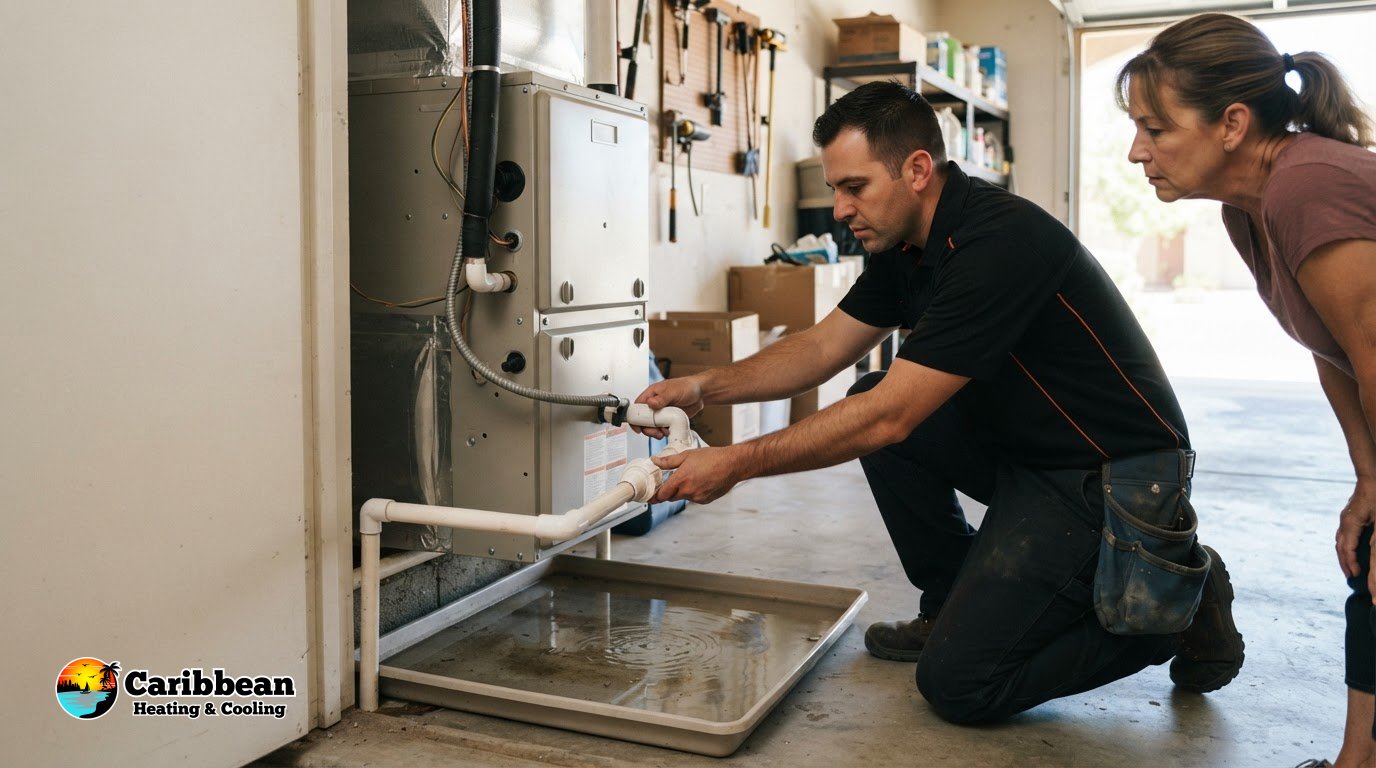
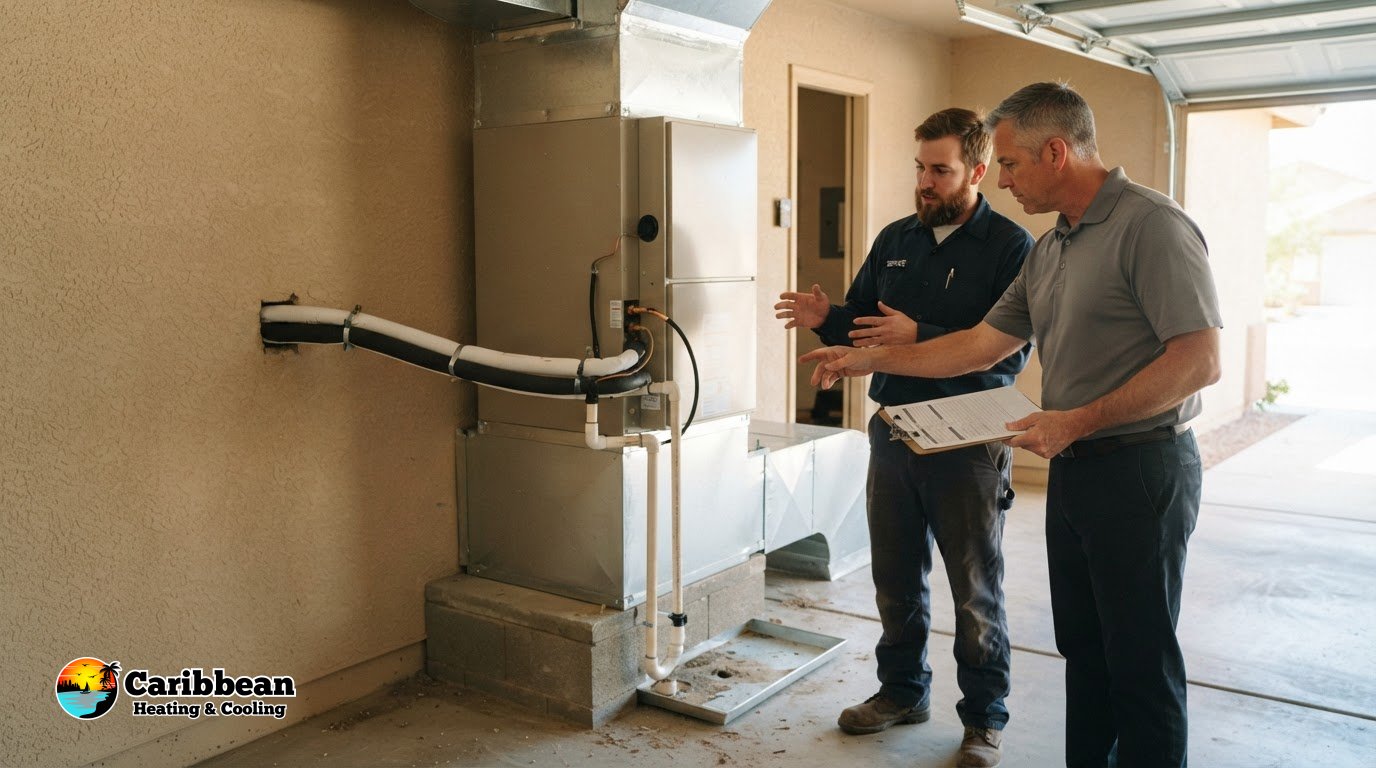
Look near the indoor air handler or evaporator coil for a white PVC pipe. It usually carries condensate outside, away from the equipment. Water from the coil drips into a drain pan, then flows through this line. The outdoor outlet may be near the unit or on an exterior wall.
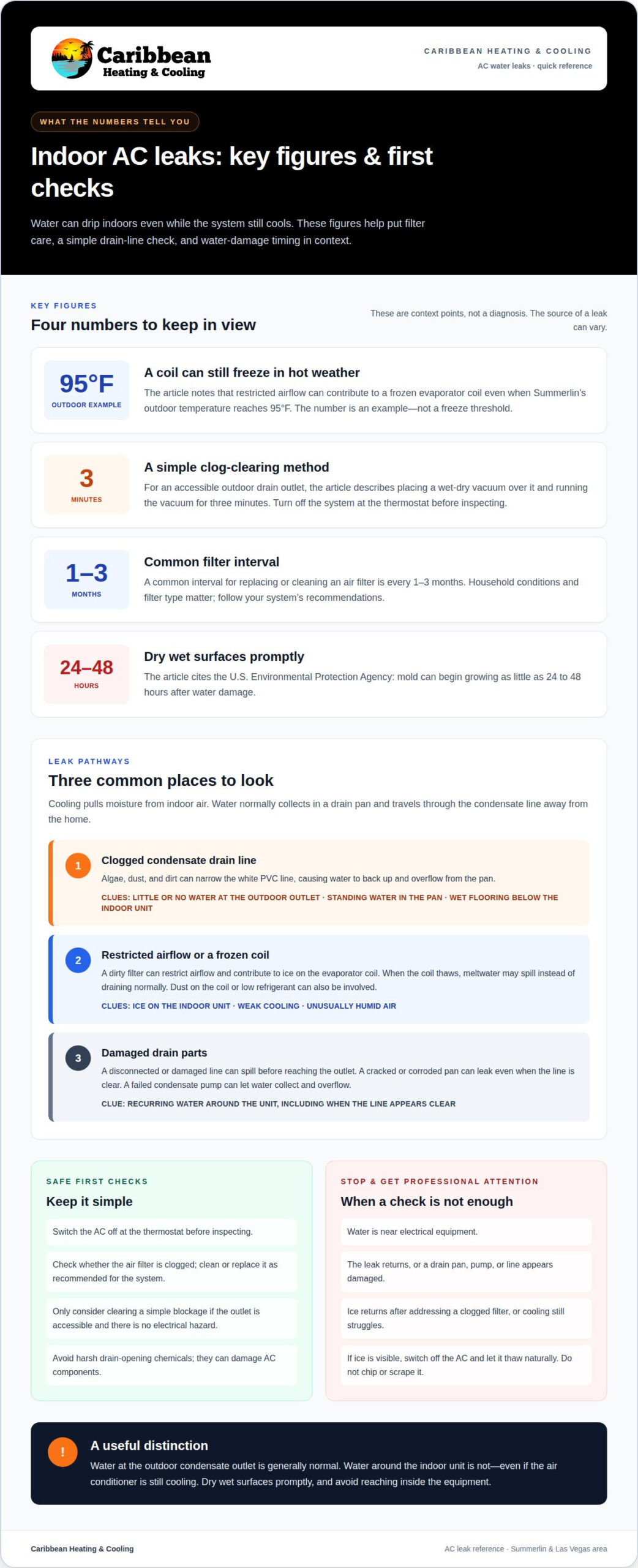
A clogged line is a common cause of indoor water leaks. Algae, dust, and dirt can narrow the passage until water backs up into the pan and overflows. Signs include little or no water at the outdoor outlet, standing water in the pan, or wet flooring below the indoor unit. A clog may not stop the system from cooling.
A simple blockage may be a DIY fix if the outlet is accessible and there’s no electrical hazard. Turn off the system at the thermostat before inspecting; call a technician for recurring leaks, damaged parts, or water near electrical equipment. Section 608 of the EPA Clean Air Act regulates refrigerants and requires proper handling in the United States, according to the U.S. Environmental Protection Agency.
To clear a simple clog, place a wet-dry vacuum over the outdoor condensate drain outlet and run it for three minutes. Don’t pour harsh drain-opening chemicals into the line, as they can damage AC components.
A disconnected or damaged drain tube can spill water before it reaches the outlet. An old, cracked, or corroded drain pan may leak even when the line is clear, so a technician should inspect damaged parts. Dry wet surfaces promptly: according to the U.S. Environmental Protection Agency, mold can begin growing in as little as 24 to 48 hours after water damage.
Dirty air filters and frozen evaporator coils
A dirty filter restricts airflow across the evaporator coil. With less warm air moving over it, the coil can become too cold and freeze. This can happen even when Summerlin’s outdoor temperature reaches 95°F. Ice on the indoor unit, weak cooling, or unusually humid air can signal restricted airflow or another moisture problem.
As a frozen coil thaws, meltwater may spill instead of draining normally, causing a leak near the indoor unit. The drain can also struggle if water accumulates faster than it can carry it away. Dust or grime directly on the evaporator coil can contribute to ice buildup, so a clean filter doesn’t rule out a coil problem.
Start with the filter: replace or clean it as recommended for your system and household. A common interval is every 1-3 months, but household conditions and filter type matter. If you see ice, turn off the air conditioner and let the coil thaw completely. Don’t chip or scrape ice, since that can damage the coil. Check for water around the unit as it melts.
If ice returns after you address a clogged filter, or the system still struggles to cool, arrange a technician’s inspection. Low refrigerant can also freeze an evaporator coil, and suspected refrigerant leaks need professional attention. For recurring comfort concerns alongside airflow problems, explore indoor air quality services as part of a broader home-comfort assessment.
How air conditioners produce and drain condensate
Cooling creates water as indoor air passes over the cold evaporator coil. Whether that moisture drains normally depends on the system’s components and operating conditions.
Condensate Production and Normal Drainage
Condensate is moisture collected from indoor air as the evaporator coil cools it. Water falls into a drain pan, then travels through the condensate drain line away from the home. Water at the outdoor outlet is generally normal; a leak around the indoor unit is not. In Las Vegas, low outdoor humidity doesn’t prevent condensate from forming. Indoor humidity, temperature, system runtime, and equipment size all affect the amount.
Broken Drain Lines and Failed Pumps
A broken or disconnected drain line can release water before it reaches the intended outlet. A condensate pump moves water when gravity alone can’t carry it to the drain. If the pump fails, water may collect and overflow near the indoor unit. A clogged line can also cause water to back up. These faults can lead to leaks even while the system continues cooling.
Cracked or Damaged Drain Pans
The drain pan catches water beneath the evaporator coil and directs it toward the drain line. A crack, corrosion, or deterioration can let condensate escape before it drains. Look for water beneath the indoor unit or around the pan, but don’t reach inside the equipment. Persistent moisture can damage nearby surfaces and encourage growth around the unit.
Replacing Condensate Pumps and Drain Pans
Replacement cost depends on the equipment and the work required, with pricing provided after a quote request. Factors include whether the failed part is the pump or pan, access to the component, and whether the drain line also needs attention. For a water leak or cooling problem requiring system diagnosis, request AC repair.
Caribbean Heating & Cooling: AC Repair
Caribbean Heating & Cooling repairs AC systems for homeowners dealing with indoor leaks, recurring drainage trouble, or cooling problems in Summerlin and the Las Vegas area. Arrange a repair if a leak returns after a simple clog is cleared, a drain pan or condensate pump appears damaged, or ice forms on the evaporator coil. These symptoms can have different causes, so it’s important to identify the source before replacing parts.
AC repair can address the system problem behind the water, rather than treating the puddle alone. If your air conditioner keeps leaking or you’re unsure why water is collecting indoors, contact Caribbean Heating & Cooling to discuss a repair.
Take the Next Step Toward Reliable Cooling
An indoor AC leak can interrupt comfort and leave you unsure whether to keep running the system. If your air conditioner is leaking water inside your Summerlin home, focus on getting a clear diagnosis instead of repeatedly wiping up the same spot. Note when the water appears, whether cooling seems weaker, and where the moisture first collects. These details can help explain the symptoms during service.
Caribbean Heating & Cooling offers AC Repair for troubleshooting, AC Maintenance for routine system care, and AC Installation when a new system is needed. The right next step depends on what’s causing the issue, not just where water pooled. Contact Caribbean Heating & Cooling to discuss your AC concerns and move toward a more comfortable home.
Frequently Asked Questions
What Should You Do When Your AC Is Leaking Water?
Switch off the AC at the thermostat and keep people away from water near electrical components. If water is near wiring or a control board, shut off power at the main panel only if you can do so safely. Don’t reach inside the equipment. Move electronics away and soak up accessible standing water without opening the unit.
How do I know if my AC condensate line is clogged?
Little or no water flowing from the outdoor drain outlet while the AC runs can indicate a blockage, especially if water is collecting indoors. Look for recurring dampness beneath the air handler or a full drain pan. A dry outlet alone doesn’t prove there’s a clog, because condensate production varies with indoor conditions and system runtime.
How much water should drain from an air conditioner?
There isn’t one fixed amount of condensate for every home. The volume changes with indoor humidity, temperature, how long the system runs, and equipment size. A steady outdoor drip can be normal during cooling, while water around the indoor unit signals a drainage or equipment problem. Compare indoor and outdoor signs rather than judging by volume alone.
Quick Answer: What Causes an Indoor AC Water Leak?
A blocked condensate drain is a common cause, but a damaged pan, disconnected tube, failed pump, or frozen coil can also let water escape. If an air conditioner is leaking water inside your Summerlin home, note whether the leak appears during cooling, after ice melts, or near the drain outlet. The timing can help narrow down the cause.
Where Is the Water Coming From?
Indoor AC water usually escapes from the condensate collection or drainage path, but the wet spot may be below the actual fault. Water can travel along a cabinet, ceiling, or nearby surface before dripping. Trace the damp trail upward without removing panels, and note whether moisture first appears near the indoor unit, a ceiling seam, or the floor.

Related Posts
Comments (0)