
¿Qué pasaría si su aire acondicionado deja de funcionar al anochecer durante una ola de calor en Summerlin? El servicio de emergencia para HVAC...
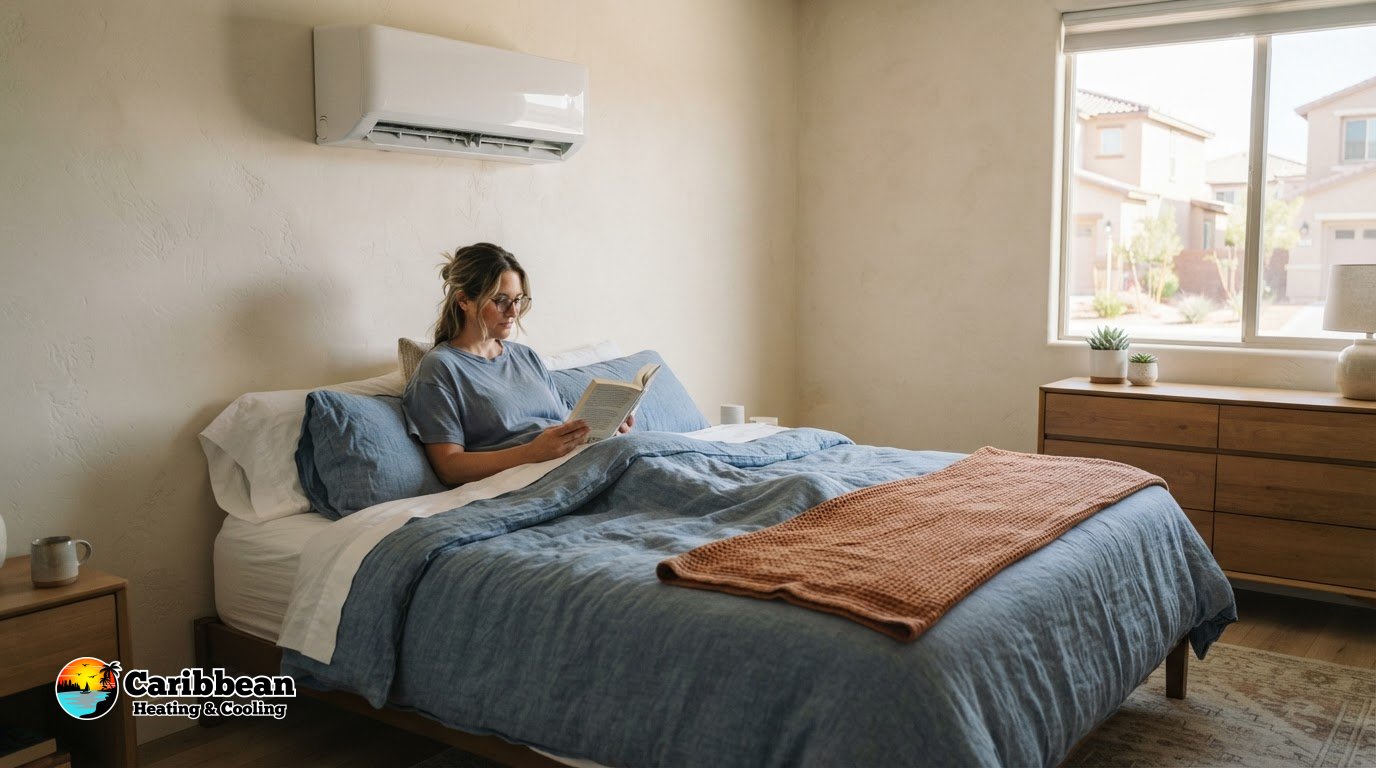
What Is the Quietest HVAC System for Your Home?
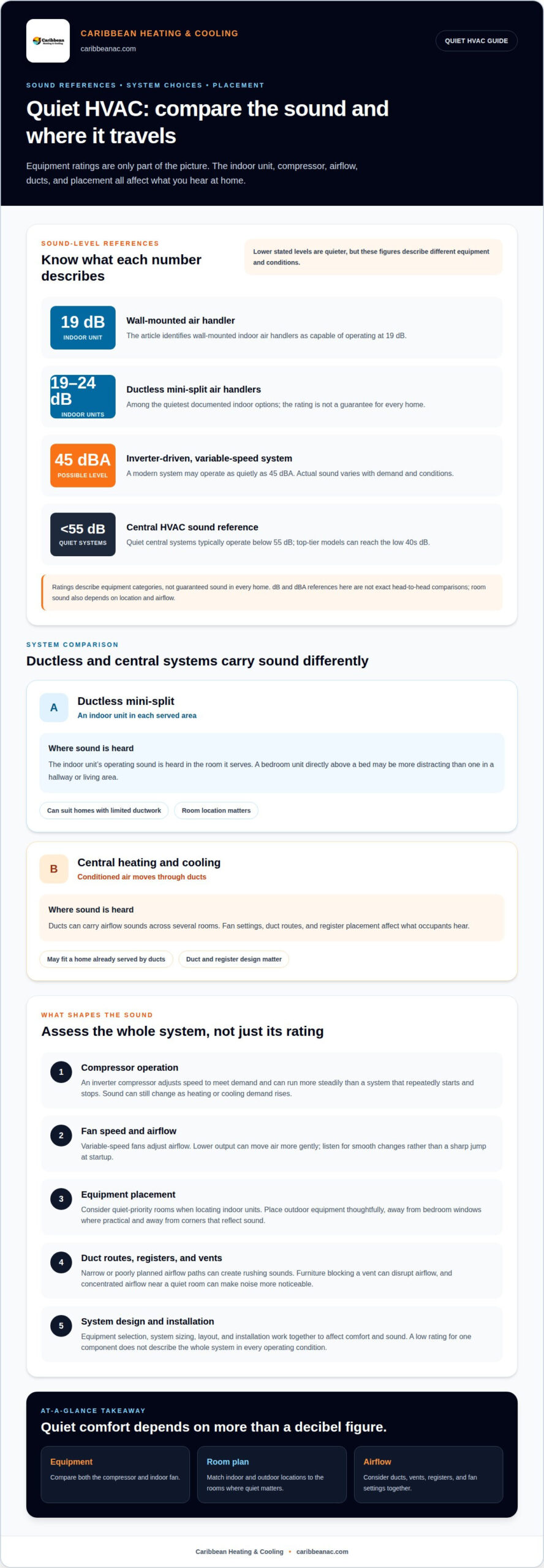
Quiet starts with how an HVAC system runs, not just what type it is. If you’re asking what is the quietest HVAC system available, inverter-driven systems with variable-speed fans are a strong answer: some can operate at sound levels as low as 45 dBA. The quietest indoor units, including ductless mini-split air handlers, can run at 19-24 dB.
It makes sense to focus on the equipment, but the fan, compressor, installation, and room placement all shape what you hear at home. This guide explains how those factors affect sound and why a well-designed central system can also be a quiet choice. You’ll learn what to look for in inverter compressors and variable-speed fans, how unit placement matters, and how central heating and cooling options compare, so you can choose a system that supports comfort without adding unnecessary noise.
Key Takeaways
- Inverter compressors and variable-speed fans can reduce abrupt changes in sound by adjusting output to the home’s needs.
- Where an indoor unit and outdoor equipment sit can affect how much operating noise reaches living spaces.
- Central heating and cooling can be a quiet option when system design, equipment selection, and installation work together.
- Professional HVAC installation can help match a system to your home’s comfort needs, while AC repair or maintenance can address noise from existing equipment.
1. Inverter compressors and variable-speed fans
For homeowners asking what the quietest HVAC system available is, inverter-driven equipment is a strong candidate. A modern variable-speed system with inverter technology may operate as quietly as 45 dBA. That figure describes a possible operating level, not the sound produced in every home.
An inverter compressor adjusts its speed to meet heating or cooling demand. Unlike a system that repeatedly starts and stops at one output, it can run more steadily as conditions change. That can make the transitions between operation less noticeable. The compressor still works harder when the home needs more heating or cooling, so sound can vary with demand.
Variable-speed fans adjust airflow instead of running at one fixed speed. At lower output, a fan can move air more gently, reducing the forceful whoosh associated with high airflow. Listen for smooth changes between operating levels rather than a sharp jump at startup. Fan design and installation also influence the sound you hear.
When comparing equipment, consider both the compressor and the indoor fan. A low sound rating for one component doesn’t describe the entire system during every operating condition. The 45 dBA figure is useful as a reference point, but also consider how the equipment sounds as it ramps up, runs steadily, and changes output.
Comfort matters as much as sound. A system running at lower speed for longer periods may provide steadier heating or cooling, while abrupt airflow changes can stand out in quiet rooms. In Las Vegas, cooling demand can climb during hot weather, and inverter controls can adjust output as conditions change. Correct system sizing and placement are also essential to quiet operation.
2. Quiet HVAC system selection and room placement
Among the quietest documented indoor options are ductless mini-splits, rated at 19-24 dB in 2025. Wall-mounted indoor air handlers can operate at 19 dB. These figures describe equipment categories, not specific brands or guaranteed sound levels in every home.
Placement affects how noticeable equipment sounds are. A bedroom wall unit directly above a bed may be more distracting than one in a hallway or living area. Position outdoor equipment thoughtfully, with distance from bedroom windows and away from corners that reflect sound. When planning, identify the rooms where quiet matters most and consider equipment locations in relation to them.
Duct design, airflow, and vent placement also affect noise. Narrow or poorly planned airflow paths can create a rushing sound at registers, while furniture blocking a vent can disrupt airflow and make noise more noticeable. Assess duct routes, register locations, and airflow needs together rather than treating the indoor unit as the only sound source. Even equipment with a low sound rating can seem loud if airflow is concentrated near a quiet room.
Installed cost depends on equipment type, home layout, existing ductwork, and installation requirements; pricing is provided after a quote request.
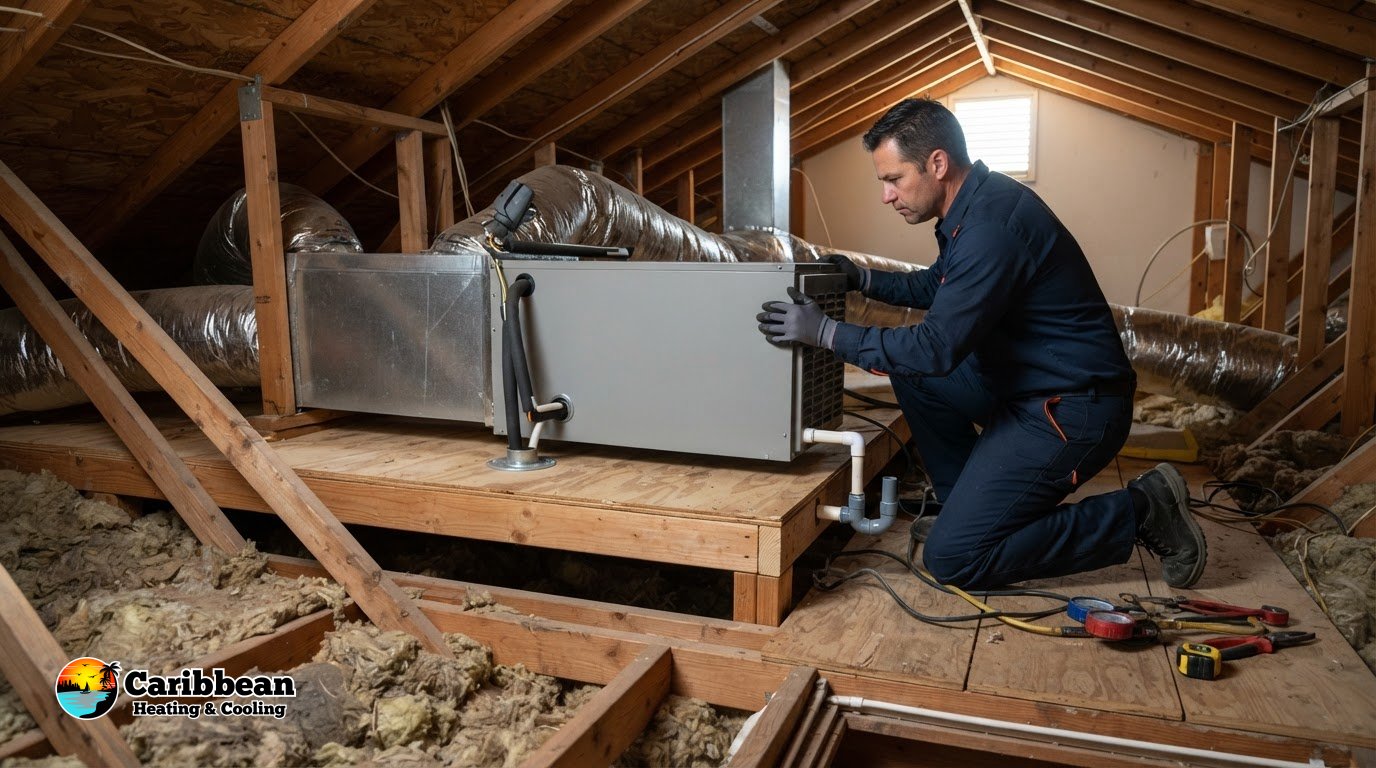
For a home with limited ductwork, a ductless layout may suit the room plan; central equipment may fit better when ducts already serve the home. A professional HVAC installation considers equipment and placement as one system, helping align comfort needs with quieter operation.
3. Quiet central heating and cooling systems
Central HVAC can be quiet when equipment, ductwork, and installation work together. Quiet systems typically operate below 55 dB, while top-tier models can reach the low 40s dB. Those figures describe system sound levels, but the sound heard in a room also depends on equipment location and airflow.
Ductless mini-splits have an indoor unit in each served area, so its operating sound is heard in that room. Central HVAC moves conditioned air through ducts, which can carry airflow sounds across several rooms. A central system can still operate quietly, but fan settings, duct routes, and register placement affect what occupants hear.
Heat pumps offer another central-system option for homes needing both heating and cooling. Many 2025 heat pump models use R-32 refrigerant and are designed for lower decibel ratings. Refrigerant type alone doesn’t determine the sound level; the model’s design and installation also matter.
For a quieter central setup, start with the home’s layout and existing duct system. Where practical, place the outdoor unit away from bedroom windows and avoid corners that reflect sound. The indoor equipment, duct routes, and registers should work together to deliver airflow without concentrating noise in one room. A living room register with a strong rush of air, for example, can undermine an otherwise quiet system.
The takeaway: central HVAC can meet quietness goals without using a separate indoor unit in every room. For help planning a system around your home’s heating needs, explore heating installation options.
Caribbean Heating & Cooling: HVAC installation
Caribbean Heating & Cooling helps homeowners in Las Vegas, Henderson, North Las Vegas, and Summerlin with HVAC installation. When planning a quieter system, consider the home’s layout, indoor unit locations, outdoor equipment position, and airflow together. These choices affect how operating sounds carry into bedrooms and living areas.
If an existing system has become noisier, AC repair can address equipment problems, while AC maintenance supports ongoing system care. The right next step depends on whether you’re planning new equipment or responding to a change in sound from a system already in place.
Contact Caribbean Heating & Cooling to discuss your home’s HVAC needs.
Make quiet comfort part of your next HVAC decision
Finding the quietest HVAC system available takes more than comparing sound ratings. Consider how you use your home, which rooms need uninterrupted quiet, and whether your current system has become noisier. These details help clarify whether you need new equipment or attention to an existing concern.
Caribbean Heating & Cooling offers AC Installation for homeowners planning an upgrade, as well as AC Repair and AC Maintenance for existing systems in Las Vegas, Henderson, North Las Vegas, and Summerlin. Tell us what sounds you notice and where they matter most, then request service to discuss your home comfort needs.
Contact Caribbean Heating & Cooling today to talk through your next step. A quieter, more comfortable home can begin with a clear plan.
Frequently Asked Questions
What Makes an HVAC System Quiet?
Quiet operation depends on more than the compressor. Vibration, airflow, and the equipment housing all contribute. A vibrating cabinet can transmit sound through a wall or floor, while an obstructed return path can make airflow more noticeable. When diagnosing unexpected noise, a technician can inspect mounting, panels, and airflow instead of relying only on the unit’s sound rating.
What are typical HVAC noise limits?
Quiet HVAC systems typically operate below 55 dB, but that is an equipment benchmark, not a universal legal limit. If an air conditioner operates above 70 decibels, check the local noise ordinance that applies to the property. Rules can vary by location and measurement point, so the equipment’s sound rating and local requirements are separate considerations.
What HVAC system types are quietest for residential homes?
Ductless mini-splits and well-designed central systems can both provide quieter residential comfort. A mini-split may suit a home where separate room control is useful, while central HVAC serves rooms through a shared system. In Las Vegas, Henderson, North Las Vegas, and Summerlin, the home’s layout and cooling needs help determine which arrangement makes practical sense.
What are the quietest central air conditioners and heat pumps available in the U.S.?
Rather than relying on a single model name, compare central equipment’s published sound ratings and operating conditions. Quiet HVAC systems typically operate below 55 dB, and top-tier models can reach the low 40s dB. Many 2025 heat pump models use R-32 refrigerant and are designed for lower decibel ratings, though refrigerant alone does not determine system sound.
How many decibels do quiet HVAC systems produce indoors and outdoors?
Quiet indoor mini-split units can operate at 19-24 dB, with some wall-mounted air handlers rated at 19 dB. For whole-system comparisons, quiet HVAC equipment typically operates below 55 dB, and top-tier systems can reach the low 40s dB. Outdoor sound heard at a property depends on equipment placement and distance, so an indoor rating isn’t an outdoor measurement.

Related Posts
Comments (0)