
El costo de instalación de una bomba de calor en North Las Vegas depende del tipo y la capacidad del sistema, los ductos y la instalación eléctrica...

Weak Airflow From AC Vents in Las Vegas: Should You Close Unused Vents
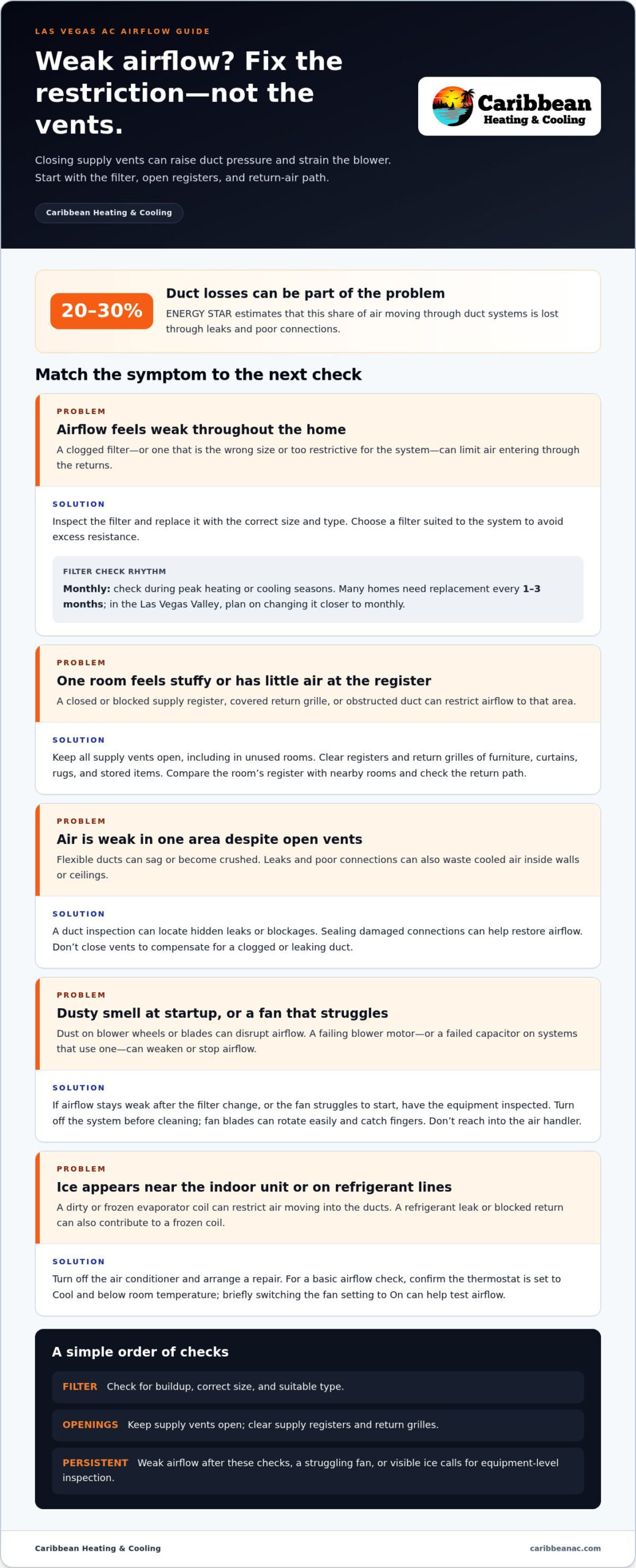
Closing unused vents can make weak airflow worse, not better. If you’re noticing weak airflow from AC vents in Las Vegas, keep supply vents open and check the air filter first. A clogged filter can restrict the air entering your system and reduce airflow to the rooms. A dirty filter can cause significant trouble.
It’s natural to assume that shutting vents sends more cooled air to the rooms you use. But restricting airflow can increase pressure in the ducts and strain the blower. The cause may be a dirty filter, a blocked register, or a problem inside the equipment.
This article explains what to check, how blower or fan problems affect airflow, and when persistent symptoms call for AC repair. You’ll also learn why keeping vents open is usually the better choice for comfort in a Las Vegas home.
Key Takeaways
- Check the air filter and make sure supply registers and return grilles are open and unobstructed; a clogged or poorly suited filter can restrict airflow.
- Keep vents open in unused rooms. Closing too many can increase duct pressure and strain the blower.
- ENERGY STAR estimates that 20 to 30 percent of air moving through duct systems is lost through leaks and poor connections, so weak airflow in one room may point to a duct issue.
- If airflow stays weak after you change the filter, or the blower seems to be struggling, AC repair can help identify the equipment problem.
Blower motor and fan problems
Nevada HVAC contractors need a state license for work that requires contractor licensing; you can check a contractor’s status through the Nevada State Contractors Board. Las Vegas dust can collect on blower components, while extreme heat raises cooling demand and can make weak airflow more noticeable.
Watch this video to see how common airflow problems can affect comfort:
Dust on Blower Wheels and Blades
The blower wheel and blades push cooled air from the air handler through the ducts. Dust or dirt buildup can disrupt airflow, so the system may run while less air reaches each register. A dusty smell when the air conditioner starts may point to a dirty blower wheel. Turn off the system before cleaning. Fan blades can rotate easily and catch your fingers.
Failing Blower Motors and Capacitors
The blower motor drives the fan, so a failing motor can weaken airflow or stop it altogether. On systems with a capacitor, a capacitor failure can also interfere with motor operation. If airflow remains weak after you change the filter, or the fan struggles to start, have the equipment inspected rather than reaching into the air handler.
A dirty or frozen evaporator coil can also restrict air moving into the ducts. Check that the thermostat is set to Cool and below room temperature. Briefly switching the fan setting to On can help you test airflow. If ice appears near the indoor unit or on refrigerant lines, turn off the air conditioner and arrange a repair.
Can a dirty filter really cause this much trouble?
Yes. A clogged filter restricts air entering the system, reducing airflow at the supply registers. In Las Vegas, check the filter before assuming the blower or ducts are at fault.
Clogged or Restrictive Air Filters
An air filter catches particles, but a clogged one can restrict air drawn through return vents. This may weaken airflow throughout the home and lengthen cooling cycles, potentially increasing energy bills and straining system components. A filter that’s the wrong size or has a MERV rating too high for your system can also create excess resistance. Inspect the filter and replace it with the correct size and type.
Blocked Return Vents
Return vents carry room air back to the air conditioner, so blocked grilles limit return airflow. Check that furniture, curtains, or stored items aren’t covering a return grille, and keep supply registers open and clear. A blocked return can contribute to frozen evaporator coils, which restrict airflow further. If one room feels stuffy, compare its register with nearby rooms and inspect the return path.
Filter Replacement Frequency
Check HVAC filters monthly during peak heating or cooling seasons. Many homes need a replacement every one to three months, depending on pets, allergies, and system use. In the Las Vegas Valley, plan on changing it closer to monthly. Hold a reusable filter up to the light to spot visible buildup, and clean reusable mini-split filters monthly. A pleated filter can be preferable to the cheapest option, but choose one suited to your system to avoid excess resistance.
If a clean, correctly sized filter and clear grilles don’t restore airflow, a professional airflow assessment can help identify the restriction.
Should I close vents in unused rooms to improve airflow elsewhere?
No. Keep all supply vents open, including those in unused rooms. Closing several registers can raise duct pressure, strain the blower, and disrupt comfort.
Blocked or Closed Vents and Registers
A closed or furniture-blocked register obstructs airflow through that part of the duct system. Check each room’s supply vent and return grille, then move rugs or furniture away from the openings. If only one room has weak airflow, a blocked register, duct leak, or airflow-balancing issue may be involved. Flexible ducts can sag or become crushed, restricting airflow inside walls or ceilings.
Leaks and poor connections also waste cooled air. ENERGY STAR estimates that 20 to 30 percent of the air moving through duct systems is lost because of leaks and poor connections. A duct inspection can locate hidden leaks or blockages; sealing damaged connections can help restore airflow. Don’t close vents to compensate for a clogged or leaking duct.
Potential Safety and Air Quality Concerns
Weak airflow alone doesn’t prove there’s a refrigerant leak, electrical hazard, or indoor air quality problem. A refrigerant leak can freeze the evaporator coil, and a blocked return can also contribute to frozen coils. If you see ice near the indoor unit or refrigerant lines, turn off the air conditioner and arrange a repair. A blocked furnace exhaust is a separate concern: a safety switch can shut down the furnace to help prevent flue gases from re-entering the home. Keep the exhaust unobstructed.
For persistent airflow problems or visible ice, arrange AC repair to identify the cause.
Caribbean Heating & Cooling: AC Repair
Caribbean Heating & Cooling provides AC repair when weak airflow persists after you check the filter, thermostat, and open registers. If airflow is weak even at the register closest to the air handler, or you see ice near the indoor unit, the problem may need equipment-level attention. Continued operation with restricted airflow can strain the blower and other components.
AC repair can address problems affecting system performance, while AC maintenance can help identify developing issues before comfort drops. Describe what you’ve noticed, such as a dusty smell at startup, a struggling fan, or weak airflow in every room. These details can help guide the service visit.
Contact Caribbean Heating & Cooling to discuss AC repair for your home.
Take the Next Step Toward Steadier Comfort
Use persistent airflow changes as a reason to plan your next move, not to keep adjusting vents. Note which rooms feel uncomfortable and whether the issue changes while the system runs. That context can help focus the conversation around weak airflow from AC vents in Las Vegas and the right path for your home. Caribbean Heating & Cooling offers AC repair, AC maintenance, and AC installation, matching support to the condition of your system and your comfort needs. If airflow remains weak or you’re ready to discuss your options, contact Caribbean Heating & Cooling. A clear next step can help you move toward a more comfortable home.
Frequently Asked Questions
Do you clean blower wheels?
Caribbean Heating & Cooling provides AC maintenance and motor and fan repairs. Maintenance includes cleaning the outdoor coil, checking indoor and outdoor motors, and checking airflow. If you suspect dust buildup on the blower wheel, an AC repair assessment can help identify what’s affecting airflow and the appropriate service. This distinction helps clarify what maintenance and repair involve.
How often should I change filters here?
Change your home’s filter every one to three months, with replacement closer to monthly in the Las Vegas Valley. Check it monthly during peak heating or cooling seasons, especially if pets, allergies, or frequent system use add to the load. If the filter looks clogged before its next planned change, replace it sooner and confirm the new filter fits correctly.
What Causes Weak Airflow From Your A/C Vents?
Common causes include a restricted filter, blocked return, closed register, dirty blower wheel, blower motor trouble, frozen evaporator coil, or duct leakage. The pattern offers a useful clue: weak airflow at every register, including one near the air handler, points more toward an equipment issue. Weak airflow in just one room suggests a local register, duct, or balancing problem. Compare rooms before describing the symptoms.
When should I call a professional about weak airflow?
Arrange AC repair if airflow remains weak after you change the filter. Turn off the air conditioner if ice appears near the indoor unit or refrigerant lines, then seek repair because frozen coils can block airflow. Also get professional help if the fan won’t start or airflow stays weak at the register nearest the air handler. These signs point beyond a simple room-level obstruction.
What causes weak airflow from AC vents in a Las Vegas home?
For weak airflow from AC vents in Las Vegas, dust on a filter or blower surface can restrict air reaching the rooms. Check that the thermostat is set to Cool and below the room temperature, then compare a nearby register with those in distant rooms. Weak airflow throughout the home suggests an equipment issue; airflow problems in one room point toward its register or duct route.

Related Posts
Comments (0)