
El costo de instalación de una bomba de calor en North Las Vegas depende del tipo y la capacidad del sistema, los ductos y la instalación eléctrica...
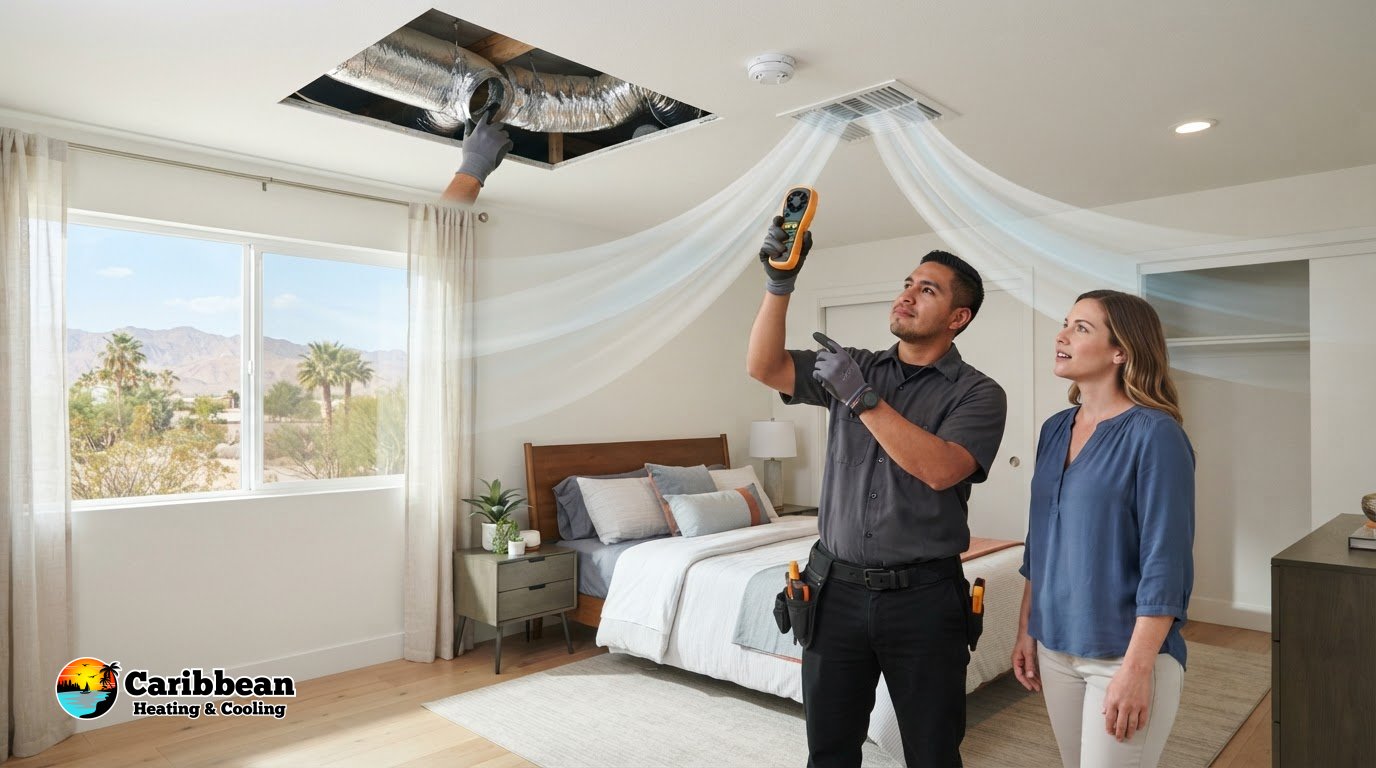
Improve Bedroom Airflow by Checking Ducts, Vents, and Balance
A dirty filter can restrict airflow, but it isn’t the only reason a bedroom feels stuffy or stays warmer than the rest of the home. To improve airflow to bedrooms in North Las Vegas, replace a visibly dirty filter, keep supply and return vents open, and look into ductwork or airflow balance if uneven comfort continues. Start with these simple checks, then investigate further if the problem persists.
It’s frustrating when the rest of the house feels comfortable but your bedroom doesn’t. Filters, duct leaks, blocked vents, and airflow balance can all affect room comfort. This guide covers practical checks you can make at home, signs of a deeper airflow issue, and how measurements can help pinpoint what’s disrupting comfort so you can choose a focused next step.
Key Takeaways
- Look for disconnected or damaged duct sections when a bedroom consistently receives weak airflow. Duct tape usually isn’t a lasting fix for leaks.
- Keep supply and return vents open, with furniture and clutter moved away so air can circulate freely.
- Compare room temperatures and airflow patterns to spot imbalances; professional measurements can help identify where air distribution is off.
- If basic checks don’t resolve poor cooling or uneven comfort, AC repair can help address system problems affecting bedroom airflow.
1. How do I know if my ductwork is causing airflow problems?
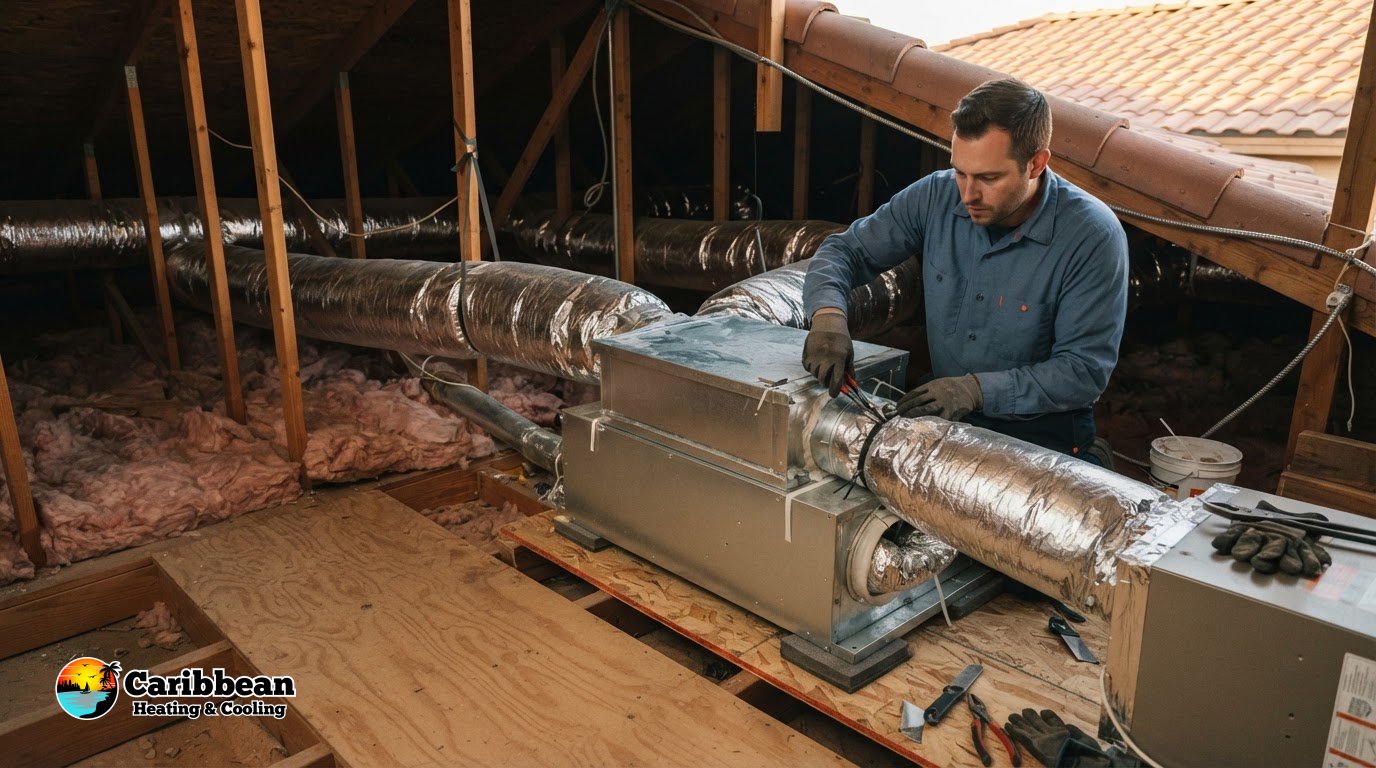
Poor bedroom airflow can result from a dirty filter, blocked register, closed damper, or damaged duct. A crushed or disconnected duct can restrict airflow, while leaks let conditioned air escape before it reaches the room. Inspect the filter and accessible duct runs, then note which rooms have weak airflow or uneven temperatures.
For a simple duct check, look for loose connections, visible gaps, or sections bent out of shape. The U.S. Department of Energy states that duct leakage can account for 20 to 30 percent of the energy produced by a well-performing air conditioner being lost before it reaches living spaces. Duct tape usually isn’t a lasting repair; suitable duct sealant or foil-backed tape can seal certain joints. A technician can inspect hidden runs and determine whether sealing or repair is needed.
Damper settings matter, too. Dampers adjust how much air flows to different areas, so a closed or misadjusted damper may leave a bedroom under-supplied. A room-by-room airflow balance test measures delivery and helps identify where adjustments could reduce temperature differences. Changing the thermostat setting alone won’t fix a crushed duct or leaking connection.
Permit requirements depend on the work, such as repairing an existing duct run versus adding or relocating ducts or vents. For work in North Las Vegas, consult the city’s building-permit guidance to determine the applicable requirements.
Attic heat can warm air moving through poorly insulated ducts, while insufficient attic insulation allows more heat to transfer into upstairs rooms. If a bedroom near the ceiling stays warmer than the rest of the home, inspect visible duct insulation and attic coverage.
Rebate and utility programs can change, and eligibility may depend on the equipment and improvement. Review current Las Vegas-area program terms before budgeting for HVAC upgrades.
2. Keeping supply and return vents open and unobstructed
With the HVAC system running, check every room’s vents. Keep supply registers and return grilles open and clear. Closing a supply vent can disrupt circulation instead of neatly redirecting air elsewhere. Move rugs, curtains, laundry baskets, and furniture away from registers. Leave several inches of clearance around return grilles so the system can draw room air back freely.
Check vents in summer and whenever you rearrange a room. A bed pushed against a low return or a dresser in front of a grille can restrict airflow even if the vent is open. Move objects away, then compare airflow with nearby rooms. Inspect the filter, too: a clear vent can’t make up for a visibly dirty filter. If you’re considering how to improve airflow to bedrooms in North Las Vegas, make these checks part of your room-by-room routine.
A supply register and a return grille serve different purposes. Supply vents deliver cooled air; return grilles carry room air back through the HVAC system. Blocking either can affect circulation and cooling. Keep both accessible, and make sure closed curtains don’t fall across a high wall register.
Smart vents and integrated sensors can adjust airflow based on room conditions, but they can’t replace unobstructed grilles or correctly designed ductwork. Check that smart controls work with the HVAC system before changing their settings. For another step in how to improve airflow to bedrooms in North Las Vegas, consider whether dust or lingering odors persist after clearing vents and replacing a dirty filter. Indoor air quality improvements may be part of a broader comfort plan.
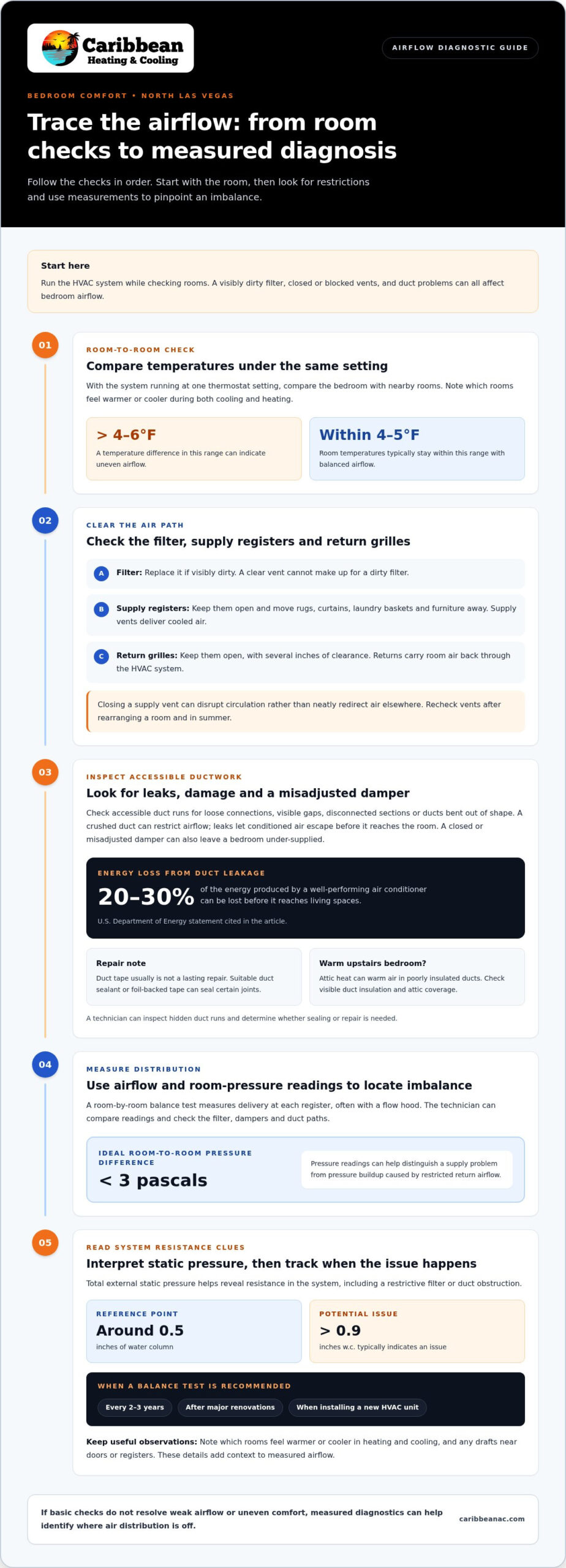
3. Airflow balancing diagnostics
Uneven temperatures can reveal an airflow imbalance even when supply registers are open. Compare bedroom temperatures with nearby rooms while the HVAC system runs at one thermostat setting. A difference greater than 4 to 6°F can indicate uneven airflow. With balanced airflow, room temperatures typically stay within 4 or 5°F.
A professional balance test measures air delivered at each register, often using a flow hood. The technician can compare readings, inspect the air filter, and check dampers and duct paths. Room-to-room pressure measurements also matter: less than 3 pascals is considered the ideal pressure difference. These readings help distinguish a supply problem from pressure buildup caused by restricted return airflow.
Static pressure offers another diagnostic clue. Total external static pressure should be around 0.5 inches of water column; readings above 0.9 inches w.c. typically indicate an issue. High pressure can point to resistance in the system, such as a restrictive filter or duct obstruction. A balance test is recommended every 2-3 years, after major renovations, or when installing a new HVAC unit.
Record which rooms feel warmer or cooler during both cooling and heating, and note drafts near doors or registers. This gives the technician useful context alongside measured airflow. Adjusting dampers can redistribute supply, but closing registers isn’t a reliable balancing method. If heating comfort remains uneven after these checks, arrange heating maintenance to assess system performance and airflow together.
Caribbean Heating & Cooling: AC Repair
If bedroom airflow remains weak after you’ve checked the filters, registers, and accessible ductwork, Caribbean Heating & Cooling can assess the AC system. If it struggles to cool the home, cycles unusually, or leaves several rooms uncomfortable, AC repair can help identify equipment problems affecting overall performance.
When requesting service, describe which rooms feel warmer, whether airflow changes while the system runs, and what you’ve already inspected. Those details help focus troubleshooting on the AC system rather than assuming every comfort issue comes from a blocked vent. If your system is aging or repeatedly underperforming, AC maintenance or installation may also be appropriate options.
For persistent cooling or airflow concerns, contact Caribbean Heating & Cooling to discuss AC repair.
Make Bedroom Comfort Your Next Home Improvement
If you’re still deciding how to improve airflow to bedrooms in North Las Vegas, start with the room that feels least comfortable. Note when the problem occurs and whether it changes during cooling or heating. That pattern can help clarify whether the next step is equipment service or a broader system upgrade.
Caribbean Heating & Cooling provides AC repair, AC installation, and AC maintenance for residential air-conditioning systems. Choose the service that fits your system’s needs and take the next step toward more consistent comfort at home.
Contact Caribbean Heating & Cooling to discuss your next step. A more comfortable bedroom can start with a focused plan.
Frequently Asked Questions
Can a dirty air filter really affect home airflow that much?
Yes. A dirty filter adds resistance, making the HVAC system work harder to move air through it. Check the filter monthly and replace it when it looks dirty, following the correct fit and airflow direction. If airflow remains weak with a clean filter, the restriction may be elsewhere in the system.
Does closing vents in unused rooms improve home airflow elsewhere?
No. Closing supply vents isn’t a reliable way to send extra air to another room. It can disrupt the system’s intended airflow, and the closed room may become less comfortable. Keep supply and return vents open, including in unused rooms, and use the thermostat to manage the home’s overall heating or cooling setting.
How do I know if my ductwork is causing airflow problems?
Suspect ductwork if one room remains uncomfortable despite an open register and clean filter, or if airflow differs sharply between rooms. From accessible areas, look for disconnected joints, visible gaps, or crushed sections. Note which rooms are affected and whether the issue occurs during cooling, heating, or both. That pattern can help narrow down the cause.
How much can fixing home airflow problems save on energy bills?
There’s no single savings figure that applies to every home. The impact depends on how much conditioned air escapes, how long the system runs, outdoor heat, thermostat settings, local electricity rates, and the home’s energy use. Fixing a restriction or leak can reduce wasted system effort, but the effect on your bill depends on these conditions.
What is HVAC airflow balancing and when do I need it?
Airflow balancing measures how air is distributed through the home, then guides adjustments so rooms receive appropriate supply. Consider it after renovations, when installing a new HVAC unit, or when persistent room-to-room comfort differences remain. A balance test every 2-3 years is also recommended to check distribution as the home and system change.

Related Posts
Comments (0)