
¿Qué pasaría si su aire acondicionado deja de funcionar al anochecer durante una ola de calor en Summerlin? El servicio de emergencia para HVAC...
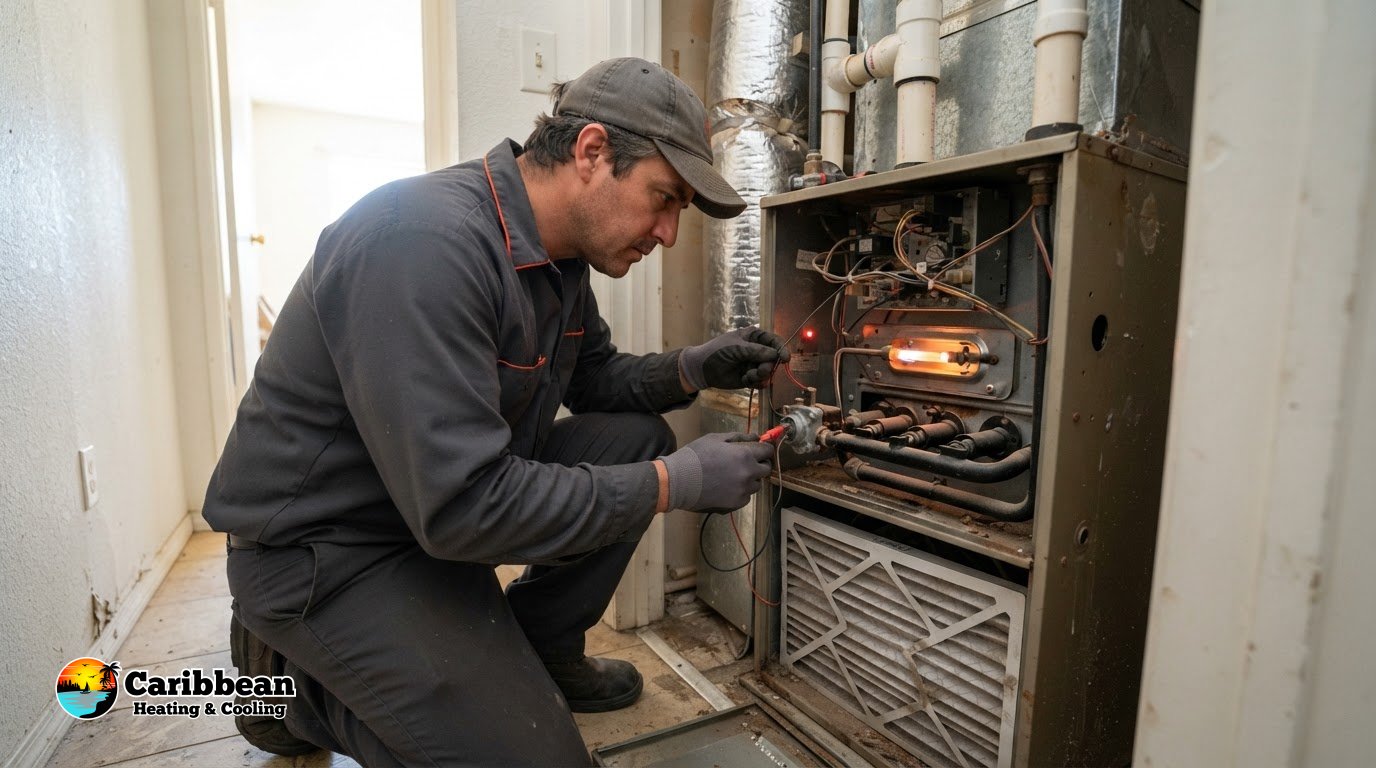
How to Troubleshoot Furnace Ignition Lockout Causes and Fixes
A furnace ignition lockout is a protective stop: after failed attempts to light or detect a flame, the control interrupts ignition rather than continuing the startup sequence. Most furnaces allow three relight attempts before a hard lockout. Troubleshooting a furnace ignition lockout means identifying why ignition failed, not repeatedly resetting the system.
A lockout follows a failed ignition sequence, while another safety shutdown may stop operation because of a different fault. You’ll learn common causes of a hard lockout, how hard and soft lockouts differ, and which basic checks are appropriate before seeking heating repair. We’ll also explain when to stop troubleshooting and leave the furnace off, so you can respond calmly and protect your home’s comfort.
Key Takeaways
- Start with airflow: a clogged filter or blocked return vent can contribute to overheating and a limit-switch shutdown.
- Know what to expect from a soft lockout, and avoid repeated resets if the furnace fails to restart.
- Use the furnace’s status light to help identify the fault, but leave ignition and control-board troubleshooting to a professional.
- Arrange heating repair when the lockout returns, ignition sounds unusual, or a simple filter change doesn’t resolve the issue.
What causes a furnace hard lock out?
A hard lockout can follow repeated failed ignition attempts, including losing the flame during 3 to 5 recycle attempts. Restricted airflow is one possible cause: a clogged filter can reduce airflow and trip the limit switch.
-
Check for Airflow Blockages
Check that return-air vents aren’t covered by furniture, rugs, or stored items. Blocked returns can restrict airflow through the furnace. Replace a dirty filter, and keep the furnace powered off before working around the unit. Don’t reach inside or bypass a safety switch, as doing so can expose you to hazards or disable protection.
-
Review Limit Switch Trips
Restricted airflow can cause the limit switch to trip. A clogged filter may reduce airflow, allowing the furnace to overheat and trigger this safety response. After replacing the filter and clearing blocked return vents, note whether the lockout returns. A repeated trip suggests a problem that a filter change alone hasn’t resolved.
- Replace the filter regularly. Furnace filters generally need changing every 30-90 days, depending on filter quality, pets, and furnace use. Check the filter for visible dust buildup, then use a replacement that fits the furnace. Keep return-air vents unobstructed as well. If the furnace continues to lock out after these airflow checks, stop resetting it and arrange professional troubleshooting.
What is the difference between a hard and soft lockout?
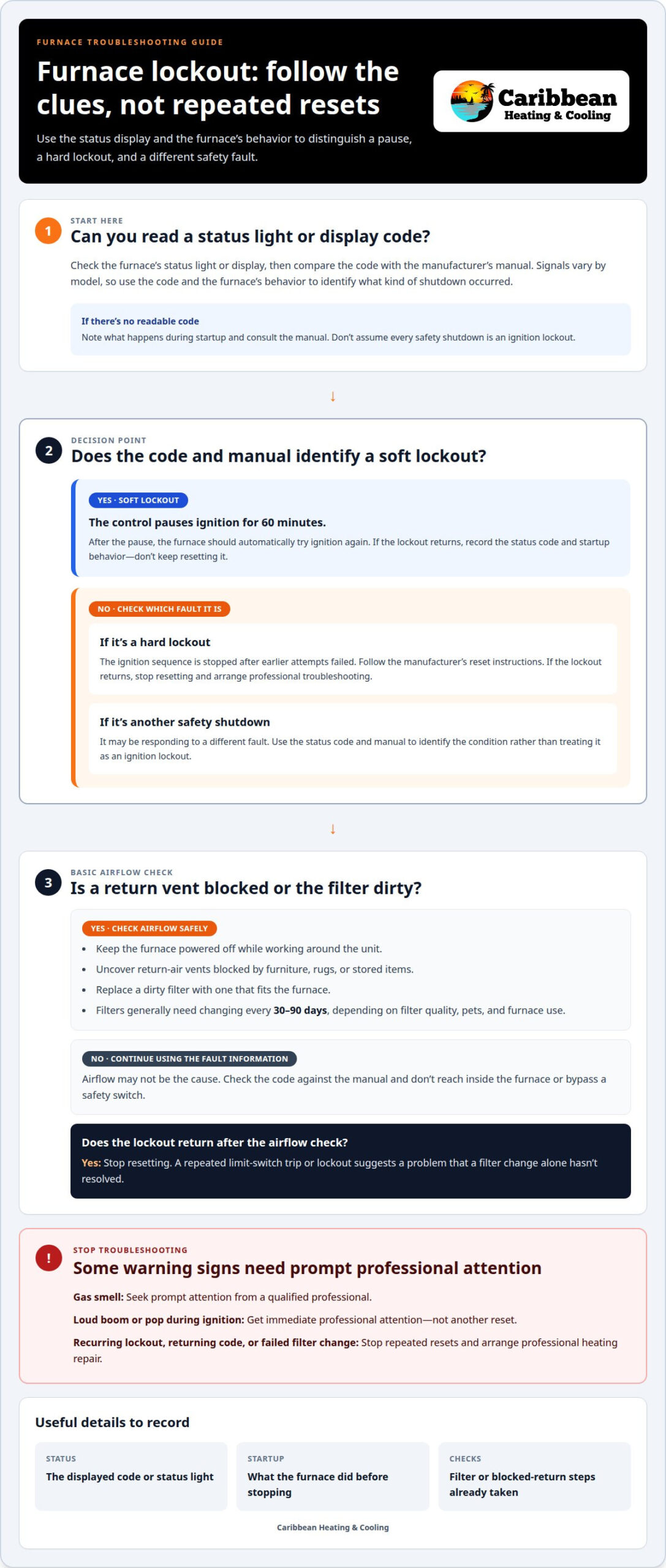
A soft lockout pauses ignition; after 60 minutes, the furnace should automatically try again. A hard lockout stops the ignition sequence, so follow the furnace manual’s reset instructions and call a technician if the lockout returns instead of repeatedly resetting it.
-
Identify the Lockout Type
Check the furnace’s status light or display for a fault code, then compare it with the manufacturer’s manual. A soft lockout may allow the system to retry after a pause; a hard lockout prevents another ignition sequence until the control is reset. Signaling varies by model, so use the displayed code and manual to distinguish a lockout from a temporary pause.
-
Understand Lockout Behavior
Use the status code and the furnace’s response to determine what happens next. During a soft lockout, the control pauses for 60 minutes before an automatic ignition attempt. During a hard lockout, ignition remains stopped because earlier attempts failed. The difference matters: waiting may be appropriate for a soft lockout, while a hard lockout calls for the manufacturer’s reset procedure and attention to the cause.
- Reset cautiously. Read the furnace manual before switching power off or restoring it, because reset instructions vary by model. If the manual directs a power reset, follow its sequence and stated wait time. Don’t repeatedly cycle power to force ignition. A reset clears the control’s lockout state, but it doesn’t repair an ignition or flame-sensing fault.
- Know when to stop. Don’t keep resetting a furnace that returns to hard lockout. Record the status code and describe whether it tried to ignite before stopping. That information helps a technician investigate the failure. For recurring lockouts, professional heating repair can address the underlying ignition problem.
Furnace ignition lockout and safety shutdowns
An ignition lockout stops a failed startup sequence, while another safety shutdown may respond to a different fault. Troubleshooting furnace ignition lockout carefully means distinguishing these conditions before considering a reset.
-
Troubleshoot a Furnace That Won’t Ignite
Note the status light or display code and what the furnace does during startup. Replace a dirty air filter, then consult the manual for model-specific instructions. A failed flame-sensing attempt can trigger lockout, according to the U.S. Environmental Protection Agency. The U.S. Consumer Product Safety Commission reports that, in a tested furnace, failure to sense a flame after four ignition attempts triggered lockout. These details can help narrow down the fault.
-
Consider Repeated Reset Risks
Stop resetting the furnace if it locks out again. Repeated power cycles won’t fix an ignition fault and may make it harder to diagnose. Never bypass a safety control. A gas smell warrants prompt attention from a qualified professional. A loud boom or pop during ignition also requires immediate professional attention, not another reset.
-
Know When to Call an HVAC Technician
Call a technician if the filter change doesn’t resolve the lockout, the code returns, or ignition makes a loud booming or popping sound. A technician can assess the ignition sequence and review control-board error codes on a newer gas furnace. For troubleshooting furnace ignition lockout that keeps recurring, arrange professional heating repair instead of continuing to reset the system.
Caribbean Heating & Cooling
Caribbean Heating & Cooling provides residential heating repair in Las Vegas, Henderson, North Las Vegas, and Summerlin when a furnace repeatedly enters ignition lockout or won’t start after a basic filter change. A recurring fault needs more than another reset: proper repair starts by identifying the ignition problem. Share the furnace’s status code and startup behavior when requesting service.
If the lockout returns or you notice unusual ignition sounds, stop resetting the furnace and arrange professional help. Contact Caribbean Heating & Cooling to discuss your furnace and heating repair needs in Las Vegas, Henderson, North Las Vegas, or Summerlin.
Take the Next Step Toward Reliable Heating
Treat an ignition failure as useful information about how the heating system is behaving, not as a reason to keep trying resets. A brief record of the symptoms, status display, and steps already taken can give a technician a clearer starting point if the issue returns. That makes troubleshooting furnace ignition lockout more focused.
Keep the furnace manual accessible and note recurring heating concerns as they happen. If a lockout continues or the furnace won’t operate reliably, professional diagnosis can help identify the repair needed. Contact Caribbean Heating & Cooling to discuss your heating repair needs and choose a practical next step. A clear account of what you’ve noticed is a useful place to begin.
Frequently Asked Questions
What does ignition lockout fault mean?
An ignition lockout means the furnace control stopped the startup sequence after it couldn’t establish or confirm a flame. A fault code may point to the stage where startup failed, but it doesn’t prove which component needs repair. For example, a code may direct attention to ignition or flame sensing; use the furnace manual to interpret the specific display.
What causes furnace ignition lockout?
Furnace ignition lockout can result from a failed igniter, a flame sensor that can’t detect the flame, or an interrupted fuel supply. A blocked vent can also interfere with operation. If the furnace starts but shuts down before heating, note that sequence and the displayed code. Those details can help distinguish an ignition problem from another operating fault.
What does hard lockout mean on my furnace?
A hard lockout means the furnace control has stopped further ignition attempts, and the system won’t resume normal heating until the control is reset or serviced. The reset method depends on the furnace model, so use its manual rather than trying different power-cycling sequences. If the same code returns after a reset, share the code and startup behavior with a technician.
What does furnace ignition lockout mean?
Furnace ignition lockout is the control’s response when the system can’t complete ignition safely. It differs from a thermostat setting that simply isn’t calling for heat: during lockout, the furnace has attempted to start and then stopped. Check whether the thermostat is requesting heat and note any furnace display code, but don’t treat a reset as a repair.
What causes a furnace ignition lockout?
A furnace may lock out when ignition doesn’t begin, the flame isn’t sensed, or the flame goes out during operation. A dirty or corroded sensor may sometimes be cleaned, while a cracked or damaged one may need replacement. Don’t remove or work on internal components; share the furnace model and any displayed fault code with a heating technician.

Related Posts
Comments (0)