
¿Qué pasaría si su aire acondicionado deja de funcionar al anochecer durante una ola de calor en Summerlin? El servicio de emergencia para HVAC...
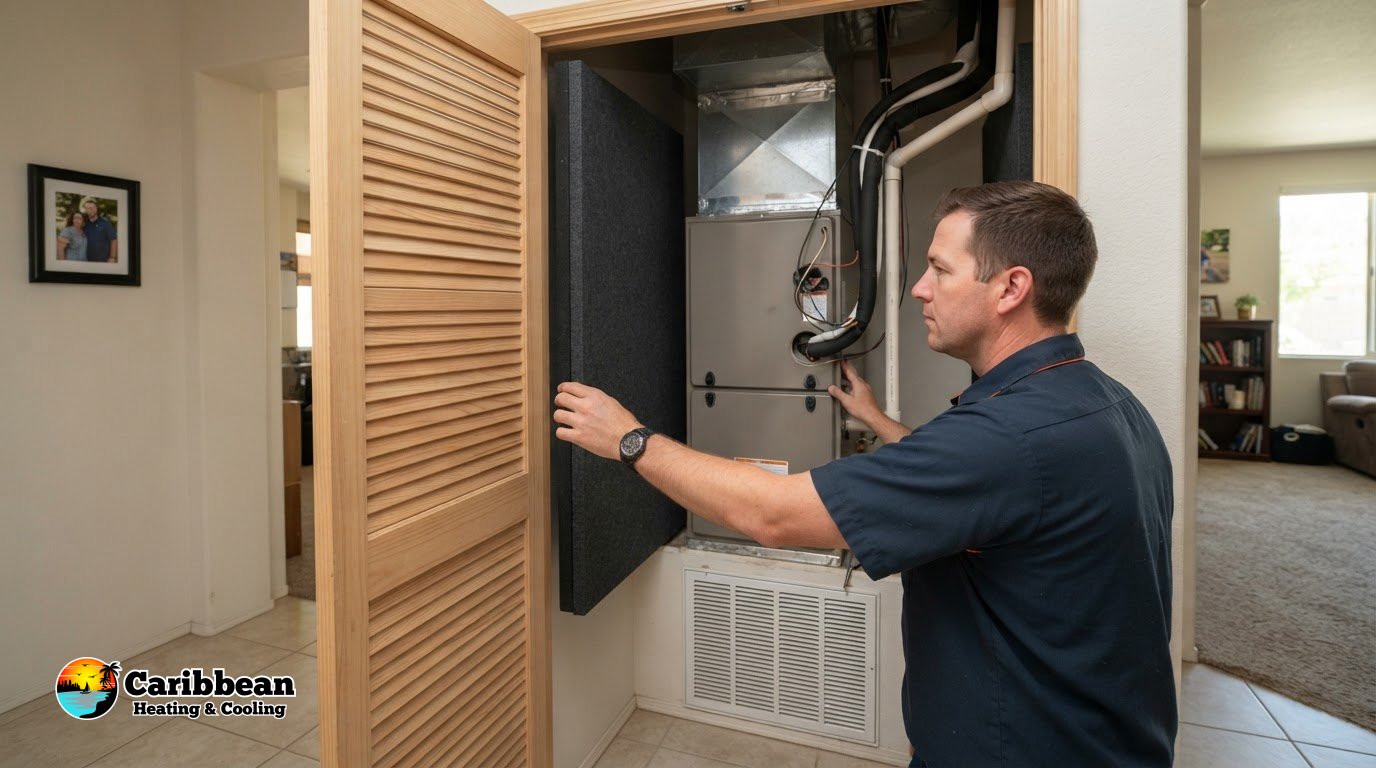
How to Reduce Air Handler Noise in a Closet with Acoustic Absorption
A utility closet can be made quieter, but complete silence is rarely realistic. Learning how to reduce air handler noise in a closet starts with addressing both sound escaping through doors and walls and vibration traveling through framing. Acoustic absorption alone won’t block every noise path.
A loud air handler can disrupt comfort, especially when its closet opens onto a living space. This guide explains how to reduce air handler noise in a closet by identifying whether the sound comes from the equipment, ductwork, vibration, or openings. You’ll learn practical ways to address noise without blocking needed airflow, and when an equipment inspection or broader door-and-wall treatment may be more suitable. A louvered door can limit sound control because it may also provide return or combustion air.
Key Takeaways
- Acoustic panels can reduce echo inside a utility closet, but layered wall and door treatments are needed to limit sound escaping.
- Identify whether noise travels through the air or through the building structure, since each path calls for a different treatment.
- Keep required ventilation openings clear; blocking airflow can affect equipment operation and may undermine a noise-control plan.
- Match the solution to the noise source, from door gaps and duct noise to equipment vibration, rather than relying on foam alone.
Professional acoustic absorption inside the closet
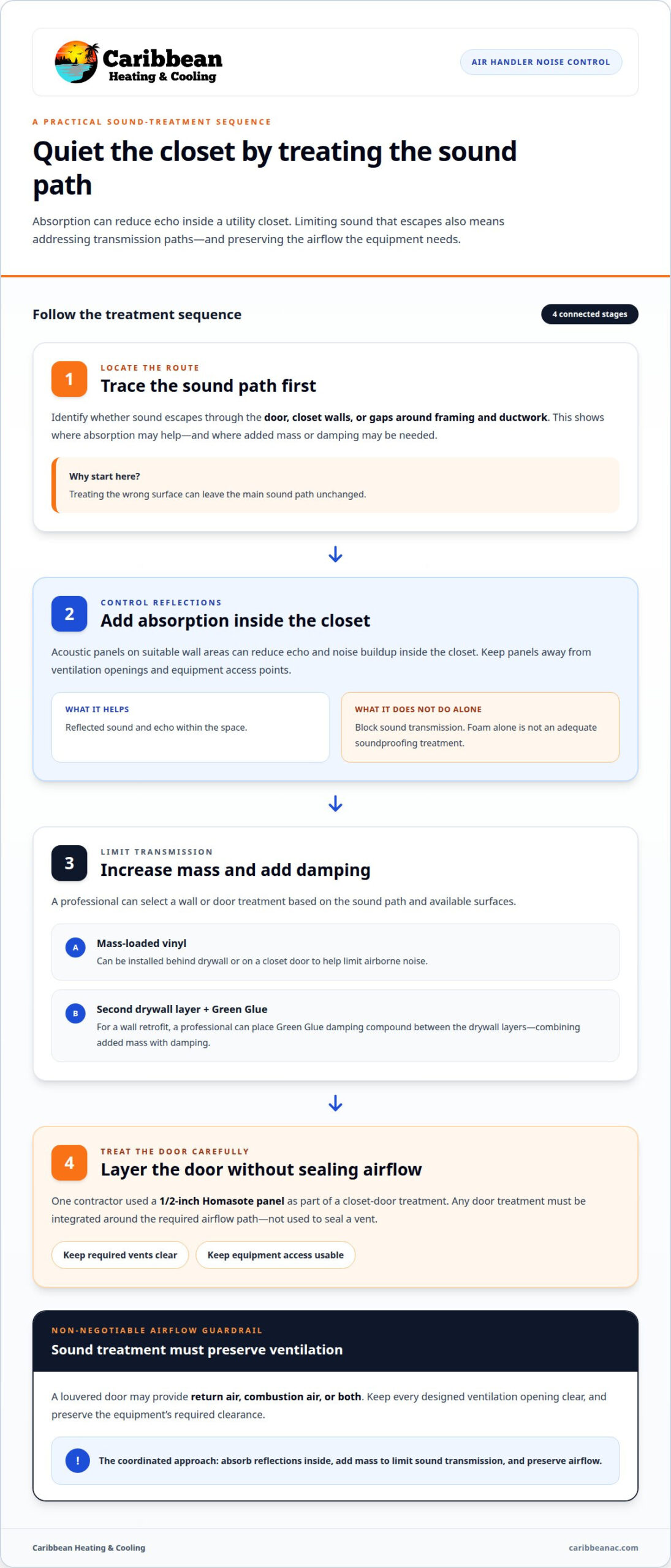
Keep every designed ventilation opening clear. A louvered door may provide return air, combustion air, or both, so a professional preserves those paths and the equipment’s required clearance rather than covering vents with soundproofing.
- Trace the sound path first. A professional identifies whether noise escapes through the door, closet walls, or gaps around framing and ductwork. This determines where added absorption can help and where extra mass or damping is needed. Treating the wrong surface can leave the main sound path unchanged.
- Add absorption without blocking airflow. Acoustic panels can reduce echo and noise buildup inside the closet, but they don’t block sound on their own. A professional places them on suitable wall areas, away from ventilation openings and equipment access points. Foam alone isn’t an adequate soundproofing treatment.
- Increase wall or door mass. Mass-loaded vinyl can be installed behind drywall or on a closet door to help limit airborne noise. For a wall retrofit, a professional can add a second drywall layer with Green Glue damping compound between the layers. This combines added mass with damping, rather than relying on absorption alone.
- Consider a layered door treatment. One contractor used a 1/2-inch Homasote panel as part of a closet-door treatment. Such a panel needs to be integrated around the door’s required airflow path, not used to seal a vent. The professional also keeps access panels usable for equipment service.
The best results come from treating the closet as a coordinated assembly: absorb reflections inside, add mass to limit sound transmission, and preserve ventilation. If a door opening supplies return or combustion air, any changes to its treatment must account for that function.
Can You Really Soundproof a Utility Closet?
Noise reduction is possible, but results depend on how sound travels. A good plan for how to reduce air handler noise in a closet first distinguishes airborne sound, vibration, and airflow, then matches treatments to the cause.
-
Identify airborne and structure-borne noise
Have a technician trace whether sound travels through the air, framing, or ductwork. Motors, fans, and airflow can produce airborne noise, while vibration can travel through the unit’s contact with framing. Common causes include loose or vibrating components and restricted return airflow. Removable barriers may help with minor sound leakage, but diagnosing faults and changing equipment require an HVAC technician. The cost depends on the diagnosis, repairs, and treatment scope.
-
Reduce floor-borne vibration
Have the technician inspect where the air handler, ducts, and refrigerant lines meet the floor or framing. Rigid contact can carry vibration into a slab or subfloor, making noise audible beyond the closet. Vibration isolation pads beneath the equipment may reduce this transmission. Addressing contact points can help where wall absorption alone would leave a floor-borne sound path unchanged.
-
Quiet fan, motor, and blower components
Arrange an equipment inspection if the fan or blower develops a new rattle, hum, or uneven sound. A technician can assess the motor, blower, mounting, and operation, then repair a mechanical fault or adjust the system as needed. Treat smoke, a burning odor, or a sudden, severe change in sound as urgent, not as an absorption problem.
-
Reduce airflow noise in ducts and vents
Have the technician assess return airflow, grilles, and duct sizing. A restricted return can make the unit sound as if it’s pulling air through a straw, while undersized ducts can increase air velocity and noise. Louvers can’t simply be covered if they serve as return or combustion air. To determine how to reduce air handler noise in a closet, preserve required airflow while treating sound paths; an AC repair assessment can address suspected equipment faults.
Choosing soundproofing solutions by noise type
Match each treatment to the sound path and the closet’s airflow needs. A technician can diagnose the noise before selecting materials.
-
Diagnose rattling, buzzing, humming, or whistling with an HVAC technician
Listen near the air handler, closet door, and connected ducts to help locate the sound. Rattling may point to vibration or a loose component; buzzing and humming can travel through the unit or framing. Whistling often calls for attention to airflow and openings. Where and when the noise occurs can help distinguish an equipment issue from sound escaping through the enclosure.
-
Reduce echo with sound-absorbing panels
A professional can place panels on suitable closet walls to reduce reflected sound and echo. Panels absorb sound inside the space, but they don’t block transmission on their own. Their placement must leave ventilation openings, equipment access, and the return-air path unobstructed. This approach can help with noise buildup inside the closet, but not vibration traveling through the building.
-
Choose sound-blocking materials without removing drywall
For a retrofit that keeps the existing drywall, have a professional assess the door and wall surfaces for added mass. Mass-loaded vinyl can be installed on a closet door or behind drywall during suitable work. The right approach depends on the sound path and available surfaces. Avoid any installation that seals a required vent or interferes with service access.
-
Use industrial soundproof blankets
Ask whether industrial soundproof blankets suit the closet when permanent construction isn’t practical. A professional can position them along suitable walls or around equipment while keeping vents and access clear. Blankets offer flexible noise control, but they won’t correct a mechanical fault or eliminate every sound path. Arrange an HVAC noise assessment to identify which treatment fits the problem.
Caribbean Heating & Cooling
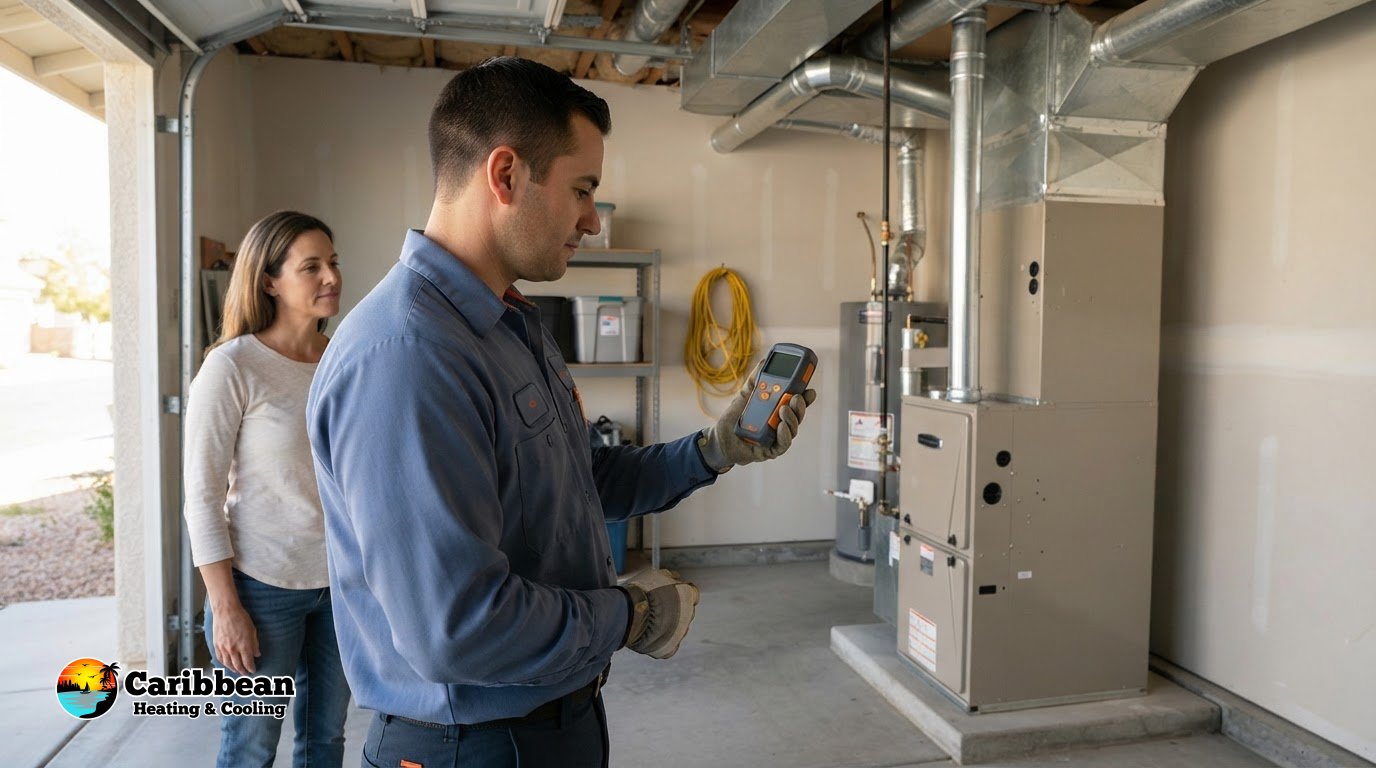
Caribbean Heating & Cooling can help when closet noise points to an air-conditioning or heating system problem. A technician can assess whether the sound comes from normal equipment operation or a mechanical fault, then recommend appropriate HVAC repair or maintenance. If the system needs replacement, installation may be the better next step. Acoustic panels and door treatments address sound transmission, but they won’t fix a faulty air handler. When requesting service, describe when the noise occurs and whether it sounds like rattling, buzzing, humming, or whistling. This can help focus the assessment. Contact Caribbean Heating & Cooling for help with a noisy HVAC system.
Plan the Next Step Toward a Quieter Home
The best next step is a focused assessment, not another layer of material applied without diagnosing the noise. A professional can determine how to reduce air handler noise in a closet by identifying whether the main issue comes from equipment operation, vibration, or sound escaping through the enclosure. That distinction helps align the solution with the actual problem while preserving the airflow the system needs.
Caribbean Heating & Cooling offers AC repair, AC installation, and AC maintenance to address issues on the system side. If the sound has changed or is disrupting your comfort, discuss your air handler noise with Caribbean Heating & Cooling. A clear diagnosis is a practical first move toward a more comfortable home.
Frequently Asked Questions
How can an HVAC technician reduce vibration from an air handler using isolation pads or mounting changes?
A technician can fit vibration isolation pads beneath the air handler and adjust mounting points to reduce direct vibration transfer. They can also inspect nearby brackets where refrigerant lines attach to framing; rubber-lined clamps can interrupt that vibration path. The technician should ensure supports remain secure and that the equipment, lines, and cabinet don’t make rigid contact with the surrounding structure.
How much does professional air handler noise reduction or repair cost?
Cost depends on the diagnosis, any needed repairs, and the treatment scope. Request service to receive a quote.

Related Posts
Comments (0)