
El costo de instalación de una bomba de calor en North Las Vegas depende del tipo y la capacidad del sistema, los ductos y la instalación eléctrica...
Heat Pump Blowing Cold Air in Heat Mode: What’s Normal
Cool air from a heat pump doesn’t always mean the system has failed. A heat pump blowing cold air on heat mode in Las Vegas may be normal briefly as its coils and ductwork warm up, but airflow that stays cold for more than 15 to 20 minutes needs professional attention. The difference lies in how the system is operating and how long the cool air lasts.
It can feel unsettling when you expect heat but get a cool draft instead. This guide explains how a heat pump moves outdoor heat indoors, why its airflow may feel cooler than furnace air, and what happens during defrost. You’ll also learn when persistent cool airflow may point to a reversing valve stuck in cooling mode rather than normal operation.
Key Takeaways
- Brief cool airflow can occur during normal heat-pump operation; a whoosh or visible steam outdoors may accompany defrost.
- Heat-pump air can feel less hot than furnace air, so judge performance by whether the home is warming and holding its thermostat setting.
- A reversing valve directs refrigerant between heating and cooling. If it sticks, a technician can assess it alongside refrigerant, compressor, and control issues.
- Don’t tap or modify the reversing valve yourself. Persistent cold airflow or unusual equipment noises calls for professional heating repair.
How do you unstick a reversing valve on a heat pump?
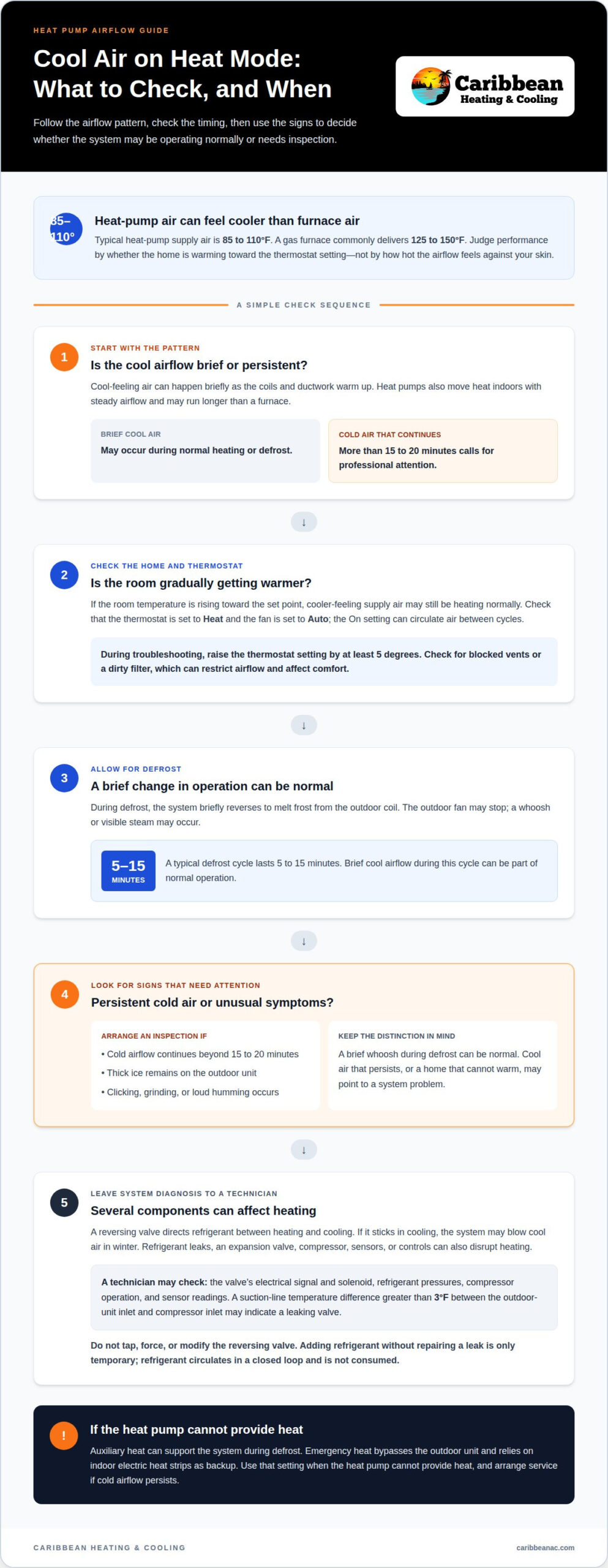
A reversing valve directs refrigerant between heating and cooling. If it sticks in cooling, the system may blow cool air in winter. A brief whoosh during a defrost cycle can be normal; persistent cool airflow suggests a problem. A technician can test for internal leakage. A suction-line temperature difference greater than 3°F between the outdoor-unit inlet and compressor inlet may indicate a leaking valve.
The expansion valve meters refrigerant and lowers its pressure so it can absorb heat outdoors. Low refrigerant caused by a leak can limit heat transfer, while a faulty expansion valve can disrupt refrigerant flow and temperature. The compressor circulates refrigerant through the system, and compressor trouble can also reduce heating. Temperature sensors or controls may misread conditions and affect the valve or heating setting, so diagnosis takes more than a visual check.
Don’t tap, force, or modify the reversing valve. A technician can test its electrical signal, solenoid, refrigerant pressures, compressor operation, and sensor readings to identify the fault. Adding refrigerant without repairing a leak is only temporary: refrigerant circulates in a closed loop and isn’t consumed.
Auxiliary heat can support the heat pump during defrost, with electric heat strips warming the air. Emergency heat bypasses the outdoor unit and relies on indoor electric strips, providing backup while you arrange repair. Use that setting when the heat pump can’t provide heat, and arrange service if cold airflow persists.
To find a licensed heat pump HVAC technician in Las Vegas, look for a local professional who handles heat-pump heating repair and ask for their license details before scheduling. Describe whether the system blows cool air continuously, cycles through defrost, or makes unusual sounds; those details help focus the inspection.
Is it normal for a heat pump to blow cool air?
Cool-feeling airflow can be normal during heating, but persistent cold air needs attention. If your heat pump is blowing cold air in heat mode in Las Vegas, consider how long it lasts and whether the home warms up.
Typical Heat Pump Supply-Air Temperatures
Heat-pump supply air is typically 85 to 110°F, while a gas furnace commonly delivers 125 to 150°F air. That difference can make heating airflow feel cool against your skin. A Las Vegas heat pump blowing cold air on heat mode may still be heating normally if the room temperature is rising toward the thermostat setting.
Heat Flow and Heating Airflow
Heat pumps move heat indoors and usually run longer with steady airflow, unlike a furnace’s hotter bursts. After switching to heating, air may feel cool while the coils and ductwork warm. Check whether the home is gradually getting warmer; blocked vents or a dirty filter can restrict airflow and affect comfort.
Defrost Mode and Repair Signs
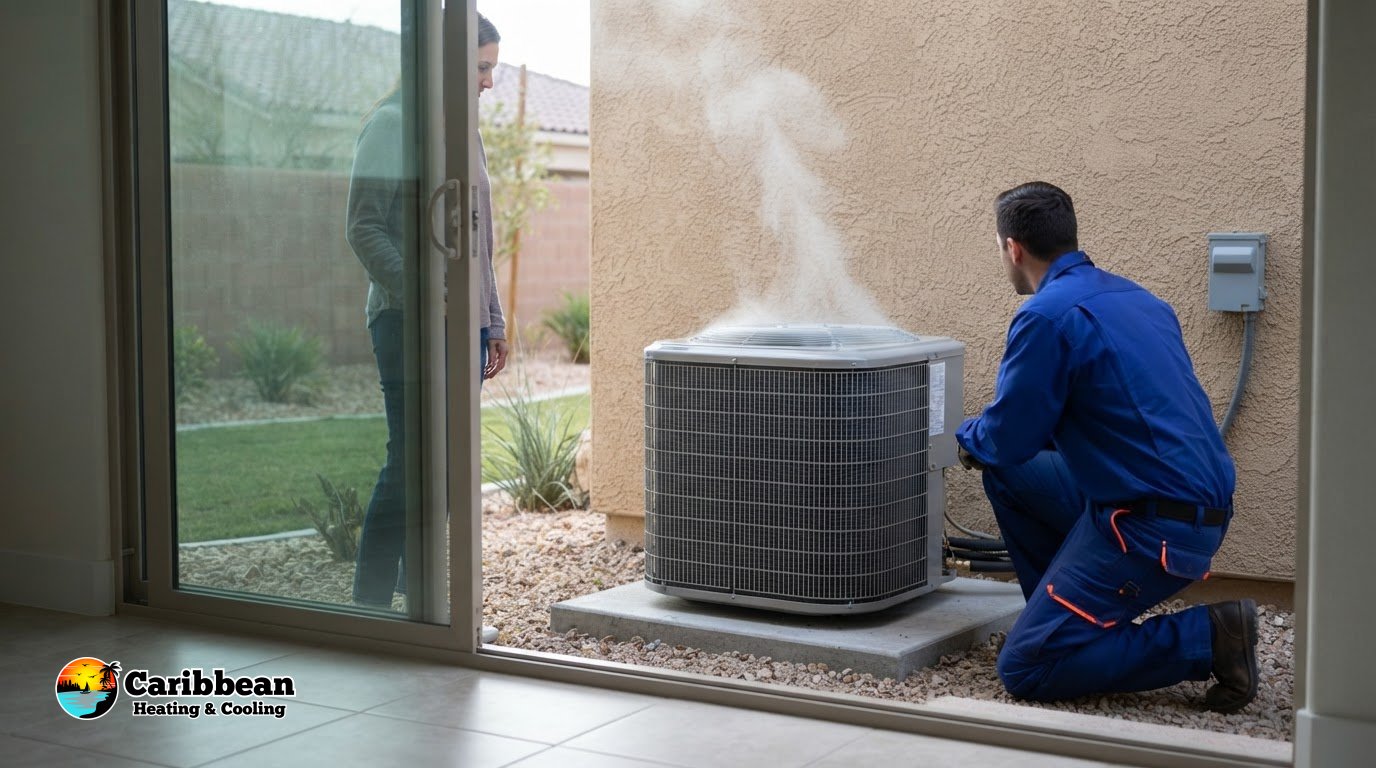
Defrost briefly reverses the system to melt frost from the outdoor coil. A whoosh, stopped outdoor fan, or steam can occur during a normal cycle, which usually lasts 5 to 15 minutes. If cold airflow continues beyond 15 to 20 minutes, thick ice remains, or the unit makes clicking, grinding, or loud humming sounds, arrange an inspection.
Thermostat Settings and Cold-Air Response
Check that the thermostat is set to heating and the fan is set to Auto; On can circulate air between cycles. Raise the setting by at least 5 degrees during troubleshooting. Warm-up time depends on outdoor conditions, equipment, and the home, so there’s no single timeline. Don’t turn the system off for brief cool airflow alone; if cold air persists, heat pump repair can identify the cause.
How heat pumps move heat in heating mode
In heating mode, a heat pump transfers heat from outdoor air into the home instead of producing heat through combustion. Even cold air contains usable heat: a heat pump can extract it from outdoor air at 5°F. Refrigerant helps make that possible because its boiling point is around -50°F. In the outdoor coil, the colder refrigerant absorbs heat and changes into vapor.
The compressor raises the refrigerant’s pressure and temperature, sending hot vapor toward the indoor coil. Air passes over that coil, picks up heat, and circulates through the home. As the refrigerant releases heat, it cools and returns through the system to repeat the cycle. This explains why the refrigerant can be warmer than the outdoor air while still moving heat indoors.
A reversing valve changes refrigerant direction for cooling. In summer, the indoor coil releases heat from the home, and the outdoor unit carries it outside. In heating mode, the valve routes refrigerant so the indoor coil delivers warmth instead. This is the key distinction: the heat pump moves thermal energy rather than replacing it with heat generated by an electric resistance element. The compressor and fans still use electricity, while the refrigerant cycle transfers heat.
When a heat pump runs for longer stretches, steady airflow can be part of normal heat transfer, not proof of failure. If the system cannot warm the home, a technician can assess whether the refrigerant circuit, controls, or airflow are disrupting that process. For help restoring heat transfer, schedule heat pump repair.
Caribbean Heating & Cooling: Heat pump installation
Caribbean Heating & Cooling provides heat pump repair when a system blows persistent cool air in heating mode, and heat pump installation when replacement is the right fit. A technician can assess whether the issue involves the reversing valve, refrigerant circuit, controls, or another component, then recommend a next step.
Installation may make sense when existing equipment has a major failure or ongoing performance problems. Repair is often appropriate when a specific fault disrupts heat transfer. Caribbean Heating & Cooling also provides heating repair and heat pump maintenance for residential systems.
Contact Caribbean Heating & Cooling for help deciding whether your system needs repair or replacement.
Take the Next Step Toward Reliable Home Comfort
If your heat pump is blowing cold air in heat mode in Las Vegas, use the pattern you’ve noticed to guide your next step. Note whether the problem is persistent, whether the system’s performance has changed, and whether you’ve noticed other heating concerns. These details help focus an assessment on the system’s condition and suitable repair or installation options.
Caribbean Heating & Cooling also provides AC repair, AC installation, and AC maintenance for residential comfort through changing seasons. For heat pump concerns, base your next step on the system’s needs rather than trying to force a mechanical part into place.
Contact Caribbean Heating & Cooling to discuss your home’s heating needs. A clear path forward can make it easier to restore dependable comfort.
Frequently Asked Questions
Why is my heat pump blowing cold air when the heat is on?
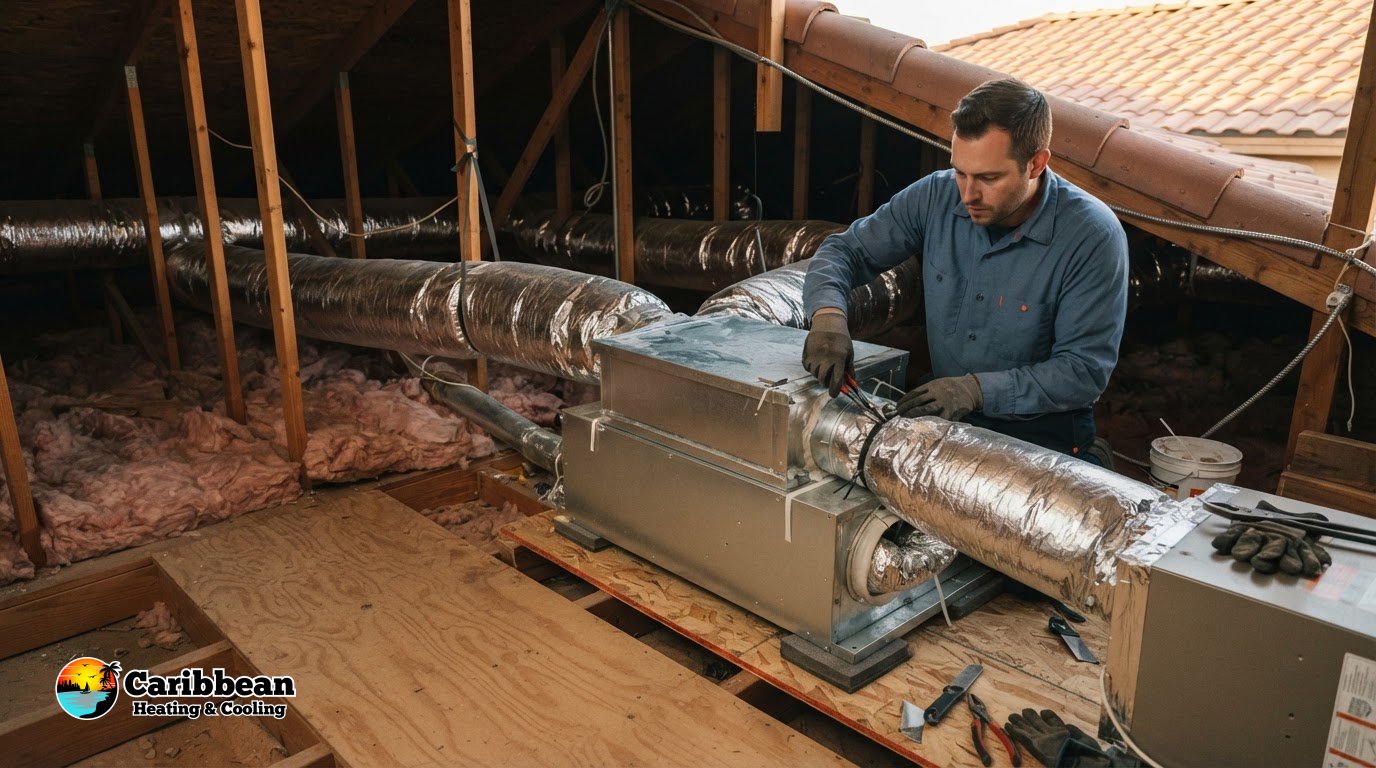
A thermostat fan set to “On” can circulate room-temperature air between heating cycles. Check whether the indoor fan keeps running after the outdoor unit stops. Also consider airflow: a clogged filter or closed supply register can reduce air reaching a room, while leaky or disconnected attic ducts can lose warmed air before it reaches living spaces.
How long does a heat pump defrost cycle last?
A defrost cycle usually lasts 5 to 15 minutes. During that time, the outdoor fan may stop for several minutes, and steam can rise as frost melts. If the unit remains heavily iced after repeated cycles, or cool indoor airflow continues after defrost ends, the cycle may not be clearing the coil properly and the system needs inspection.
When to Call a Professional?
Arrange service if the heat pump can’t bring the home to the thermostat setting after running for a long time, or if thick ice remains on the outdoor unit. Clicking, grinding, or loud humming also warrants attention. If a breaker trips again after you reset it, leave it off and arrange professional service instead of repeatedly restoring power.
Should You Repair or Replace Your Heat Pump?
Repair is often appropriate when a technician identifies a specific, fixable fault and the rest of the system is operating properly. Replacement may be worth considering after a compressor failure, a badly leaking coil, or repeated repairs on an older unit. The decision depends on the condition of major components and whether repairs can restore dependable heating.
Why is my heat pump blowing cold air in heat mode?
A heat pump that continues cooling in heating mode may have a reversing valve stuck in the cooling position. Other possible causes include a refrigerant leak, compressor trouble, or faulty sensors and controls. These faults require system testing, not forceful adjustment of the valve. Note whether the outdoor unit runs and what sounds or changes in cycling accompany the cold airflow.

Related Posts
Comments (0)