
Son las 2:00 a. m. en Anthem y, aunque las estrellas del desierto son hermosas, el aire a 38 grados Fahrenheit (3 °C) que se cuela por sus ventanas...
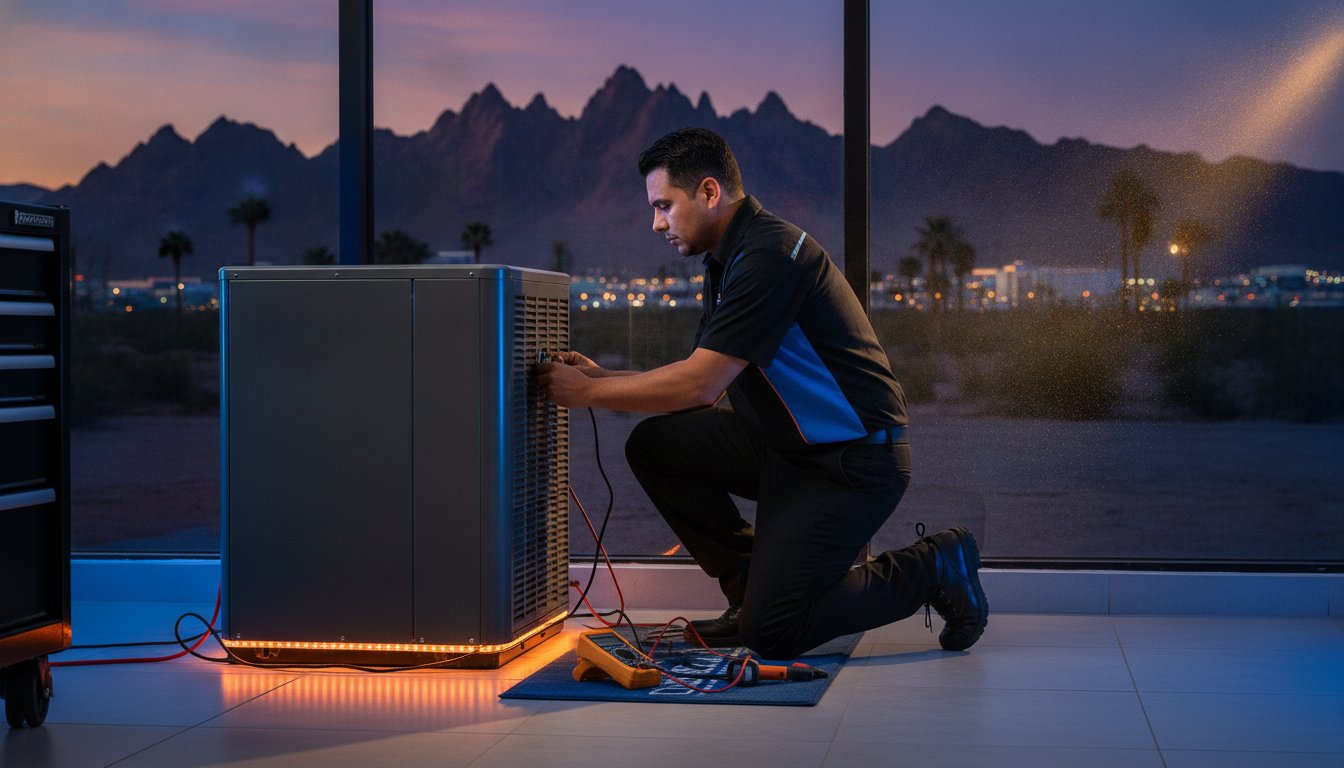
Furnace Maintenance Near Me: Professional Las Vegas Heating Tune-Ups (2026)
Most Las Vegas homeowners don’t think about their furnace until the temperature drops and it refuses to turn on. It’s an easy habit to fall into when winter here feels like a mild inconvenience compared to what the rest of the country endures. But that assumption is exactly what leads to cold nights, sky-high energy bills, and the kind of carbon monoxide worries that nobody wants to deal with at 2 a.m.
You already know your home deserves reliable heat when the desert nights turn sharp. A professional heating tune up in Las Vegas isn’t just routine maintenance; in the Mojave Desert, it’s as much about managing the relentless dust and particulate buildup that clogs your system as it is about checking burners and heat exchangers. Those two problems feed each other, and ignoring either one quietly drives up your utility costs while putting your family’s safety at risk.
This guide covers everything you need to know about furnace maintenance in the Las Vegas Valley, from what a thorough tune-up actually includes, to how desert conditions create unique demands on your heating system, to how Caribbean Heating and Cooling supports local homeowners with residential-focused expertise and 24/7 emergency availability when you need it most.
Key Takeaways
- Las Vegas’s unique desert environment creates a “dust factor” that accelerates wear on furnace components in ways that standard maintenance checklists often overlook – and understanding this distinction could save you from a costly breakdown.
- A professional heating tune up in Las Vegas involves far more than a quick visual check; you’ll learn exactly what a comprehensive inspection covers and why each step directly protects your family’s safety and comfort.
- Not all HVAC contractors are equal – discover what separates a locally rooted, residential-focused company from national chains when it comes to navigating Nevada building codes and responding to your specific needs.
- Desert cold snaps can strike fast and late, so knowing what 24/7 emergency support actually means for Las Vegas homeowners could make the difference between a quick fix and a miserable night.
- Routine furnace maintenance connects directly to indoor air quality – a link that matters more than most homeowners realize in a region where dust and particulates are a year-round reality.
Why Local Furnace Maintenance is Essential for Las Vegas Homeowners
Furnace maintenance isn’t just a box to check before winter arrives. In the Las Vegas Valley, it’s a proactive safety and efficiency inspection shaped entirely by the demands of the Mojave Desert climate. Understanding how furnaces work makes it clear why a system operating in Phoenix or Denver faces entirely different stressors than one running in Henderson or Summerlin. The heat, the dust, and the long stretches of dormancy create a specific pattern of wear that generic maintenance advice simply doesn’t address.
Carbon monoxide safety sits at the top of every professional inspection checklist, and for good reason. Gas furnaces in residential neighborhoods can develop cracked heat exchangers after months of thermal stress and inactivity, allowing CO to migrate into living spaces without any visible warning. A proper heating tune up in Las Vegas always includes combustion analysis and CO testing, not as an optional add-on, but as the first line of defense for your household.
Combating Desert Dust and Air Filtration
Standard one-inch filters were never designed for the Mojave. Fine silica particles and alkaline dust common to Southern Nevada are small enough to bypass standard filter media and settle directly onto igniter rods, flame sensors, and blower motor windings. Once coated, these components run hotter, draw more power, and fail earlier than they should. This is why indoor air quality services and furnace maintenance are inseparable in this region. A clean system produces cleaner air, and cleaner air protects the system. The relationship runs both ways.
The Dormancy Problem: Why Summer Hibernation Matters
Las Vegas furnaces can sit completely idle for six months or longer. When they fire up for the first time in October or November, that initial “burning dust” smell is normal and typically clears within the first heating cycle. But if the odor persists beyond 20 to 30 minutes, or if it smells electrical or acrid rather than dusty, that’s a warning sign worth taking seriously. Dust accumulation on heat exchangers and burner assemblies during summer dormancy is one of the leading causes of inefficient first-season performance, and it’s exactly what a pre-season heating tune up in Las Vegas is designed to catch before it becomes a problem.
What to Expect During a Professional Furnace Tune-Up
There’s a meaningful difference between a technician who glances at your filter and calls it a day and one who works through a structured, multi-point inspection that actually protects your home. A proper heating tune up in Las Vegas is a systematic process, not a quick visual sweep. Understanding what that process looks like helps you evaluate what you’re getting, and holds any contractor accountable to a real standard.
Safety and Mechanical Inspection Points
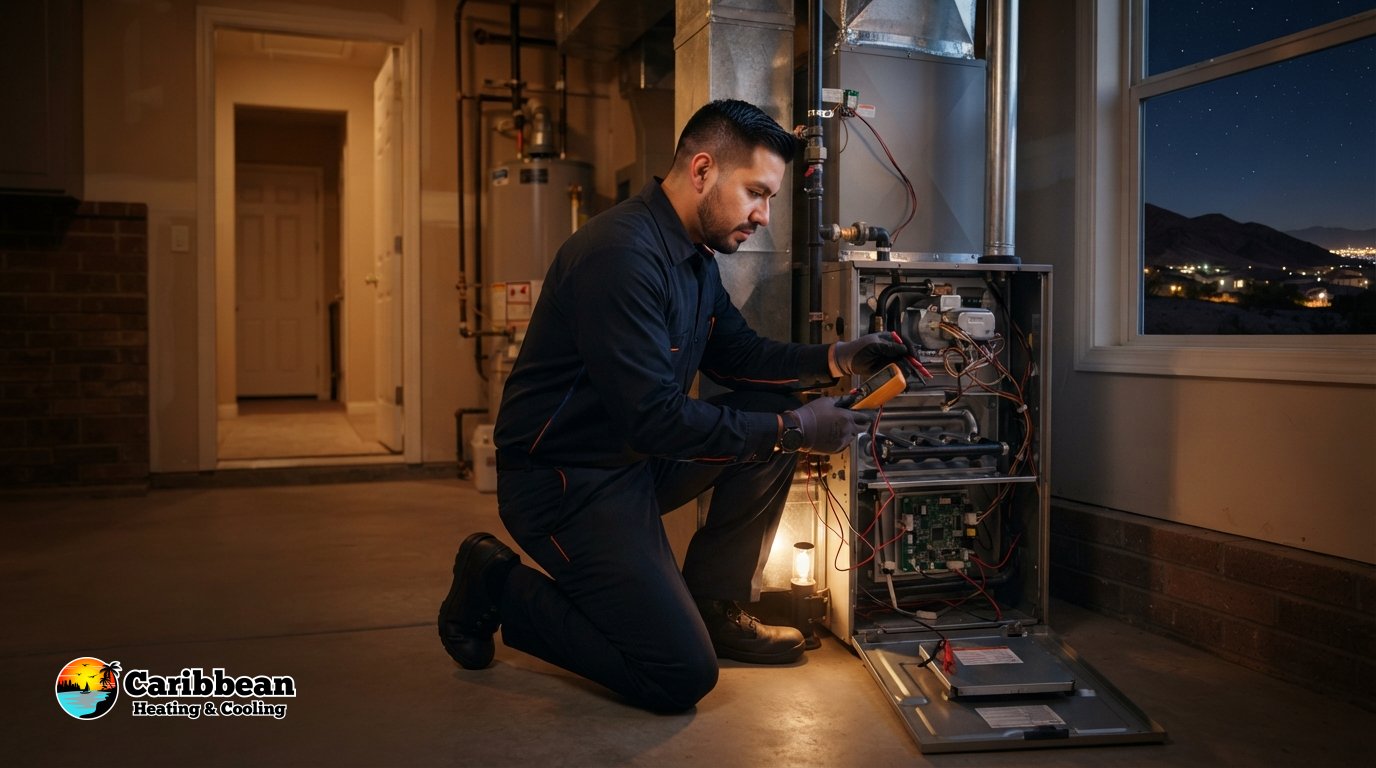
Every professional visit should begin with the components that carry the highest safety risk. The heat exchanger is the most critical safety component in a gas furnace; it’s the metal barrier that keeps combustion gases separated from the air your family breathes. A technician should visually inspect it for cracks or stress fractures, which can develop after repeated thermal cycling and extended summer dormancy.
From there, the inspection moves through:
- Pilot light or electronic ignition testing: A weak or inconsistent ignition signal means unreliable startup on cold nights. Technicians check igniter resistance and flame sensor voltage to confirm the system lights cleanly every time.
- Flue pipe inspection: Las Vegas flue pipes are surprisingly vulnerable to bird nesting and debris accumulation during the long off-season. A blocked flue is a direct carbon monoxide risk, and it’s one of the most commonly skipped checks on a rushed maintenance visit.
- Burner assembly cleaning and flame pattern analysis: Uneven or lazy flame patterns signal combustion problems that reduce efficiency and accelerate heat exchanger wear.
The EPA’s guidance on indoor air quality and HVAC maintenance reinforces why these safety checks connect directly to what your family breathes indoors. A compromised furnace doesn’t just run poorly; it actively degrades the air quality throughout your home.
Electrical and Performance Calibration
Safety checks done, a thorough technician shifts to performance. Blower motor amperage and voltage readings reveal whether the motor is working harder than it should, which is a common early warning sign before a mid-winter burnout. Catching an out-of-spec reading during a tune-up costs far less than an emergency replacement call in January.
Thermostat calibration is equally important and often overlooked. A thermostat that reads two or three degrees off sends incorrect signals to your system, causing it to short-cycle or run longer than necessary. Proper calibration ensures your thermostat communicates accurately with your heater repair history and current operating profile, which translates directly to lower utility costs and more consistent comfort.
If your system is due for this level of attention before the desert nights turn cold, scheduling a furnace inspection with Caribbean Heating and Cooling is a straightforward next step.

Choosing the Right Heating Contractor Near You in Las Vegas
Not every HVAC contractor is the right fit for a Las Vegas homeowner. National chains move technicians between commercial properties and residential jobs interchangeably, which means the person inspecting your furnace this morning may have been calibrating rooftop units at a strip mall yesterday. That context gap matters more than most homeowners realize. Local building codes in Henderson and Summerlin carry specific requirements around gas line clearances, ventilation standards, and permit documentation that a contractor without deep Nevada roots may simply not know by instinct.
Before scheduling any technician, verify three things: an active Nevada State Contractors Board license, proof of general liability insurance, and a clear focus on residential work. These aren’t bureaucratic checkboxes; they’re the baseline that protects your home and your family if something goes wrong during a repair.
The Advantage of Residential-Only HVAC Specialists
Caribbean Heating and Cooling focuses exclusively on home comfort, which means their technicians aren’t pulled between commercial projects and residential calls. That focus translates directly to faster response times for families and deeper familiarity with the specific systems installed in Las Vegas neighborhoods. It also connects naturally to a whole-home approach: a heating tune up in Las Vegas pairs cleanly with their AC maintenance expertise, so your home’s comfort is managed as a single integrated system rather than disconnected seasonal jobs.
When a desert cold snap hits at 2 a.m. and your furnace won’t fire, who answers the phone matters. Caribbean Heating and Cooling offers 24/7 emergency residential support, which means you’re not leaving a voicemail and hoping for a callback by morning.
Scheduling Your Maintenance Before the Peak Season
October is the right window. Book your furnace tune-up before November arrives and technician availability tightens. Pre-season scheduling means shorter wait times, a system that’s ready before the first sharp night, and no emergency premium costs when demand spikes.
Don’t wait for a warning sign to take action. Contact Caribbean Heating and Cooling today to schedule your residential furnace maintenance and head into the desert winter with a system you can trust.
Your Desert Winter Deserves a Furnace You Can Count On
Las Vegas winters are short, but they hit fast and without much warning. The takeaway from everything covered here is straightforward: desert dust accelerates wear in ways standard maintenance schedules miss, a thorough heating tune up in Las Vegas protects both your family’s safety and your monthly energy costs, and the contractor you choose matters as much as the service itself.
Caribbean Heating and Cooling has been a family-owned, residential-focused operation since 2018, serving Las Vegas Valley homeowners with licensed, insured technicians and 24/7 emergency support when cold nights don’t wait for business hours. There are no commercial distractions pulling attention away from your home, just straightforward residential expertise from a team that knows this climate.
Don’t let another October slip by without getting your system ready. Book your residential furnace tune-up with Caribbean Heating and Cooling today and head into the season with confidence. A little preparation now means warm, clean air when your household needs it most.
Frequently Asked Questions About Heating Tune-Ups in Las Vegas
How often should I schedule furnace maintenance in Las Vegas?
Once a year is the standard recommendation, and in Las Vegas, that timing matters. Schedule your tune-up in September or October, before the first cold snap arrives and before technician availability tightens. Annual maintenance keeps your system operating efficiently, satisfies most manufacturer warranty requirements, and gives a professional the chance to catch wear patterns specific to desert conditions before they escalate into a mid-winter failure.
What are the signs that my furnace needs immediate maintenance or repair?
Don’t ignore these warning signals: unusual banging, rattling, or squealing during startup; a persistent burning smell that doesn’t clear after the first heating cycle of the season; uneven heat distribution between rooms; or a sudden spike in your gas or electric bill without a change in usage habits. Any of these points to a component under stress. A carbon monoxide detector alarm is an emergency, full stop. Leave the home immediately and call for professional service before re-entering.
Is furnace maintenance necessary if my heater seems to be working fine?
A furnace that appears to be running fine can still have a cracked heat exchanger, a partially blocked flue, or a flame sensor coated in fine desert dust. These problems don’t always produce obvious symptoms until they’ve already degraded efficiency or created a safety risk. A professional heating tune up in Las Vegas catches these hidden issues before they become expensive repairs or, in the case of carbon monoxide concerns, a genuine hazard to your household.
Can I perform furnace maintenance myself or do I need a pro?
There are a few tasks homeowners can handle safely: replacing the air filter on schedule, keeping the area around the furnace clear of storage, and checking that supply and return vents aren’t blocked by furniture. Everything beyond that, including combustion analysis, heat exchanger inspection, electrical testing, and flue examination, requires licensed tools and training. Attempting those checks without proper equipment doesn’t just risk missing a problem; it can create one.

Related Posts
Comments (0)