
¿Qué pasaría si su aire acondicionado deja de funcionar al anochecer durante una ola de calor en Summerlin? El servicio de emergencia para HVAC...
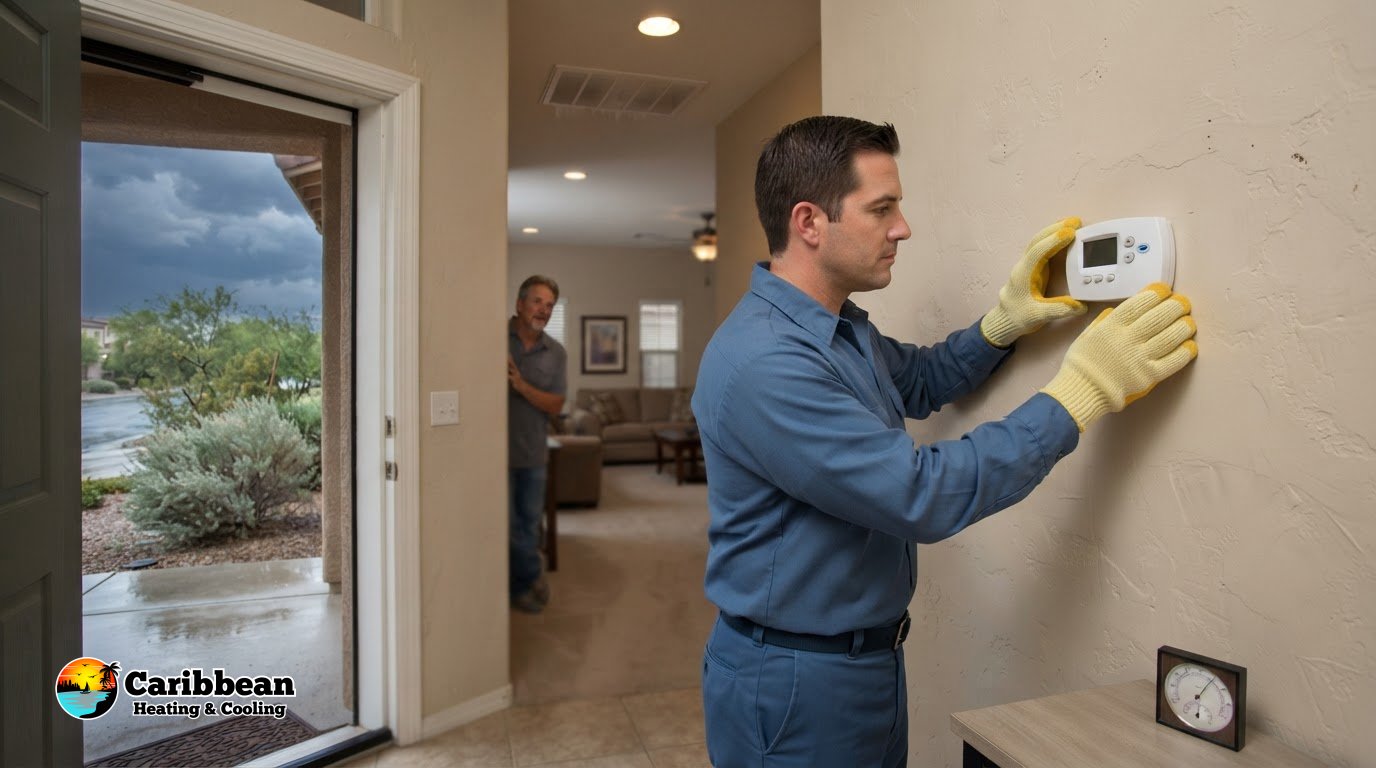
Controlling Home Humidity During Las Vegas Monsoon Season
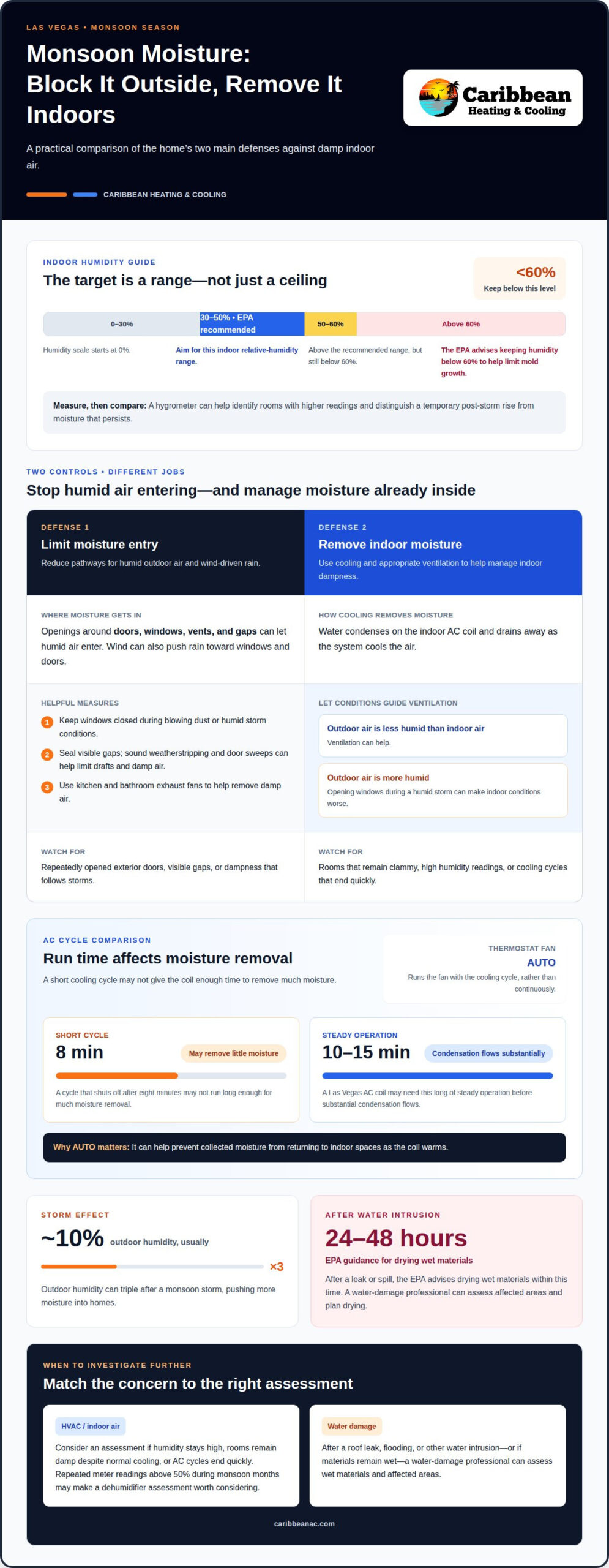
Las Vegas’s desert climate doesn’t keep monsoon moisture outside. During monsoon season, controlling home humidity during Las Vegas monsoon season starts with keeping indoor relative humidity in a healthy range: the U.S. Environmental Protection Agency recommends 30 to 50 percent and keeping it below 60 percent to help limit mold growth. In the Southwest, monsoon season typically runs from late June to mid-September.
That seasonal shift can feel surprising in a region known for dry air, especially when rooms feel damp after a storm. Learn what monsoon season brings to Las Vegas, how humid outdoor air enters through doors, vents, and gaps, and how air conditioning removes moisture. This guide explains what humidity changes to watch for, why openings and AC performance matter, and when a professional assessment can help restore indoor comfort.
Key Takeaways
- Keep indoor humidity below 60 percent to help hold mold growth in check, according to the U.S. Environmental Protection Agency.
- Monsoon moisture can enter through doors, windows, vents, and gaps, so sound weatherstripping and door sweeps can help limit drafts and damp air.
- Air conditioning cools indoor air while removing moisture; short cooling cycles may not remove much humidity.
- If a humidity meter repeatedly reads above 50 percent during monsoon months, a dehumidifier may be worth considering.
WHAT IS MONSOON SEASON?
In Las Vegas, monsoon season typically runs from mid-June through September, bringing storms and temporary increases in outdoor moisture. That shift can make rooms feel clammy and affect furniture or indoor air quality. For homeowners, controlling home humidity during Las Vegas monsoon season means balancing indoor moisture before dampness lingers. The U.S. Environmental Protection Agency recommends keeping indoor humidity below 60 percent to help hold mold growth in check. Its recommended indoor range is 30 to 50 percent.
During monsoon season, aim for indoor relative humidity between 30 and 50 percent, while keeping it below 60 percent. An HVAC professional can use a hygrometer to measure humidity in relevant rooms and compare readings across the home. Those measurements help identify problem areas and distinguish a temporary post-storm rise from moisture that persists.
Effective moisture control starts with understanding ventilation and the source of dampness. Ventilation can help when outdoor air is less humid than indoor air, but opening windows during a humid storm can make conditions worse. A professional can assess AC operation and look for moisture around windows and in bathrooms. Kitchen and bathroom exhaust fans can also help remove damp air.
After a roof leak, flooding, or other water intrusion, a water-damage professional can assess wet materials, locate affected areas, and plan drying. The U.S. Environmental Protection Agency advises drying wet materials within 24 to 48 hours after a leak or spill. Call an HVAC professional if humidity stays high or rooms remain damp despite normal cooling; contact a water-damage professional after intrusion or if materials remain wet. A professional assessment supports a lasting plan for controlling home humidity during Las Vegas monsoon season.
Moisture entering through doors, vents, and gaps
Monsoon storms bring humid air and wind-driven rain to Las Vegas homes. Openings around doors and windows can provide pathways for outdoor moisture to enter. During blowing dust, keep windows closed and seal visible gaps to limit unwanted outdoor air. Even small openings can affect indoor conditions, especially when exterior doors are opened repeatedly during unsettled weather. In ground-level spaces like garages and porches where damp air often drifts in, sealing concrete with protective systems from Masterclass Epoxy Floors & Training helps keep moisture from soaking into porous flooring.
Air conditioning removes moisture as it cools: water condenses on the indoor coil and drains away. But a cooling cycle that shuts off after eight minutes may not run long enough to remove much moisture. A Las Vegas AC coil may need 10 to 15 minutes of steady operation before condensation flows substantially. Thermostat AUTO mode runs the fan with the cooling cycle, rather than continuously; this can help prevent collected moisture from returning to indoor spaces as the coil warms.
Thermostat settings matter, but system operation and the home’s air pathways matter too. A professional can assess whether the AC runs consistently, inspect visible areas around doors and windows, and determine whether ventilation makes sense in current outdoor conditions. Opening windows can add moisture when storm air is more humid than indoor air, so let the weather guide ventilation.
Monsoon thunderstorms develop as moist air rises, cools, and condenses into clouds and rain. In Las Vegas, storms can bring humid air that enters through gaps, while wind pushes rain toward windows and doors. Call an HVAC professional if indoor dampness persists or cooling cycles end quickly. A professional thermostat and indoor air assessment can help determine whether cooling, ventilation, or another approach best fits the home.
Las Vegas monsoon-season humidity
Las Vegas monsoon-season humidity typically affects the region from July through September. Outdoor humidity, usually near 10 percent, can triple after a monsoon storm, pushing more moisture into homes.
Professional Dehumidifier Sizing for Homes
Dehumidifier sizing means matching a system’s moisture-removal capacity to the home’s conditions. An HVAC professional considers the area served, indoor humidity patterns, room layout, and how moisture moves through living spaces. Those factors matter because a unit that is poorly matched to the home may not manage dampness effectively. If a humidity meter repeatedly reads above 50 percent during monsoon months, consider a dehumidifier assessment.
Dehumidifier Operating Costs and Professional Recommendations
Operating costs depend on equipment energy use, how often it runs, and how much moisture it needs to remove. Installation costs vary with placement, drainage needs, and the spaces served. A professional can assess these factors and recommend a suitable system rather than choosing based on floor area alone. Ask for an evaluation that considers both summer humidity and your home’s layout.
A suitable capacity depends on moisture levels and the areas needing control, not one standard size for every Las Vegas home. High readings that persist after storms, damp surfaces, or clammy rooms can signal that current cooling and ventilation aren’t keeping indoor humidity balanced. A professional indoor-air assessment can help clarify the source and appropriate response. Schedule an indoor air quality assessment to discuss humidity concerns in your home.
Caribbean Heating & Cooling
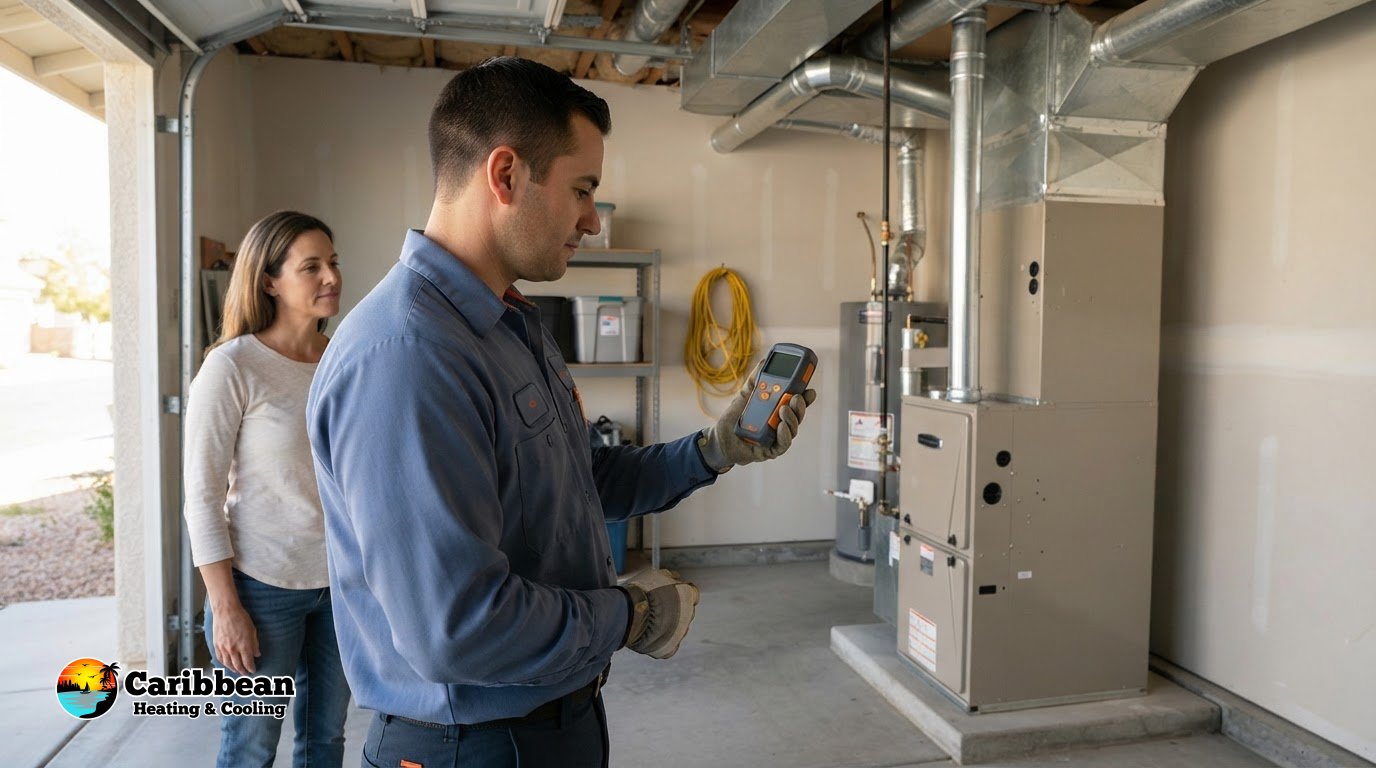
Caribbean Heating & Cooling can assess whether your cooling system is operating properly when indoor humidity stays high during monsoon season. Its residential HVAC services include AC maintenance, repair, and installation, addressing system issues that can affect cooling and moisture removal. An assessment can consider the equipment alongside your home’s humidity concerns and help identify an appropriate next step.
If storms bring persistent dampness or your air conditioner isn’t keeping your home comfortable, contact Caribbean Heating & Cooling to discuss your needs.
Make Your Next Step a More Comfortable Home
Track when rooms feel damp and whether the discomfort follows storms, AC use, or particular spaces. This pattern gives an HVAC professional a useful starting point for assessing indoor conditions and discussing practical options. A plan for controlling home humidity during Las Vegas monsoon season should fit your home’s layout and how its cooling system operates, rather than rely on a one-size-fits-all fix.
If your cooling system needs attention, Caribbean Heating & Cooling offers AC repair, installation, and maintenance. The right service depends on the system’s condition. A professional assessment can help identify the issue and guide your next decision.
Contact Caribbean Heating & Cooling to discuss your home’s comfort concerns and take a clear next step.
Frequently Asked Questions
Does AC remove humidity from the air?
Yes. As an air conditioner cools indoor air, water vapor condenses on the evaporator coil and drains away. If rooms feel sticky even when the thermostat reaches its setting, the system’s operation or drainage may need assessment. An HVAC technician can evaluate these factors rather than relying only on a lower thermostat setting to ease discomfort.
What are the dangers?
Excess indoor moisture can support mold growth and leave musty odors on fabrics, carpets, or stored belongings. Persistently damp drywall and wood can also deteriorate and attract insects; if structural dampness leads to an infestation, providers like Mosquito Assassin Pest Control can help eliminate ant activity. Look for damage inside closets, beneath rugs, or behind furniture, where moisture may be less visible. Address the source of dampness, since drying exposed surfaces alone may leave hidden moisture behind.
What amount of humidity is the right amount?
The U.S. Environmental Protection Agency recommends an indoor relative humidity range of 30 to 50 percent. Treat this as a useful range rather than chasing one exact reading: levels can vary between rooms and shift after storms. A room-by-room assessment can help identify whether one living space needs attention while other areas remain within the recommended range.
What should the humidity be in a house?
For a house, aim for indoor humidity between 30 and 50 percent, according to the U.S. Environmental Protection Agency. It also recommends keeping humidity below 60 percent to help hold mold growth in check. Persistent readings near or above that upper limit, especially alongside damp surfaces, are a reason to investigate moisture sources and affected rooms.
How does Las Vegas monsoon weather affect indoor humidity and condensation?
Monsoon weather can raise outdoor moisture, and air entering through openings may increase indoor humidity. Condensation forms when moisture in indoor air meets a cooler surface, such as a window during air conditioning. Droplets or recurring dampness around glass and frames after storms may indicate a localized condensation issue, rather than high humidity throughout the home.

Related Posts
Comments (0)