
Son las 2:00 a. m. en Anthem y, aunque las estrellas del desierto son hermosas, el aire a 38 grados Fahrenheit (3 °C) que se cuela por sus ventanas...
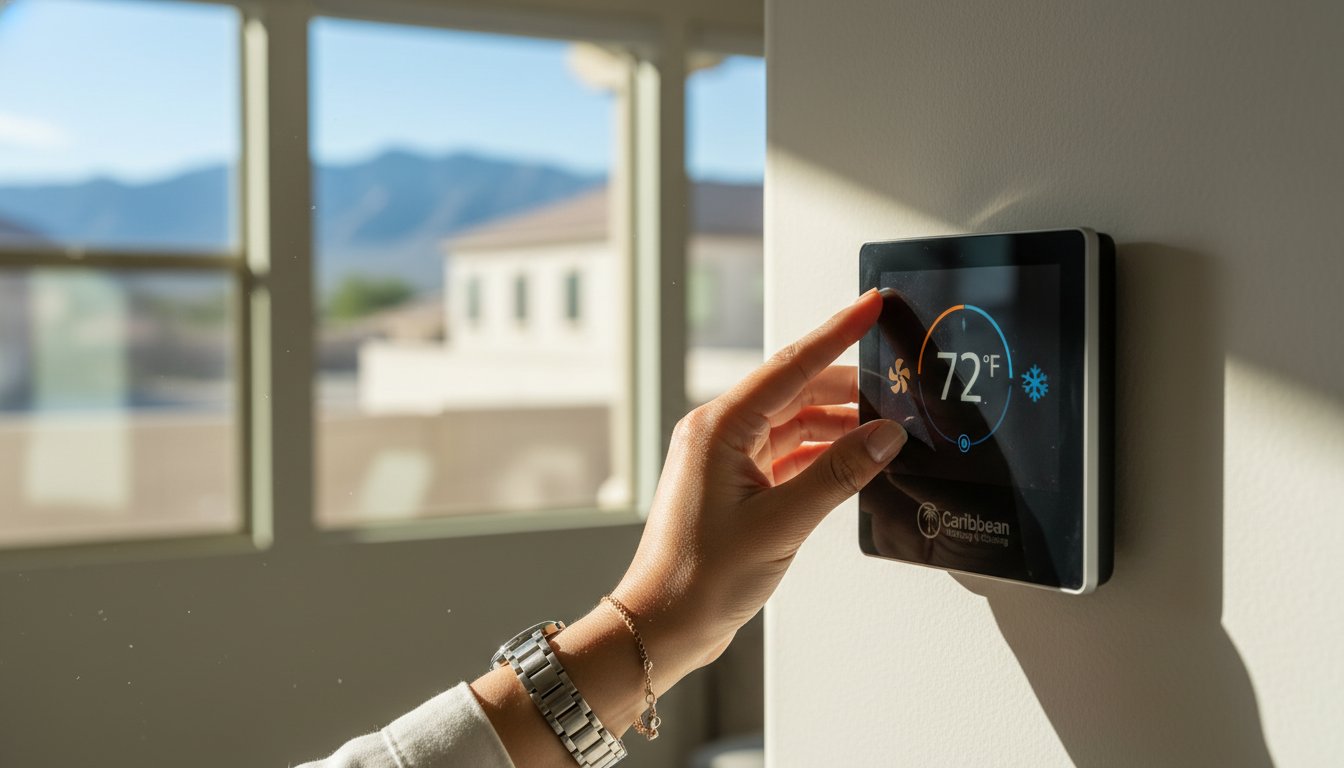
Best Smart Thermostat for Desert Climate: 2026 Guide for Las Vegas Homeowners
In the Mojave Desert, your thermostat isn’t a luxury gadget. It’s a critical safety tool that prevents your air conditioner from burning out while managing extreme thermal loads. You likely already feel the stress of sky-high NV Energy bills and the frustration of uneven cooling in a multi-story home. Finding the best smart thermostat for desert climate conditions is about more than just convenience; it’s about protecting your HVAC system from 115-degree heat and fine desert dust.
We know that keeping your family comfortable shouldn’t break the bank. With the right technology, you can save up to 26% on annual cooling costs and secure NV Energy rebates of up to $125. This 2026 guide reveals which smart thermostats actually survive the heat and how to optimize them to slash your monthly expenses. We’ll explore the top models for Las Vegas homeowners, explain how to use remote sensors for balanced cooling, and show you how to safeguard your system against overworking during the peak of summer.
Key Takeaways
- Identify the specific hardware features needed for the best smart thermostat for desert climate, focusing on compressor protection and high-cycle reliability.
- Compare the durability of 2026 models from Ecobee, Nest, and Honeywell to see which units maintain Wi-Fi connectivity during 115°F heatwaves.
- Learn why remote room sensors are a non-negotiable addition for multi-story homes to eliminate hot spots caused by intense afternoon sun.
- Discover how to use “pre-cooling” strategies to lower your indoor temperature before the daily 1:00 PM peak heat surge begins.
- Set up critical safety features like Compressor Lockout to shield your AC unit from damage during rapid voltage fluctuations.
Why Desert Climates Demand More Than a Standard Smart Thermostat
Living in the Las Vegas Valley means your HVAC system faces pressures that standard hardware simply isn’t built to handle. When you are looking for the best smart thermostat for desert climate conditions, you need a “desert-ready” unit. These specialized devices prioritize compressor protection and high-cycle reliability over basic aesthetic features. While understanding what is a smart thermostat is a good starting point, local homeowners must look deeper into hardware durability.
A 115°F afternoon is a brutal stress test for a thermostat’s internal components. Extreme ambient heat can cause standard Wi-Fi chips to glitch or disconnect entirely. This leaves you unable to monitor your home remotely during the hottest part of the day. Reliability is paramount because short-cycling occurs when your air conditioner turns on and off too frequently in rapid succession, which places immense mechanical stress on your compressor and drastically shortens the lifespan of your unit.
To better understand this concept, watch this helpful video:
In Nevada, “Swing Temperature” settings are often more important than “learning” algorithms. This setting controls the specific temperature gap required before the cooling cycle begins. By widening this gap slightly, you prevent the system from firing up for every minor fluctuation, saving your equipment from unnecessary wear.
Managing the Heat: Beyond Simple Temperature Settings
Modern desert thermostats must manage “Recovery Time” effectively. This is the duration required to cool a house from a power-saving 85°F down to 72°F. Smart recovery features allow your AC to ramp up slowly before you get home, which reduces the massive electrical strain during peak hours. In neighborhoods like Henderson, a consistent C-wire connection is vital. It ensures your thermostat stays powered during summer brownouts when the grid is under maximum pressure.
Dust and Low Humidity: The Hidden Thermostat Killers
Fine Mojave dust can eventually clog sensitive occupancy sensors, leading to “false away” modes that shut off your cooling while you are still in the room. This is a common frustration in our region. Additionally, the low humidity and vaulted ceilings found in many local homes can trick sensors. If your thermostat is placed in a spot with poor airflow or near a heat-soaking south-facing wall, it will provide inaccurate readings that force your system to overwork.
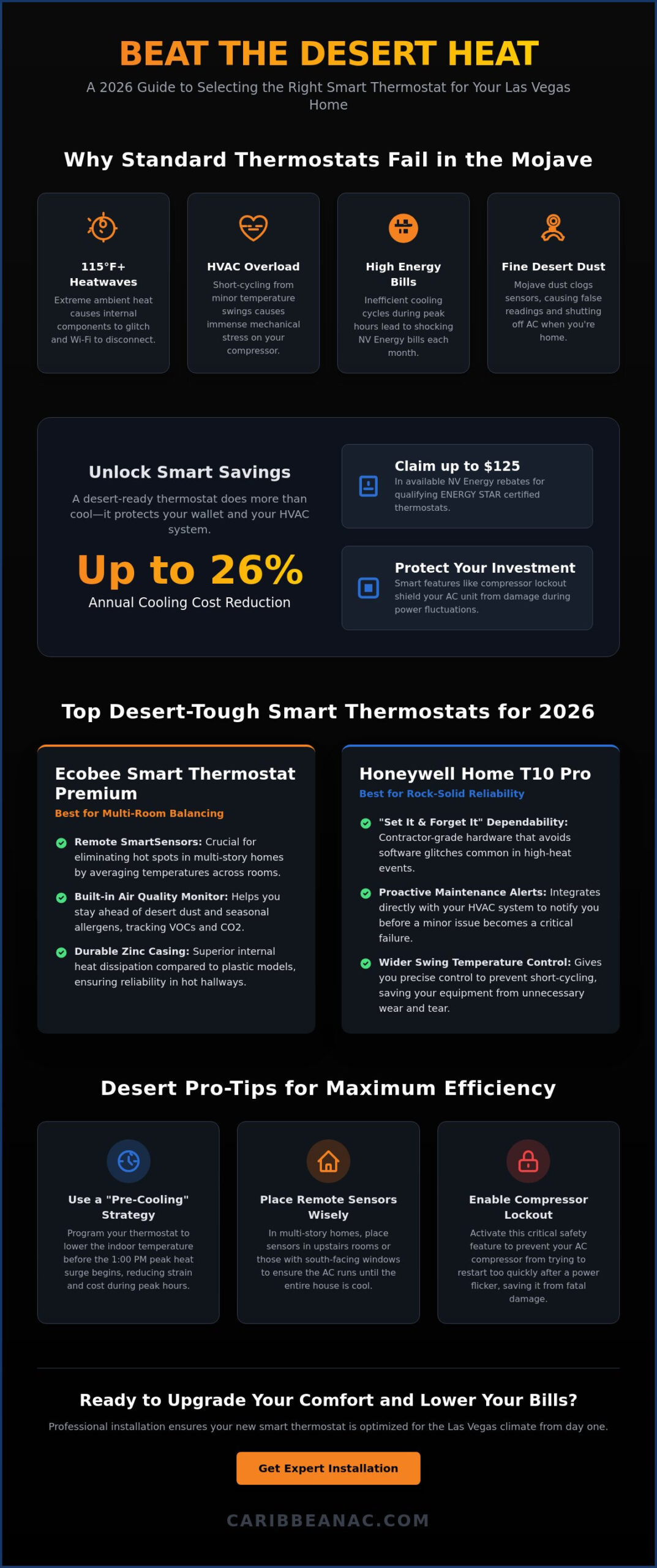
The Top 3 Smart Thermostats for Las Vegas Homes in 2026
Selecting the best smart thermostat for desert climate conditions involves balancing high-tech features with rugged hardware. While many devices look sleek on a wall, we prioritize ENERGY STAR certified smart thermostats that can withstand the specific electrical and thermal demands of Southern Nevada. In our experience, three models lead the market in durability and precision.
Ecobee Smart Thermostat Premium: Best for Multi-Room Balancing
The Ecobee Smart Thermostat Premium stands out for its superior heat management and whole-home balancing. I recommend the Ecobee Smart Thermostat Premium for its built-in air quality monitor, which helps you stay ahead of desert dust and seasonal allergens. Its zinc-backed casing helps dissipate internal heat much better than plastic models, making it ideal for units installed in warmer hallways. For Summerlin homes with large south-facing windows, using SmartSensors is non-negotiable to fix “hot spots” in upstairs bedrooms. These sensors communicate with the main unit to ensure the AC runs until the warmest room reaches your target temperature. This works perfectly alongside professional indoor air quality services to keep your home healthy.
Honeywell Home T10 Pro: The Reliability King
Local HVAC contractors often prioritize the Honeywell Home T10 Pro for its “set it and forget it” dependability. It avoids the software glitches sometimes seen in consumer-grade brands during high-heat events. The T10 Pro offers direct integration with AC maintenance alerts, sending notifications to your phone before a minor issue becomes an emergency failure. If you are ready to upgrade, our team can help you with expert thermostat installation to ensure your system is calibrated correctly for the Mojave heat.
Google Nest Learning Thermostat: The Efficiency Specialist
The Google Nest Learning Thermostat (3rd Gen) remains a popular choice due to its intuitive interface and lower price point. While it offers solid energy savings of up to 15% on cooling bills, it requires careful placement to avoid “sunblock” issues where direct desert sunlight tricks the sensors. It’s a dependable option for those who want a best smart thermostat for desert climate that focuses heavily on automated scheduling to combat NV Energy peak rates.
Optimizing Your Thermostat for Maximum Desert Efficiency
Even the best smart thermostat for desert climate conditions requires proper configuration to deliver real savings. In the Mojave, you cannot wait until the house is hot to start cooling. We recommend a “pre-cooling” strategy. Drop your home’s temperature by three or four degrees starting at 9:00 AM. This allows your home to act as a thermal battery, holding the cold air before the 1:00 PM peak heat hit and NV Energy price surges begin.
Protecting your equipment is just as important as saving money. Always configure the “Compressor Lockout” or “minder” setting to include a five-minute delay. This prevents your air conditioner from attempting to restart immediately after a rapid power flicker, which is a common cause of compressor failure during summer storms. Additionally, maintaining an indoor humidity level between 30% and 45% is the ideal set-point for Mojave homes to prevent wood floor cracking while keeping the air comfortable.
Programming for NV Energy Time-of-Use (TOU) Rates
Smart thermostats allow you to automate your savings by shifting heavy cooling to off-peak morning hours. You can also set “Safety Temps,” typically around 85°F, to protect your pets and indoor plants without overcooling an empty house while you are at work. This balanced approach ensures your system stays efficient without sacrificing the safety of your home’s interior environment.
Professional Installation vs. DIY in the Desert
While DIY videos make installation look simple, incorrect wiring in a desert environment often leads to “phantom” cooling calls. These occur when a thermostat sends a signal that the system cannot properly process, which can cause your coils to freeze over and lead to a total breakdown. Caribbean Heating & Cooling ensures your smart thermostat is perfectly synced with your system’s specific SEER rating. This professional calibration is vital for ac installation success, ensuring your high-efficiency equipment actually delivers the performance you expect.
Take Control of Your Home’s Climate and Cooling Costs
Surviving a Mojave summer requires more than just a basic Wi-Fi connection. You now know that choosing the best smart thermostat for desert climate means prioritizing hardware that can handle 115-degree stress and utilizing strategies like pre-cooling to beat peak energy rates. These technical adjustments protect your compressor from short-cycling while keeping your monthly bills manageable.
Don’t leave your comfort to chance or risk incorrect wiring that could lead to frozen coils. Upgrade your comfort today with professional thermostat installation from Caribbean Heating & Cooling. As a family-owned business serving Las Vegas and Henderson since 2018, we are licensed experts in high-efficiency desert cooling. We ensure your new technology is perfectly calibrated to your specific HVAC system’s requirements.
We provide 24/7 emergency support to restore your peace of mind if a sudden failure occurs. Investing in the right thermostat and professional calibration today ensures a cooler, more dependable home for your family. You deserve a system that works as hard as you do to stay comfortable.
Frequently Asked Questions
Will a smart thermostat actually lower my Las Vegas power bill?
Yes, installing the best smart thermostat for desert climate can lower your cooling bills by approximately 15% according to independent studies of ENERGY STAR certified models. In Southern Nevada, you can maximize these savings by enrolling in NV Energy’s PowerShift program to receive annual bill credits. These devices use advanced algorithms to reduce cooling loads during peak afternoon hours, ensuring your HVAC system runs only when it’s most cost-effective for your budget.
What is the best thermostat for a house with a heat pump in Nevada?
The Ecobee Smart Thermostat Premium and Honeywell T10 Pro are the most dependable options for local homes using heat pump technology. These models excel at managing the “O/B” reversing valve and auxiliary heat settings, which prevents your system from switching to expensive emergency heat unnecessarily. Because heat pump maintenance is critical in our climate, these thermostats also provide helpful alerts to notify you when it’s time for a professional system checkup.
Can I install a smart thermostat myself if I have a 24/7 AC system?
You can perform a DIY installation, but we recommend professional calibration for systems that face heavy desert workloads. Incorrectly jumping wires or failing to secure a proper C-wire connection can lead to “phantom” cooling calls or a blown fuse in your control board. A professional ensures the thermostat is synced with your system’s specific SEER rating, which prevents the equipment from overworking and reduces the need for premature AC repair.
Why does my smart thermostat say ‘Waiting’ or ‘Cooling’ but no air is coming out?
This status usually means your thermostat has engaged its compressor protection delay to prevent damage from short-cycling. This five-minute pause is common after a brief power flicker or if you’ve recently adjusted the temperature. If the screen says “Cooling” for more than ten minutes without any airflow, you may have a tripped breaker or a failed component in your outdoor condenser. In these cases, a professional diagnostic is necessary to protect your HVAC investment.

Related Posts
Comments (0)