
El costo de instalación de una bomba de calor en North Las Vegas depende del tipo y la capacidad del sistema, los ductos y la instalación eléctrica...
AC Blowing Warm Air in My Las Vegas House: What to Check First
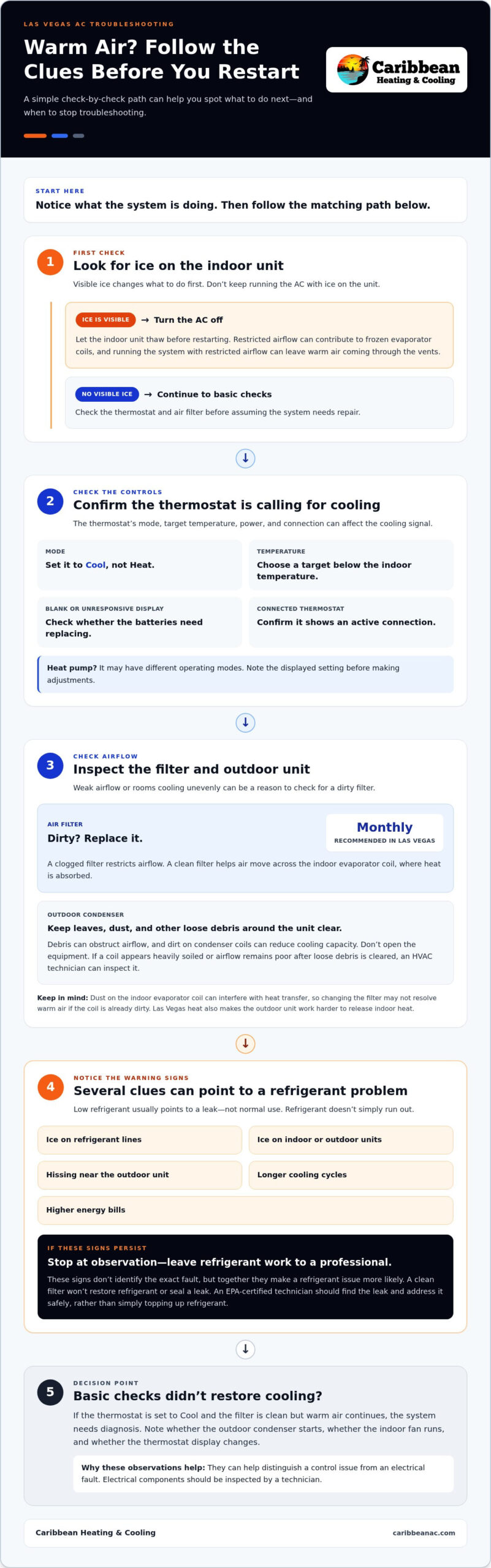
Warm air doesn’t always mean you need to shut down your AC. If your AC is blowing warm air in your Las Vegas house, turn it off if you see ice on the indoor unit and let it thaw before restarting. If there’s no visible ice, start with simple checks such as the thermostat setting and air filter.
It’s frustrating when the system runs but your home still feels hot, especially in the Las Vegas desert climate. A dirty filter can restrict airflow, while thermostat problems or low refrigerant can also interfere with cooling. The right first step depends on what you notice.
Here’s how to recognize when to stop the system, what filter and thermostat issues may be behind warm air, and which signs can point to a refrigerant problem that needs professional attention.
Key Takeaways
- If you see ice on the indoor unit, turn off the AC and let it thaw before restarting.
- Change the air filter monthly in Las Vegas; restricted airflow can interfere with cooling.
- Ice on refrigerant lines, hissing near the outdoor unit, or longer cooling cycles can signal a refrigerant problem.
- If thermostat settings and a clean filter don’t resolve the issue, Caribbean Heating & Cooling provides AC repair for persistent cooling problems.
Can a dirty filter cause my AC to blow hot air?
Yes. A clogged air filter restricts airflow through your air conditioner, reducing cooling and sometimes contributing to frozen evaporator coils. If the indoor unit has visible ice, turn the system off and let it thaw before restarting. Continuing to run it with restricted airflow can leave warm air coming through the vents.
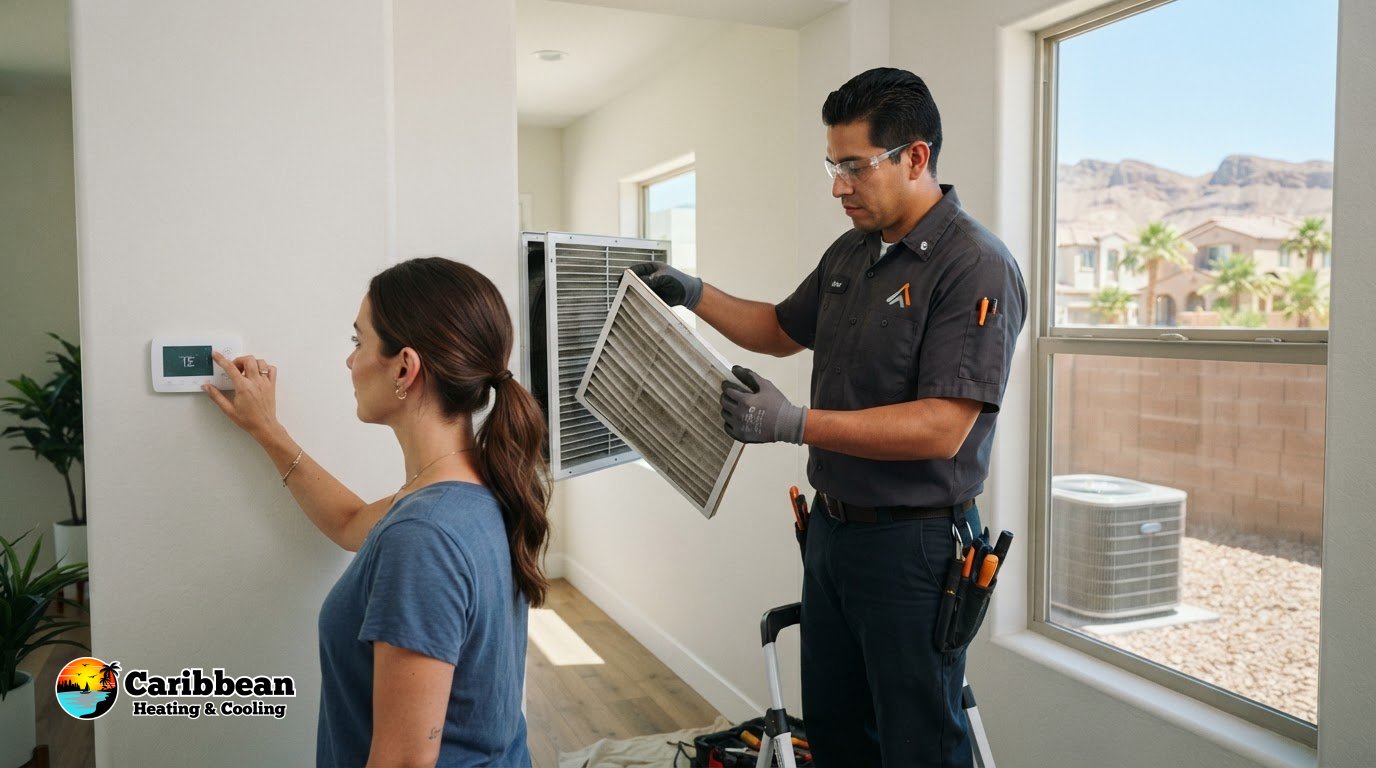
Check the filter when airflow feels weak or rooms aren’t cooling evenly. Replace a dirty filter. In Las Vegas, homeowners are advised to change AC filters monthly. A clean filter helps air move across the indoor evaporator coil, where heat is absorbed. Dust buildup on that coil can also interfere with heat transfer, so changing the filter may not resolve warm air if the coil is already dirty.
Inspect the outdoor unit, too. Leaves, dust, or other debris around the condenser can obstruct airflow, while dirt on the condenser coils can reduce cooling capacity. Keep the area around the unit clear, but don’t open the equipment. If the coil appears heavily soiled or airflow remains poor after you clear loose debris, an HVAC technician can inspect it and determine whether repair or maintenance is needed.
Las Vegas heat makes the outdoor unit work harder because it must release indoor heat into already-hot outdoor air. A dirty condenser coil can make that heat transfer less effective, so outdoor conditions and equipment cleanliness both matter.
To check an HVAC contractor’s credentials in Nevada, ask for their license number and verify its current status and trade classification in the state’s official contractor-license records. Make sure the listed information matches the contractor and the HVAC work being performed.
Low refrigerant and refrigerant leaks
Refrigerant carries heat through a closed cycle. At the indoor evaporator, it absorbs heat from household air. The compressor then moves it through the system, where heat is released outside. If refrigerant levels fall, the air conditioner may struggle to remove enough heat, and warm air can come through the vents.
Low refrigerant usually points to a leak, not normal use. Refrigerant doesn’t simply run out. A small leak can weaken cooling gradually: the system runs longer, yet the indoor temperature stays uncomfortable. A clean air filter is useful to check, but it won’t restore refrigerant or seal a leak.
Watch for ice on refrigerant lines or on the indoor and outdoor units, a hissing sound near the outdoor unit, longer cooling cycles, or higher energy bills. These signs don’t identify the exact fault, but together they make a refrigerant issue more likely. A frozen evaporator coil or refrigerant leak can both lead to warm air. Ice on the coil can also restrict airflow.
Don’t try to handle refrigerant yourself. A refrigerant issue needs an EPA-certified technician to find the leak and address it safely, rather than simply topping up refrigerant. If the system has recurring breakdowns, poor cooling, or a major component problem, compare the repair scope with replacement options. The decision depends on the system’s condition, expected repair needs, and ability to cool the home reliably.
For persistent cooling trouble, consider professional help with an AC problem.
Thermostat settings and malfunctions
A thermostat setting or fault can stop a cooling cycle from starting as expected. Check its mode and display before assuming the air conditioner needs repair.
Thermostat Settings and Connectivity
A thermostat controls when the system calls for cooling, so its settings and power affect the signal it sends. Set it to “cool” and choose a target below the indoor temperature. If the display is blank or unresponsive, check whether its batteries need replacing. On a connected model, confirm it shows an active connection. A lost connection can prevent remote settings from reaching the system.
Thermostat Set to Heat
A thermostat set to “heat” calls for heating rather than air conditioning. Switch it to “cool,” then lower the target temperature below the room reading and allow the system to respond. If the display already shows the proper cooling mode, changing settings won’t fix a faulty component. A heat pump may have different operating modes, so note its displayed setting before making adjustments.
If settings look right but cooling doesn’t improve, note what the system does: whether the outdoor condenser starts, whether the indoor fan runs, and whether the thermostat display changes. These observations can help distinguish a control issue from an electrical fault. A technician should inspect electrical components to diagnose faults or component failures. Dirty condenser coils can also limit cooling, but adjusting the thermostat won’t clean them.
If the mode and settings are correct but warm air continues, schedule AC repair to diagnose the system rather than repeatedly changing the thermostat.
Caribbean Heating & Cooling: AC Repair
Caribbean Heating & Cooling provides AC Repair when basic checks don’t explain why your system is blowing warm air. A technician can inspect the air conditioner, identify the source of the cooling problem, and determine what repair it needs. This is a sensible next step if the thermostat is set to cool, the filter is clean, or you’ve noticed signs of a refrigerant issue.
For systems that need ongoing attention, AC Maintenance can help address wear and performance concerns before they interrupt home comfort. If an inspection shows the system needs more than a repair, AC Installation may be the appropriate option. The right service depends on the equipment’s condition and the problem found.
Contact Caribbean Heating & Cooling to discuss your AC repair, or visit caribbeanac.com.
Take the Next Step Toward Reliable Cooling
If your AC is blowing warm air in your Las Vegas house, use what you’ve observed to describe the problem clearly. Note when the warm air began, whether it continues throughout the home, and what changes when the system runs. These details can help focus the evaluation and make it easier to decide what your home needs.
Caribbean Heating & Cooling offers AC Repair, AC Maintenance, and AC Installation, with the appropriate next step depending on the system’s condition. You don’t have to work through the decision alone. Contact Caribbean Heating & Cooling to discuss your AC concerns and take a practical step toward restoring comfort.
Frequently Asked Questions
Should I turn off the AC if it is blowing warm air?
Yes, turn it off if you see ice on the indoor unit, and let the ice thaw before restarting. Running a system with visible ice can leave airflow blocked. If you don’t see ice, check the thermostat mode and filter first. If warm air continues, avoid repeated restarts and arrange an inspection.
How do I fix my AC that blows hot air?
Start with checks that don’t require opening the equipment: confirm the thermostat calls for cooling, replace a dirty filter, and make sure supply vents aren’t blocked by furniture. Note whether the outdoor unit starts and whether the problem affects every room or just one. Ice, unusual sounds, or persistent warm airflow call for professional diagnosis.
How much does it cost to fix AC blowing hot air?
The price depends on the case and is provided after a quote request. The main factors are the cause of the failure, the parts involved, and the repair scope. A thermostat issue differs from a refrigerant leak or a failed component. Caribbean Heating & Cooling states that it provides upfront pricing with no hidden fees.
Need AC Repair in Las Vegas, Paradise, or Green Valley?
Caribbean Heating & Cooling provides residential AC Repair in Las Vegas and surrounding areas. Its stated service locations include Henderson, North Las Vegas, and Summerlin. Paradise and Green Valley are communities near Las Vegas; share your home’s location when discussing service so the team can address your repair needs and the property details.
What does it mean if AC is blowing hot air?
It means the system isn’t removing enough heat from indoor air, or the cooling cycle isn’t operating as intended. If your AC is blowing warm air in your Las Vegas house, note whether every room is affected, whether the outdoor unit runs, and whether the thermostat responds. These clues can help narrow down the cause.

Related Posts
Comments (0)