
Son las 2:00 a. m. en Anthem y, aunque las estrellas del desierto son hermosas, el aire a 38 grados Fahrenheit (3 °C) que se cuela por sus ventanas...
How to Reduce Allergens in Your Henderson Home: The HVAC Strategy for Desert Relief
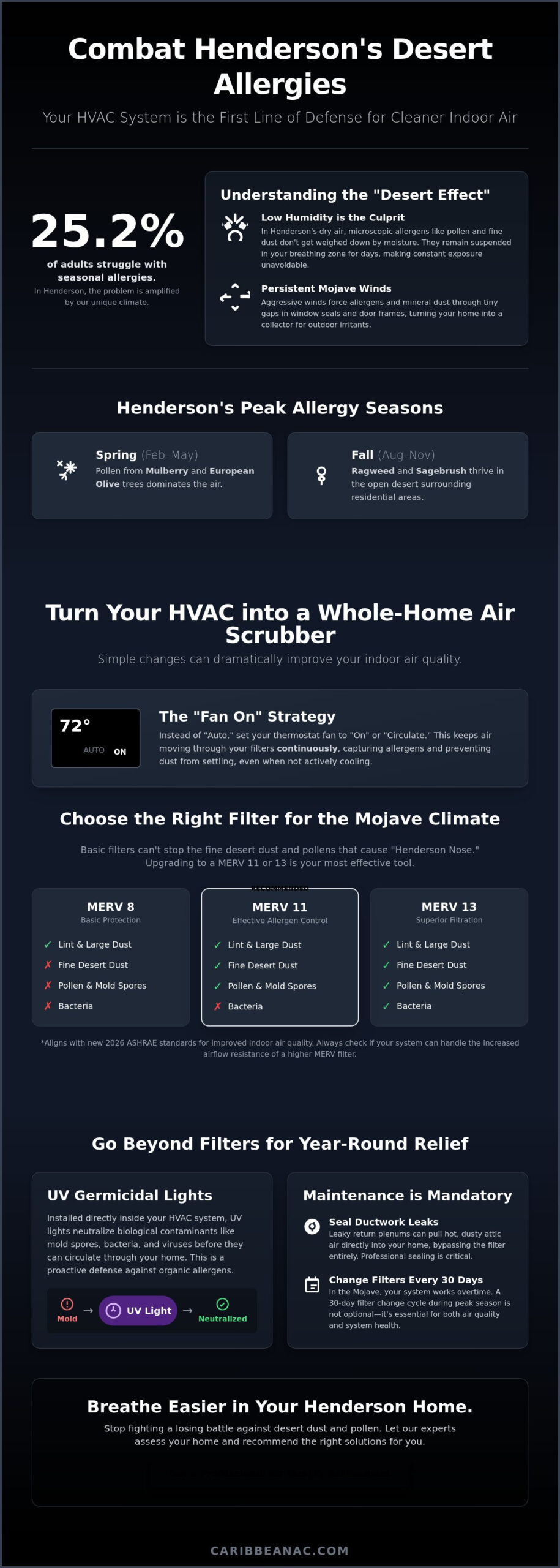
Did you know that 25.2% of adults are currently struggling with seasonal allergies? In Henderson, that figure hits home as the dry Mojave winds keep non-native pollens like mulberry and European olive trees circulating through our neighborhoods. If you feel like you’re constantly fighting a losing battle against “desert dust” on your shelves and persistent congestion in your sinuses, you aren’t alone. It’s exhausting to manage a home that never quite feels clean or comfortable despite your best efforts.
The good news is that you can significantly reduce allergens in Henderson home spaces by turning your HVAC system into a powerful line of defense. You deserve a sanctuary where the air is as clear as it is cool. This article explains how to optimize your indoor air quality to find lasting relief from hay fever and respiratory irritation. We will cover the new 2026 ASHRAE filtration standards, how to leverage NV Energy rebates for high-efficiency upgrades, and which professional indoor air quality solutions actually work for our unique desert climate.
Key Takeaways
- Understand the “Desert Effect” and why Henderson’s low humidity keeps allergens in your breathing zone longer than in other climates.
- Learn why upgrading to a MERV 11 or 13 filter is the most effective way to reduce allergens in Henderson home settings and catch fine desert dust.
- Discover the “Fan On” strategy to transform your HVAC system into a whole-home air scrubber that works even when you aren’t cooling the house.
- Explore advanced indoor air quality solutions like UV germicidal lights that neutralize biological allergens directly within your system.
- Identify how professional HVAC maintenance and high-efficiency upgrades help alleviate “Henderson Nose” and persistent seasonal hay fever.
Understanding Henderson’s Unique Allergy Challenges
Living in the Mojave Desert presents environmental challenges that differ significantly from more humid regions. To effectively reduce allergens in Henderson home environments, you first need to understand why our local air behaves the way it does. The primary culprit is the “Desert Effect.” In most parts of the country, humidity helps weigh down pollen and dust, eventually pulling these particles to the ground. In Henderson, our extremely low humidity allows microscopic allergens to remain suspended in the air for days at a time. This keeps them directly in your breathing zone, making it nearly impossible to avoid them without a strategy for Understanding Indoor Air Quality and proper filtration.
Many newcomers are surprised by the “Henderson Nose.” You might feel perfectly fine during your first year in the valley, only to develop intense congestion and sneezing during your second or third season. This happens because your immune system often needs repeated exposure to local non-native flora before it begins to overreact. When you combine this biological response with our aggressive afternoon wind gusts, your home can quickly become a collector for mineral dust and pollen that is forced through tiny gaps in window seals and door frames.
To better understand this concept, watch this helpful video:
Henderson’s Peak Allergy Seasons
- Spring (February–May): This is the most intense period for many. Pollen from Mulberry and European Olive trees dominates the air. Even though these trees were banned for sale in Clark County in 1991, many older specimens remain in established neighborhoods.
- Fall (August–November): Ragweed and Sagebrush become the primary concerns as temperatures begin to dip. These weeds thrive in the open desert surrounding our residential areas.
- Year-round: Persistent Mojave winds carry fine mineral dust and particulate matter. This isn’t just “dirt”; it’s a complex mix of minerals that can irritate respiratory passages regardless of the season.
Your HVAC system serves as the front line in this battle. It is the only mechanical system in your home designed to move, cool, and most importantly, scrub the air. By treating your air conditioner as a defense mechanism rather than just a cooling tool, you can reclaim your indoor comfort.
Optimising Your HVAC System to Filter Out Desert Allergens
Your air conditioning system is your primary tool to reduce allergens in Henderson home environments. While many people view their HVAC unit strictly as a way to escape the heat, its filtration capabilities are what truly protect your respiratory health. According to the CPSC Guide to Indoor Air Quality, controlling pollutants at the source and improving ventilation are key steps to a healthier home. In the Mojave, this means ensuring your system is perfectly sealed. If your return air plenum has even minor leaks, it can pull unfiltered, 120-degree attic dust directly into your living space, bypassing your filter entirely.
One of the most effective ways to scrub your air is the “Fan On” strategy. Instead of setting your thermostat to “Auto,” where the fan only runs during a cooling cycle, switch it to “On” or “Circulate.” This keeps air moving through your filters continuously. It prevents the stagnation that allows desert dust to settle on your furniture. It’s a simple change that makes a massive difference in daily congestion levels. During the peak of the Henderson summer, your system works harder than almost anywhere else in the country. This makes a 30-day filter change cycle mandatory, not optional.
Choosing the Right Air Filter for the Mojave Climate
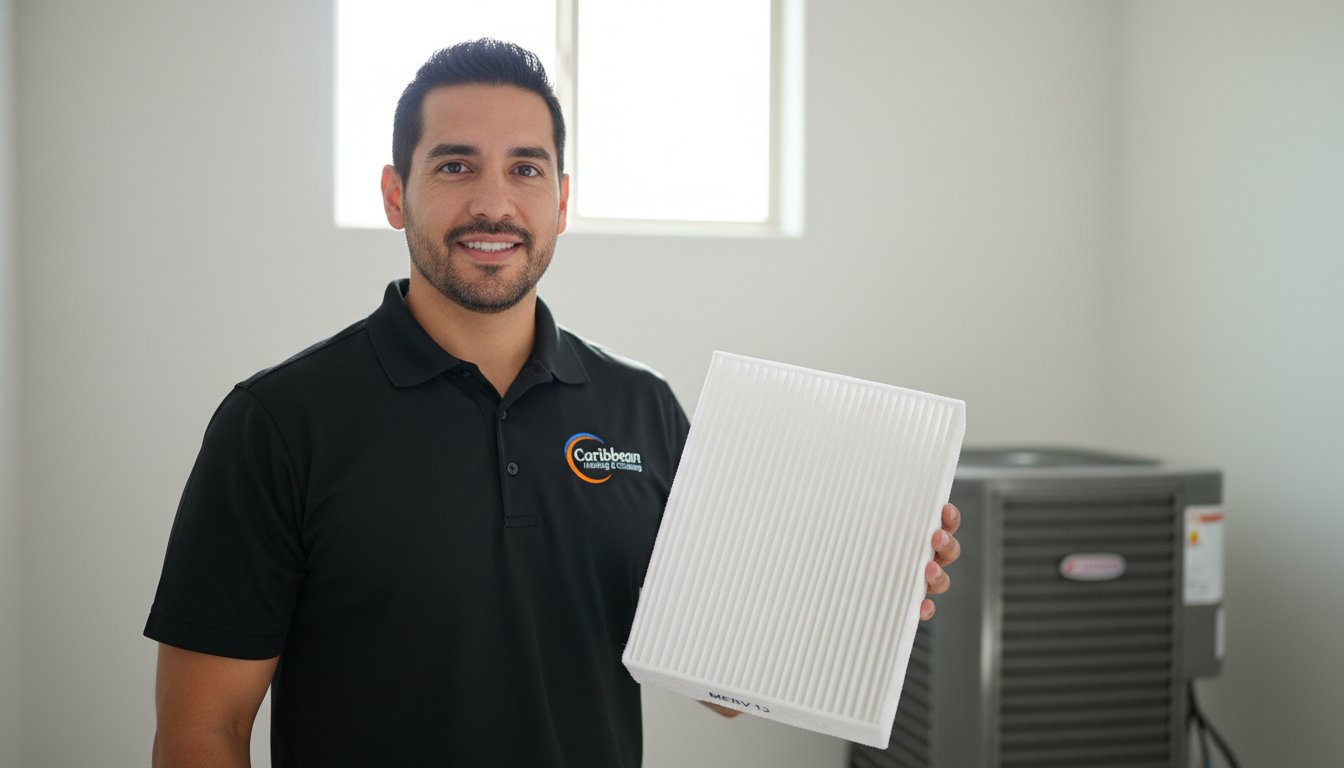
Not all filters are created equal. While a basic MERV 8 filter catches large lint, it won’t stop the fine pollens that cause “Henderson Nose.” You generally need a MERV 11 to MERV 13 filter to capture microscopic desert invaders, aligning with the 2026 ASHRAE standards. However, you must be careful. High-efficiency filters create more airflow resistance. If your system isn’t designed for a MERV 13, it can strain your blower motor and lead to an expensive repair. Pleated filters are vastly superior to flat fiberglass models because their increased surface area captures significantly more allergens without suffocating your system.
Thermostat Tactics for Cleaner Air
Modern smart thermostats offer advanced “Circulate” modes that run the fan for a set number of minutes every hour. This balances air quality with energy efficiency. These devices also help you monitor indoor humidity. Aiming for a range between 30% and 50% is the “sweet spot” for desert living. It keeps your nasal passages moist enough to filter out particles naturally while preventing the growth of biological allergens. If you’re unsure if your current setup is optimized, a professional assessment of your Indoor Air Quality can provide the clarity you need.
Advanced Indoor Air Quality Solutions for Year-Round Relief
High-efficiency filters are a great start, but they are only one part of a comprehensive strategy to reduce allergens in Henderson home environments. To achieve clinical-grade air quality, you should consider integrating a whole-home air purifier directly into your ductwork. These systems provide HEPA-grade filtration for every room simultaneously, catching particles as small as 0.3 microns. By following these EPA tips for improving air quality, you can create a multi-layered defense that handles the unique challenges of the Mojave Desert.
UV germicidal lights offer another layer of protection. While filters catch physical dust, UVC lamps installed inside your evaporator coil neutralize biological allergens. Mold spores and bacteria can occasionally thrive in the damp environment of an AC coil, even in our dry climate. These lights break down the DNA of these microorganisms, ensuring they can’t reproduce or circulate through your vents. It’s a silent, effective way to maintain a truly sterile environment.
Whole-Home vs. Portable Air Purifiers
Portable units are often the first thing people buy, but they have significant limitations. A high-quality portable unit might cover 300 square feet, which is fine for a single bedroom. In contrast, a whole-home system treats up to 2,000 square feet or more, ensuring the air in your living room is just as clean as your sleeping area. Integrated systems are also more cost-effective over time. You won’t have to manage multiple noisy machines or buy different filter sizes for every room in the house.
The Role of Professional Maintenance
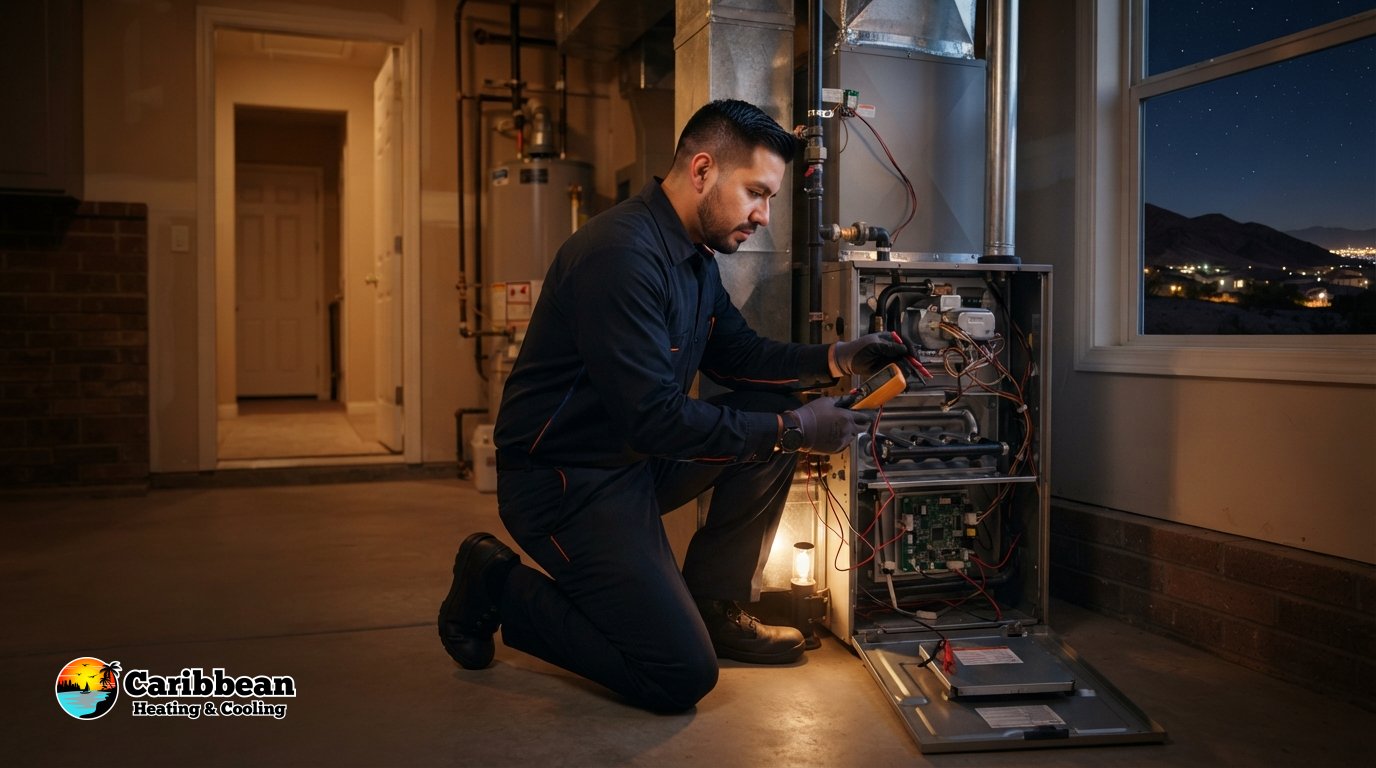
The most advanced technology won’t work if your system has physical gaps. A professional AC repair technician can identify “air bypass,” which happens when air slips around the edges of a poorly fitted filter. This allows raw desert dust to enter your home despite having a high MERV filter. Consistent regular AC maintenance ensures your drainage system stays clear and your filter rack remains airtight.
Final Checklist for Better Air:
- Inspect the seals around your filter rack for visible gaps or dust trails.
- Check your condensate drain line for standing water to prevent hidden biological growth.
- Schedule an indoor air quality assessment to see if your system is compatible with HEPA or UV upgrades.
Reclaim Your Indoor Sanctuary
Living in the desert doesn’t have to mean living with constant congestion and dust. By upgrading to high-efficiency filtration, utilizing the “Fan On” strategy, and integrating advanced UV germicidal lights, you can effectively reduce allergens in Henderson home spaces. These proactive steps transform your HVAC system from a simple cooling unit into a comprehensive air-scrubbing defense against the Mojave’s unique environmental challenges.
Caribbean Heating & Cooling is here to help you achieve the clean air you deserve. As a licensed and family-owned company serving Henderson and Las Vegas since 2018, we pride ourselves on being the local experts who understand our regional climate. Our expert IAQ technicians are ready to assess your system and ensure it’s perfectly sealed and optimized for your health. With 24/7 residential emergency support, we’re always available to protect your comfort and safety.
You have the power to turn your home into a pollen-free retreat. Start today and experience the difference that professional-grade air quality makes for your daily well-being and long-term peace of mind.
Frequently Asked Questions
What is the best HVAC filter for allergies in Henderson?
A pleated filter with a MERV 11 to 13 rating is generally the most effective choice for local residential systems. These filters strike the ideal balance between catching fine desert dust and maintaining the airflow your system needs to operate efficiently in extreme heat. If you’ve recently upgraded to a high-efficiency unit with a SEER2 rating of 15.2 or higher, your system is likely optimized to handle these denser, high-performance filters without straining the motor.
Can my air conditioner actually make my allergies worse?
Yes, a poorly maintained air conditioner can exacerbate respiratory issues if it develops “air bypass” or internal biological growth. When seals around the filter rack fail, the unit pulls raw, unfiltered air from your attic directly into your living space. Additionally, if the condensate drain line becomes clogged, it creates a damp environment where mold spores can thrive. These spores are then distributed through your vents every time the cooling cycle starts, triggering seasonal symptoms indoors.
How often should I change my AC filter during a Henderson summer?
You should replace your air filter every 30 days during the peak cooling months from May through September. Our triple-digit temperatures force your system to run almost continuously, which means it processes a massive volume of dust-laden air. Frequent changes are essential to reduce allergens in Henderson home spaces and prevent your blower motor from overheating due to restricted airflow. During the milder winter months, you can typically transition to a 60 or 90-day replacement schedule.
Will a whole-home air purifier help with “Henderson Nose” symptoms?
An integrated whole-home air purifier is one of the most effective ways to alleviate “Henderson Nose” by capturing the microscopic triggers that standard filters often miss. These systems target the sub-micron pollens from non-native mulberry and olive trees that cause chronic congestion. By scrubbing the air 24/7, these advanced indoor air quality solutions help maintain a stable, irritant-free environment. This allows your respiratory system to recover from the harsh outdoor conditions we experience in the valley.

Related Posts
Comments (0)