
¿Qué pasaría si su aire acondicionado deja de funcionar al anochecer durante una ola de calor en Summerlin? El servicio de emergencia para HVAC...
Signs of Poor Indoor Air Quality at Home and How to Check It
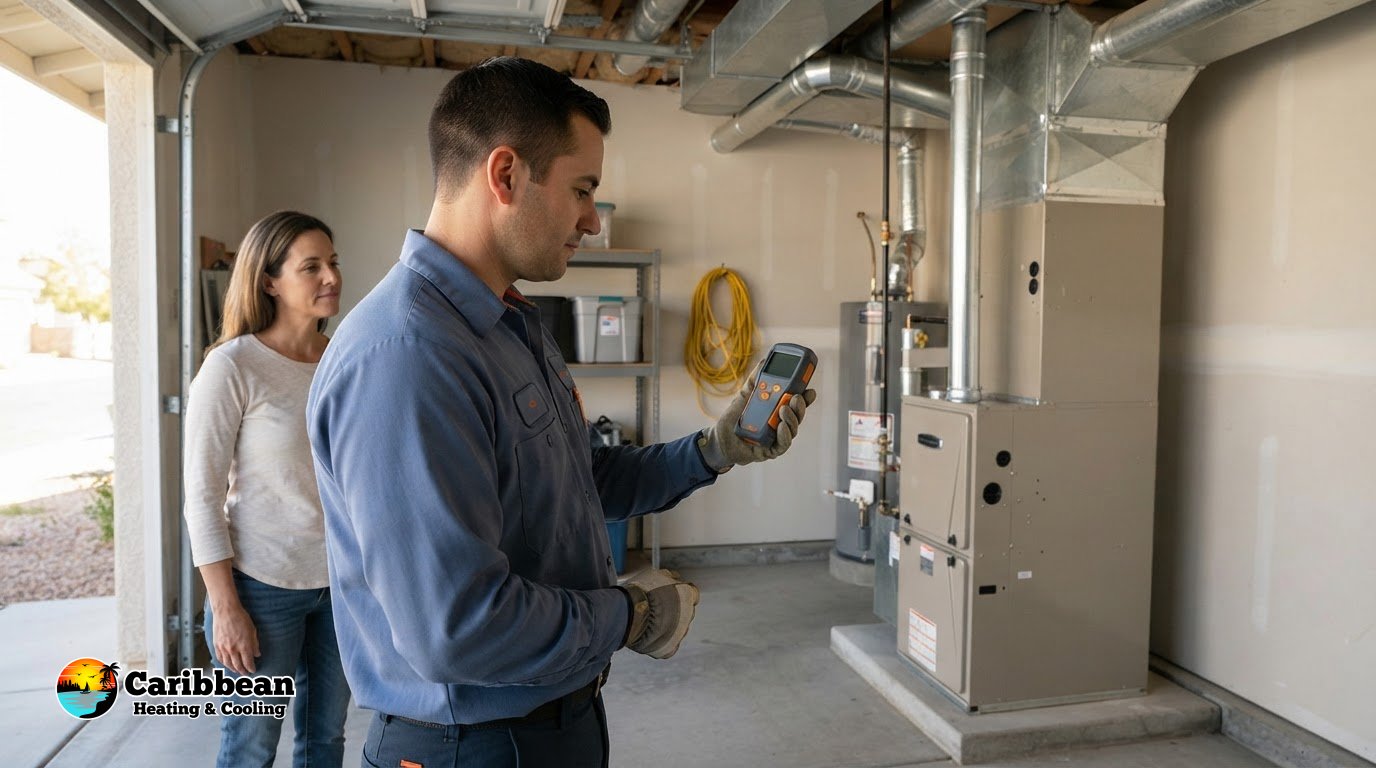
A home can look clean while its air irritates your eyes, triggers headaches, or makes breathing feel harder. Signs of poor indoor air quality in your home may include stale air or condensation, or symptoms that ease when you leave a room.
It makes sense to look for a clear reading, but one monitor cannot tell the whole story. A useful check combines what you notice with measurements of indoor humidity and pollutants such as carbon monoxide, radon, or volatile organic compounds (VOCs).
This guide explains how to recognize common warning signs, monitor indoor air, and reduce likely pollution sources. It also covers health effects that deserve attention and when home comfort or HVAC issues may be part of the picture.
Key Takeaways
- Notice stale air, lingering odors, condensation, and visible mold as clues that ventilation or moisture control may need attention.
- Use an indoor air monitor to track specific pollutants, and interpret readings alongside humidity levels and conditions in your home.
- Pay attention to symptoms that improve after leaving a room, while remembering that some pollutants, including radon, may not cause immediate symptoms.
- Reduce indoor pollution by improving ventilation, controlling moisture, and addressing pollutant sources rather than masking odors.
Ventilation, cleaning, and reducing indoor pollutants
Poor ventilation traps pollutants; dust, moisture, and household products add sources.
Identifying and Removing Pollution Sources
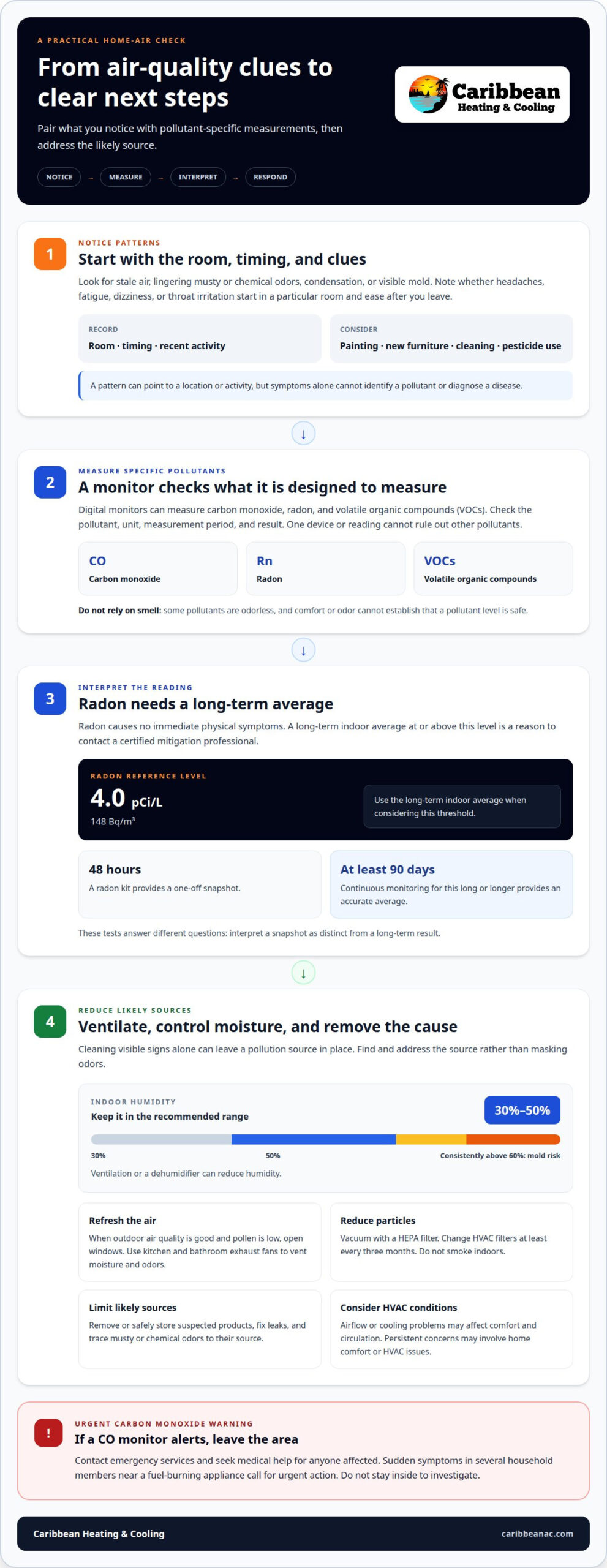
Identifying and reducing pollution means tracing contaminants to their source and limiting exposure. Cleaning up visible symptoms alone leaves the source in place. Note whether headaches, fatigue, or dizziness follow painting, bringing in new furniture, cleaning, or pesticide use. Remove or safely store suspected products, fix leaks, and use kitchen or bathroom exhaust fans to vent moisture and odors. Dust can also aggravate allergies and asthma.
Invisible Pollutants and Lingering Odors
Some indoor pollutants are odorless, so smell alone cannot establish that the air is safe. Digital monitors can test for carbon monoxide, radon, and volatile organic compounds (VOCs). Carbon monoxide and VOCs can contribute to headaches, dizziness, and fatigue; radon causes no immediate physical symptoms. Lingering musty or chemical odors may point to mold, mildew, pet dander, or household products. Find the source instead of masking the smell with sprays.
Indoor Pollutant Levels and Safety Guidance
For radon, a long-term indoor average at or above 4.0 pCi/L (148 Bq/m³) is a level for which homeowners should contact a certified mitigation professional, according to the U.S. Environmental Protection Agency. This threshold requires measurement; smell and visible signs cannot reveal radon exposure. Testing can identify a concern that symptom tracking alone may miss.
When outdoor air quality is good and pollen is low, open windows to refresh rooms. Use kitchen and bathroom exhaust fans; vacuum with a HEPA filter, and change HVAC filters at least every three months. The U.S. Environmental Protection Agency identifies indoor humidity consistently above 60% as a mold risk that ventilation or a dehumidifier can reduce. It recommends maintaining indoor humidity between 30% and 50%. The American Lung Association advises against smoking indoors.
Health effects of poor indoor air quality
Health effects can range from brief irritation to worsened respiratory disease. Dust mites, pollen, and mold spores may trigger itchy eyes, a runny nose, skin irritation, or coughing. Pet dander and airborne particles can aggravate asthma. Someone with asthma or COPD may notice more difficulty breathing when exposed to these irritants.
Look for a pattern rather than focusing on one isolated symptom. Headaches, fatigue, dizziness, or throat irritation that starts in a particular room and eases after leaving may point to an indoor exposure. If symptoms return when you reenter, note the room, timing, and recent activities, such as cleaning or using a hobby product. These observations can help clarify whether a location or activity is linked to discomfort.
Some pollutants can affect health without a noticeable smell. Carbon monoxide exposure may cause headaches, dizziness, nausea, or drowsiness. Sudden symptoms in several household members near a fuel-burning appliance call for urgent action: leave the area, contact emergency services, and seek medical help for anyone affected. Do not stay inside to investigate a possible exposure.
Longer-term exposure to indoor air pollution may contribute to or worsen asthma, COPD, cardiovascular disease, and lung cancer. Symptoms alone cannot identify the pollutant or diagnose a disease; discuss persistent or recurring concerns with a doctor or local health department. For practical next steps on home air concerns, explore indoor air guidance.
What indoor air pollutant levels are considered unsafe under U.S. guidelines?
Unsafe indoor-air readings depend on the pollutant and the measurement used. Carbon monoxide, VOCs, and radon are different exposures, so a single shared number cannot interpret them all. Digital monitors can measure these pollutants. Check which pollutant a device measures, its unit, and whether it reports a short-term result or an average. A monitor that tracks one contaminant cannot rule out others. Odor and comfort also cannot establish that a pollutant level is safe.
Radon needs particular attention because it causes no immediate physical symptoms. According to the U.S. Environmental Protection Agency, a long-term indoor radon average at or above 4.0 pCi/L (148 Bq/m³) is a level for which homeowners should contact a certified mitigation professional. A 48-hour radon kit provides a one-off snapshot. Continuous monitoring for at least 90 days or longer provides an accurate average. These tests answer different questions, so interpret a snapshot as distinct from a long-term result.
For any reading, note the pollutant, measurement period, and result before deciding what it means. If a carbon monoxide monitor alerts, treat the warning as urgent: leave the area and contact emergency services. For radon, use the long-term average when considering the EPA threshold. VOC readings also need to be interpreted as VOC measurements, not as a general score for every indoor pollutant. For help assessing air concerns in your home, explore indoor air quality support.
Caribbean Heating & Cooling: Indoor Air Quality
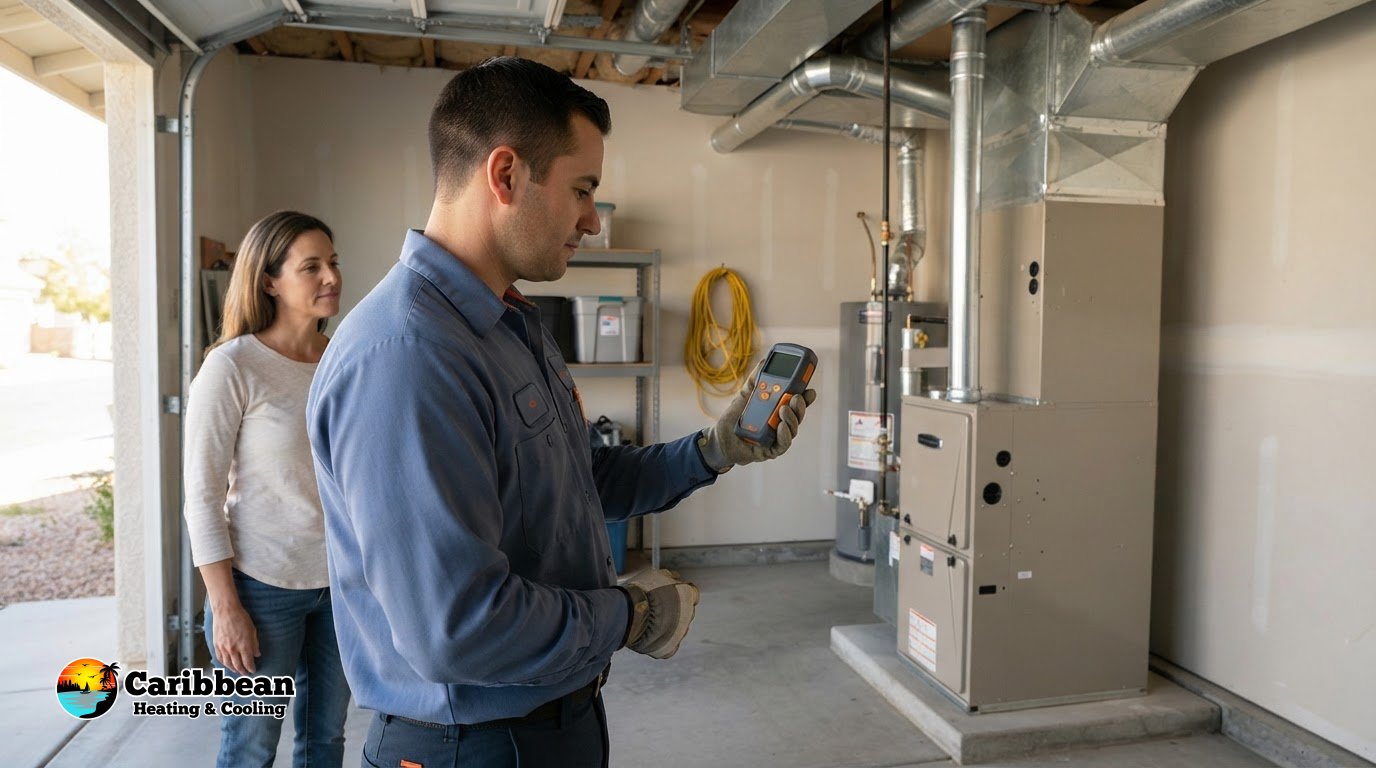
Caribbean Heating & Cooling provides Indoor Air Quality services for homeowners with persistent air concerns. If stale air, unusual odors, or recurring discomfort continue after you address obvious sources, the company can help assess possible HVAC-related concerns and suitable next steps.
Airflow or cooling problems may also affect comfort and circulation. AC Maintenance can address system upkeep, while AC Repair is relevant when equipment is not operating properly. AC Installation may suit a home that needs a new system. Choose the service based on the issue affecting your home, not symptoms alone.
For help with indoor air concerns or an HVAC issue affecting your comfort, contact Caribbean Heating & Cooling.
Take the Next Step Toward Healthier Home Air
Recognizing signs of poor indoor air quality in your home is a useful start. Next, connect your observations to the conditions behind them. Keep a brief record of where concerns occur, when they appear, and what has changed nearby. This context can help distinguish a recurring room or equipment issue from a one-time irritation, giving a professional a clearer starting point.
If the pattern continues or your home’s air and comfort remain concerns, Caribbean Heating & Cooling can help you consider an appropriate indoor air quality or HVAC service. You can also discuss AC repair, installation, or maintenance when cooling equipment is part of the concern. Contact Caribbean Heating & Cooling to discuss your home’s needs. A clear next step can make improving your indoor comfort feel more manageable.
Frequently Asked Questions
How do I test if my house is making me sick?
Look for a repeatable connection between symptoms and a place or activity, then pair your observations with suitable testing. Record when symptoms start, where they occur, and whether they ease after you leave. A monitor can measure selected pollutants, but it cannot diagnose illness. Discuss recurring symptoms with a doctor, who can consider your history and possible environmental triggers.
How does ventilation impact health, well-being, and productivity?
Ventilation brings outdoor air inside and helps carry indoor contaminants out, supporting comfort and reducing pollutant buildup. Poor airflow can leave rooms stuffy and allow emissions from cooking, cleaning, or furnishings to linger. Properly installed and serviced air conditioning systems, like those highlighted on engico.co.za, can help maintain steady airflow and temperature control. Use kitchen and bathroom exhaust fans during activities that create moisture or odors. Open windows only when outdoor air quality and pollen conditions are suitable.
What is indoor air pollution?
Indoor air pollution means unwanted gases, particles, or biological contaminants are present inside a home. Sources can include combustion, cleaning products, damp materials, dust, pollen, and pet dander. Some pollutants have noticeable odors; others do not. Identifying the specific source matters because reducing exposure depends on knowing what is entering or accumulating indoors.
What should I test my home’s air quality for?
Choose tests based on likely sources and concerns rather than expecting one device to measure everything. Digital monitors can test for carbon monoxide, radon, and volatile organic compounds (VOCs). If dampness or visible growth raises concerns about mold, airborne mold tests are available and must be sent to a lab for results. Match each test to the pollutant you want to assess.
What are the common signs of poor indoor air quality in a home?
Common signs of poor indoor air quality in your home include recurring irritation, headaches, or breathing discomfort linked to particular rooms. Stale air, lingering odors, condensation, water damage, and visible mold can also signal conditions worth investigating. Notice whether symptoms change after cooking, cleaning, or using a product. These clues can help narrow down where to look for a source.

Related Posts
Comments (0)