
¿Qué pasaría si su aire acondicionado deja de funcionar al anochecer durante una ola de calor en Summerlin? El servicio de emergencia para HVAC...
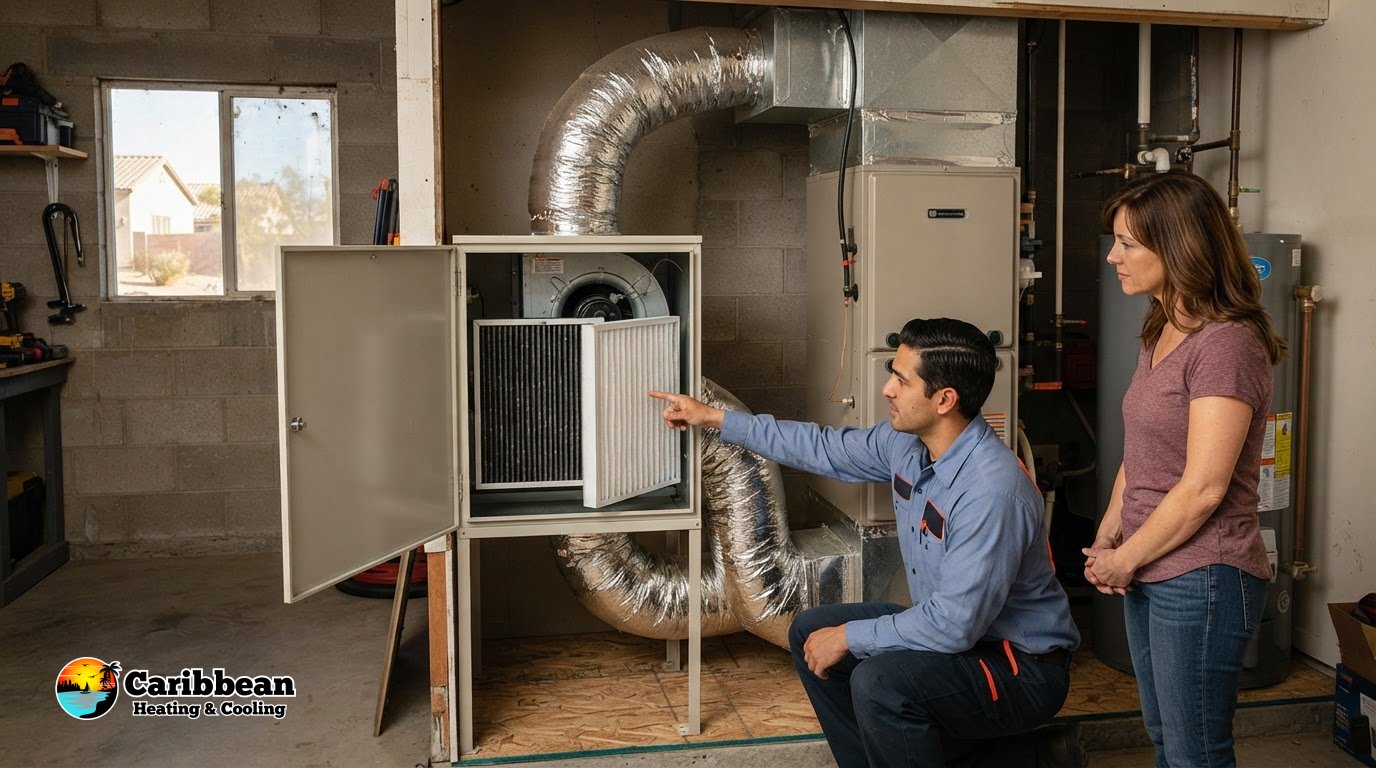
Whole-home air purifier for wildfire smoke in Henderson: compare cost and fit
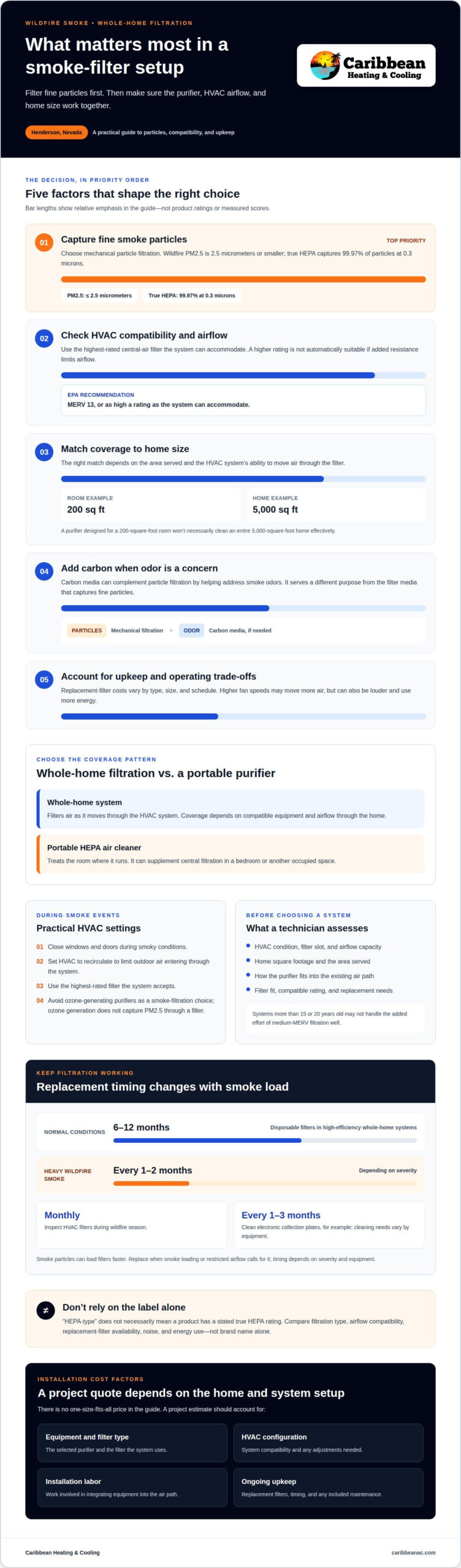
The best wildfire-smoke filter is the one that captures fine particles and fits your HVAC system, not simply the one with the highest rating. A whole-home air purifier for wildfire smoke in Henderson should use HEPA filtration for particles and carbon filtration when smoke odor is a concern. The U.S. Department of Energy says true HEPA filters capture 99.97% of particles at 0.3 microns, while the U.S. Environmental Protection Agency recommends a central-air filter rated MERV 13 or as high as the system can accommodate.
When wildfire smoke affects Henderson, choosing a whole-home air purifier means looking beyond the filter. Your home’s size and HVAC airflow matter too. This guide explains how filtration types address smoke particles and odor, what to consider when matching a system to your HVAC, and why installation costs depend on the equipment and work involved. It also compares whole-home filtration with a portable purifier.
Key Takeaways
- Learn why smoke-particle filtration and odor control can call for different filter media.
- See how home size and HVAC airflow affect whether a whole-home purifier is a practical fit.
- Understand which equipment and installation factors shape a project quote, without relying on a one-size-fits-all estimate.
- Find out when professional HVAC installation or service can help integrate air-quality improvements with your home system.
1. What kind of air purifier removes wildfire smoke?
For wildfire smoke, choose mechanical filtration that captures fine particles. The U.S. Environmental Protection Agency defines wildfire smoke PM2.5 as inhalable particles with diameters of 2.5 micrometers or smaller. True HEPA filters capture 99.97% of particles at 0.3 microns, according to the U.S. Department of Energy. That particle size range includes wildfire PM2.5.
A whole-home system filters air as it moves through the HVAC, while a portable purifier treats the space where it operates. For professional installation, the filter’s efficiency must suit the HVAC equipment and airflow. A “HEPA-type” label does not necessarily mean the product has a stated true HEPA rating. If smoke odor is also a concern, carbon media can complement particle filtration by helping address odors.
Compare brands and models by filtration type, HVAC airflow compatibility, replacement-filter availability, noise, and energy use, not by name alone. A more powerful fan may move more air, but higher speeds can be louder and use more energy. Replacement-filter costs vary with filter type, size, and replacement schedule.
In Henderson and Clark County, close windows and doors during smoky conditions, set HVAC to recirculate, and use the highest-rated filter the system accepts. For central air, the U.S. Environmental Protection Agency recommends MERV 13 or the highest rating the system can accommodate.
Avoid ozone-generating purifiers as a smoke-filtration choice: ozone generation doesn’t capture PM2.5 through a filter. It also introduces a separate indoor-air concern, so prioritize mechanical particle filtration instead.
During wildfire season, inspect HVAC filters monthly. Heavy smoke can mean replacement every 1-2 months, depending on severity. A technician can assess a smoke-loaded or clogged filter and replace it when needed; regular maintenance also helps keep the filtration system working as intended.
2. Choosing a whole-home air purifier for your HVAC type and home size
A professional starts by assessing the HVAC system, its filter slot, airflow capacity, and the home’s square footage. The EPA recommends central-air filters rated at least MERV 13, or as high a rating as the system can accommodate. A higher rating isn’t automatically suitable if added resistance limits system airflow. That compatibility check matters when choosing a whole-home air purifier for wildfire smoke in Henderson.
For an HVAC-integrated purifier, the technician considers how the unit will fit into the existing air path and work with the equipment. The right match depends on both the area served and the system’s ability to move air through the filter. An air purifier designed for a 200-square-foot room won’t necessarily clean an entire home of 5,000 square feet effectively.
Whole-home filtration treats air moving through the HVAC system, while a portable HEPA air cleaner focuses on the room where it runs. A portable unit can supplement central filtration in a bedroom or another occupied space. Whole-home coverage depends on compatible equipment and airflow through the house.
During smoke events, an HVAC professional can use recirculation to limit outdoor air entering through the system. The technician assesses filter fit, airflow, and system condition, then selects a compatible rating. Systems more than 15 or 20 years old may not handle the added effort of medium-MERV filtration well.
For a Henderson home, sizing and installation should account for both square footage and HVAC capacity. Maintenance includes inspecting the filter and replacing it when smoke loading or restricted airflow calls for it. A professional assessment helps determine whether a whole-home air purifier for wildfire smoke in Henderson fits the existing system. If you’re planning an indoor air-quality improvement, explore professional HVAC system support as a next step.
3. Whole-home purifier installation costs
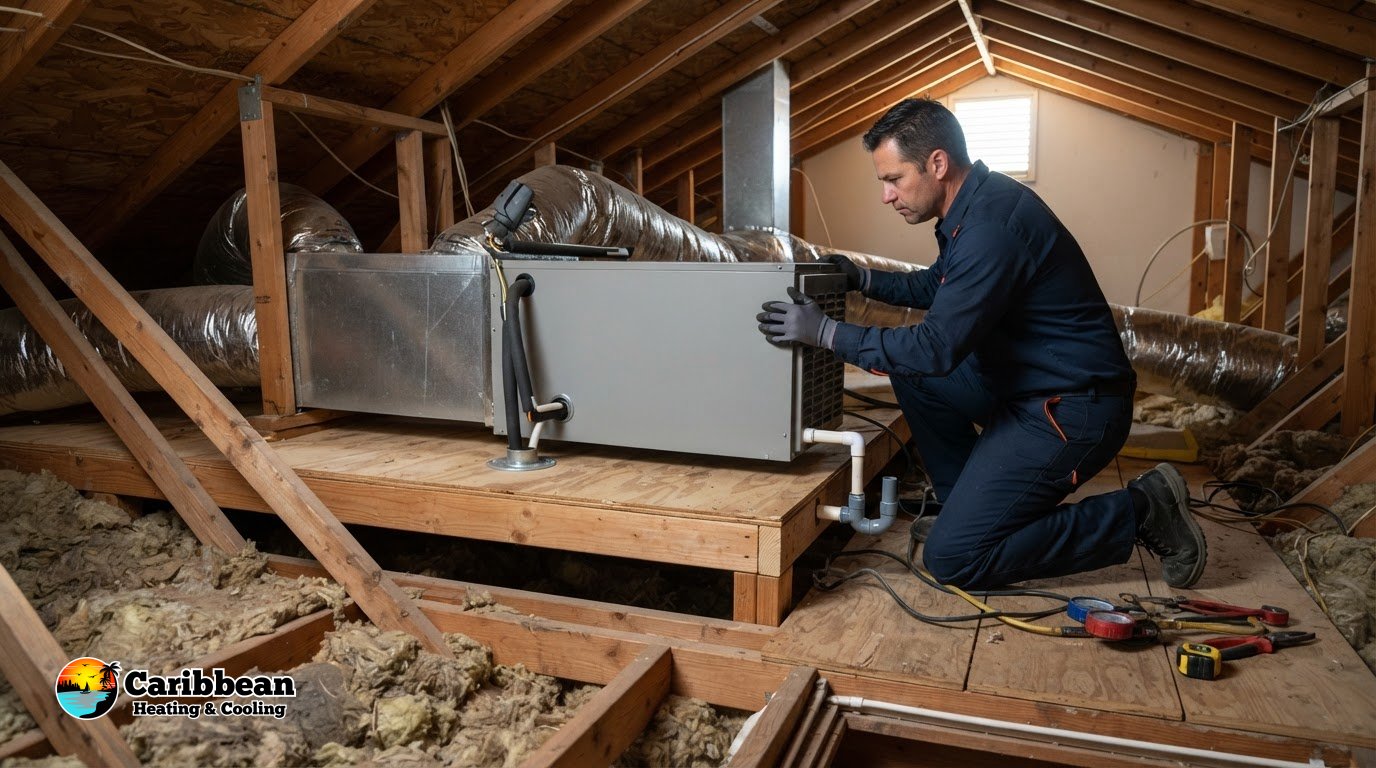
Installation and ongoing filter costs depend on the purifier, filter type, HVAC configuration, and work needed to integrate the equipment. The project price is based on the home and system setup. A quote should account for the equipment, installation labor, any system adjustments, and replacement filters needed for ongoing use.
Ask for the expected replacement schedule as well as the installation scope. Disposable filters in high-efficiency whole-home systems typically last 6 to 12 months under normal conditions. During heavy wildfire smoke, replacement may be needed every 1-2 months, depending on severity. That difference can affect the yearly cost of maintaining filtration through smoke season.
Fine particles, including PM2.5 at 2.5 micrometers or smaller, can load a filter faster during smoky periods. A professional can explain which filter the system uses and how smoke exposure affects replacement timing. Filter choice also influences ongoing expenses, so the quote should distinguish the installed unit from recurring filter purchases and any included maintenance.
During smoky conditions, keep windows closed to limit outdoor particles entering the home. A whole-home air cleaner operates with the HVAC system, so an installation assessment should consider equipment compatibility and your indoor air-quality concerns. Cleaning needs vary by equipment; electronic collection plates, for example, require cleaning every one to three months. These considerations affect both initial and ongoing costs.
For a project-specific estimate, request an indoor air-quality installation quote that outlines equipment, installation work, and filter replacement considerations.
Caribbean Heating & Cooling
Caribbean Heating & Cooling helps homeowners understand how their HVAC system relates to indoor air-quality needs. When considering a whole-home purifier, assess system condition, airflow, and equipment compatibility. A professional evaluation can clarify how your existing system operates and whether HVAC installation or maintenance fits your plans.
If smoke concerns coincide with heating or cooling problems, AC Repair, AC Maintenance, or Heating Repair can address related residential HVAC needs. This support helps you consider system performance and home comfort alongside filtration, rather than choosing equipment by rating alone.
Contact Caribbean Heating & Cooling to discuss your home’s HVAC and filtration needs.
Make a Confident Next Move
Choosing a whole-home air purifier for wildfire smoke in Henderson is also an opportunity to plan for comfort beyond smoke season. Consider how an air-quality upgrade fits your home’s broader HVAC needs, especially if your cooling system needs attention or you are planning equipment work. Caribbean Heating & Cooling provides AC repair, AC installation, and AC maintenance for these related needs in Henderson, Las Vegas, Summerlin, and North Las Vegas.
Discussing your home’s priorities can help identify a practical next step, whether you need to address an HVAC concern or plan an indoor air-quality improvement. Tell Caribbean Heating & Cooling what you’re experiencing and what you want your home system to do.
Contact Caribbean Heating & Cooling to discuss your home’s needs and move forward with confidence.
Frequently Asked Questions
What is the best filter for forest fire smoke?
A true HEPA filter in a unit with an appropriately sized smoke CADR is a strong choice for fine smoke. A useful sizing rule is at least two-thirds of the room’s floor area in CFM. For example, a 300-square-foot room calls for a smoke CADR of 200 CFM or higher. During active smoke events, aim for CADR matching the room’s full floor area.
What kind of air purifier removes wildfire smoke?
Mechanical particle filters, including true HEPA filters, capture fine smoke particles as air passes through. Carbon filtration can help address smoke odor. UV germicidal lights target biological contaminants such as mold spores, bacteria, and viruses, not wildfire particles. In a Henderson home, choose equipment based on whether you need room-level or HVAC-integrated coverage.
Do you need carbon as well as HEPA for wildfire smoke?
Carbon media can help with smoke odor, while HEPA filtration targets airborne particles. They serve different purposes, so consider both if you want to address fine smoke and lingering smells. Carbon does not replace particle filtration, and a HEPA filter alone may not address odor as effectively. Choose based on whether particles, odor, or both are your main concerns.
How can a professional help clear wildfire smoke from your home?
A technician can assess whether smoke has loaded the HVAC filter and whether the system needs a replacement filter. During smoky conditions, keep windows and doors closed and use recirculation to limit outdoor smoke entering. After outdoor air clears, continue running filtration for a day or two to help reduce remaining airborne particles.
How can a professional clean wildfire smoke from your indoor air?
A professional can evaluate HVAC filtration and system operation, but settled residue on surfaces needs separate attention. Damp-mop floors to collect settled particles; vacuuming can stir them back into the air. In Las Vegas and Henderson, combine suitable HVAC filtration with careful surface cleaning, and keep outdoor smoke from entering through open windows.

Related Posts
Comments (0)