
¿Qué pasaría si su aire acondicionado deja de funcionar al anochecer durante una ola de calor en Summerlin? El servicio de emergencia para HVAC...
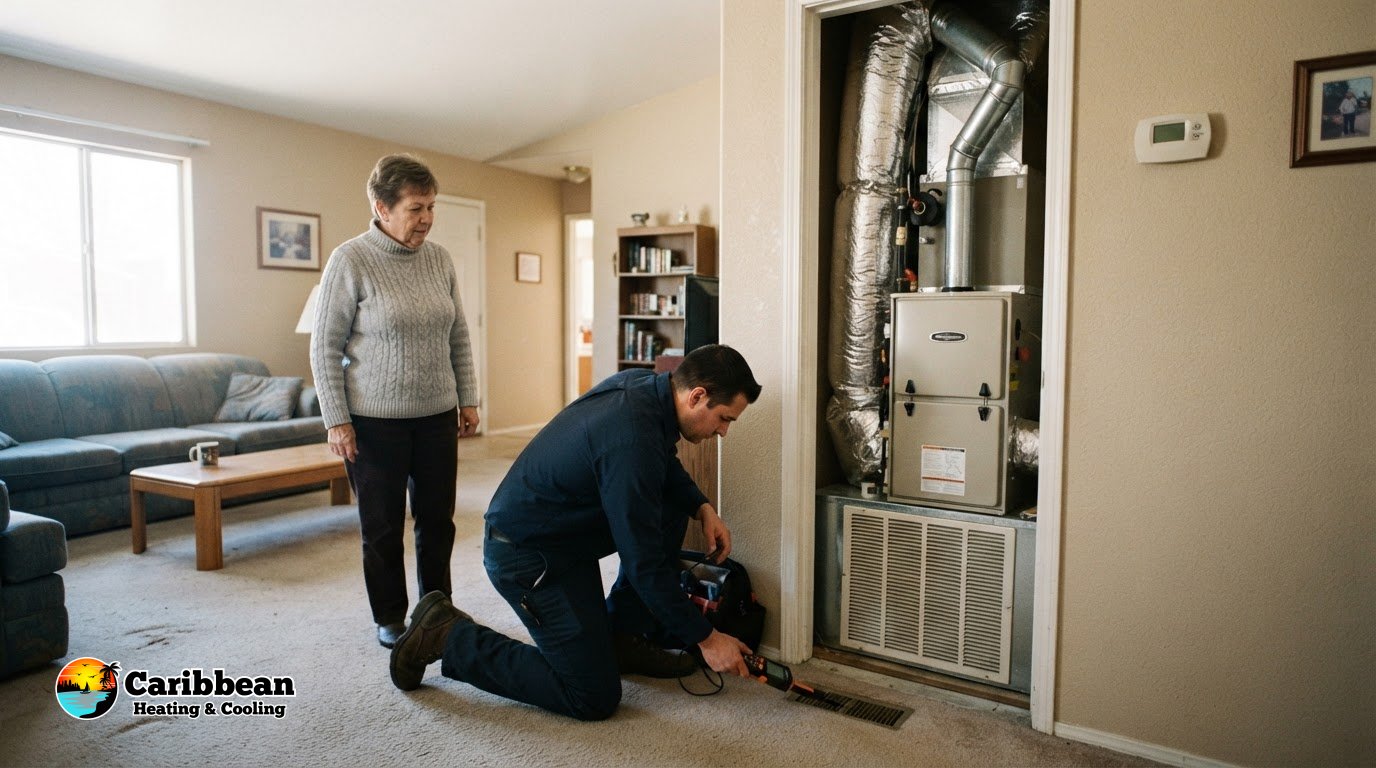
Can an Undersized Furnace Heat Your North Las Vegas Home?
A furnace that runs for long stretches isn’t automatically proof that it’s too small. An undersized furnace may heat your North Las Vegas home in milder weather but struggle to maintain the thermostat setting when outdoor temperatures drop. Whether it can keep your home warm depends on the home’s heat loss, the furnace’s heating capacity, and whether the ducts deliver enough warm air to each room.
It makes sense to suspect the furnace when rooms feel chilly or the system seems to run constantly. But duct restrictions or leaks can cause similar symptoms, so replacing equipment before identifying the cause may not solve the comfort problem.
This article explains how duct sizing and condition affect delivered heat, what a Manual J load calculation measures, and how furnace capacity relates to your home’s needs. You’ll see why square footage alone can’t settle the question, and which signs point to a system that needs a closer heating evaluation.
Key Takeaways
- A furnace may heat adequately in mild weather yet struggle during colder spells if its capacity falls short of the home’s heat loss.
- Uneven room temperatures can point to ductwork or airflow issues, not just an undersized furnace.
- Manual J accounts for home-specific heating and cooling needs, giving a more useful basis for sizing than square footage alone.
- Persistent long run times or failure to reach the thermostat setting can help identify when a heating system needs professional evaluation.
Furnace and heat-pump sizing for heating and cooling
Heating capacity must match a home’s heat loss, while cooling capacity addresses heat gain. In North Las Vegas, local design conditions and air delivery both matter.
Heating and Cooling Load Calculations
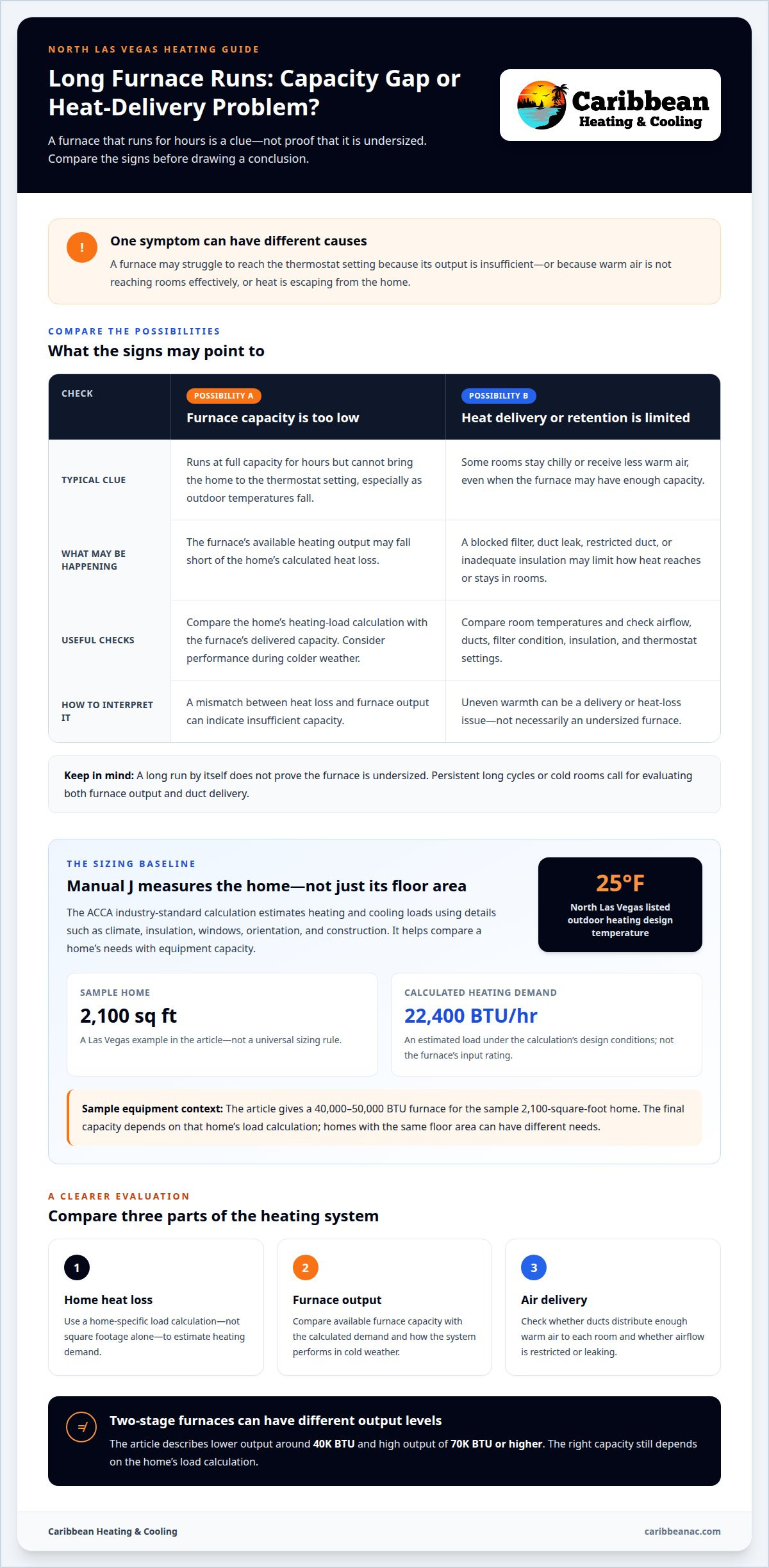
Manual J calculates a home’s heating and cooling loads using details such as insulation, windows, orientation, and climate. The ACCA industry standard helps determine equipment capacity from the home’s needs, rather than square footage alone. North Las Vegas’s listed outdoor heating design temperature is 25°F. This calculation helps show whether a furnace can meet demand during cold weather and whether cooling equipment can handle local summer conditions.
System and Cooling-Load Evaluation
A professional evaluation considers equipment capacity, thermostat operation, and whether the ducts distribute conditioned air effectively. The listed Las Vegas cooling design temperature is 108°F, with a correctly sized system designed to maintain 72-75°F indoors at that outdoor temperature. If an air conditioner is genuinely undersized, replacement with properly sized equipment is typically the long-term solution. Closing blinds during peak sun and using ceiling fans can reduce cooling demand temporarily. Furnace replacement permit requirements depend on applicable local rules and the project.
Undersizing Versus Airflow or Insulation Problems
An undersized furnace lacks enough output for the home’s heating load. Poor airflow or insulation, by contrast, limits how well heat reaches or stays in rooms. A blocked filter, duct leak, or restricted duct can leave a room cold even when the furnace has adequate capacity. Thermostat settings also affect run time and comfort. Comparing temperatures between rooms and checking airflow can help distinguish delivery problems from insufficient furnace output.
Undersized Furnace Signs and Risks
A furnace may be undersized if it runs at full capacity for hours but can’t reach the thermostat setting. Longer-than-designed operation may wear parts faster. Two-stage furnaces can provide lower output around 40K BTU and high output of 70K BTU or higher, but the right capacity depends on the load calculation. Persistent cold rooms or long cycles call for evaluating both furnace output and duct delivery.
What Does Manual J Actually Calculate?
Manual J is the ACCA industry standard for calculating a home’s heating and cooling loads. It estimates how much heating or cooling a specific house needs instead of sizing equipment by floor area alone. The calculation considers factors such as climate, insulation, windows, orientation, and construction. These details help show whether a furnace’s output matches the building’s heat loss.
For example, a 2,100-square-foot Las Vegas home has a sample calculated heating load of 22,400 BTU per hour. That figure represents the home’s estimated heating demand under the calculation’s design conditions. It isn’t the furnace’s input rating, and it doesn’t mean every home of that size needs identical equipment. A home with different windows, insulation, or exposure can produce a different result.
Without a heating-load calculation, equipment selection may rely too heavily on square footage or the existing furnace’s capacity. That can lead to a system that struggles during cold weather or cycles without matching the home’s needs. Home layout and the level of detail in the assessment also affect the work involved.
Use the result to compare the home’s heating demand with the furnace’s delivered capacity, not just its label. If the calculated load and equipment rating appear mismatched, assess system performance and heat delivery next. For a North Las Vegas homeowner, this can help clarify whether furnace sizing or another factor is affecting comfort.
Furnace capacity for a sample home
A sample 2,100-square-foot Las Vegas home would use a 40,000-50,000 BTU furnace, based on its calculated heating demand. That range illustrates why floor area alone cannot determine capacity: windows, insulation, layout, and heat loss influence the result. A contractor uses the home’s load calculation to match furnace output to the conditions it must handle, including North Las Vegas cold snaps.
Can an undersized furnace keep a North Las Vegas home warm during winter cold snaps? It may maintain the thermostat setting in milder weather but struggle when outdoor temperatures fall and the home loses heat faster than the furnace can replace it. The key comparison is the home’s heating load against the furnace’s available output, not the home’s size alone.
Consider performance as well as the equipment rating. If the furnace runs at full capacity for hours without bringing rooms to the thermostat setting, it may lack sufficient output. A long run alone doesn’t prove undersizing: restricted airflow, duct leakage, or heat escaping through the building envelope can also limit comfort. For homeowners dealing with thermal drafts through aging glass, window replacement specialists such as Galaxy Home Remodeling demonstrate how upgrading your home’s exterior envelope helps reduce heat loss before investing in larger heating equipment. Differences in room temperatures offer another clue, especially if some areas receive less warm air.
A properly matched furnace can help maintain more consistent warmth throughout the home during cold weather. When capacity appears inadequate, a professional evaluation can compare the load calculation, furnace output, and air delivery before replacement is considered. For a heating-capacity assessment, schedule a furnace evaluation with a qualified contractor.
A 40,000-50,000 BTU furnace suits the sample 2,100-square-foot home, but the final capacity should follow a load calculation that accounts for heat loss and North Las Vegas cold snaps.
Caribbean Heating & Cooling
Caribbean Heating & Cooling helps North Las Vegas homeowners address heating concerns when a furnace struggles to keep rooms comfortable. If the system runs for long periods, misses the thermostat setting, or leaves rooms unevenly heated, heating repair can address operating problems. An evaluation can help determine whether installation or maintenance is the appropriate next step.
Furnace capacity is only one part of comfort. The home’s heating load, equipment condition, and heat delivery all affect performance. A professional assessment can help distinguish a furnace that needs repair from one that may need replacement, without assuming long run times alone prove it is undersized.
For help with a furnace that isn’t keeping your home comfortable, contact Caribbean Heating & Cooling in North Las Vegas.
Make Your Next Heating Decision With Confidence
Comfort problems are easier to address when the next step follows evidence, not guesswork. If you’re still asking whether an undersized furnace can heat your North Las Vegas home, note what happens during normal operation: whether rooms stay comfortable, the thermostat setting is reached, and the system performs reliably. These observations can help guide a useful conversation about repair or replacement.
Caribbean Heating & Cooling can assess heating concerns and provide heating repair when a system needs attention. For related cooling needs, the company also offers AC repair, AC installation, and AC maintenance in North Las Vegas and surrounding areas.
Contact Caribbean Heating & Cooling today to discuss your home’s comfort needs. A clear next step can help you move toward dependable indoor comfort with greater confidence.
Frequently Asked Questions
How Does Ductwork Size Relate to Equipment Size?
Ducts must carry the airflow the heating or cooling equipment is designed to deliver. A narrow return path or poorly balanced branches can limit airflow, so even correctly sized equipment may not condition rooms evenly. A useful evaluation considers supply and return paths together, along with duct layout and airflow, rather than matching duct dimensions to the furnace’s label alone.
How Does Las Vegas, NV Climate Change the Calculation?
Las Vegas and North Las Vegas experience intense summer heat as well as cooler winter periods, so heating and cooling loads must be considered separately. A system sized only for typical mild weather may struggle under more demanding conditions. Sun exposure, shade, insulation, and window placement also affect how quickly a home gains or loses heat through the local seasons.
How Is HVAC Sizing Determined for My Las Vegas, NV Home?
HVAC sizing starts by calculating the home’s heating and cooling demand, then comparing it with equipment capacity. The evaluation should distinguish a furnace’s usable heat output from its input rating and consider whether the system can distribute that output throughout the home. Room layout, windows, insulation, and duct paths help explain why similar homes may need different equipment.
What Can You Do About It?
Note which rooms feel uncomfortable, whether the thermostat reaches its setting, and whether the problem occurs during heating, cooling, or both. These observations help describe the issue during a professional assessment. Caribbean Heating & Cooling offers residential heating repair and installation, along with thermostat services, to address equipment or control problems affecting home comfort in North Las Vegas.
What Does ‘Undersized’ Mean?
“Undersized” means a system’s available heating output is below the home’s heating demand under the conditions it must handle. It doesn’t describe the furnace’s physical dimensions. A furnace may keep rooms comfortable in milder weather yet fall behind during a colder spell because heat escapes from the home faster than the equipment can replace it.

Related Posts
Comments (0)