
¿Qué pasaría si su aire acondicionado deja de funcionar al anochecer durante una ola de calor en Summerlin? El servicio de emergencia para HVAC...
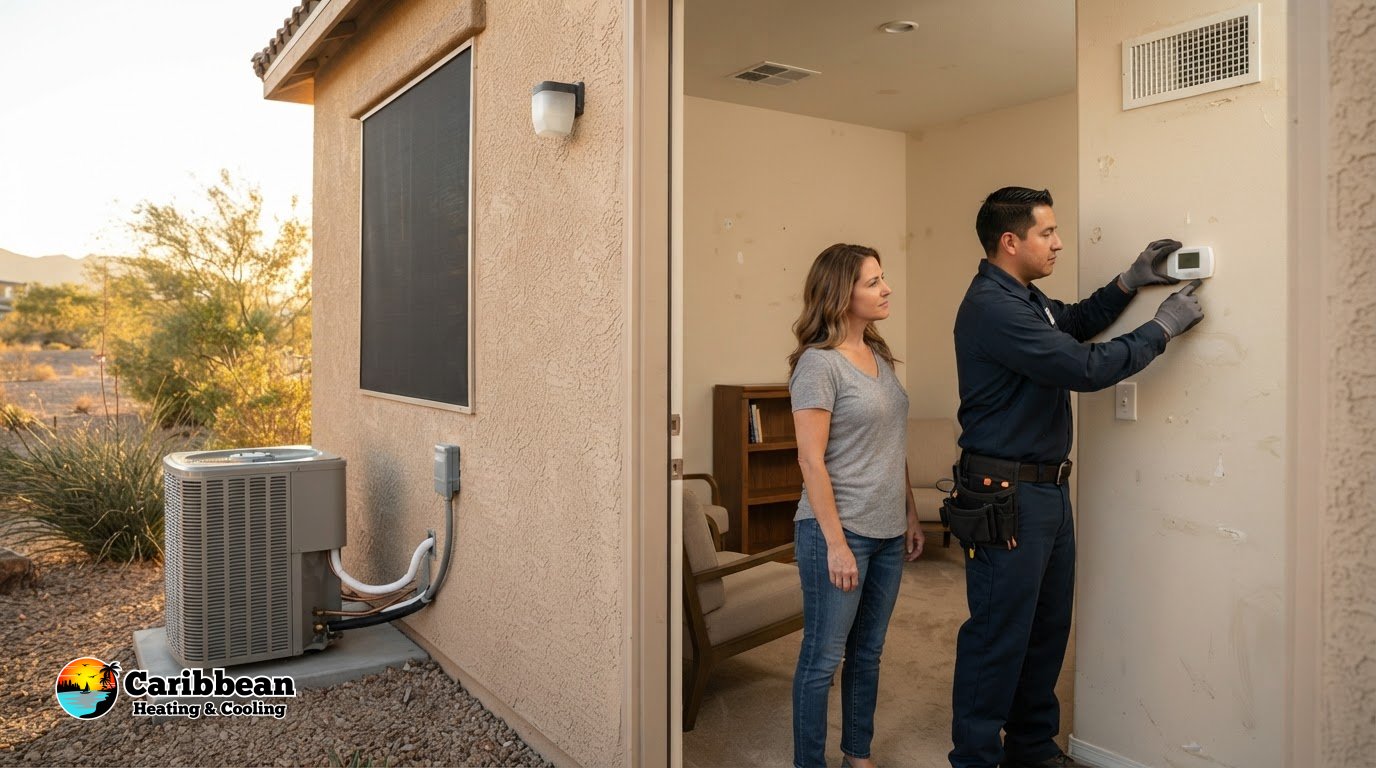
HVAC Considerations for a Henderson Casita or Guest House
A Henderson casita needs more than a smaller version of the main home’s HVAC system. The key HVAC considerations for a casita or guest house in Henderson include right-sized heating and cooling, ventilation, life-safety planning, and design that responds to desert sun and sharp temperature changes. Outdoor temperatures can exceed 110°F, while evenings often cool down, so comfort depends on how the space handles both extremes.
It’s easy to focus on equipment, but a comfortable guest space also needs fresh air and thoughtful planning for how it will be used. This article explains how ventilation and safety features shape HVAC choices, why desert-ready planning matters, and how hot days and cooler evenings affect temperature control. You’ll have a clearer picture of the decisions that support dependable comfort in a detached casita or guest house.
Key Takeaways
- Plan ventilation and life-safety features alongside heating and cooling so the casita supports comfortable, habitable use.
- Consider sun exposure, orientation, and the separate needs of a detached space when shaping a desert-responsive design.
- Account for intense daytime heat and cooler evenings when choosing how the space will maintain comfort throughout the day.
- Understand how HVAC installation and ongoing AC care can help keep a guest house comfortable as its needs change.
Ventilation and life-safety features for habitable space
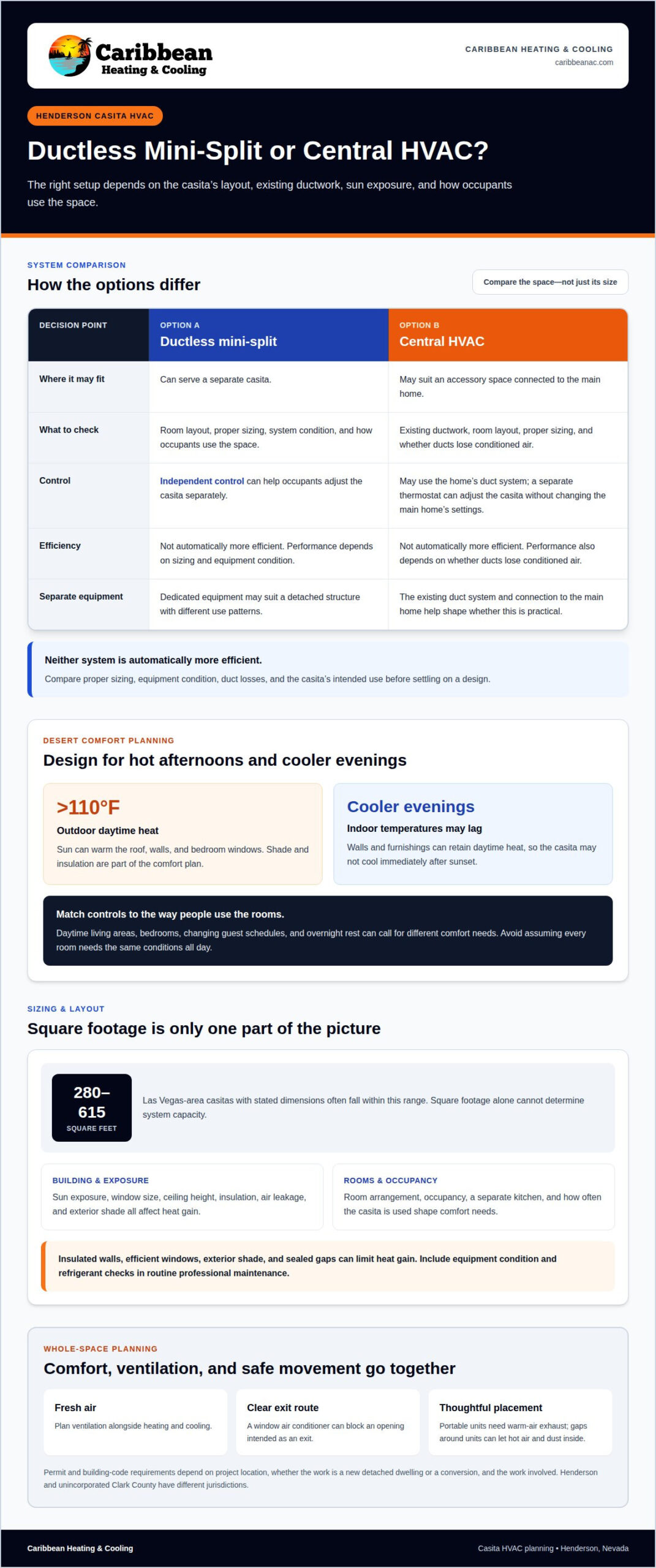
A casita designed as a dwelling needs more than temperature control. Plan ventilation, a clear exit route, and life-safety features alongside the HVAC layout. Las Vegas-area casitas with stated dimensions often range from 280 to 615 square feet, so limited square footage makes equipment placement and airflow especially important. A bedroom, bathroom, and separate entrance can also make the structure function as independent living space for guests or multigenerational households.
In Henderson, an accessory dwelling unit may be up to 25% of the primary home’s size or 1,000 square feet, whichever is greater. Permit and building-code requirements depend on the project’s location, whether it is a new detached dwelling or a conversion, and the work involved. Henderson and unincorporated Clark County have different jurisdictions, so the applicable local review matters before HVAC plans are finalized.
Operating costs for a small guest house depend on its system, insulation, thermostat settings, and how often occupants use the space. A frequently occupied unit may need longer cooling or heating cycles than one used occasionally. Electricity rates and equipment condition also affect the bill.
Portable and window air conditioners may be less integrated than a permanent system. A window unit can block an opening intended as an exit, while gaps around either type can let hot air and dust inside. Portable models also need a way to exhaust warm air, which can limit placement. In a small dwelling, blocked access, poor airflow, or misplaced equipment can affect comfort and safe movement around the property.
Climate-responsive casita design
In Henderson, sun exposure, insulation, and the casita’s connection to the main home all shape HVAC decisions. HVAC considerations for a casita or guest house in Henderson start with the actual layout and expected use, not square footage alone.
HVAC System Options for Casitas
A ductless mini-split can serve a separate casita, while central HVAC may suit an accessory space connected to the main home. The right system depends on the room layout, existing ductwork, and how occupants use each space. A separate kitchen or an exterior-facing wall can affect heat gain, so consider window exposure, shade, and room arrangement when planning for comfort.
Ductless Mini-Splits and Central HVAC Efficiency
Neither option is automatically more efficient. Performance depends on proper sizing, system condition, and whether ducts lose conditioned air. Ductless equipment provides independent control, while central HVAC may fit a casita connected to the home’s duct system. For a luxury listing with a separate guest suite, the ability to control that space independently may suit changing occupancy.
Separate HVAC Controls and Equipment
A separate thermostat lets occupants adjust the casita without changing the main home’s settings. Dedicated equipment may also suit a detached structure with different use patterns. Separate utility meters are a distinct property decision, not a requirement for independent HVAC control. The intended use and design of a permitted accessory dwelling help shape a practical setup.
Casita HVAC Capacity by Square Footage
Square footage alone can’t determine system capacity. HVAC considerations for a casita or guest house in Henderson also include sun exposure, insulation, window size, air leakage, ceiling height, and occupancy. Insulated walls, efficient windows, exterior shade, and sealed gaps can limit heat gain. Include equipment condition and refrigerant checks in routine professional maintenance to support reliable operation in desert conditions.
Hot daytime temperatures and cooler evenings
Southwest outdoor temperatures regularly exceed 110°F, while evenings cool comfortably. That daily swing affects how a detached casita handles heat, especially after sun warms its roof, walls, and bedroom windows. The cooling system must manage afternoon heat without leaving occupants uncomfortable as outdoor temperatures fall. Henderson’s desert conditions make shade and insulation part of the same comfort plan.
Occupancy patterns matter, too. A guest who uses the living area during the day may need cooling before bedtime, while a rental may have changing schedules. A separate bedroom and bathroom can also have different comfort needs from a shared living space. Plan controls around how people use each room instead of assuming every space needs the same conditions all day.
For buyers considering a casita as part of a real estate purchase, ask how the detached unit is used and which rooms receive direct afternoon sun. A listing may describe a guest house, but its orientation, window exposure, and construction affect how quickly it heats and cools. Those details shape the experience of guests, family members, or tenants, whether or not rental income is part of the housing plan.
During buying or renovation planning, consider how the structure responds after sunset. Walls and furnishings can retain daytime heat, so cooler evening air does not always mean the indoor space cools immediately. A well-planned system should match the casita’s layout and daily use, with controls that support comfortable transitions between daytime activity and overnight rest. For help planning dependable comfort in changing desert conditions, discuss your guest-house HVAC needs.
Caribbean Heating & Cooling: HVAC installation
Caribbean Heating & Cooling provides HVAC installation for Henderson casitas and guest houses, including projects that need cooling planned for a separate living space. Turn to the team when building a casita, replacing an existing system, or addressing uneven cooling in desert heat. The installation should reflect the space’s layout, insulation, sun exposure, and expected use.
For an existing guest house, AC repair can address a system that struggles to keep rooms comfortable, while AC maintenance supports ongoing operation. If the equipment needs replacement, AC installation is another option. These services address the HVAC system itself and the comfort needs of a detached casita, rather than treating it as an extension of the main home.
For help with HVAC installation or an existing system, contact Caribbean Heating & Cooling.
Plan for Comfort That Lasts
As your casita’s use changes, its comfort needs may change too. A space used occasionally for visitors may later serve as a home office or accommodate family for longer stays. Keep HVAC considerations for a casita or guest house in Henderson tied to how you expect the space to function, not just how it’s used today. This perspective can help you make informed decisions about equipment, controls, and future upkeep.
Caribbean Heating & Cooling offers AC installation for new or replacement systems, AC repair when cooling performance needs attention, and AC maintenance for ongoing care. If you’re planning a project or addressing a comfort issue, contact Caribbean Heating & Cooling today to discuss your casita’s HVAC needs. A thoughtful next step can help you create a guest space that feels ready for what comes next.
Frequently Asked Questions
How do Henderson’s hot desert summers and mild winters affect casita HVAC sizing?
Henderson’s summer heat makes peak cooling demand the key sizing concern, while winter heating needs still matter for year-round comfort. Because outdoor temperatures can exceed 110°F, equipment must handle demanding afternoon conditions without being oversized for a small casita. A load calculation weighs insulation, sun exposure, windows, room layout, and heating requirements rather than choosing capacity from square footage alone.
What permits and building code requirements apply to casita HVAC in Henderson or Clark County?
Permit and building-code requirements depend on the project’s location, whether it is a new detached dwelling or a conversion, and the work involved. Henderson and unincorporated Clark County fall under different jurisdictions, so confirm the applicable local review and plan for ventilation, a clear exit route, and life-safety features before finalizing HVAC plans.
What are typical HVAC operating costs for a small guest house in Henderson?
Operating costs vary with the system, insulation, thermostat settings, occupancy, electricity rates, and equipment condition. A frequently occupied unit may need longer heating or cooling cycles than one used occasionally.

Related Posts
Comments (0)