
El costo de instalación de una bomba de calor en North Las Vegas depende del tipo y la capacidad del sistema, los ductos y la instalación eléctrica...
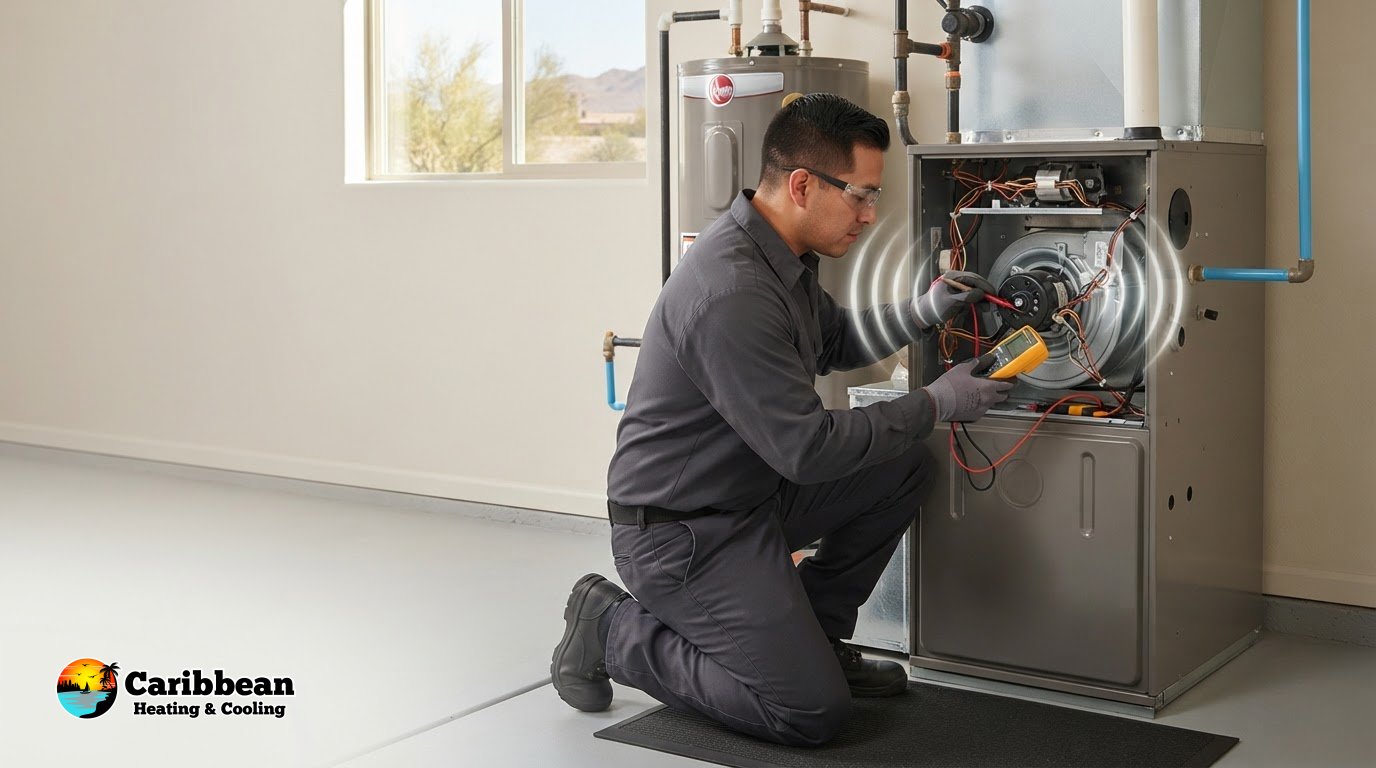
Furnace Making a Loud Humming Noise in Henderson? Find the Cause
If your furnace is making a loud humming noise in Henderson, don’t ignore the change. A steady blower hum can be normal, but a loud or persistent buzz may point to an electrical or motor problem. If you notice a burning smell, flickering lights, or a tripped breaker, turn the furnace off and seek professional help.
It’s understandable to wonder whether a dirty filter is to blame. A clogged filter can restrict airflow and make the system work harder, but it may not explain every furnace making a loud humming noise in Henderson. Electrical components or loose parts can also cause unusual sounds.
Learn what may be behind the noise, how to check the filter safely, and which warning signs mean the furnace should stay off. This guide helps you distinguish routine operating sounds from problems that need attention, so you can choose a clear next step for your home’s comfort and safety.
Key Takeaways
- A loud or persistent buzz can point to an electrical or ignition issue, while a soft blower hum may be part of normal operation.
- A clogged filter can restrict airflow and strain the system; checking it and replacing it when dirty may help.
- Turn the furnace off if buzzing comes with a burning smell, flickering lights, or a tripped breaker.
- When the noise continues or the furnace won’t run properly, heating repair can help identify the cause and restore dependable operation.
Why Is My Furnace Making a Buzzing Noise?
A soft blower hum can be normal, but a loud, persistent buzz may point to an electrical, motor, or ignition problem. If your furnace is making a loud humming noise in Henderson, note when it starts and whether the system is heating. That pattern can help narrow down the cause.
Normal Sounds and Electrical or Ignition Issues
Normal furnace sounds include the blower running and a hum after ignition. A new, loud buzz is different and deserves attention. Clicking or buzzing can signal an electrical issue or trouble with ignition, while loud, irregular noise may mean a component is loose or failing. Warranty coverage depends on the written terms and the failed part; the sound alone doesn’t establish whether a furnace or home warranty covers a repair.
Notice the pattern: buzzing during a heating cycle is different from buzzing when the furnace isn’t heating. A hum that continues with the thermostat off and the fan set to AUTO may involve a stuck relay. These clues can help describe the problem, but don’t open the cabinet to inspect wiring.
Transformer and Inducer Buzzing
A transformer regulates incoming voltage to a level the furnace can use, and a failing transformer may hum or buzz as current passes through it. A loose transformer box can also vibrate against the cabinet, including after installation. Because both causes involve electrical components, have a qualified technician inspect the unit rather than handling electrical parts yourself.
Buzzing near the inducer may come from its motor or a loose component. Note whether the sound begins before ignition, continues during heating, or changes when the cycle ends. The timing can help distinguish a persistent motor sound from a brief startup noise.
Capacitor Clicking and Buzzing
A capacitor helps regulate power to motors such as the blower motor. If it’s failing, the motor may not start or run normally, and buzzing can accompany the problem. If your furnace is making a loud humming noise in Henderson, note whether the blower starts after the buzz, but don’t test the capacitor yourself.
Listen to see whether airflow reaches the rooms. If buzzing continues or the heating system won’t operate, arrange a repair. Ductwork can also carry or amplify sounds, so note where the noise seems loudest without assuming the duct is the source.
Can a dirty air filter really make my furnace so loud?
Yes. A clogged filter can restrict airflow, making the blower work harder and creating extra noise. Check the filter before assuming a loud sound points to an electrical fault.
Checking and Replacing a Dirty Filter
Check your air filter every 30 days; the inspection takes about 30 seconds. Find the filter slot, then look for visible dust and buildup across the filter material. If it’s dirty, replace it with a filter that fits the slot and matches the system’s requirements. A severely clogged filter should be replaced, not left in place. Change the filter at least every three months, and check it more often if it visibly collects dust sooner.
Filter choice matters, too. An older furnace may howl with a high-efficiency filter rated MERV 13 or higher if the system can’t handle the pressure. If a new filter brings on a howl, don’t assume the blower or ignition has failed; the filter’s resistance may be contributing to the sound.
Filter Strain and Airflow Noise
A dirty filter limits the air returning through the heating system, so the blower must work harder to move air. That restriction can contribute to whistling, especially while the furnace runs. Filter-related whistling signals an airflow issue, unlike a persistent electrical buzz that may continue when the furnace isn’t heating.
Replace a dirty filter, then listen as the furnace starts and runs. Keep registers open and return-air vents clear of furniture to avoid restricting airflow elsewhere. If the noise continues with a clean filter, filter maintenance alone may not resolve the cause.
Routine heating maintenance can help keep filters and system components on a regular inspection schedule. Soundproofing may mask noise, but it won’t remove a clogged filter or correct restricted airflow. If a clean filter doesn’t resolve the sound, consider heating maintenance to investigate the system.
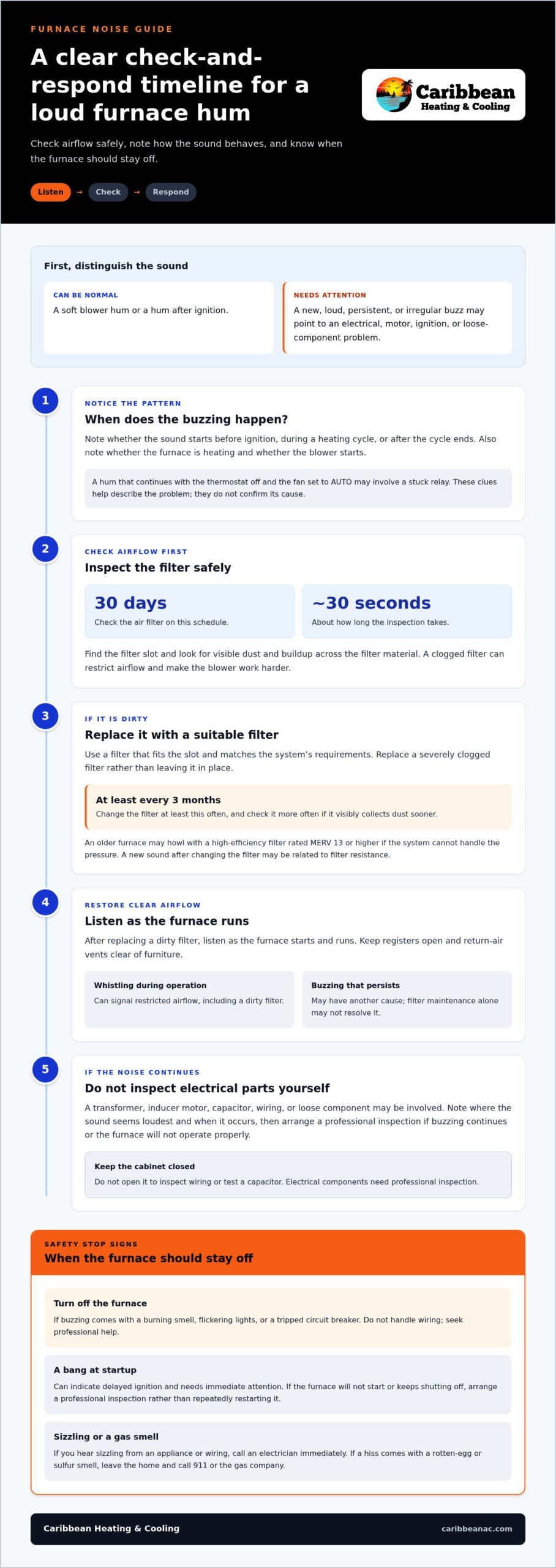
Furnace noise urgency and when to turn the system off
A new buzz needs attention, especially if it’s loud, continuous, or accompanied by other warning signs. The sound and what happens when the furnace starts can help determine whether to shut it down.
Assessing Furnace Noise Urgency
How urgent the noise is depends on its pattern and accompanying symptoms, because some sounds signal a developing fault. Turn off the furnace if buzzing comes with a burning smell, flickering lights, or a tripped circuit breaker. A bang when the furnace starts can indicate delayed ignition and needs immediate attention. If the furnace won’t start or keeps shutting off, arrange a professional inspection rather than repeatedly restarting it.
A damaged blower motor or loose components can worsen and lead to a breakdown. Worn bearings in an older fan motor may cause a high-pitched squeal, while rattling or scraping can point to loose parts. Note when the sound begins and whether the blower runs; those details can help a technician assess the issue.
Humming and Electrical Fire Risk
Yes, a loud hum or buzzing noise can signal an electrical problem and a fire risk, particularly with faulty or loose wiring. Turn off the furnace if the buzzing comes with a burning smell, flickering lights, or a tripped breaker. Don’t open the cabinet or handle wiring; electrical components need professional inspection.
If you hear sizzling from an appliance or wiring, call an electrician immediately. A hiss accompanied by a rotten-egg or sulfur smell may indicate a gas leak: leave the home and call 911 or the gas company. For persistent humming without those warning signs, keep the system off if its operation seems abnormal and arrange professional heating repair.
Caribbean Heating & Cooling: AC Repair
Caribbean Heating & Cooling provides heating repair when a persistent furnace hum, buzzing sound, or startup problem needs attention. If you’ve checked the filter and the noise continues, or the furnace won’t heat reliably, a repair visit can help identify which system component needs attention. Share when the sound begins, whether the blower runs, and any other symptoms, such as a burning smell or interrupted heating. These details help guide the assessment. Keep the furnace off if you notice urgent warning signs, and arrange professional help rather than opening the unit or handling electrical parts. For a separate cooling issue, Caribbean Heating & Cooling also offers AC repair. Contact Caribbean Heating & Cooling or visit caribbeanac.com to discuss your heating repair needs.
Take the Next Step Toward Steady Home Comfort
If your furnace is making a loud humming noise in Henderson, use the sound as a prompt to decide what your home needs next. Track changes in its operation, and arrange heating help if the noise continues or the system struggles to run. A clear description of the sound and when it occurs gives the service team a useful starting point.
Caribbean Heating & Cooling also provides AC repair, AC installation, and AC maintenance for home comfort needs beyond heating. Choose the service that fits the issue, and take the next step with confidence.
Contact Caribbean Heating & Cooling to discuss your home comfort needs. A practical plan can help you move forward with greater peace of mind.
Frequently Asked Questions
Is Your Furnace Sound Normal?
A steady blower sound during operation and a brief hum after ignition can be normal. A new, harsh buzz or a sound that changes abruptly deserves attention. For example, ductwork may ping or pop as it warms, while a repeated electrical-sounding buzz from the furnace cabinet is a different clue. Compare the sound with the system’s usual startup and running pattern.
What Causes a Furnace to Buzz?
Electrical parts, a motor, or loose components can cause buzzing. A transformer regulates voltage for the furnace, while a capacitor helps supply power to motors; faults in either may affect operation. Loose wiring can also buzz or vibrate. Note whether the sound occurs before ignition, during heating, or while the blower runs, then share that pattern with a technician instead of handling internal parts.
What You Can Check on Your Own?
You can check whether the access panel is closed and latched, and whether furniture blocks return-air vents. Before clearing dust or debris near the blower, turn off furnace power. Don’t touch wiring or electrical components. If the panel is secure and vents are clear but the noise persists, stop troubleshooting and arrange a professional inspection rather than removing cabinet parts.
What’s the difference between furnace noise and ductwork noise?
Furnace noise usually seems to come from the unit itself, while ductwork sounds travel along air passages or appear near a register. A ping or pop as heating begins can come from ductwork expanding. Listen from a safe distance and note whether the sound follows airflow through the home or stays near the furnace cabinet. This helps describe where the noise occurs.
When Should You Turn Off Your Furnace Immediately?
Turn it off if buzzing is accompanied by a burning smell, flickering lights, or a tripped breaker. A sizzling sound from wiring calls for immediate help from an electrician. If you smell rotten eggs or sulfur with a furnace hiss, leave the home and call 911 or the gas company, since that combination may indicate a gas leak. Don’t restart the furnace until the hazard is addressed.

Related Posts
Comments (0)