
Son las 2:00 a. m. en Anthem y, aunque las estrellas del desierto son hermosas, el aire a 38 grados Fahrenheit (3 °C) que se cuela por sus ventanas...
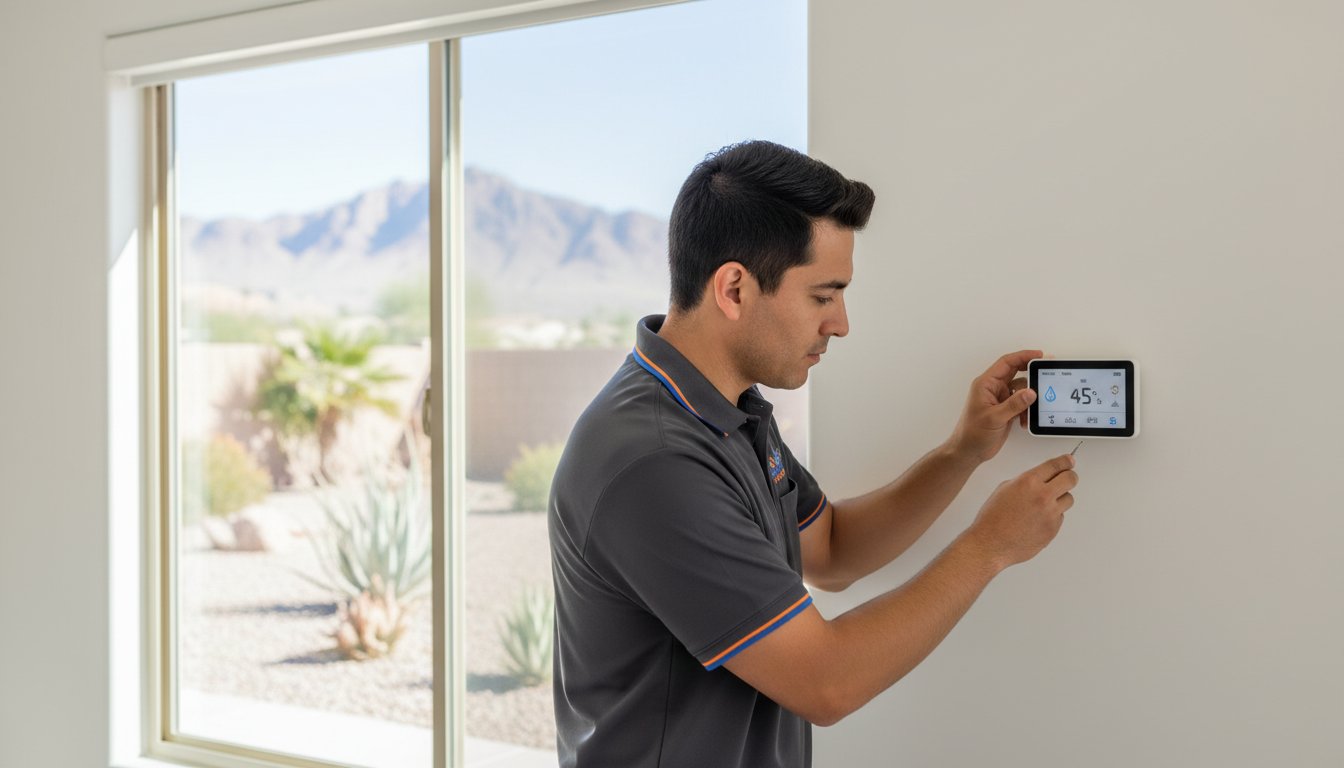
Las Vegas NV Humidity: A Homeowner’s Guide to Desert Comfort
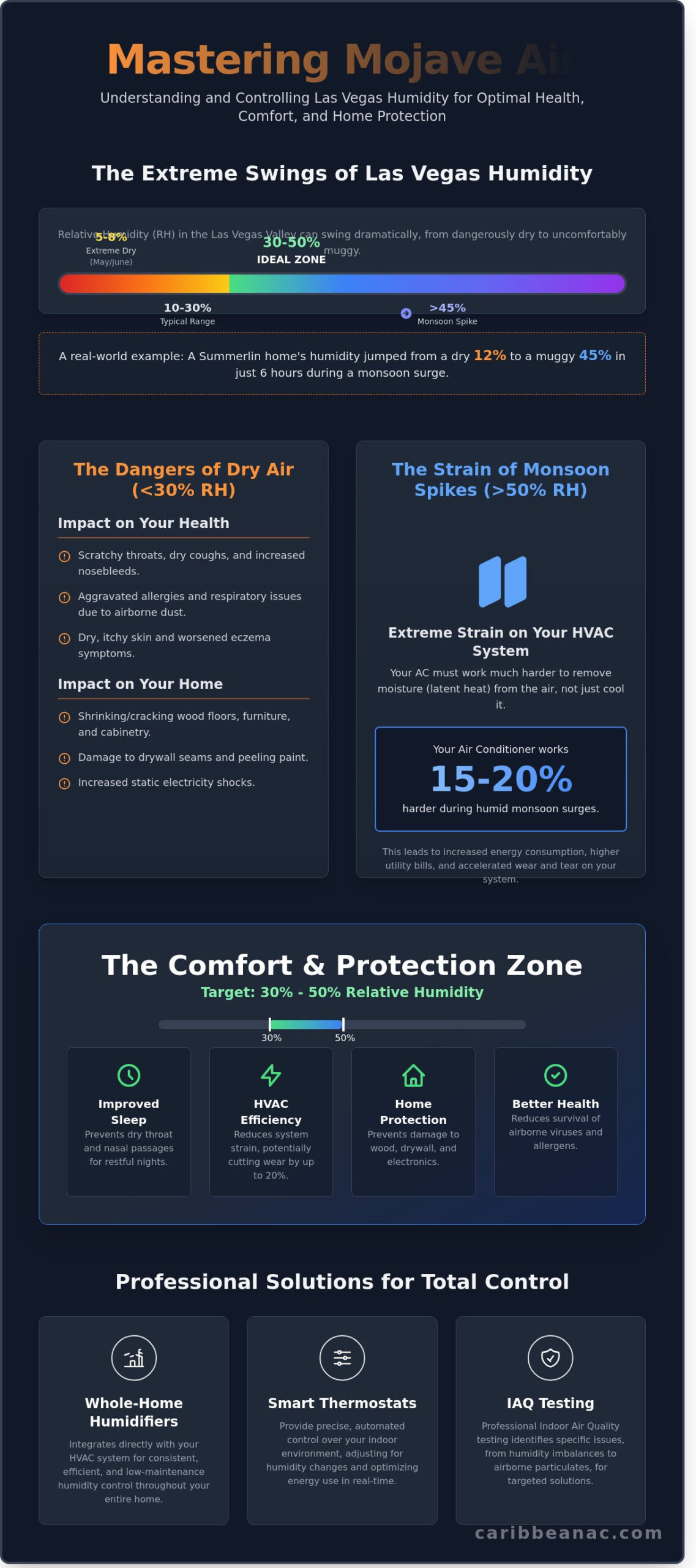
Last August, a Summerlin homeowner watched their indoor humidity climb from a bone-dry 12% to a muggy 45% in just six hours as the monsoon rolled in. While we often celebrate the Mojave Desert for its dry heat, these drastic swings create a hidden strain on both your body and your home’s infrastructure. You likely know the frustration of waking up with a scratchy throat or seeing your energy bills climb as your system struggles to keep up. Managing las vegas nv humidity is about more than just avoiding a muggy afternoon; it’s about protecting your long-term health and your property.
We understand that maintaining a perfect balance in this extreme environment feels like a constant battle. This guide will show you how to stabilize your indoor moisture levels to improve your sleep quality and reduce HVAC wear and tear by as much as 20% annually. You’ll learn the specific comfort zone for Southern Nevada homes and discover professional strategies to keep your air clean, your skin hydrated, and your cooling system running efficiently through every seasonal spike.
Key Takeaways
- Understand the science behind the Mojave Desert climate and why maintaining the right moisture balance is critical for your daily comfort.
- Recognize how low las vegas nv humidity affects your respiratory health and protects your home’s infrastructure from costly wood and drywall damage.
- Prepare your HVAC system for the unique challenges of the monsoon season to prevent mechanical stress during sudden moisture spikes.
- Evaluate the long-term benefits of whole-home humidification versus portable units to determine the most efficient solution for your living space.
- Discover how professional indoor air quality testing and smart thermostats provide the precise control needed to optimize your desert air.
Understanding Las Vegas NV Humidity: The Science of Desert Air
Living in the Mojave Desert means managing a unique atmospheric profile that directly impacts your home comfort and air quality. Relative humidity measures the amount of water vapor currently in the air compared to the maximum amount the air could hold at that specific temperature. In the Las Vegas desert climate, this figure fluctuates based on intense thermal shifts. While coastal cities often maintain levels between 50% and 70%, the Las Vegas Valley typically sees a range of 10% to 30%. This dryness occurs because warmer air expands, allowing it to hold significantly more moisture before reaching saturation.
The Spring Mountains play a critical role in our local weather through the rain shadow effect. As moist air travels from the Pacific Ocean, it’s forced upward by the 11,916 foot peak of Mount Charleston. The air cools, releases its moisture as snow or rain on the western slopes, and descends into the valley as hot, dry wind. This geographical barrier ensures las vegas nv humidity remains consistently low, which accelerates the evaporation of skin oils and increases the suspension of fine dust particles in your living space.
Relative Humidity vs. Dew Point in the Valley
For residents in Henderson or Summerlin, the dew point provides a more reliable comfort metric than relative humidity. The dew point identifies the exact temperature where air becomes saturated. When dew points stay below 50°F, your home feels crisp and comfortable. If the dew point climbs above 55°F during a monsoon surge, your air conditioner must work 15% to 20% harder to remove latent heat. Monitoring these numbers helps you predict your cooling system’s energy load before the heat wave hits.
Seasonal Humidity Trends: From Dry Heat to Monsoon Spikes
Our local environment shifts dramatically throughout the calendar year. May and June represent the most challenging period for indoor air quality and personal comfort. During these months, humidity levels frequently plummet to 5% or 8%, which can cause wood flooring to shrink and respiratory passages to dry out. Winter brings a different set of challenges; cold desert nights can increase indoor relative humidity, but traditional heating systems often strip that moisture away quickly. The average annual humidity in Las Vegas is approximately 30% but noting it often drops to single digits. By understanding these cycles, you can better prepare your filtration and HVAC systems for the specific demands of las vegas nv humidity throughout the year.
The Impact of Low Humidity on Your Health and Home
Living in the Mojave Desert means your body and home are in a constant battle against evaporation. When las vegas nv humidity levels drop below 15 percent, the air acts like a sponge, pulling moisture from every available source. This includes your skin, your sinuses, and even the structural timber of your house. You might notice your sleep quality declining as your throat becomes parched overnight, or you may experience sudden nosebleeds caused by brittle nasal membranes. These physical symptoms are your body’s early warning signs that your indoor climate is out of balance.
Beyond physical discomfort, dry air creates a deceptive cooling effect. Since moisture evaporates off your skin instantly, you often feel colder than the actual room temperature. This leads many homeowners to adjust their thermostats or over-use the AC, which puts extra strain on the system and increases monthly energy bills. Low humidity also fuels the static electricity factor, where friction on carpets creates constant shocks at every light switch. Managing these conditions is vital for long-term comfort and system efficiency.
Health Implications for Las Vegas Residents
The combination of desert dust and lack of moisture creates a harsh environment for your respiratory system. Research from the Desert Research Institute highlights the health impacts of extreme heat and dry conditions, which often exacerbate seasonal allergies. Maintaining stable las vegas nv humidity levels between 30 and 50 percent is a proven way to reduce the survival of airborne viruses and limit the spread of dust-borne irritants.
Residents in Summerlin face unique challenges due to the neighborhood’s 3,500-foot elevation. Higher altitudes naturally have thinner, drier air, making hydration and humidity control even more critical for those new to the area. If you find yourself struggling with persistent dry coughs or itchy eyes, a professional indoor air quality services assessment can identify if your home is falling below safe moisture levels.
Protecting Your Home’s Interior from the Desert
Your home’s infrastructure reacts poorly to the 10 percent humidity levels common in Southern Nevada. Wooden floorboards shrink, leaving unsightly gaps where dust accumulates and allergens hide. Musical instruments, especially pianos and guitars, can suffer permanent warping or cracked soundboards if they aren’t kept in a controlled environment. Protecting these assets requires a proactive approach to moisture management.
- Desert Cracks: Small fissures in paint or drywall often result from materials contracting in the dry air rather than foundation issues.
- Humidity-Hungry Areas: In North Las Vegas, rooms with large south-facing windows lose moisture 25 percent faster than shaded areas.
- Material Fatigue: Leather furniture and oil paintings become brittle and lose their luster without adequate ambient moisture.
Stable humidity preserves the integrity of your home’s finishes. When you control the moisture levels, you stop the cycle of expansion and contraction that leads to costly cosmetic repairs. Our team focuses on balancing these environmental factors to ensure your home remains a sanctuary from the harsh desert elements outside.
The Monsoon Exception: When Las Vegas NV Humidity Spikes
From early July through late September, the desert’s character shifts dramatically. While most residents prepare for dry, scorching heat, the arrival of the North American Monsoon introduces a different set of challenges. According to Las Vegas climate data, this seasonal pattern pulls moisture from the Gulf of California into the valley. Las Vegas monsoon humidity can jump from 10% to 50% in under an hour. These sudden spikes create “muggy” conditions where temperatures often refuse to drop below 90 degrees, even in the middle of the night.
Many homeowners rely on evaporative cooling, commonly known as swamp coolers, to manage the heat. These systems are highly effective when the air is bone-dry. However, the “Swamp Cooler” myth falls apart once the humidity rises. These units work by adding moisture to the air to lower the temperature. When the ambient moisture is already high, the air cannot absorb more water, and the cooling process stops. This leaves your indoor space feeling sticky and oppressive rather than comfortable.
Why Your AC Struggles During a Monsoon
Standard refrigerated air conditioning systems face a specific hurdle called latent heat. Your AC doesn’t just lower the temperature; it has to remove water from the air before you’ll feel any relief. This double duty puts immense pressure on your compressor. During humid August afternoons, you might notice your unit “short-cycling.” This is when the system turns on and off in rapid bursts, which fails to dehumidify the home and leads to 20% higher energy bills. It’s also vital to monitor your condensate lines. When las vegas nv humidity hits 40% or higher, your system pulls gallons of water from the air. A single clog in the drain line can lead to an immediate system shutdown or costly water damage. Staying ahead of these issues with professional ac service and repairing in Las Vegas is the most reliable way to prevent monsoon-season breakdowns before they happen.
Indoor Air Quality During Dust Storms (Haboobs)
Monsoon moisture often arrives with massive dust storms, or haboobs. These walls of sand can tower 3,000 feet high and sweep through the valley in minutes. The combination of high las vegas nv humidity and heavy dust creates a thick “monsoon muck.” This sludge coats your air filters and can reduce system airflow by up to 30% after a single event. To protect your home’s air quality, consider these steps:
- Check filters immediately: Inspect your air filter after any visible dust storm to prevent airflow restriction.
- Upgrade your MERV rating: Use a MERV 11 or 13 filter to trap the fine silt common in desert storms.
- Clean outdoor coils: Ensure your outdoor condenser isn’t packed with wet dust, which acts as an insulator and traps heat.
Our team understands these unique environmental pressures. We provide the technical expertise and preventative maintenance needed to keep your equipment reliable when the weather is at its worst. Taking these proactive steps ensures your home remains a cool, breathable sanctuary throughout the monsoon season.
Practical Solutions for Mastering Desert Humidity
Mastering the balance of las vegas nv humidity is about more than personal comfort. It is about protecting your health and your home’s infrastructure. While portable units offer a temporary fix for a single bedroom, they often struggle to maintain consistency across a standard 2,000 square foot floor plan. Achieving a stable indoor environment requires a combination of professional technology and smart daily habits.
Whole-Home Humidification Systems
Whole-home systems install directly into your existing HVAC supply or return plenum. They work by introducing controlled amounts of water vapor into the air stream as it circulates through your vents. This ensures every room maintains a consistent moisture level. In Southern Nevada, water hardness often exceeds 260 parts per million. This high mineral content means your system requires a dedicated scale reduction filter or annual pad replacements to prevent calcium buildup. Despite the maintenance, homeowners typically see a 5% to 8% reduction in heating costs. This happens because moist air holds heat more effectively than dry air, allowing you to keep the thermostat lower during winter nights.
Thermostats and Indoor Air Quality (IAQ) Sensors
Modern smart thermostats serve as the primary command center for your indoor environment. You should program your system to trigger a mobile alert if the las vegas nv humidity inside your home falls below 25%. This threshold is the danger zone where dry skin, respiratory irritation, and cracked wood furniture become common. Integrating these sensors with your 6-month AC maintenance schedule ensures the bypass damper and water solenoid valve function correctly before the driest months arrive. A professional technician can calibrate these sensors to within 1% accuracy, providing a level of precision that manual hygrometers cannot match. If you’re navigating complex thermostat settings to optimize your humidity controls, our Honeywell thermostat manual roundup for Las Vegas homeowners provides expert guidance on programming your system for desert conditions.
While the desert is famous for dryness, you must also prepare for the monsoon season between July and September. During these weeks, outdoor humidity can spike above 50% following a storm. If your indoor air becomes too muggy, it can lead to mold growth in dark closets or behind furniture. Keep these DIY habits in mind to manage daily fluctuations:
- Open bathroom doors after showering to allow steam to naturally humidify the hallway.
- Group indoor plants together to create a micro-climate through transpiration.
- Use a small dehumidifier in the laundry room during the humid monsoon weeks.
- Check window seals every October to prevent dry air from leaking into your living space.
If you’re ready to stabilize your home environment and improve your air quality, explore our indoor air quality services with our expert team today.
How Caribbean Heating & Cooling Optimizes Your Desert Air
Living in the Mojave Desert requires more than a standard air conditioner. Caribbean Heating & Cooling builds residential HVAC strategies specifically for the intense Las Vegas environment. We don’t just cool your home; we treat your air as a complete ecosystem. Our technicians perform professional Indoor Air Quality (IAQ) testing to pinpoint exactly how las vegas nv humidity levels affect your comfort and health. While the valley often sees humidity drop below 10%, our goal is to maintain a healthy balance that prevents respiratory irritation and protects your wooden furniture from cracking.
Monsoon season brings a different set of challenges between July and September. Sudden spikes in moisture combined with 100-plus degree temperatures put immense strain on your equipment. Our 24/7 emergency service is a vital lifeline for Henderson and Summerlin families during these high-stress weeks. If your system fails at 2:00 AM on a Tuesday, we’ll be there to restore your safety. Every job we perform comes with the Caribbean “Peace of Mind” guarantee, ensuring your investment is protected by a team that actually lives in your community.
Expert Installation of IAQ and Humidity Solutions
Our team calibrates every system to handle the brutal reality of a 115-degree afternoon. We specialize in integrating whole-home humidifiers and high-efficiency filtration systems that manage the las vegas nv humidity fluctuations that standard units ignore. A professional AC tune-up before the June heat peak can improve your system’s efficiency by up to 15% and prevent 80% of common summer breakdowns. We design customized filtration plans that use MERV 13 or higher filters to trap the fine desert dust that often bypasses basic hardware.
Schedule Your Comfort Assessment Today
Don’t wait for a dust storm to realize your air quality is suffering. We invite you to a comprehensive indoor air quality audit where we’ll measure particulates, VOCs, and moisture levels in every room. As a local, family-owned business, we treat every Las Vegas home like it’s our own. We’ve spent years refining our processes to meet the specific demands of our desert home. Take the first step toward a healthier living environment right now.
Improve your home’s air quality with Caribbean Heating & Cooling
Take Control of Your Home’s Desert Climate Today
Managing the unique challenges of las vegas nv humidity requires more than just a standard thermostat setting. You’ve learned that desert air often drops below 10% relative humidity, a level that can crack expensive wood flooring and dry out your nasal passages. While the summer monsoon season introduces sudden spikes that strain your cooling system, the year-round objective is maintaining a stable 30% to 50% range for total comfort. Since 2018, our licensed team has focused on solving Mojave Desert HVAC challenges with precision and care. As a family-owned local business, we treat your home’s air quality as our top priority. We provide 24/7 emergency residential support because we know that desert equipment doesn’t always wait for business hours to fail. Protecting your family’s health and your home’s structural integrity starts with a professional assessment of your current environment. It’s time to stop reacting to the weather and start commanding your indoor climate. Schedule your Indoor Air Quality Audit with Caribbean Heating & Cooling to secure the peace of mind you deserve. Your path to a perfectly balanced, refreshing home is just one call away.
Frequently Asked Questions
What is a normal humidity level for a home in Las Vegas?
Ideal indoor humidity for a Las Vegas home ranges between 30% and 50% for maximum comfort. While the outdoor las vegas nv humidity often drops below 10% during June, keeping your interior levels in this range protects your respiratory health and prevents wood furniture from cracking. Maintaining this balance ensures your home remains a sanctuary against the harsh desert climate and prevents the buildup of static electricity.
Does high humidity make my Las Vegas AC work harder?
Yes, high humidity forces your air conditioner to work significantly harder because it must remove excess moisture before it can effectively lower the air temperature. During the 20% to 30% humidity spikes of July, your system consumes 15% more energy to maintain the same cooling effect. This increased workload can lead to higher utility bills and faster wear on your compressor components, making regular maintenance essential for reliability.
Why is my skin so dry since moving to Henderson, NV?
Your skin feels dry because the average relative humidity in Henderson often hovers around 10% to 12%, which rapidly evaporates moisture from your body. This extreme lack of water vapor in the air strips the natural oils from your skin and nasal passages. Installing a whole-home humidification system provides a consistent 35% moisture level that helps alleviate these physical symptoms of desert living and improves your sleep quality.
Can I use a swamp cooler in Las Vegas when it’s humid?
Swamp coolers become ineffective once the outdoor las vegas nv humidity exceeds 25% because the air cannot absorb more evaporated water. When moisture levels rise during the August monsoon season, these units stop cooling and instead create a damp, uncomfortable environment. Switching to a refrigerated air conditioning system ensures reliable cooling regardless of the moisture levels outside your home, providing peace of mind during the wettest months.
How do I know if I need a whole-home humidifier in the desert?
You likely need a whole-home humidifier if you experience frequent static electricity shocks or notice cracks in your wood flooring and furniture. If your hygrometer consistently reads below 25% during the winter months, your home is too dry for optimal health and material preservation. These systems integrate directly with your HVAC ductwork to deliver controlled moisture to every room automatically, ensuring your comfort without manual intervention.
What is the ‘Monsoon Season’ and how does it affect my air quality?
Monsoon season occurs from July through September and introduces sudden shifts in air quality due to increased moisture and dust storms. These storms can elevate humidity to 40% while kicking up 100% more airborne particulates than a typical spring day. This combination clogs filters quickly and introduces allergens into your home that require high-efficiency filtration to manage effectively, protecting your family from respiratory irritation.
Is 10% humidity too low for a residential house?
Yes, 10% humidity is too low for a residential home and can cause health issues like nosebleeds and dry eyes. The Environmental Protection Agency recommends keeping indoor levels above 30% to prevent the spread of viruses and protect your home’s structural integrity. Low moisture levels also make the air feel colder than it actually is, which might lead you to turn up your heater unnecessarily during the winter.
How often should I change my AC filters during a Las Vegas summer?
You should change your AC filters every 30 days during the peak summer months of June, July, and August. Dust concentrations in the Mojave Desert are 5 times higher than in coastal regions, which leads to rapid filter saturation. Keeping a fresh filter in place ensures your system maintains 100% airflow and prevents expensive emergency repairs caused by restricted cooling cycles, keeping your home cool and your air clean.

Related Posts
Comments (0)