
Son las 2:00 a. m. en Anthem y, aunque las estrellas del desierto son hermosas, el aire a 38 grados Fahrenheit (3 °C) que se cuela por sus ventanas...
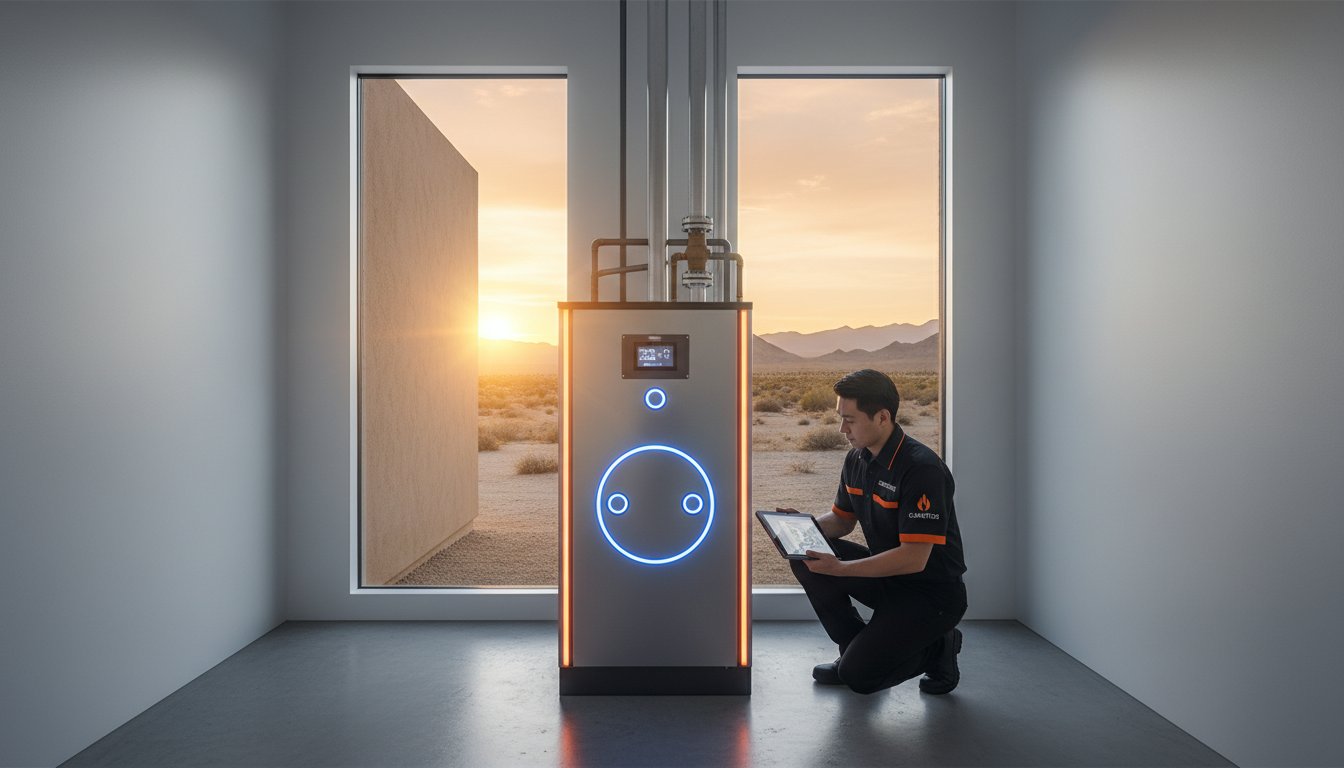
Water Source Heat Pump Guide: Efficient Residential Cooling for Las Vegas Homes
What if the secret to surviving a 110°F Las Vegas afternoon isn’t found in the scorching desert air, but in the steady, cool flow of water? You’ve likely felt the frustration of an outdoor condenser struggling to keep up while your summer utility bills climb. A Water Source Heat pump creates a thermal sanctuary by using stable water temperatures rather than volatile air to cool your home. It’s a reliable solution that eliminates the loud noise and inefficiency of traditional systems during our most extreme heat waves.
We understand the stress of maintaining comfort when the grid is taxed and temperatures soar. You’ll discover how these systems provide superior efficiency and consistent comfort even in extreme desert heat while lowering your monthly bills. This guide covers the technical advantages of water-sourced cooling, current NV Energy rebates ranging from $510 to $3,400, and how to prepare for upcoming 2026 state-administered funding.
Key Takeaways
- Discover why transferring heat into a water loop is significantly more effective than venting it into the scorching Nevada air.
- Determine if your property, such as a Summerlin high-rise or a luxury estate, is the right fit for a Water Source Heat pump installation.
- Compare Energy Efficiency Ratio (EER) ratings to see how these systems outperform standard air-source units when temperatures peak.
- Learn why monitoring water chemistry and loop pressure is essential for preventing unexpected breakdowns and ensuring quiet, reliable operation.
What is a Water Source Heat Pump and How Does it Work?
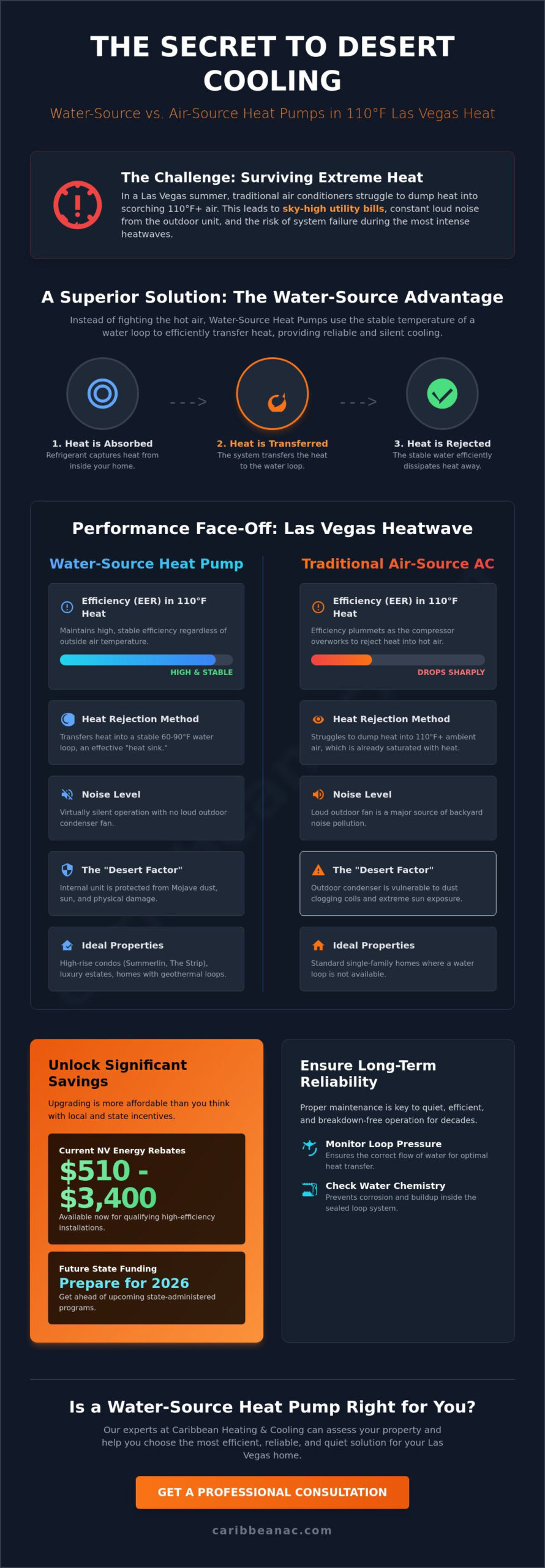
A Water Source Heat pump is a specialized HVAC system that moves heat between your indoor air and a water loop rather than the outdoor air. This technology is often categorized under the broader umbrella of What is a Water Source Heat Pump, utilizing the high thermal conductivity of water to manage your home’s climate. While traditional air conditioners try to dump heat into 110°F desert air, water acts as a superior “heat sink.” It absorbs thermal energy far more effectively than dry Nevada air, which means your system doesn’t have to work nearly as hard to keep you cool.
To better understand how these components interact in a real-world setting, watch this helpful video:
A residential setup consists of three primary parts: the internal heat pump unit, the circulating water loop, and a high-efficiency heat exchanger. These parts work in tandem to provide a level of reliability that standard air-source units simply can’t match when the Southern Nevada sun is at its peak.
The Refrigeration Cycle vs. Hydronic Loops
During the cooling cycle, refrigerant captures heat from your home’s interior. Instead of blowing that heat outside through a noisy condenser fan, the system transfers it to a hydronic loop. In Las Vegas, most residential systems use a closed-loop design where the same water circulates continuously through a sealed pipe. Open-loop systems are less common but draw from a local water source before returning it to the ground. This process is remarkably quiet and efficient because it relies on fluid dynamics rather than forced air.
Why Water Temperature Stability Matters
Standard air conditioners often struggle when outdoor temperatures hit 115°F because the air is too hot to absorb more heat effectively. Water loops provide a consistent thermal environment, usually staying between 60°F and 90°F regardless of the weather. This stability prevents your compressor from overworking, which significantly reduces long-term wear and tear. It’s a dependable way to ensure your home remains a sanctuary without the risk of system failure during a heatwave.
Ultimately, a water source heat pump serves as an ultra-efficient alternative to traditional air-source units for homeowners seeking reliable performance in extreme climates.
Is a Water Source Heat Pump Right for Your Las Vegas Home?
Choosing a Water Source Heat pump isn’t just about efficiency; it’s about matching the system to your specific home type in Southern Nevada. While these units are frequently found in commercial settings, they’re the preferred choice for high-rise condos along the Las Vegas Strip and in Summerlin. In these buildings, a central water loop provides the cooling medium, allowing for a compact indoor unit that saves valuable square footage. Luxury estates in areas like Ascaya or MacDonald Highlands also leverage this technology through geothermal ground loops to maintain consistent temperatures year-round.
When you compare performance, these systems often reach significantly higher EER ratings than traditional ac installation alternatives. Because the heat exchange happens via water, there’s no need for an outdoor condenser. This “Desert Factor” is a major benefit in Clark County. You won’t have to worry about Mojave dust clogging sensitive coils or the brutal 115°F sun beating down on outdoor components. It also means you’ll enjoy a silent backyard, which is perfect if your HOA has strict noise ordinances. If you’re looking for a quieter, more durable solution, our team at Caribbean Heating & Cooling can help you determine if your property is a candidate for this upgrade.
Water Source vs. Air Source: Performance in 100°F+ Weather
During a typical July heatwave in Henderson, the efficiency of a standard air-source unit can plummet as it struggles to reject heat into the scorching air. According to data on Heat Pump Systems, water-sourced units maintain a much more consistent energy draw because the water loop remains at a stable temperature. This stability doesn’t just save money on your monthly utility bill; it improves indoor air quality by utilizing closed systems that don’t rely on pulling in outside air during peak dust events.
Geothermal Opportunities in Nevada
Ground-loop systems take advantage of the Mojave Desert’s stable underground temperatures. Even when the surface is baking, the earth a few feet down remains relatively cool. A residential water source pump circulates fluid through these underground pipes to dissipate heat. It’s a long-term investment in comfort that provides peace of mind. This approach aligns with Nevada’s Renewable Portfolio Standard, which requires utilities to source 50% of their electricity from renewable resources by 2030.
Installation and Professional Maintenance in Las Vegas
Specialized technical knowledge is non-negotiable for these systems. A Water Source Heat pump requires a technician who understands both advanced refrigeration cycles and hydronic loop management. Unlike standard air-source units, these systems rely on precise loop pressure and balanced water chemistry to function. According to this EPA guide to heat pumps, these units offer exceptional efficiency but demand consistent professional oversight to maintain their low operating costs and high performance levels.
During a professional installation, Caribbean Heating & Cooling performs rigorous loop testing and thermostat configuration to ensure seamless communication between your indoor unit and the water source. We prioritize long-term system health by treating the water loop to prevent corrosion from Southern Nevada’s hard water. If you encounter a performance drop, specialized heat pump repair is necessary to troubleshoot the heat exchanger and pump assembly without compromising the sealed system. Our approach focuses on technical precision to alleviate the stress of home maintenance.
24/7 Emergency Support for Your Comfort
When a water loop failure occurs during a 110°F July afternoon, you can’t wait until the next business day for a resolution. We provide 24/7 emergency support across Henderson and the entire Las Vegas valley. Our technicians arrive with the specialized tools needed to restore your cooling immediately. We act as a dependable partner to resolve technical failures before they impact your family’s safety or comfort.
Preventative Maintenance Checklist
Preventative care is the most effective way to avoid emergency calls and extend the life of your equipment. Our comprehensive maintenance checklist includes:
- Inspecting the heat exchanger for mineral scale or sediment buildup from local water sources.
- Testing loop pressure and pump flow rates to ensure optimal heat transfer.
- Improving indoor air quality services by cleaning coils and replacing high-efficiency filters.
- Checking all electrical connections and calibrating thermostats for maximum energy savings.
Invest in a Reliable Thermal Sanctuary
A Water Source Heat pump offers a level of reliability that standard air-source units simply can’t match when the Southern Nevada sun is at its peak. By bypassing the limitations of scorching 115°F air and utilizing stable water temperatures, you ensure consistent cooling and lower energy consumption. You’ve learned how these systems eliminate the noise and maintenance headaches of outdoor condensers while providing a durable solution for high-rise condos and luxury estates alike.
Since 2018, our family-owned team has specialized in high-efficiency desert cooling solutions tailored to our local environment. We understand that a cooling failure is an emergency, which is why we provide 24/7 emergency residential support to keep your home safe. As licensed experts, we guide you through every step from initial loop testing to long-term preventative care. Schedule your expert water source heat pump consultation with Caribbean Heating & Cooling today! We’re here to provide the peace of mind you deserve all summer long.
Frequently Asked Questions
Are water source heat pumps legal in Las Vegas given water restrictions?
Yes, these systems are perfectly legal and comply with Southern Nevada Water Authority (SNWA) regulations. Most residential installations use a closed-loop design that recirculates a fixed amount of water or refrigerant. Since the system doesn’t “consume” or evaporate water like a cooling tower or misting system, it’s an environmentally responsible choice that doesn’t violate local drought restrictions or water usage limits.
How long does a residential water source heat pump typically last?
A residential Water Source Heat pump typically lasts between 20 and 25 years with proper care. This is a significant improvement over standard air-source units, which often fail after 12 to 15 years in the harsh Nevada climate. Because the entire unit stays indoors, it’s protected from the 115°F heat and abrasive desert dust that typically degrade outdoor condensers and electrical components over time.
Can I replace my standard central AC with a water source system?
You can replace a standard AC with this technology, but it requires the installation of a water loop infrastructure. This isn’t a simple “drop-in” replacement like a traditional condenser swap. For most Las Vegas homeowners, this involves installing a geothermal ground loop or connecting to an existing building loop in a high-rise. Our team evaluates your property’s layout and soil composition to determine if this transition is a viable long-term investment.
What are the common signs that my water source heat pump needs repair?
The most common sign is a noticeable decrease in cooling performance or a sudden 20% increase in your monthly energy bill. You should also watch for reduced water flow or unusual vibrating sounds from the internal pump assembly. In our local area, mineral scale buildup in the heat exchanger is a frequent culprit. If your system cycles on and off more than four times per hour, it’s a clear indicator of a technical issue.

Related Posts
Comments (0)